1 free read left. Create a free account for unlimited reading + AI research.
Create free account
How to get 40M installs? Mobile Games Marketing | Brian Sapp VP User Acquisition at Jam City
Key insights
6 takeaways- 01User acquisition (UA) at Jam City is a performance-based discipline where marketing budgets are strictly allocated based on projected payback periods and the specific lifecycle phase of each game title.
- 02The UA process follows a structured R&D path: starting with technical stability in soft launches, moving to retention metrics in secondary markets, and concluding with predictive lifetime value (LTV) modeling in primary territories.
- 03UA departments should be organized into cross-functional 'supercells' consisting of media buyers, analysts, and creative strategists to ensure ownership and alignment between marketing and game production.
- 04Data-driven creative strategy often contradicts subjective assumptions, as high-performing advertisements are frequently simple and short rather than elaborate or high-fidelity.
- 05Intellectual property (IP) titles typically command lower costs per install (CPI) and higher initial momentum, allowing for more aggressive launch spending compared to original titles.
- 06Machine learning tools on platforms like Facebook and Google have automated targeting and optimization, shifting the marketer's primary responsibility toward creative strategy and holistic business planning.
Ask AI about this video
Transcript
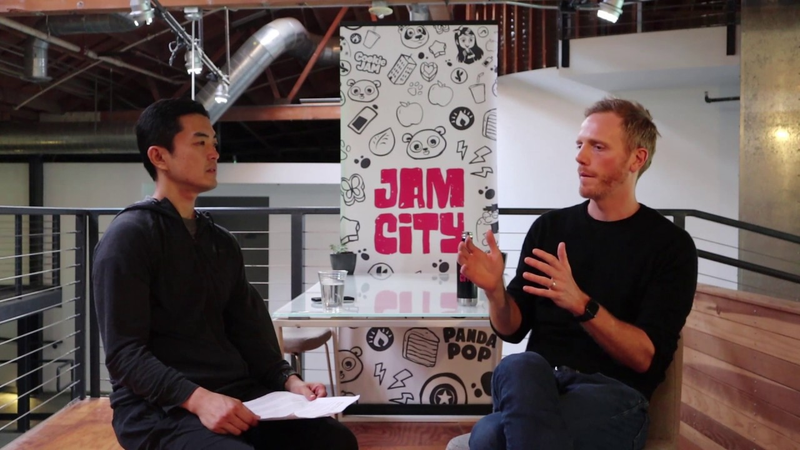
everybody jam city is one of the largest and most successful mobile free-to-play game publishers in the world with a lot of hit titles such as cookie Jam panna pop the recently launched Harry Potter Hogwarts mystery and more recently they have made a couple of acquisitions such as Disney's emoji blitz from Disney and bingo pop from You c'n games based in Canada now how has a company been able to be so successful well one of the key pillars of success in addition to the games themselves is the marketing side of the equation which is more about you know user acquisition and how do you get players to come in to your game and play play your game and so today we will be speaking to Brian Sapp who heads user acquisition & Performance Marketing at jam city and we will be talking about a few key topics with respect to user acquisition for example from a marketing perspective the difference between brand marketing and performance or user
acquisition based marketing what does it take to be successful in the new world of user acquisition the type of teams and how you would structure a team if you're building a user acquisition team for for your mobile game and a lot of other great topics that we're going to talk about in today's interview with again Brian Sapp VP of user acquisition at jam city let's go [Music] I want to start by just assuming a general audience could you talk to me about the role of like a you know the user opposition marketing department and your role specifically here at gem city sure so my name is Brian SAP I obviously do a marketing team it's a team of about 24 people right now yeah and you know you a marketing our performance
marketing is really marketing that is tied very much to measurement okay and really really at the core of it is data right and so you know for for most mobile gaming companies that are free-to-play performance marketing is a big driver of both the growth and the revenue for those companies and so for us especially everything we do around what channels we spend with what we're focused on is really costs per user and then the revenue coming in for that and so when we say performance marketing it's really around these KPIs these data measurement that we really care about which is slightly different than brand marketing right where that's more encompassing around awareness different channels it can't necessarily measure how effective it is but performance marketing is all about measurement all about do it in a free-to-play game studio like my jam city so you mentioned both performance marketing and the brand
marketing so how much brand marketing exists within jam city relative to your site the performance of these athletes inside yeah so jam city was a mobile first company and was built on the back of performance marketing okay performance marketing has been one of the biggest music companies growing the size of has you know this year lonely released Harry Potter the game has done over 40 million installs and you know a lot of that was driven by one it being a very successful IP the other part is scaling you a scaling user acquisition and so we are definitely a performance marketing heavy company we do do brand marketing it's just not at core of what drives our our growth and that's it's slightly different than some other gaming companies especially ones they're more entertainment focused yeah yeah but on the brand whitening side
like are there some examples of what you guys do yeah so you know just to give you an example we have an integrated marketing team and they're working on activations that might be things like working with influencers around certain violent game events it could be working with celebrities and having them come in both into the game and then marketing collateral yeah and so they're always working on ideas that kind of fall outside of traditional performance marketing right but they can actually help enable performance might be performed better right you talk to me about like sort of you know what is your day-to-day with like what are you kind of doing on a general basis yeah a lot so we have eight titles that warning you a on scale that we also have three titles and soft launch and so for me you know at the highest level it's setting the budgets for the games based on our
goals and objectives which is usually around payback and how we want that money to come back to us yeah the other thing is kind of setting strategy and helping the u18 set strategy for each of the games and different types of tests that we want to run okay and then working on you know creative analysis and kind of driving the creative team to really push ourselves and performance with really creatives and then planning for the soft launch titles helping sent you know kind of checkpoints into when you think these games are ready for us to like kind of give you a mic - right and so between all of that you know all these games are in different life cycle phases yeah it's kind of different strategies for all of them but really helping the team kind of hone in on can we dig into that a little deeper so like just just like assuming a typical game Lodge from sort of conception pre-production - production - softlocks that hard Lodge can you talk about like
how user acquisition like where do you guys get involved and how do you work with whether it's the production team or you know other teams during each phase in that sort of game development process sure so soft launch or I kind of called it the R&D phase really has kind of generally three phases the first phase is the tech phase where we kind of get the game out in the wild see if any bugs okay in this case you a is basically trying to get enough users to make sure we can get a good lead on that right second phase is generally early of attention and so from a UA standpoint we are trying to drive cheaper installed between tier 2 tier 3 countries with a focus on getting statistical significance on retention right and so we're not necessarily focused on like you know what's happening later in the funnel we're not focused on like getting ready it's really just about stat
signaling what's happening in games the game you might understand the metrics they're seeing and where they need to improve I mean in phase 3 is really like we call it you know getting ready for the big leagues when we start going here 1 territories we really start honing in on creative I seen what works trying to understand what our predictive LTVs are and what a cost per user is yeah and then building out you know the business plan for the game just is this game viable or is it not and then we go into a worldwide launch if it is viable and from there coming up with a worldwide launch plan which is going to be different for everything from Harry Potter yeah we were very aggressive because we knew that the IP was so strong that have been a free-to-play game for Potter in the market and so it was a pretty large global launch plan for a non IP I don't it might be a different strategy that might be slow growth it also depends on the genre for some of our match-three puzzle games we're looking at multi-year paybacks yeah therefore the risk is higher in the
beginning expending too much against it and then once we're like through the worldwide launch period it's really a question of what's the strategy to grow the game and is it due weekend should we be aggressive now versus taking a time and then kind of later stage they start moving into retargeting and so depending on the games lifecycle is definitely just going back and digging a little bit deeper so let's say so you talked about soft launch and you kind of test a lot of sort of technical stuff at that point and then you focus on let's say d1 retention or some early retention metric and let's say the metric it doesn't quite what you guys are looking for what happens in back to the product group and then when they see they're ready to test again or how does that work yeah generally we're spending very little amounts during this time so there's not a lot of risk for us to just keep spending on anyways and the product
team will basically have these benchmarks that they want to hit and if they're coming below them right they will you know every update it's they're putting in features and address that right and so do we see it improving what do we see it decreasing right and of course you never you know you don't have to exactly hit your benchmarks to go worldwide I think the more important thing before going worldwide is that equal world business plan expense in other words your cost per user is less than or equal to your and that's what's most important can you talk a little bit more now about your to structure so you know the user acquisition landscape that's kind of complicated I think there are various ways you can structure your tune whether it's based on sort of you know channels or based on games or like from a structural perspective have you thought about this is how I'm going to set up my team to be the most effective yeah
certainly a challenge and I think there's no right or wrong way to do it okay you know what I've done here champ City is basically the u18 is made up fourteen there's the media buyers yep analysts that help us build the dashboards there's the creative team yep that's basically okay and then there's creative strategy team which is a small team but they're hyper focused on what competitors are doing what's working best for us overall kind of best practices and creative and okay and so those are the four teams that make up the you a marketing team and then within the media buying team this is where it can get extremely challenging just to give you an example like of course you can you can basically allocate a team around channels and you tend to see that more often when you have one or two videos scale or you see it with non-gaming
where it's really just one product and those teams are pretty large and they're focused around here channels of Geo sometimes both we were set up that way and jam city launched and went to scale with really only two games cooking in and the father at that time I think that made sense okay but as we released more games communication and strategy across the team became very challenging yeah when a buyer has only was only focused on their channel right and what was being missed was kind of the holistic view and healthy being so we actually ended up reorienting around supercells what we call them but they're basically small teams of four to five that are focused on a group of games and they split up the channels amongst themselves but more importantly they're thinking holistically about the strategy of each of those people but why do you think that strategy work do you think it's because that sort of supercell felt more ownership against those games are
like what do you think is led to the increase performance oh I think with the smaller team you've actually had improve communication okay right you got three to four people working very closely together but as opposed to twelve people working across everything together that's why it was improved ownership like hey we're responsible for these games no matter what and then it was putting the right personnel on those teams right the right experience of face book buyer Network fire and then strategist or someone who's a little bit more senior who understands like the overall game like how our patents those doing how organics doing where are we seeing opportunity to kind of going out and like coordinating along so it's a combination of more ownership that our communication a smaller team and the right personnel it's almost like a Special Forces team right like then wait a more effective when they each person has their role how does user cleaner user acquisition trainers work with other departments within City whether it's management team you know other
teams like what kinds of communication happens and who do they have to work with so that they use your acquisition can be more effective yeah so probably the closest working relationship is the PM team and the PM teams are responsible for the business of the game yeah you know every game has a living breathing entity it has live events as certain updates and the PM's are also responsible for the PNL so the you a team is constantly communicating or ramping up or slowing down spend on events when it makes sense around ten pool events as well as like what the budget is how are pacing performances doing and then beyond that we interact with integrated marketing is doing some of the brand marketing activations publishing which for us is kind of the App Store optimization anyway actually handles a lot of that as well and then to a lesser extent by the
PM and integrated marketing yeah I think there's an there's an increase in view that user acquisition plays a very strong component with the success of mobile games today increasingly more important for the user acquisition team to be doing a really good job so from your perspective in today's market what does it take to be as effective as possible so clearly like I think it's become a very important in the last couple of years is understanding how to buy on social platforms we say social we really mean the self attributing networks such as Google and Facebook all those to kind of control the market at this point and it's it's absolutely excessively to have you a buyers understand how to buying those platforms outside of that the networks are
important for scaling but the social is most important and then I would say creative like creatives become very important as a market competitive and so really trying to understand the psychology of what thrives players into the game how to differentiate amongst the competitors but also what types of errors intervene okay and what that motivation is for example you know as a WV I worked on RPGs and we found that showing character progression rank up I really brought in papers whatever reason that's what they look motivated and so for a puzzle category it's something else and so for each genre and for each game you're gonna find creatives that really resonate with the users you care about and then just getting smarter and smarter you get good at that sign in the creative side so let's say it's someone's part of the art one of your four teams a creative strategy to you what does it take for someone to be a
really really good coming up with these ideas - you know for creative ideas so that you have high-performing creators the reason I say that is that I've found that there's no faster way to get your ego beating down yeah than to come up with creative ideas that you are just absolutely positive we're gonna work and I don't and every you a team has had that experience and I think people who haven't done you a or come from brand marketing know it's less measure tend to come in with like a lot of determination that they're right okay like experimental framework yes yes and it's important to try a lot of different things in fact grow your preconceived notion about the window to give you an example like I've run very expensive CD trailers and then run I would say lower quality
five second ads and the five second ads over lower quality outperform those and so that's not uncommon and so what it takes is just you know our creative strategy team is focused on IPM which was basically impression to install and then other way to funnel metrics and we're hyper focused on improving it so we'll look at what's working what's not working and we try to like basically use the learning across the hall parking right okay it applies the one match three let's apply to all three so that helps accelerate learnings and then looking at the competitors that trying to understand what they're doing we take feedback from the studios as well but sometimes the studios don't you know they're not performance markers and they think they think high quality art always wins and it doesn't and that's when I kind of go back to the fact that like we need to be looking at the data right understand the best looking clear doesn't always win it's just the fact and then going back to you let's say there's somebody out there interested in getting into performance
while just to use your acquisition what qualities do you look for me you're hiring people onto your TV yeah Excel skills are a must okay we generally will send out Excel tests you know I also will put together often depends on this role but just put together an example question around if you had a million dollars how would you launch this game right it's less like there's no writer on the answer it's more that I like to see three or four slides I'm tell person things right and so that kind of comes down to how they communicate their ideas because it's important that when you do you a you communicate with your strategy to the game teams so basically it's data at chops which kind of Excel on ascending numbers and then it's communication and kind of strategy and then I think lastly
is like you know creative thinker to think outside the box so when I look at Jim City in terms of the so I'm noticing more it seems like there's a shift towards branded games Mitch and Harry Potter does the Blitz team and if you think about doing user acquisition or kind of original IP what are some of the considerations what's the thought process behind when you think about doing marketing for a branded game versus like yeah yeah I mean think Jim City has always kind of been in both worlds yeah some of our older titles like hook up live titles and new people and you know they both come with advantages and disadvantages some of the disadvantages are working
with IP is obviously you have to you know get approval from that my people there's gonna be restrictive right and sometimes slow down the you a creative process but the disadvantages of working with non ideas is not well generally speaking IP titles have a much different launch and what I mean by that is since IP titles generally speaking an IP are well known and are usually gonna see a very low CPI over lunch yeah that is an opportunity cost that I I for one don't think you should have up on see more to be more aggressive yeah yeah I think I look at the launch was almost like supernovas and every IP is different and I've definitely seen IPs where there is no CPI reduction and you know you throw that out the window but Harry Potter first if not IP you're not
gonna see that same momentum at launch so you're just taking you mentioned like to listen for channels for user acquisition perspective of Facebook and Google and certainly there's been in the last two to three years you know a lot of innovation with respect to like you know machine learning these can you talk about like you know some of the recent changes or some of the new things happening because it seems like there's a lot of application of machine learning whether it's to debating whether to creatives optimization can you talk about something like that the new things coming up yeah yeah so I think like two years ago yeah Google rolled out new AC which basically I think at the time there's a lot of black backlash because if you could target YouTube word search
independently and then when you AC rolled out they're like nope you can't do that anymore the machines are smarter than do it and I think it was a little bumpy for a while but now we're seeing great results and clearly it makes right we've got a long enough timeline with enough data the right algorithm all these big platforms are going to be able to basically optimize better than you can write and and save you a lot of time and now Facebook is kind of going in that direction some of our best performing ad sets for Facebook are just broad targeting male 18 to 55 and then you give Facebook your your goal you know I'm a EEO app event optimization and it just doesn't scream and so I think everything is going in that direction it's just a question of when it gets there so these looking handle great about position and I will say the targeting is still important okay in that using your own data to enhance
retargeting okay so for example creating look-alike audiences off of an in-game event and testing a bunch of different in game and one out of five degree separate from purchase event but it's it's really getting smarter about their own data you can use that here maybe talk a little more about you so how did you get into the industry what was sort of your career trajectory leading up to you know kind of come in here so I were in LA now yeah I was went to college here and like played in bands actually and was in the music industry I was basically negotiating the rights for music to be in the movies TV and film for years and didn't love it but I was doing it because I played in bands yeah and it was kind of like I could be closer to it however I you know this was
like 2010 2009 you know both those industries with dining and mobile gaming started right around that time and actually free-to-play and it just excited me so I actually quit my job and moved up the Bay Area with six months savings Wow and we're running out of money crashing on a friend's couch and I interviewed a tap joy with only 30 people and I gone on like 24 job interviews that no one hired me it's at the top joy oh and so I got in the top two Islands 30 as like one of their first direct developer partnerships people and my job was to bring on game developers as advertisers and publishers that's it and it the rest is kind of history like the apt I just blew up we were one of the things platforms at the time that horrible Kabam supercells and go you know all the early guys hey and it was a great crash course in all things both you a data monetization game mechanics yeah we had
our own publishing fun and we were like funding games yeah and so was it awesome for me personally in my career and then I decided I wanted to go compete because I was kind of it was very consultative that couldn't actually make decisions I and so I had a great opportunity of WB games to oversee UA analytics and monetization right and that was awesome and had a lot of responsibilities and definitely learned a lot and was a part of a lot of big launches including game of conquest and world combat and so that really kind of honed me I'm out of Howard that IP holders a special right and it was small for four of us being a big company we were a small scrappy team didn't have a lot of resources and so was there for three and a half years and then I have known to people at GM City for a long time knew about the great culture and really wanted to join a mobile-first company but I'd like data at its heart yeah and had resources and so decide to join Jim city about a year
ago yeah what's a high level thoughts in terms of transition from centers Kovarian to Los Angeles well at least becoming more San Francisco like by the day when I moved here I thought it would be difficult to recruit people from temp this is going it's been really much easier than I thought to get people to move down because it cost of living is a little bit lower it's not like insanely cheaper a little bit the weather is a lot better and then it seems like Elias its citing like you know we have two football teams come here now they're building like a train line I take the train to work okay before you know in the city is changing and if any lot of money in ahead of the 2008 Olympics and then a lot of tech is moving down here so it's just it seems to be coming up right you know so last question what do you like about working in user acquisition the most and then what do you like about working here at
jam city working in the UAE the most is just the live operations under I love that every day it's dynamic the data changes you know it's just it's living breathing all the time and I like that right I like being always on call if you will I mean that sounds like most people went like that but I just like that it's always going in it and always having my optimizations and things always change and all of our games are living entities and I love what other parts can you get millions of people within like I can't so that's super exciting to me and njm City it's just the culture the willingness to take risks the willingness to be aggressive and you know it comes from Chris and Josh and neighbor the founders down many
autonomy great well you know thank you very much for your time everybody I'm here with Brian Sapp here jam city and that's about [Music] you
Summary
User acquisition (UA) in the mobile gaming industry functions as a data-driven performance marketing discipline, distinct from brand marketing in its reliance on measurable key performance indicators (KPIs) such as cost per user and return on investment. At Jam City, a mobile-first publisher, UA serves as a primary engine for growth. The company’s strategy centers on rigorous data analysis, where marketing budgets are allocated based on projected payback periods and the specific lifecycle phase of each title. Successful UA requires a deep understanding of social platforms like Facebook and Google, which now utilize machine learning to automate targeting and optimization, allowing marketers to focus on creative strategy and holistic business planning.
The UA process for a mobile game typically follows a structured R&D path. During soft launch, teams prioritize technical stability, followed by early retention metrics in secondary markets, and finally, predictive lifetime value (LTV) modeling in primary territories. Once a game moves to worldwide launch, the strategy shifts based on the presence of intellectual property (IP). IP-based titles often benefit from lower initial costs per install (CPI) and higher momentum, justifying more aggressive launch spending, whereas original titles may require a more measured, long-term growth approach.
Internally, Jam City organizes its UA department into specialized, cross-functional teams—often referred to as supercells—comprising media buyers, analysts, and creative strategists. This structure fosters improved communication and ownership over specific game portfolios. Creative strategy is particularly vital, as data often contradicts subjective assumptions about art quality; high-performing ads are frequently simple and short rather than elaborate. Ultimately, effective UA requires a balance of analytical rigor, such as advanced Excel proficiency, and the ability to communicate complex data-driven strategies to production teams to ensure that marketing efforts align with the game’s live operations and monetization goals.