1 free read left. Create a free account for unlimited reading + AI research.
Create free account
Why you must focus on ad whales for your UA strategy
Key insights
6 takeaways- 01A holistic LTV calculation that combines IAP and ad revenue data is necessary to effectively manage titles that utilize hybrid monetization models.
- 02Integrating user-level ad revenue data into ROI models is essential for accurate campaign profitability assessment and preventing the misallocation of UA budgets.
- 03Ad whales follow a power-law distribution where approximately 10% of users generate 60% to 70% of total ad revenue, making them six times more valuable than the average user.
- 04Targeting look-alike audiences based on high-value ad consumers on platforms like Facebook and Snapchat often results in lower cost-per-install (CPI) rates compared to traditional IAP-focused targeting.
- 05Developers should shift UA budget allocations to include look-alikes of ad whales alongside traditional payer look-alikes to achieve greater scale and revenue growth.
- 06Rather than blocking competitor ads, developers should leverage the ad ecosystem to identify users with a high propensity for engagement and monetization.
Ask AI about this video
Transcript
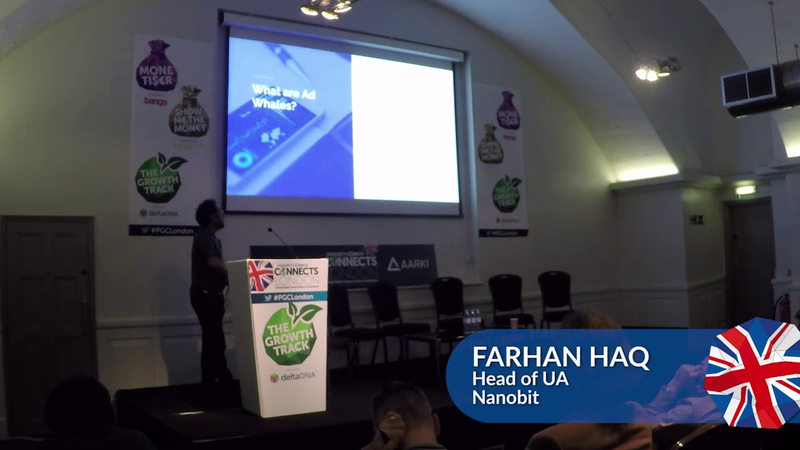
[Music] today I want to talk about why you should focus on why should focus on our goals for you or you a strategy so we'll talk a bit about add Wells and how we do our UI strategy at none of it I'm the head of acquisition user acquisition and add a bit I started that in my career as an analyst working at media common stock on media vest back in 2010 of two years I like to move out of that and basically try something else I've moved his performance marketing at that point did
you know what user acquisition was I don't think that term really existed until fairly recently and we I started out a small performance marketing agency here in London he had that small small to mid-range bigger and slops clients so basically like what working for a white label gambling clients pre mobile so did that for a year and a half and then I moved to sister company of Plum be called bonzer gaming and we had a slots package it was real money slots package on Facebook and I was acquisition analyst was my role so I did the UA on Facebook and also the analytics because there was only 12 of us so Palumbi was a big success with Mirabal slots so the niche package we had was a real money gambling on facebook the UK only so that was tough to do in the sense that yeah
gambling on Facebook didn't go down that well but at the time we thought it was big then I moved to the social point in Barcelona to be you aim at that was my first full on social mobile gaming role and I was there for three three and a half years working across a lot of different networks doing you a force of core titles which were dragon City and monster legends and then I was focused on new game launches none of which we actually released but dragon Stadium and league of dragons which are like sequels to dragon city is what I was working on and then the last year I've been in Croatia has ahead of you a nun a bit we felt like significant growth in the last year or so I built up the team from three or three guys we had to you a manager's a video artist and a graphic designer now we have eleven people which is three three OUA managers have an art
lead to video artists to illustrators graphic designer and to community as well so the teams are bigger we're spending a lot more money I think when I join we were spending two or three hundred thousand dollars a month now we're close to two million dollars a month our core titles at the moment are they story Hollywood sort of had for like five odd years it's similar to Kim Kardashian had a lot of organics I'd say when we first first launched that game but yeah it was been fairly stable in terms of the revenue generated but it was on the largest title we had when I joined the company back at the end of 2017 we've managed to throw that out in the last four months we've had like close to 200 percent revenue growth and that's been down to understand how to market the game and also a feature that we've managed to put in in the game called fan
gifts which were really well for us and my story is our big success these days it's changed to the company's outlook massively and that's an interactive story out which is very popular at the moment and been rising in popularity that these kind of titles so choices episode can lead the way but we've kind of were pushing up there at the moment currently we're like think just outside the top 40 in terms of downloads in the US on iOS and grossing just outside top view which is a big achievement because this game doesn't really get a lot of organics not naturally unless and this will fire up the charts and yeah so now we're in a position where yeah we're spending a lot more money on user acquisition and we've been able to to do that really by doing a few things I understanding analytics they're better cohorting data
I built out the table with my unless well so we understand all are you a and other than that yeah we have a really strong credit pipeline and that's one of our key successes and we just had to talk about creatives I'm not gonna talk too much about creatives today but uh yeah I think that's definitely Paul the strength of our growth fair I feel our creatives are better than the competition and that's what's helped us get up there to the these top grossing positions but obviously are not the big one is targeting and when we talked about it earlier in the panel we just had you have to get the target you use as well and understand like who you're targeting but generally we use a book for most of our you a like that's seventy percent of our budget and traditionally we do we do look-alikes of payers but what we're talking about in this talk is looking really about
AdWords so it's like a new topic I talked about it and I had a panel in the UAE society if you eat a few months ago about ad whales will cover off what ad wells are how we track those ad Wells and how it's important to understand that data and then also how we manage to use ad Wells to improve our user acquisition strategy and I don't think many guys are looking that deep into this kind of stuff it's helped us massively especially on Facebook and snapchat scale to where we are today so should be some insightful stuff hopefully for you guys so as you guys probably know they in Apple advertising revenues growing mass couple of years and the growth is supposed to be going to handy massive up to 2021 and we see the massive growth in hyper cacher hyper casual titles top at the top 50 are downloaded in the US I
think around 40 are hyper casual and a lot of the most of the money from hyper casual games are coming from in in up in up advertising rather than in that purchase so now there's these advertising titles and people are managing to successfully do you a there a lot of that is voodoo guys Lyon studios as well that they're managing to bring in new users and cross-promote them to the other titles so they have a strategy of doing of doing that but that means that in-app advertising revenue the industry's growing massively and it's continuing to grow so yeah so general when it comes down to calculating your LTV traditionally if you had an if you would get two dollars 50 worth of in-app purchase you'd have that that would be LTV people don't really look at revenue or care about that before when I was a social point we didn't even have any ads in the game for
quite a while for Dragon city and monster legends and a lot of games out there free to play games wouldn't have ads because they thought it would like what was detrimental to the experience especially if they had people purchasing but with a $2 50 in-app purchase LTV you can only pay a CPI of well here says one cent below but you that's basically your the CPI you can pay is what your LTV is which is 250 otherwise not not take into account the extra organics but that's obviously what you pay to break even but when if you add ad revenue and here we talk about this is like I say the industry average for typical IEP games has an 80/20 split so here in this example you'd have ad revenue of X for 50 cents when you implement ads through the rewarded video and here this basically increases your LTV to $3 here so what it obviously it means you can pay $3 for a user but the
key thing is that doing that means that with a lot of buttons here press basically when you when you buy in traffic it's kind of exponential in terms of the CPM models so when you have that 20 percent extra CPI that you can that you can spend it means it can you can get more than 20 percent growth here showing in this show that you get 100 percent or more according to this easy PC Pro the point is that it's very important to have an understand your ad revenue and to have that within your game so in general when with the mediation partners in the past they wouldn't be able to tell you got user level data on your ad revenue some people want that bothered about it until recently but that without that user level data you can miss appropriate your ad revenue calculations and also your LTV and it means a big difference because you need to calculate that into your ROI and
calculate into your ROI means that makes your decisions or what campaigns will be profitable and not when you when you're investing so this is a quick example of in this campaign a versus campaign B here we see campaign B as a higher it has a higher ROI but this is based on average adult TV model so you obviously in this in this scenario you'd be like let's put the money in campaign B but if you correctly if you were to correctly calculate that LTV based on user level data it could change things massively so in this example it shows that with the tubal campaign a is significantly more profitable in terms of ROI perspective and it would be a big mistake in terms of investing your money in campaign B so it could be a lot of my potential for losing you know profitability and money of your of your of your company by
investing in the wrong strategy if you don't understand you add LTV so yes and now it comes down to ad wells and what they are really because I look I didn't really know what ad war was still fairly recently and people used to think ad wells or ad revenues generated by a lot of people watching ads and you but it's not about just them watching ads is about the users who are watching ads and converting and downloading the apps that they watch so it's obviously the relevant ads are very important and this why I was talking about not to block your competitors from your game because if you're blocking your competitors from your game the your users are gonna find those competitors elsewhere and you may as well get your competitors to pay for that for those users from you so like if you're gonna you could acquire usually get them to play in your game and then sell it sell them to and you're gonna make some more money out of that way so that that in that sense yeah like ad
revenue is really important but a dwells in general they like I ap Wales they make 10 percent of the users make up 60 to 70 percent of your ad revenue so basically ad wells are six times stronger LTV than the typical average revenue user so yes ad wells are also important because they just like in-app purchase Wells you've got to know who they are they should be tracking them and the industries moving towards that direction we use Joomla I believe for quite a while because he gives they assume they're able to give us user level data on those ad whales and basically usual have a lot data on ad revenue and therefore identifying the ad
wells for us so that wasn't very that hugely relevant to us on the on a you a perspective pot from the fact that we were able to understand our revenue from ad you understand exactly bad revenue correctly to build that into a hora why when we're basically acquiring users but yeah well one thing we this is just solidifies what we talked about about the top 10% all makes up 70% of your ad revenue and we found that when we looked all day all games specifically which was huge trust understand that there was such a prevalence of a dwells within the game but yeah again this was it usually affecting me but in casual connecting may I was speaking to the Zoomer CEO yaniv and he said have you tried targeting these Admirals when you do you a and I said no i mean when generally were using payers on Facebook do look-alikes of payers and that works
well for us and when we scale we go from 0 0 to 1 percent to 1 to 2 percent and then 2 to 5 but he said look we can give you a ID well data and you can talk at those as look-alikes so we tried it out and what we found was basically this so look when we target payers as look-alike some this example is showing that we get a CPI of $5 and our day 7 ROI was 70% and that's our benchmark which is pretty high but that's a type of game we have where we have strong opt-out and low retention but when we were targeting payers the kind of the scale we were getting wasn't safai sing and we were the CPI is rising and when we spend a lot of money it was kind of restricting us because we weren't getting the
conversion because we have to widen the audience more so we tried targeting add wells and what we found was CPI's were generally lower because not as many competitors were going for those kind of users they were targeting the payers like we were targeting so add Wells the CPI is generally lower but what we found even though the conversion to payer was lower than targeting payers the conversion wasn't bad so not only were they generating money from ad revenue the look-alikes of ID walls they were also converting well to payer so I buy that but it helped us massively change our strategy and help us scale a lot so you can see here before on Facebook in general we were doing it saying like 90% of our budget would go on the closer pays we would optimize on purchase so like value optimized or up
event optimized and then the rest like interests or broad targeting but with when we use ad well look alikes we were able to scale up and basically shift our strategy to around 50 percent of our budget split between look likes of advils ad wells versus looks look likes of payers so yeah it was it became an important strategy to us and as I showed in the previous graph that so yeah that some of our a lot of our campaigns we had higher ROI with targeting add Wells so we spend a lot of our money in a lot of our you a budget on look-alikes of add Wells and I don't think a lot of guys were doing that I'm not sure a lot of people doing that at the moment I mean who does the UA or then look at targets there look like so bad Wells at the moment does anyone do that
I see no hands here so hopefully this was a good insight to do because it's helped us a lot and in seen on our grossing position the scale that we've got by talking ad walls was was very useful yeah that's generally oh here we go this is also this is a growth in revenue we had a hundred and ten percent growth in revenue last year or for resisting products and you can see the quarter growth from 2017 has been huge from quarter four to last quarter and we're still growing at the moment and yeah as I said part of that is through our targeting strategy so yeah any questions on add Wells or none of it in specific I guess we have time right yeah so like yeah I mean for us it's
just sore it's just calculating ROI right so if we're backing out if we're profitable it's all good whether it comes from ad revenue or in our purchase doesn't really bother me but the fact that this split of our game is like 80 or 85 percent in our purchase and yet we were still able to target look-alikes or bad wells I mean so if you have a game there's more 50/50 balance maybe you could do even better in targeting those kind of users yes mostly all of ads of reward videos I believe there's some interstitials I have to check with Tommy slow he knows more monetization guys the other part so there you're acting on to target these people are often similar you're not doing anything else on your
own then no also similar helped us get data in to adjust our MP so that we were to track it out into tableau so we can understand that ROI from bad revenue and they were able to give us those ad well they audiences so we could upload all of those on Facebook and snapchat so that we could do look like our pains of all questions so your ad whales are the ones who click on the ads but if they have you look to people who just watch a whole load of arts and where do they sit between payers and your ad whales so again so if you've got users who just watch a whole lot about clicking yeah they're a third group I guess how do they compare to the payers and the ad whales that you've got so yeah the users have just watched a lot of ads I mean if they're not downloading that perhaps that they watched they're not worth a lot to us or all the guys who are serving those ads
so you need to obviously be trying to show ads that relevant that's why I thought about not blocking competitors because people want to see similar apps because that's probably the genre they're they're gonna want right because they're already playing your game so you come from and then add Wells are based on the guys who have downloaded downloaded other apps watching watching ads from your game [Music] you
Summary
The primary objective of modern user acquisition (UA) strategy is to shift focus toward identifying and targeting "ad whales"—users who generate significant revenue through in-app advertising by frequently engaging with and converting on advertised content. While traditional UA strategies have historically prioritized in-app purchase (IAP) payers, the rapid growth of the hyper-casual market and the increasing prevalence of rewarded video ads necessitate a more holistic approach to lifetime value (LTV) calculation. By integrating user-level ad revenue data into return on investment (ROI) models, developers can more accurately assess campaign profitability and avoid the common pitfall of misallocating budgets toward underperforming segments.
Data indicates that ad whales follow a power-law distribution similar to IAP whales, where approximately 10% of users account for 60% to 70% of total ad revenue. These users are six times more valuable than the average user. By utilizing attribution tools to track user-level ad revenue, companies can create look-alike audiences based on these high-value ad consumers. Implementing this strategy on platforms like Facebook and Snapchat has proven effective, often resulting in lower cost-per-install (CPI) rates compared to targeting traditional IAP payers, while maintaining competitive conversion rates and superior ROI.
The methodology emphasizes the importance of granular data analytics and cross-platform cohorting. Rather than blocking competitors from serving ads within a game, developers are encouraged to embrace the ecosystem, as these ads help identify users with high propensity for engagement. By shifting UA budget allocations to include look-alikes of ad whales alongside traditional payer look-alikes, developers can achieve significant scale and revenue growth. This approach is particularly effective for titles that blend IAP and ad-based monetization, allowing for a more sophisticated and profitable acquisition pipeline that leverages the full spectrum of user behavior.




















Comments