User Acquisition reports and market data
Documents

Superstar Panel: Walk of Game
The mobile gaming industry is currently undergoing a fundamental transformation in user acquisition strategies necessitated by Apple’s App Tracking Transparency framework and broader privacy regulations.
- Apple’s App Tracking Transparency framework and global privacy regulations have forced a shift from granular, data-driven user acquisition to broader audience strategies and creative-led marketing.
- Developers are mitigating rising acquisition costs by utilizing predictive modeling based on early-session user behavior and diversifying into channels like connected television and influencer campaigns.
- Live-ops and customer relationship management have become primary operational pillars to improve player retention as the cost of acquiring new users continues to increase.

Adjoe on helping to grow apps through smarter advertisement
The advertising technology company Adjoe focuses on transforming user acquisition and monetization strategies for mobile applications.
- Mobile gaming is shifting away from traditional in-app purchases and intrusive interstitials toward reward-based, personalized advertising models.
- Opt-in rates for personalized ads in gaming have increased by approximately 20 percent despite the removal of identifiers like IDFA.
- Rewarded video and interactive ad formats are driving higher user engagement by providing tangible incentives, such as in-app currency, in exchange for interaction.

Learn how to leverage machine learning with Moloco
The primary objective of Moloco is to leverage machine learning (ML) to facilitate profitable user acquisition for mobile game developers and advertisers across the broader app ecosystem.
- Moloco leverages machine learning to automate user acquisition and performance optimization, positioning its algorithmic approach as superior to manual management in the face of data privacy constraints and market volatility.
- The company has achieved a valuation of $1.5 billion and maintains a portfolio of approximately 150 clients within the EMEA region.
- Effective implementation of Moloco’s machine learning tools requires advertisers to minimize manual interventions, allowing algorithms sufficient time to learn and optimize performance.

CPI and Retention Rates For Hyper-Casuals in Q3 2022
The Q3 2022 hyper-casual benchmark report provides an analysis of key performance metrics, including cost-per-install (CPI) and retention rates, across major mobile platforms.
- Top-tier hyper-casual titles achieve day-one retention rates of 51% on iOS and 42% on Android, significantly outperforming the industry median of 25%.
- Android has become the primary platform for testing game potential, capturing 57% of total ad spend due to privacy-related changes like IDFA deprecation.
- The industry is shifting toward a hybrid-casual model that blends accessible hyper-casual interfaces with deeper meta-game loops to improve long-term engagement.
Tenjin Dashboard vs DataVault
The Tenjin platform offers two primary analytical tools, the Dashboard and DataVault, which serve distinct purposes based on the level of data granularity required by mobile advertisers.
- Tenjin’s Dashboard provides an aggregated visualization interface for high-level performance tracking, supporting over 100 metrics including cohorted LTV and ROI.
- DataVault offers granular, user-level data access via a Redshift-hosted warehouse, enabling custom analysis and integration with external BI tools like Tableau.
- The Dashboard is organized into three specialized tabs dedicated to user acquisition, ad monetization, and SKAdNetwork performance tracking.
Cohorted vs Non-Cohorted Revenue Metrics in Tenjin
Non-cohorted and cohorted revenue metrics serve distinct analytical purposes in mobile app performance measurement, primarily differentiating between aggregate cash flow and user-level profitability.
- Cohorted metrics track revenue based on specific install dates to calculate user lifetime value (LTV) and determine the profitability of acquisition efforts.
- Non-cohorted metrics aggregate total daily revenue from all users, regardless of install date, making them the standard for accounting and cash flow planning.
- Comparing cohorted revenue per user against cost per install (CPI) allows developers to identify the exact timeframe required to recoup acquisition costs.
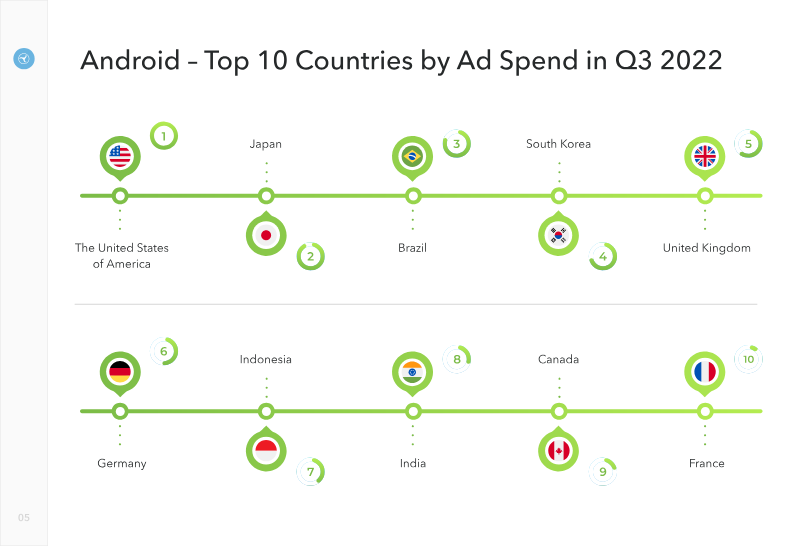
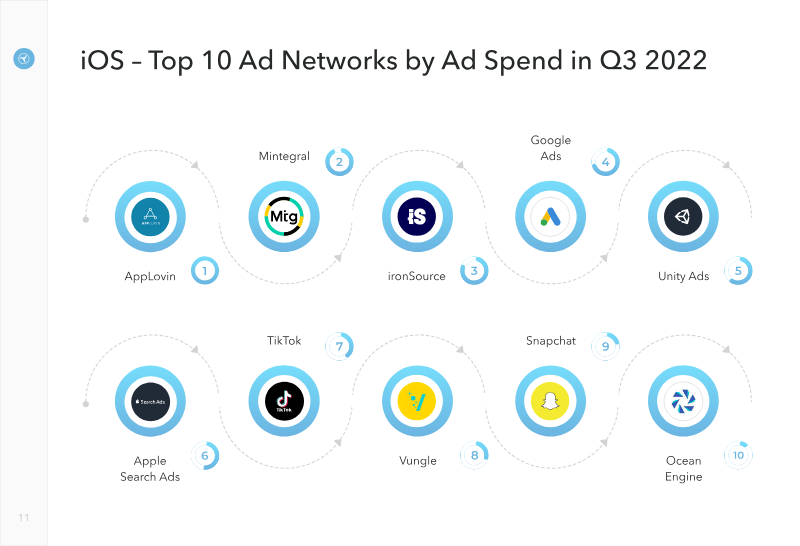

Hyper-Casual Benchmark Report Q3 2022
The Hyper-Casual Benchmark Report for Q3 2022 provides a comprehensive analysis of the mobile gaming landscape, focusing on advertising spend, cost-per-install (CPI) trends, and player retention metrics.
- Hyper-casual revenue remains primarily driven by high-volume user acquisition paired with optimized ad mediation to maximize value during short player lifecycles.
- Market leadership among ad networks is defined by the ability to deliver massive scale at low costs per install while integrating seamlessly with attribution partners.
- Successful publishers are mitigating the impact of privacy-driven attribution changes by utilizing sophisticated data analytics to balance ad spend across diverse networks.

Eric Kress on being misrepresented, pissing off sponsors, and why he can't be canceled
The gaming industry is currently undergoing a significant transition toward broad, social-interactive experiences that prioritize mass-market accessibility over speculative technologies like blockchain, which remain at least a decade away from meaningful scale.
- The gaming industry is shifting toward mass-market, social-interactive experiences, while speculative technologies like blockchain remain at least a decade away from meaningful scale.
- The mobile gaming sector faces a difficult 24-month outlook driven by market maturation and restrictive platform policies, such as those enforced by Apple.
- Lean development teams are currently finding the most success by refining established mechanics rather than pursuing high-risk innovation.

SKAdNetwork Reporting in Tenjin (Dashboard Included)
Apple’s SKAdNetwork serves as a critical privacy-centric attribution framework for mobile user acquisition following recent industry-wide shifts in data tracking.
- Tenjin provides a centralized dashboard to ingest and analyze privacy-centric SKAdNetwork data for iOS 15 attribution.
- The platform enables side-by-side comparison of install data reported directly by ad networks via API versus data reported by Apple to verify data integrity.
- Integrated reporting supports major ad networks including AppLovin, Facebook, Google Ads, and IronSource.
SKAdNetwork 4.0: Everything mobile advertisers need to know
The introduction of SKAdNetwork 4.0 represents a significant evolution in Apple’s privacy-centric mobile attribution framework.
- SKAdNetwork 4.0 replaces single conversion values with a tiered system that provides fine-grained data in the first 48 hours and coarse-grained data (high, medium, or low) for subsequent time windows.
- The update introduces cohorted reporting and support for multiple conversions, designed to improve the measurement of user lifetime value (LTV) while adhering to Apple's privacy standards.
- SKAdNetwork 4.0 expands measurement capabilities by introducing potential support for web-to-app attribution, facilitating cross-platform tracking.

A Deep Dive into Web3 Game Publishing, Growth & UA - The Metacast by Naavik
The landscape of game publishing is undergoing a fundamental transition from centralized Web2 models to decentralized, community-centric frameworks.
- Web3 gaming is shifting from centralized publishing models to decentralized frameworks that prioritize direct asset ownership and shared economic value between developers and players.
- Mass-market adoption strategies now focus on mobile-first, casual gameplay that masks blockchain complexity to remove high-friction entry barriers like wallet onboarding.
- Successful user acquisition in Web3 requires transitioning from traditional marketing to cultivating communities of co-owners who act as brand ambassadors through iterative development.

UA Apocalypse or New Era of Hope? | Jon Lau, Steve Palley, Warren Woodward
The mobile gaming industry is currently navigating a fundamental transition from an era of algorithm-dependent, performance-based growth to a more disciplined, holistic strategy.
- The mobile gaming industry is shifting from algorithm-dependent, performance-based growth to a disciplined model focused on long-term cohort health and strategic profitability.
- The deprecation of IDFA and reduced investor appetite for unprofitable scaling have rendered previous automated UA optimization strategies unsustainable.
- Successful growth now requires integrating UA with product design, community building, and brand identity to ensure the initial creative hook matches the actual in-game experience.