1 free read left. Create a free account for unlimited reading + AI research.
Create free account
A Deep Dive into Web3 Game Publishing, Growth & UA - The Metacast by Naavik
Key insights
6 takeaways- 01Web3 gaming is shifting from centralized publishing models to decentralized frameworks that prioritize direct asset ownership and shared economic value between developers and players.
- 02Long-term viability for Web3 titles depends on prioritizing sticky, high-quality gameplay over DeFi-first mechanics to ensure blockchain elements enhance rather than obstruct the user experience.
- 03Mass-market adoption strategies now focus on mobile-first, casual gameplay that masks blockchain complexity to remove high-friction entry barriers like wallet onboarding.
- 04Successful user acquisition in Web3 requires transitioning from traditional marketing to cultivating communities of co-owners who act as brand ambassadors through iterative development.
- 05The industry is currently hindered by a technical gap in bridging mobile, desktop, and on-chain data, which complicates accurate user behavior attribution.
- 06Major mobile platforms, specifically Apple and Google, continue to enforce cautious policies regarding blockchain integration due to ongoing regulatory and brand reputation concerns.
Ask AI about this video
Transcript
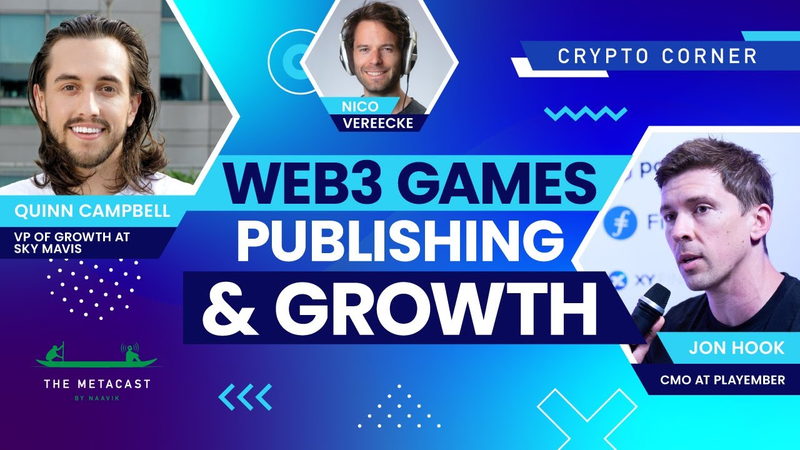
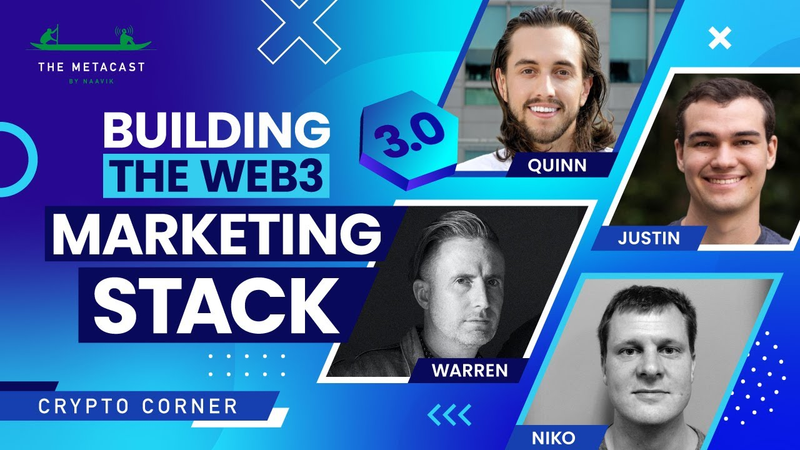
[Music] GM friends and welcome to the metagost cryptocorner brought to you by navic I'm your host Nico Greek and today I'm joined by Quinn Campbell who's the VP of growth at Sky Mavis and John hook who's an active advisor and investor and CMO at play Ember and so today's episode was kind of inspired by my experience talking to teams building ambitious mobile with three games and they all clean they'll claim that we will bring the Masters to web3 gaming um but when I ask them exactly on how they plan on reaching their target players they don't really have a good answer and so the goal of today's episode is to discuss the intricacies of growth and UA and marketing in a web 3 worlds um and so yeah we have two perfect guests for that today but before we kick off our conversation let's get to know
each other a little bit when you want to talk about your trajectory in in games and what you're doing now yeah sure thing thanks Nico excited to be here today so um yeah before my time with Sky Mavis I actually spent uh maybe almost two years in uh mobile games publishing hyper casual specifically right um and I I really kind of enjoyed that role I think what's so fun about hyper casual is most of the devs that you're working with are like 24 year old kids in their mom's basement and it is their absolute dream to ship a game so basically every time that I would launch a game as a publishing manager I was making somebody's dream come true and that was that was the coolest thing right but about like eight or nine months into my time in hyper casual I started taking a closer look at all of our publishing contracts and I realized that on every game that we shipped we as the middleman as the publisher would co-opt like 80 percent of the revenue off of that game and The Game Dev who ideated built and shipped their game was taking home like 20 of their revenue and
I was just immediately disenchanted with really like traditional games publishing right it's not a knock on where I was it's really just kind of a knock on the system that that has sprung up uh and so I as a middleman knew that it had to change um I knew there had to be something better out there and so I started digging it was right around that time I came across nft gaming uh right around the time I came across actually infinity and really Mavis Hub which is kind of what we distribute through and this idea of direct-to-community games distribution just clicked with me and I knew I had to be part of it fantastic Let's uh remember the the sky Mavis Hub because of or the Mavis Hub I'm interested to learn more uh but before that John you want to tell us about about you yeah sure it's great to have another uh hyper casual uh groupie on uh on the podcast Queen uh my background I started off uh Ad Agency side making ads for like entertainment entertainment Brands sports brands retail Brands and it was in the early days of mobile where they were just websites and those
weird crazy frog ringtones and um a really good right now really really good friend of mine and I work at Mobile World Congress you know had too much Tapas and sangria and thought well how hard could it be to start your own mobile ad Network so we did uh like at my mom's kitchen table um so you built that from scratch um sold that to uh firmware listed on the the NASDAQ um and that really just just threw me into the whole sort of mobile ecosystem um then spent some time running out colony in Europe so uh you know very big video uh gaming video SDK they've got by digital turbine um then had a pleasure of working alongside the founders of Omar games in Paris for a couple of years building out you know Uma games one of the top hyper casual Publishers so I don't disagree with anything Quinn said it's just it's just the business model of of you know heavily you know ad-based games distribution um and then spent a couple of great years at a boom bit I mean on lockdown building out there uh their publishing
Division and that's really where I met the the founder of the project I'm I'm now working on a uh play Ember we can get into that in a bit and then outside of that like you said Nico just a huge fan of just everyone in gaming you know I think there's a web 3 trait of everyone helping each other is a web 2 Gaming trait and so I've got a really fun portfolio of investments in you know gaming Tech game studios uh gaming ad Tech um and just yeah just like web3 everyone hangs out in in Discord and spaces but you know the same in web 2 have always just really valued the network and and friendships and building there as well I'm always surprised when I'm at gaming events um you know I used to go to more financial with three events and I often find it difficult to connect to people and now I go to these gaming events and if I don't know what to say I'm like What's Free what's your favorite game and then you know we can jam on that so it's really easy to connect with people um yeah so hopefully agree this is an amazing space
um we talked a bit about or you both of you touched upon the business model of hyper casual publishing um could you like go a bit deeper on that I'd like to understand um how you see that change in a web 3 World um and obviously as a part of that question I'd like to understand your thoughts on you know whether web3 makes sense for the more hyper casual types of games um when you wanna you wanna start let me kick that off yeah it's so those are almost two separate questions right it's kind of one is what does publishing look like uh in web three and then two is kind it's almost like larger is nft gaming a fit for every genre or not right uh so the publishing side gets really interesting because I I think that there are so many projects right now that um are using the like they want to be the web 3 games distributor right um and you know selling block space right now is such a powerful thing and so there are a lot of really awesome l1s and l2s who have all this block space to
sell they're kind of optimized for gaming and they'll certainly be aware here sorry can you elaborate on selling bug space Yeah so basically having your own network having a blockchain uh and then kind of whitelisting developers to come build on your on your blockchain right I think selling block space is one of the like it is the oil of the next decade it's it's probably the coolest asset to be selling right now and so anybody who has block space to sell is in a really wonderful position um so ultimately right I I think that's kind of the first layer of what it means to like distribute the other part is having a community because you know it's almost launch Patty in an effect because you do have to distribute distribute directly to your community uh but it opens up all these different avenues for how value is actually captured you know for instance well you can distribute directly to a community there's now asset sales there's token sales uh in these third-party games that can be that can be uh that can be a part of the ecosystem and so maybe that third party Dev is actually able to capture a lot of the token sales or secondary market
sales off of the Assets in their game so there's a different kind of approach to it as opposed to just like Hey we're going to run all the UA on your game and handle distribution and then take some large percent um as for the second question around hyper casual I I actually have kind of a theory and I don't know if now is the right time to dive into it or if I should pass it over to John and then take it back afterwards Nico I'll let you decide oh I'll write it down hyper casual with three and then we can we can touch them later because before um because I'd love to have John's thoughts as well but first I'd like to push back bits on what you said where you know ask you about what do you mean with bug space and so you think or like you say that's it's a big Advantage if games Publishers have actually like a blockchain any infrastructure for that me as a you know many consider me a crypto bro right I'm like yo decentralization is what we need right right and so um for me that is kind of counterintuitive right I I want in an ideal world to have all of the ecosystems open and um you know if
people come to me and ask me where should I build um I think in in the top three suggestions of ecosystems there's always the the each you know ecosystem where you know everything's open and you can bring your assets from one end right the the ZK roll up all the way to whatever like side chain there is um what are like why why are you so bullish on on companies and Publishers having their own blog space control yeah it's it's a great pushback right and it's basically this spectrum because absolutely having full decentralization and openness not needing to be whitelisted in order to access that block space which is what you get on eth right uh that's powerful but you also run these risks of like obviously gas gets expensive but even even beyond that right like what was it was it polygon a while back that was crashed by this like sunflower game so you end up right so you run this risk of where there could be block space that's kind of used inefficiently um and so if you go to a kind of a
closed more closed chain where you do have to be whitelisted to build you're not only kind of guaranteed a certain amount of efficient block space but I think a lot of the packaging that we're seeing with like BD around hey come build on our chain is also this like white glove service like hey you know this is a battle tested chain a battle tested team we can help you launch your game uh and we're going to build specific infrastructure to support your needs so it is a spectrum and there's not a perfect answer to it yes I think that's that's fair um that's something I feel like we could probably do a whole episode about um because there's a lot of interesting things you just just touched upon in your answer uh before that I'd love to have John's thoughts maybe not on you know hyper casual and web3 um but more on you know the initial question and the key differences in publishing and business models there and like how what three changes all that yeah I think when summarize at the start the traditional hyper casual business model um is exactly that and I've you know talk about this a lot is that you know developers love making games but they
are entering into each individual Publisher's business model and they they Define those levers of um you know LTV and CPI that are based on their goals right so if you're pre-exit it's not really about um it's not necessarily about ebitdar it's about Revenue it's about chart position and reinvesting any margin you make back into growth so that you can you know put all that nice marketing out there about you know we've got this many downloads you know worldwide uh hits Etc so I think I think the publishing model in in hyper casual um is is pretty comfortable from an investment perspective when I versus web 3 because you're dealing in things that you know to be true right it's a very specific calculations early on where you don't need to build a community you can make an early decision based on some hard and fast metrics that you you know have got three four five years worth of data to decide if that's going to get you to your goals whether that's a 50 mil game 100 Mil Revenue game um and of course unlike web 3 you have
centralized distribution right you have uh you know two two major App Stores of course depending on the countries and you know very helpful um uh third-party app stores as well but I think that that is that is one of the uh you know you could say it's a disadvantage but I think in that classic publishing model distribution is is is very set of course with some of the sort of recent uh changes from Apple um you know some of that distribution has become a little bit more problematic in terms of the monetization of that um you know starting to hit people's uh you know affecting ecpms and therefore for bottom line but I I I think you know even even now we can get into that I I kind of see I I believe the next generation of of publishing is going to come from you know some of these companies I see raising now the problem with the traditional web 2 Publishers is they have that web2 mindset and they're trying to basically reverse engineer web 3 publishing into what they know to be true in in terms of web 2 that I think
is um you know is is going to be a bit of a bit of a challenge uh both in terms of metrics but also I think in terms of the development capacity of you know certain Studios depending on the game genre you make um I think it's a huge step up technically um so that's sort of my thoughts on um you know the the the classic and still standing hyper casual distribution model ah I uh I I absolutely love that point you just made John about almost taking this like Legacy mindset and trying to kind of apply it here in in web3 I I don't know if you guys are familiar with the term like skeuomorphic right or skeemorphism right uh but it's this idea of when a new tech comes along and we don't we haven't quite figured it out yet we just kind of copy paste our existing mental models and like the greatest example is newspaper on the internet uh when it first came out it was they were literally just rebuilding the front page of the New York Times on the internet now obviously like it looks very different because we realize there's a more efficient kind of web native way to do it and I think we're in
this very skeuomorphic phase specifically around games publishing right now I don't think that there is actually an exact answer out yet uh and I think that this winning model will be quite different than anything that we're used to but it's just kind of Beyond The Event Horizon right now so we can't quite see it yet yeah I think for me that was really interesting obviously listing you've made that jump sort of from hyper casual now to you know one of the the leaders and innovators in web3 and I love how your mind is already on needing your own uh you know you almost are your own blockchain um versus yeah when I look at the the current approach of all these sort of other web twos it's just natural in that what what cruel run sort of mentality that you know you all sort of basically find your your home with that initial N1 and just build around that whilst you figure out and learn um you know because for me that's actually something I've been thinking about a lot when I when I think about hyper casual specifically and not the distribution model but the the the the the content
and the audience for me that's the really interesting piece here when we're talking about the l1s because for me the sort of last bull market driver in you know 2021 was the L1 story right and now it's this if we want 500 million joining a billion joining well it's not just going to be based on you know ether Soul or ormatic they're just infrastructure right you need to build that application layer to reach end customers and for me that's what I think is the you know this interesting opportunity the hyper casual is you you have this you know very traditional but very large Billion Dollar application layer within the app stores so I think that's definitely something that can be innovated around is how how you can harness that you know you need to figure out some UI ux challenges but basically something people love spending time with without adding like significant barriers and how you can unlock that to potentially Drive the the next wave now whether that is
you know piggybacking on the existing l1's whether it's going to be some of these L2 Challengers or whether you know like you're thinking Quinn it's going to be some of these Publishers behind the scenes or you know actually web3 innovators building out their own infrastructure to dial into that I think it's super exciting to see how this plays out it really is so I came into this this discussion thinking that in five years we would have web 2 publishing for you know blockchain or number three related games and we're pre-publishing for games like x infinity that ecosystem and games that that playmer builds it kind of sounds like web3 um in your minds and maybe I'm wrong right but it kind of sounds like you're saying that web3 actually revolutionizes publishing as a as a business model and as an as an industry or as a part of the industry is that is that fair and correct I I totally think so uh I I think it just it just changes the economics of the system in such a strong way uh and when you when you no longer need this
like pure middleman hey I'm going to run all of your UA manage your monetization and take X percent cut it unlocks a lot of the the economics of the game and a large portion of that table to go back to the developer a large portion of that's able to go to the players themselves who are holding who are co-owners of your games Network and a large portion of that is captured by the network itself as well maybe that's the blockchain that it's running on or other people who are holding assets and so I think that aspect is so revolutionary that we will see it seep into everything yeah I think in in Phase One we're already seeing that classic sort of web 2 publishing model which is the the web 2 Publishers striking up Partnerships or even investing in the L1 uh and then maybe some broad ecosystem Partnerships with like eventually a Stardust and uh launching a a fund or grant that effectively is the sort of web to you know pay pay to develop model um and then trying to make blockchain games in the same way that they know and
is very familiar with them in terms of web 2 games with some sort of you know testing model to de-risk their um their investment so that's what I'm seeing a lot in the classic web 2 space but then in web 3 you've got some some other other companies and one you and I have discussed Nico but like the joyride team when I see something like that that that to me is what you know whether it's exactly that that's the route I think web3 publishing is going to go in right I think you know building a a platform an SDK that within it has got you know live Ops distribution analytics nfts marketplaces you know for me if I think about you know like the the the the the tilting points the scope please the omers the the lion Studios that if if I had to think about like what would V1 of web3 publishing look like I definitely think you know that that's that's what feels very smart to me I'm excited to see how that um that evolves yeah I think there's another interesting
piece to this too right because I think everything we've been discussing so far is very much around like this polished game Studio side um and that's obviously really important probably where the biggest winners will be but there's a there's a flip side to this which is this very Community Driven open ecosystem ugc side um and the example for for me that's coming to mind is this axi Builders program um that that we shipped maybe six months ago um and it's where we we basically opened up the IP um and have provided whitelisted access to build on Ronin Network too I think it's 12 different Community Studios um and you know they range from groups who have never shipped a game before to one of them is actually a really badass hyper casual Studio that shipped uh I won't say what but they shipped I think they did over 100 million downloads in one of their games with a major publisher um and so all of them are basically invited in and can use our full IP to build any game that they want they're all pretty light um and and have some type of Economics built into it and we're finding ways to support them in the building process but
that is like the other side of it where are you know opening up and sharing our community and sharing our IP and you wouldn't really see that necessarily in the traditional publishing quit are those um are they are they mobile games or they're like webgl type builds uh all of them are I believe mobile first but can be played on desktop as well oh sweet yeah so we're gonna have to get all of them into the app stores at some point so that for me that's really interesting so without turning into the host so what in terms of these web 3 distribution model obviously you've got like you know like Gabby Leading The Way with like ygg so how how do you see see that with what you're doing because if I listen to you it's almost like you are now building your own web 3 sort of you know in the web 3 mindset web3 publishing model and if you're doing that directly now tapping into the billions of players in the App Store in in that model where where do they where do you see the guilds fitting in in terms of in that sort of mobile distribution model
the guilds have like the guild ecosystem has really changed a lot uh in a super powerful way right uh when we had this massive boom uh it's super interesting I don't know if a lot of people know this but at one point about 60 of our Dau were Scholars um so think about how powerful that is because that means for sixty percent of our players actually didn't actually do any uh major pushes onboarding buying these users educating them right and retaining them it was actually kind of the guilds who are doing it that's the beauty obviously being a platform as guilds grow we grow and vice versa uh now obviously things have changed um so and the guilds who are still really really passionate and really driving are the ones who have shifted away from just being this like uh play to earn kind of extractive model to actually like how can we build within this ecosystem and so I think the winning guilds going forward like we have some guilds who are doing actually like SAS work uh we have guilds who are now focused on like Esports and content creation we have guilds now who are actually wanting to shift more into this like game creation work and like work alongside these
Builders program games and be almost launch pads to some extent uh like mini intra Community launch pads and I think that's so important because as you grow it gets harder to scale that nice niche Community feel and guilds kind of support that you mentioned earlier Quinn that for you the sky no sorry the Mavis Hub I keep saying Sky maybe so anyway the Mavis Hub is is a key Innovation um you know compared to what you were doing before could you elaborate a bit on that what are the the most important differences that made that light switch on in your head so Mavis have it's actually great that we're talking about this because there are some updates kind of coming through this soon but it's it's like it really is the kind of most centralized point for a lot of the touch points within our ecosystem uh and it's what we load all all of our games through and it's kind of obviously accessible to all um is it will soon have all of these Builders program games in it as well uh it will soon have any kind of ronin third party games on there also but obviously because it's our own platform
right like it's it's that we're not kind of blocked by Apple or Google saying no or any other kind of web3 hurdles that might come up in the process and so and by the way if if you guys want to run this conversation and keep chatting please do please go ahead because you know you know what the good questions are I'm just here you know trying to figure out what exactly you guys are talking about so um in any case I'd like to shift the conversation a bit more towards actually getting users on your platform um Quinn could you tell us a bit more about how you're approaching that from the sky movies side yeah yeah so the way that the way that I think about growth really at axi is like there's kind of four or four parts to it right uh it's our community it's our content creators uh it's it's this like ecosystem projects or really guilds right and then it's user acquisition um and so every day the conversation is halfway further unlock each of those channels um so like on the community side we recently launched this lunacy and codes program which is this really badass referral program where like all the ref codes and ref rewards are actually coded
into our Marketplace smart contract so that uh reward payouts occur immediately as soon as Marketplace transactions occur um and you know we launched like an axi creators program as well uh but the UA side is getting really interesting just because it's completely unsolved in web3 and it's it's been it's been a headache for us but like a really fun headache because it's such a puzzle uh maybe I'll pause before I dive too deep into the UA side and maybe invite John to add in and then I can I can add more afterwards yeah I think um I I think there's two two ways to look at it and I think part of the answer is freeing yourself from all these labels like and definitions that write a web 3 game to date traditionally has been you know uh like a webgl type build and it's not mobile and anything web 2 is mobile I think that the starting point here is just to remove that and it's about where can we bring blockchain in to make gaming more fun and and one of our investors made this great point he's like look if you can bring me a game that I would choose to play over and above an existing mobile game that that would really excite me and
then let's start talking about um nfts and and tokens so I think this is this is something we've been obsessing over which is um okay you've got these billions of players in the Mobile store already and we're talking a lot about hyper casual so you know we're not talking about AAA Gamers here we're not talking about RPG Gamers and we're talking about people that aren't going to play a game if you put a giant paywall in front of it EG an nft that costs a hundred dollars right you know in hyper casual that would just tank your business immediately um so I think that that for me is is is is is kind of really exciting is and and what a lot of these l1s are trying to figure out and I love what axi are doing listening to it I I saw it at the um before insane Japanese Ambassador at the uh the conference in Okinawa was talking about the builders program but now you're talking about it I think this is super cool about the way that you're approaching it for this Mass casual audience I think that's really cool but I I think there is a huge opportunity
here because a lot of the really top um uh eth games you know like like illusion like uh like the Laguna team for example I think a lot of what's coming is these more you know casual skill based PVP games so I think for hyper casual there's definitely an opportunity for someone to figure out okay there's this billion dollar audience here um how can we just without them even knowing bring them an onboard them into uh web3 right and that and that's essentially what we've been sort of quietly using our knowledge and uh and building out but then the challenge there is how how do you basically um obviously for the players if you think about that classic hyper casual model there's no community in it right you can make the The Experience more easier um and more fun in terms of interoperability but this sort of community element you know when you know this for hyper casual games you just ship a game and buy the usual comment in the App Store about there's too many ads you don't have this Discord Channel about like hey guys like when game like when's update when's the next skin coming like every every day right you
just and the multiplayer is fake multiplayer anyways oh yeah the the the AI um so yeah I I definitely think that's a that's a there's a huge challenge but I think the investor challenge when it comes to hyper casual is typically they you know in web 2 yeah they they can't compete with um you know like look at triple dots recent valuation they don't have the ltvs of those kind of players but I think this is where web3 for me is really interesting is this is an about gaming right I think it's how can you unlock this hyper casual audience to power this whole community-led brand-led pfp LED loyalty-led um uh like next wave of web3 businesses because that for me is a perfect fit right you look at um like 50 of hyper casual ads and they are not for hyper casual games right they are for you know other um like Brands and commerce and and products so I I think I'm really excited to see you know that evolution of uh of
hyper casual games in into web3 well John what what what are some of the hardest parts some of the biggest challenges as you think about bringing bringing normies right into a web 3 game so I I think so one of the biggest challenges is just the whole crypto piece right yeah um and that's the thing all of this right now is a thesis like I'll be able to give you if you ask me in a month I'll actually have some answers for you but I think this is what we don't know right um I think what we do know and have to assume is that you know some of the current uh onboarding in terms of like um having to you know have two different tokens Bridge East mainnet right that's just a huge step too far and I think there's just a lot of negativity around if people have heard of crypto it's not a positive experience for them and I think you made the point earlier I think it's this assumption that you know player and fits into this assumption right you and I have spent a lot of time with these players well there's some pretty proven web 2 business models that actually tell us what they are happy to do in in game in terms of
um uh you know like reward like misplay for example like rewards based gaming so I I think the major barriers that need to be removed is is this nft pricing issue I think making it very very easy to sign up and become a web 3 player without even knowing it and there's a whole other topic of conversation around the wallet onboarding and security issues related to that to try and make that as simple as possible um given obviously the recent Salon unused but I think that's definitely a key part of it and I think the other the other challenge is then certainly with web3 is making sure the sort of meta game that sits on top of top of that the sort of motivations are really simple but compelling to drive the user behavior that ultimately um the the studio or the the people accruing value behind it so in web through the community is going to sustain it right because if that if that motivation is not enough then why go and
leave um the games they love playing every day for this other game that kind of looks the same but there's no real extra value for me playing it in terms of me personally as a player um and there's this you know huge hundred dollar IEP I've got to make to play the game so I think that's a sort of summary of how I see what some of the current blockers are if you just try and smash web 3 on top of hyper casual yeah Nico I think you and I even spoke about some of this before right like it you can no longer just kind of do like uh D5 protocol with the game wrapper on it it has to you got to go back to the roots of having a fun and sticky core gameplay first and foremost and then you know token mechanics and an open economy are just kind of some really nice sprinkles on top um but John awesome points I actually kind of have a couple thoughts here uh in response I think we're at a really tough time right now where all of us in the space kind of see the inevitability of this really awesome future that's
being powered by by blockchain right um but you know the most people are scared of it and and like it makes me think of like when email first rolled around uh you know I think like your average mom who today plays Candy Crush probably back then was like oh I don't want to figure it out like that's just you know let me get my son to help me and then it reached this critical mass where like everybody had to figure it out and you got into it and it turned out to not really be that that scary you know I I think we're kind of just chasing that moment right now and it'll definitely come probably sooner than most of us really are ready for but in the meantime right or even probably after having this free to play uh on-ramp I think into most nft games especially in Mobile especially kind of in hyper casual I think it's super critical and that's a theory we are testing right now with actually Infinity origin which is the latest kind of you know revamp of axi that we're pushing here um so far we're seeing a lot of power in that actually uh what's beautiful is it lets us capture users you know in a way that they're already super comfortable right go to the App Store click download everybody can do that once we have them
already in my head this is this is actually what we're going to be testing really really powerful here probably kick off of Q4 does it then just turn into a CRM problem right at once we have them already can we optimize uh through every touch Point possible basically a curriculum to help them convert into being blockchain Gamers into being nft Gamers nft owners at that point right because ultimately we're going to capture them as unregistered free players then we're spitting up this conversion rate optimization team that's going to be focused on okay free to registered and then registered to blockchain uh and I think it's going to be a super grindy to figure it out like just old school a b testing but I think that there's an answer there and I think I think the other thing Quinn and again I I love how you think is I think a couple of things one you've got the perfect IP for it for these Mass casual games right it's something that wouldn't look out of place in the hyper casual game but I'd love to know what you're thinking then around because the other piece I see is
then for the just like web 2 games the different profiles of players you've got some will love playing the original sort of like gamified staking version but as you grow your portfolio how you're starting to think about creating different content and different games to then start moving people around and then almost a meta game around that as the motivation to start interacting with like different games in your portfolio so I guess my bigger question is is ultimately if we go forward three years do you see almost like this giant like axi arcade right where you've got this portfolio of like you know almost at your own app store right you've got I know 200 games in there like across hyper casual I will merge like PVP skill based that you're powering how how do you see it yeah that's such a wild question right and the reason why is because we actually sat down and and did like a really deep analysis on this uh a while ago now maybe like nine months ago and we identified like 13 personas in our ecosystem why because maybe six of them
actually play the game but we have like hardcore community members who are nothing but like uh rare asset holders or nothing but like participating in our Dow governance discussions every day they never touch the game are they any less a Community member than someone who only games no maybe they're even more involved in a way right and so that's where web3 gets super weird because it's not just Gamers who are Persona community members you know all of a sudden so figuring out how to keep all of them involved is is a lot to juggle uh and and it goes beyond like the traditional approaches but when it comes to just the gaming personas themselves um I think the answer is yes like we definitely have this vision of of having a much greater ecosystem uh a large portion of which is also actually IP you know like for instance the builders program games we discussed and a large portion of which is also like entirely third-party IP um but finding ways that you know as we select some of these games that we build alongside it's very important to us to make sure that it's a match for our current kind of player archetypes we're
actually in the process of onboarding this like really badass uh kind of psychological analysis behavioral analysis tool called soulston uh it used to be called 12 traits now it's called soulston Uh and they're going to basically help us identify you know what gamer what games our current players are most into what kind of genres and types to help us really pick the best it for once going forward that's super cool I I I I love that and it's um I think it also feeds into another thought I've been having in this challenge where I see all these like pfp Collections and it and it's like okay this particularly on eth where you kind of feel that people there are so passionate about the identity and the brand and the merchandise and it's just like it almost feels a bit lazy they're like oh we should make a game and it's something I'm waiting to see as these game drawers what is the actual fit between you know and I see them making like hardcore games and I look at their pfps and I'm like I'm pretty sure I mean I might be wrong I mean I don't know him personally but like you know Justin Bieber does he want to sit and play a triple A game right
um and I'm also wondering like it's it's not a huge audience here um so I'm also interested to see how that that evolves because I feel some of these pfps should should stick to being like a web 3 brand right and explore that broader entertainment space and I think leave you know leave gaming to you know companies like like yourselves or the the established Studios I'm really interested to see how that pans out but you know the way you're thinking with all these it goes back to my agency days you you've got these like 13 different audience personas and you know you're basically building you know content and experiences for them like you said whether that is gaming whether it's entertainment you know whether it's just merchandise I think it's really cool John it's a really cool Point around uh the uh like 10K pfp projects right uh and I think there's definitely this kind of fashion to to build a game and I think a lot of that may have even been more well timed with the X2 earn um kind of wave of things and so it just became a really another another powerful
mechanism for rewarding your current token holders right like staking okay you got staking now go build a game and you know distribute more tokens I'm actually curious have we seen any pfp projects launch a major kind of hit not hit but too early for that but even really successfully launch a big game yet I mean it depends I mean it depends how Loosely you define like pfp [Music] um you know like like for me like if I look at crypto unicorns I could know it's a game but like also like there's some people that were just buying that because they love unicorns right um and I discovered this phrase these like crypto Bros um sorry these unicorn Bros that you that love My Little Pony that we're all buying crypto unicorns right they weren't buying it because it's a game um but you've got like a legit you know like Aaron and Laguna team behind that project and they're now spinning off some more games I know that's a really
tenuous link because ultimately it is a game but yeah but you're yeah but your point is yeah if you look at the classic pfps from my knowledge I don't know Nico if you know any but I'm struggling to think of one and I don't I don't want to bash any right so I want to be clear was it was more of a question and and not a uh not a slanted opinion I think everyone's figuring out right there like one of exactly one of the Solana projects that um you know I've been in for a while just as a holder um like Soul Gods um uh they've now made this huge pivot like the CEOs moved to Lisbon and they're now building out this big entertainment uh company but as part of it they are moving into this uh like gaming experience and he's been really open on Discord and Community about some of the challenges of making that transition from being a really early like Solana pfp collection to trying to build a gaming company right and and you know I love that honestly right because it's it's just not easy right we've all been there on the the gaming side and it you know to build up you know building out live Ops is something that is not easy
easy to do but yeah that's what I love about this space is that everyone is just is you know it's that startup mentality you've got a couple of thesis like run lots of little experiments and see which one catches fire and I think that's what's exciting about web3 is everyone is thinking like that and moving so fast that these it's you know you you have we've all said it before like a week a week in web 3 is like what I don't know three months in web two it's it's crazy it really is it really is I I've been speaking with the CRM platform about kind of uh signing an agreement and their original pitch was a four-year deal and I just in in you know in nft land that's that's an eternity and so uh I think helping people understand one thing Quinn the CRM thing again I think is really interesting about where I think web3 from a marketing and distribution Point can solve some big web 2 problems is this question about like audience profiles that ATT you know made a lot harder right in terms of you know people having to opt in and add targeting whereas in web 3 you know when
you have people signing up and if you're building this whole CRM engine behind it collecting all this data from you know I think the wallet is going to be that is going to definitely be the next Battleground but I see that as a really interesting piece around web3 marketing and distribution moving forward um the uh again you you can actually build up some really rich like compliant audience profiles to deliver amazing not necessarily advertising but amazing experiences for your players and consumers that increasingly is becoming a a challenge in in web 2 and people are almost trying to gamify uh and and hack the you know the App Store and Google rules to just get around these uh these permissions so I I for me I also think that's a really interesting area when we talk about UA and growth in web3 that I can I can see some people building yeah yeah and so I think it's super interesting point that needs to be solved right and and there's people working on it like I've just found out in the last couple weeks that's what's incredibly exciting actually just had
coffee yesterday uh was someone from a major uh web 2 hyper casual publisher and uh they're now working on um basically the ability to create like really powerful personas uh using wallet data uh and then use those personas to Target kind of the not the uninitiated like web 2 traditional Gamers uh and acquire them into web 3 that way by like you know basically finding what's going to be the best fit uh super interesting and I think I actually just got us into a beta for that which will I'm pumped to test that out but the other piece of this as well is like even attribution platforms don't really work that well in web3 uh you know we we onboarded one and uh realized it was only going to do about 60 of what we needed it to do and so actually had to onboard a second attribution platform to fill that a remaining 40 uh and now have two attribution platforms kind of working together in kind of a hacky way uh but it's gonna work you know because we have to track people across mobile across
desktop across our web-based Marketplace we have to pull in blockchain data real-time transaction data that's not even denominated in like a currency that makes sense to an attribution platform and so like it's super messy I love this by the way um you know I'm supposed to be a facilitator of discussion and if I don't have to do any anything I'm just sitting here and trying to figure out what you guys are talking about and absorbing um the knowledge and insights John I'd like to um get your learnings so you've been operating within about three space for a bit I think people that listen to this might be you know CMOS at a webtoofer what are some of the skills that you've needed to learn in order to you know be successful in in this space so I think first of all Community um it's just this word that is is bounded around but if you are even considering it get involved in some like web3 pfp collections games Collections and hang out in the community and understand what community really means right because
it's not people just sell your community build a community but what does that actually mean and these some of these discords are just wild right um but particularly the ones that you really want to get enchanted by and understand how they do it are the ones where there's no mention about floor price right uh it's just people that are just there for the community for the game just constantly giving sort of feedback and it's just quite overwhelming right I I'm in one of them on Solana and it's it's just amazing I don't I feel like I know these people like it's um it's like the remnants it's like a just really really like sort of Hardcore Idol looting game but the community there it just it like insane um so I definitely think this this community piece is is something you shouldn't underestimate and just assume because you've got a social media team in web too oh yeah they can they can do this in web3 it's fine but everything is different like you started the podcast and you're going like GM right great example like no one talks like that in
the web too right so I I think I think definitely that that is one of the key things the second thing that we've covered is um the speed at which you have to move you do not have that luxury in web 3 to have a team meeting another team meeting a smaller team meeting like meeting with your you just don't you you have to figure this stuff out relatively quickly um I think the third thing linked to that point that I you know I guess you get used to in in web 2 um but in web 3 you have to be you're going to fail a lot more and you just need to get super comfortable with that because there are really no rules right whereas in web 2 Gaming the three of us be like as we've discussed yeah that's kind of how you do it that's the business model that works here's the reference point to the metrics in web3 no one knows right but there's the opportunity right there are some people that kind of know and are testing loads of stuff and that's the mindset that you've got to have um and I think that's the challenge I've seen from some people is they come into web 3 with this I want to say ego from web2 like oh I've
done this stuff and whatever that's like that's that's amazing that's great and and the incredible achievement but I think web3 you just have to be humble it doesn't matter who you are what your background is just learn like treat people with respect and your your curve of learning is going to be amazing if that is your mindset but I think unfortunately if if you don't Embrace sort of web 3 um and yeah you bring any sense of ego into it then it's going to be a bit bumpy yeah that failure part's so key right like failure is not only part of the development process but public failure is is part of the development process because everything we do we have to we have to build a moment right yeah and and there's a super interesting point around why Community is so powerful in in web3 um because the truth is that community in web three each Community member is 10x more passionate and that's on both sides right that's on the upside and the downside of it um why it's it's because they're they're
really not just community members and this is something that all of us kind of intuitively get even though we don't say but the truth is they they're your co-owners they're the co-owners of your network right and the way I always like to think about it is like in web 2 when you ship a new project your first goal is really to like capture your first one million paying users in web 3 your first goal is to onboard your first 10 000 co-owners of your network and that's why we see like these 10K pfp projects and the ones that that kind of kind of hit that that that that point are able to roll forwards and the ones that don't quite capture that that mass kind of don't right but it turns into like this very powerful hand-holding process of onboarding those first 10 000 co-owners but once they're on man like they're your evangelists and they turn into your whales and they're the ones who are grinding on the Discord every day and they're the ones who feel like your family even though you've never never met him in in physical then just like you've done Quinn right then they actually become your ambassadors right like I haven't seen some of them on stage and tell their story they just started out as players right and just
progressed and I think that's the amazing thing about building teams in web 3 is that just acknowledging some of your key Highs are going to come from that early Community right and and that's great and the reason why we hire them is they've already got that Network and they just understand web3 um so he's a great Point yeah and again I think you're you know something I've been I've been studying and looking at axi to really understand this in web 3 because your earlier Point man that the passion some of these videos for like your big conference coming up in Barcelona are just insane it's just people people Love Actually it's just nuts appreciate that yeah it's really cool but again I think that's just one of the key learnings like I think you you need to study like all of the big games and I know there is this barrier but you need to play them join these communities and once you start figuring this stuff out it's just okay what what is my version of that um you mustn't forget the importance of um of brand that again you don't have to think of in in in web 2 you think about
your brand in a B2B sense if we're talking about hyper casual publishing right your brand is important to investors and game studios but you don't have to worry about consumers whereas in web 3 as a games company your brand is super important right not just obviously the game itself but your brand and the like you know like actually just the power and the passion behind that that's what people are looking for and they you know you can smell it and taste it in the in the Discord and that's not something you can just whip up or you know just just release a bot Army on right no and what's so unique about it is like it's not curated uh the brand is so organic and really the community is kind of what actually creates and molds and pushes the brand forward and gives its its own its own soul in the first place um I think I I owe you guys a name uh Antonio Garcia Martinez is uh is the guy I'm speaking with who's building a web 3 attribution platform uh Antonio GM on Twitter um I uh I won't plug him too hard as I haven't actually had a have had a talk with them yet but that's coming next
week also I have kind of an interesting example around uh around community and building in public and how you have to involve them right um so you know we recently shipped this actually Creator program uh maybe maybe two months ago now and it's actually the second iteration of it the first iteration was shipped back in February I believe and was killed uh 24 hours later and uh what happened was we like we so you know we we needed to build something some better structure around our creators retain them and help them participate in the value that they were bringing uh and so jiho and I actually went and like did a whole bunch of really badass web 2 creative program benchmarking and we spoke to people at supercell uh we even spoke to fiz uh he was still at YouTube gaming at the time right um and we spoke to Epic about how they structure theirs and we built like honestly it was a really elegant Creator program uh and had ways one thing that they kept telling us was like you gotta pay your creators like it doesn't sound great but ultimately your top creators
you got to pay money and other ones you have to like give them away to see a path to making money and what they do and so I was like okay how do we figure that out and and we ultimately decided to kind of add one percent to our Marketplace fee at the time to to kind of fund this referral code program that only creators could access and we built all this like quietly and then one day just wrote a sub stack and shipped it and I'll never forget like 30 minutes later there was this Twitter space spun up uh with like 78 of our top creators and they were Furious they were Furious uh and I had to get in there right and it like for an hour and a half I basically just kind of let them vent because they had a lot of emotions but what I learned that day was two things like one nobody likes to be taxed and that makes a lot of sense but two nobody likes to be surprised and it was the fact that we built all of this for our creators without ever because our creators are also some of our largest assets largest asset owners we built all this for them without even ever Consulting them about it and as I look back on that I'm like how could we be so stupid but I was taking this very web to approach right if you're building
something for your consumers like maybe you'll do a little bit of a survey to see how like you know what their interests are but you're not actually going to like invite them into the development process and this was just this powerful learning for me that like oh [ __ ] these guys are so passionate and they deserve to be behind the curtain in everything that we do so we went back to the drawing board we did like 160 hours of creator one-on-ones with all of like the biggest creators in our ecosystem ended up learning we had to like even redefine what it means to be a Creator because in web3 like you know uh somebody creating Community tooling a Dev creating Community tools as a content creator and like that's not in web too and ended up shipping it alongside the community and you know I think right now we have a CRM with over 400 web 3 content creators in it uh and I'm pretty confident that's got to be the single largest web3 content creator CRM in existence so it would building alongside the community was the biggest learning coming from that that's amazing the thing I'm taking from this is like everyone actually always gets wheeled out as like the Bastion of web 3 games the thing I'm taking for this is we we need to get you on stage
at the next wave about building like like web three this marketing machine I think that's that's the story that is not not being told at these events right it's only it's it's how you've got there that's what I find fascinating um so yeah I'm hope I'm hoping we'll see you at more of these conferences because this is I think this is just such a great conversation to be having because everyone is focusing on the outcomes of you know idos and nft sales and a lot of the noise around the battle of the L1 this the you know some of the things that are going to be figured out here in terms of CRM attribution you know we've not even touched on like the opportunities in terms of advertising like Innovation when it comes to ad formats like I know I know you hate them but there's just some super cool stuff that's going to be done there um you know maybe cry inside a little bit I love the idea but when Coca-Cola did that launch on polygon and everyone was shouting about it I think again the intention was amazing but I'm like oh you could have you could have done something really really cool there if you if you wanted to
um but yeah it is is new a new relative monetization is that something that you guys have started to think for us it's excuse me for us it's in our roadmap but we haven't actually been able to put any thought towards yeah I mean that's kind of my background is like agency ad Tech side and that's what something I've been obsessing over which is you know in hyper casual there's only has so many rewarding videos you can put in a game right uh and I think hyper casual the matter of hyper casually is getting better right I think Rolex in particular for me with the Zinger acquisition I think the the layer of complexity they're adding and bringing you know three button upgrades into hyper casual is kind of cool that gives you more flexibility to do that but yeah I definitely think blockchain technology you know is it blank piece of paper in you know you should be trying loads of loads and loads of stuff so something we're going to be testing is okay loot box is the gacha mechanic right people people know that right it's already in loads of mobile games wouldn't it be cool if you could hide like loads of axes in these gacha loot
boxes in mobile games right and then you could just have this crazy competition of is in the community and there you go right of course there's some infrastructure behind that but there you go there's your web 2 web 3 Bridge right there and I think it's just again I I've had to go through this process of of of just forgetting everything I know in web 2 learning web 3 and then trying to come web3 into web 2 but I think there's a lot of innovation that can be had now in terms of even what the concept of advertising means rather than just shuffling an ad on a screen right because I think we're all a bit tired of that so that's his ecosystem that I can see growing up and have been trying to draw which is okay how does this all fit together you know like open C fractal like the blockchain games what does what does this web three that App Stores the wrong word but this just like you know like the eBay of of like web3 this marketplace where you know it's just super easy and seamless no matter what token you've got to like trade upgrade whatever you want right how does that all fit in and how does
advertising fit into it and I think yeah there's so many interesting parts of this that need to come together like the CRA and the attribution the cross chain piece um and it and again that's why we're here right is we we will all do it together versus web 2 is like no no I'm gonna do it I'm just gonna build this giant moat and I'm gonna bring everything in other people I'm gonna have my own attribution my own creative tools my own content um and and that's that's the thing that I I think is really exciting web three is there are these amazing ad stacks and multi-billion dollar businesses and we've all seen the whole high profile sort of news a couple of days ago and proposed takeover that's going to happen in web 2. but the thing is in web 3 and I think this is the sense that you know we keep talking about is rising now that there were some people skirting around it in these web 2 business models around identity and people really wanted monetizing it and I think this is what web3 is going to unleash in people that I think were to some web two companies don't understand they don't own the person right those ad tech companies you are
just the sum of each of those individual people right and if you can and you know like take axi like hey this is way more fun I just want to go spend my time here and you've built this CRM machine and thinking that whose goal is to derive value to those people that's really exciting and that that has to win versus Web Two it's not about driving value to someone it's how I can get the most value out of you as a user to drive my machine and I think for me that's why I'm so excited about like just that's one of the key tenets of web3 that you know listening to you in particular axi and and some other big Builders that's what they care about and that's going to win right people people are going to leave these web 2 wall Gardens that don't own them but these are all Gardens think they do own them right and I think that's super cool this is why I truly I just I know right uh web3 is inevitable um because the the value capture mechanisms and and the value distribution mechanisms in web 2
are 10x uh more Superior to what we see in in web 2 in web 3 or more Superior to web2 right uh in web 2 nobody's time is valuable to themself it's only valuable to the the deaf who who launched the game and web three like and especially actually we truly believe everybody's time is valuable and because of that you should get to participate in the value that you helped create right like this super boiled down example I love to think about it through is like a restaurant okay if you're sitting at a restaurant and you're eating there traditionally in our web 2 head you're you're a customer and you're paying the truth is though just by you being there you're adding value to that restaurant because somebody walking by nobody wants to go into a dead restaurant but if you're in the restaurant and you're having a good time and you're smiling and chatting with your friends you're adding value to the atmosphere of that restaurant and helping the acquisition of new customers into that restaurant now if that restaurant was a dow and you held some of the tokens controlling that restaurant you were uh you know you participated in governance of that restaurant you would the token value would be increasing by you the value you add to that ecosystem and therefore you would be participating in the value that
you helped create and it's so simple in in web three we just never had this technology before on web 2. yeah I love that I love that and I think also with that is you know coming to this hyper casual that's the education piece because you're saying Adele like all of us are like hey that's super cool and you know Nico what you're doing with your Dao is you know makes we get that it's not like you have to explain to us what a Dao is but I think that's going to be part of this on ramp there isn't just the technical side it's just helping you know just find a really friendly way that doesn't feel like this big identity privacy thing that can clearly communicate the benefits of this Dao and governance to mass consumers because I think that's also a challenge right now um you know I was in a focus group last week on this and they were like what do you think a dow is and you just get some hilarious answers like like it's it's a it's a cheese it's a it's a yogurt like whereas yeah we're talking in acronyms I think also this is part of the challenge is just assume your audience this is all
alien to them they just want to have fun how can you enable that without all these acronyms in the background um so I think that's also a real challenge for us right well it also raises a really beautiful Point too because at the end of the day like I we you're right we shouldn't even be using that terminology especially when we're onboarding new people because ultimately if you're selling a house are you ever going to talk about like the hammer and the tools that you use to build that house no you're going to sell like you know the roof over your head the security wonderful moments with your family so like ultimately as we're selling nft games and onboarding new users we should just be selling the gaming did you did you did you miss Rialto out in your introduction in terms of fuel your background the way you just sold me a house I'm like I'm not mad I want to live in that house you just reeled that up I love it maybe that's an alternate career um but yeah right I think ultimately we we rely so much on the tools because like to us we're in it and the tooling is unbelievable but like your average your average norm is gonna have no interest in the tools and that's fine because we can still sell them a really
wonderful experience without them and I think that's one of the questions you asked me I think that still is one of the challenges right now that I think Google Apple need to join the party a little bit now and help us out here because they you know for me they're only going to benefit right there is a huge amount of extra value that they can they can capture here um but perhaps that's wrong right perhaps that's wrong in thinking that these you know these billion dollar web 2 infrastructure media gaming companies are just suddenly going to switch on to web3 and maybe it's wrong to think that but I I think that is still part of the challenge right for these non-crypto Natives and perhaps the ones that index really well with the current sort of blockchain games and you know like the shrapnels of the world uh like time readers those kind of games that I don't think are a big barrier for that overlap between crypto Natives and Gamers but I think yeah for these Mass consumers there is definitely a a technical infrastructure problem right now that you know we we can create all we want um but we could get there a lot faster if Apple and Google would just you know
join the party and have a very open conversation and be part of this uh and they are that it I I don't want to again I don't want to say like they that they're not there are you know there are already games in the App Store with like web3 wallets in it and it's starting to happen um I just hope it's now going to start happen a lot a lot faster yeah Google is is getting a lot more comfortable with it than Apple is um everything that's on the app store right now uh isn't necessarily in line with policy but obviously it's very easy to slip by uh on both app stores right um Google I've had a lot of really interesting conversations with them and and what's cool is a lot of their people are so crazy interested in web3 um I I actually just did a fireside chat uh with their leadership team for their APAC ads business uh in in Singapore two weeks ago um there were about 40 people in there it was supposed to be like 45 minutes into an hour and a half because the Q a just wouldn't stop uh and they
were asking the the you know the most educated questions a lot of them are in the space and super interested which is a huge site right but the truth is that like right now uh web3 and nft apps specifically probably represent less than one percent of Google's current Revenue opportunity so that slows it down a little bit for their leadership to get on board but they're talking about it and that's what matters uh and then the other part too is they're very scared right because Google's largest asset right now is probably their client relationship like they are they are a trusted mobile app distribution platform there's really only two very well trusted distribution platforms and and they're one of them right and they're actually larger in terms of users uh and and they look at what's going on in the nft space and they read headlines about rug polls and like you know uh stable coin crashes uh and they have this fear that there's not an adult in the room uh and you know all of us in here like we're in here for the right reasons we know that most people are actually are uh but they can't see that yet um and so I've had a number of conversations helping educate them and getting them around to it and I actually
just got a verbal green light uh for axi Infinity origin to be live on Play Store um the only part that we'll be missing will be are earning mechanics but when we first started conversations with them they told us we couldn't even hook up to a blockchain we couldn't even integrate nfts into the gameplay and we got them to move on both of those so I'm excited I think we'll actually be the first NFC game that uh Google is officially allowing onto onto Play Store where we're just waiting for that to be official now that's amazing when's When's the movie coming I don't know man soon maybe dude Netflix series Netflix documentary confirmed 100 all right guys we're running over time here my audience the listeners are going to be going to be angry I'm trying to keep these shorter but the yeah the conversation went well it was um I didn't have to do much it was it was amazing so thanks for that um last question for you guys where can people find you if they're interested in learning more about you what you're doing and where do you spread out you know the the crypto bro knowledge
John yeah you can find me on uh on on Twitter like at John hook um if you want to go web2 LinkedIn the two obvious places to find people I think and that's really interesting now that it's everyone's it's all about your Twitter profile I'm about three forget LinkedIn right uh but yeah those are the two for me you could yeah awesome uh I'm uh smooch underscore axi on Twitter uh and uh actually we'll be spinning up a tick tock here somewhat soon so look out for that in the Twitter bio as well fantastic by the way John so you're gonna be at Gamescom correct yeah I'll be at Gamescom yeah okay so this episode will come out I think the week before games come okay so I'm gonna be there too so you you me are gonna hang out Quinn are you gonna be there are you going to be in in Spain or I will unfortunately yeah I just staying Vietnam you are I'm in Vietnam now when is Gamescom actually it's in two weeks from now I'll
be there for actually con right afterwards good good all right so um yeah if you want to you know um hang out with John and you're in Cologne um in two weeks or like next week when this comes out um you know let us know um yeah that was it this was a fantastic episode uh this was great thanks Quinn thanks John um really enjoyed this and also really enjoyed just being able to listen not having to think okay I have to ask a smart question in a minute anyway so um yeah this was great hey listener I hope you enjoyed this too if you did feel free to let us know and give us a good rating and wherever you're listening or watching this um I know with that we are at and we look forward to speaking to you in the next episode ciao [Music]
Summary
The landscape of game publishing is undergoing a fundamental transition from centralized Web2 models to decentralized, community-centric frameworks. By leveraging blockchain infrastructure, developers are moving away from traditional middleman-heavy distribution toward systems that emphasize direct asset ownership and tokenized value capture. This shift represents a move toward a more equitable economic model where developers, players, and network participants share in the value created within the ecosystem. The primary objective is to move beyond the limitations of legacy publishing mindsets, which often fail to account for the unique dynamics of decentralized networks and secondary market participation.
To achieve mass-market adoption, the industry is prioritizing mobile-first, casual gaming experiences that mask technical complexity. By removing high-friction barriers such as expensive entry costs and cumbersome wallet onboarding, studios are successfully integrating blockchain elements into familiar gameplay loops. This strategy relies on free-to-play on-ramps to acquire users, followed by sophisticated behavioral analysis to transition them into blockchain-native participants. Success in this environment requires a departure from traditional user acquisition toward cultivating communities of co-owners who serve as brand ambassadors, necessitating a high tolerance for rapid experimentation and iterative development.
Despite this progress, significant hurdles remain regarding platform integration and data attribution. Major mobile app stores, specifically Apple and Google, maintain a cautious stance due to regulatory concerns and brand reputation risks, though high-profile titles are beginning to secure limited entry. Furthermore, the industry faces a technical gap in bridging mobile, desktop, and on-chain data, complicating the ability to track user behavior effectively. Ultimately, the long-term viability of Web3 gaming depends on prioritizing high-quality, sticky gameplay over DeFi-first mechanics, ensuring that blockchain integration serves as an enhancement to the player experience rather than a barrier to entry.













Comments