User Acquisition reports and market data
Documents

Panel: Two Years On From Major IDFA Updates, Have We Recovered?
The mobile advertising landscape has undergone a fundamental transformation following Apple’s IDFA updates, shifting away from granular, data-driven tracking toward more sustainable, privacy-centric engagement models.
- The mobile advertising industry has shifted from granular, user-level tracking to privacy-centric models, effectively avoiding the catastrophic revenue collapse initially predicted following Apple’s IDFA updates.
- Performance marketing strategies have been replaced by a holistic approach that prioritizes contextual signals, cohort-based analysis, and the strategic optimization of creative quality.
- Publishers are mitigating reduced targeting precision and rising acquisition costs by integrating monetization and growth teams to foster trust-based user relationships.
Superstar Session: Practically Personalized – Building Experiences Beyond Ad Monetization
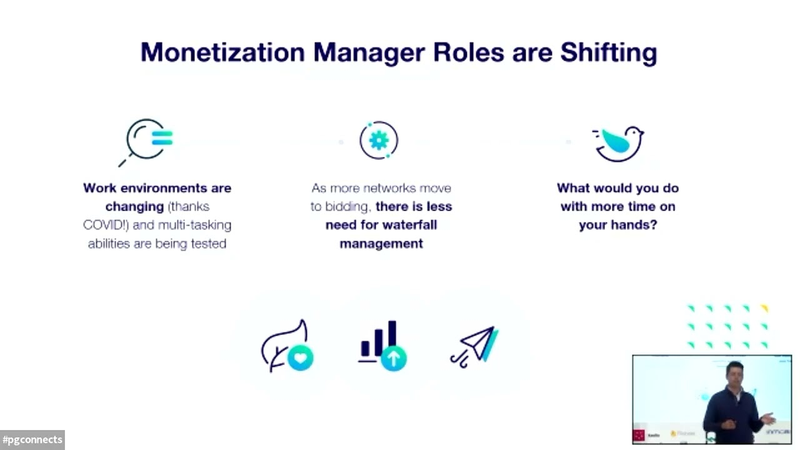
The mobile app monetization landscape is undergoing a significant transition, moving away from manual waterfall management toward automated bidding and personalized user experiences.
- The mobile monetization landscape is shifting from manual waterfall management to automated bidding, requiring growth managers to focus on strategic audience segmentation rather than operational tasks.
- The deprecation of Apple’s Identifier for Advertisers (IDFA) has made the collection of first-party data the primary requirement for maintaining effective ad targeting and user personalization.
- Developers are increasingly using gamification tactics, such as offering in-game currency or ad-free periods, to incentivize users to share the first-party data necessary for segmentation.

The Rapid Evolution of In-App Ad Monetization & What It Means for Publishers
In-app advertising monetization has historically been characterized by opaque, inefficient practices that limit publisher revenue.
- Transitioning to a unified auction model—integrating direct sales, open bidding, and header bidding—can increase publisher revenue by up to 200%.
- Modern monetization strategies are replacing manual ad waterfalls and fragmented mediation with server-side integrations and unified auctions to eliminate revenue leakage and improve transparency.
- Publishers are increasingly prioritizing first-party login data and contextual advertising to maintain high CPMs as third-party cookies decline and privacy regulations tighten.

two & a half gamers session #26 - Unpacking Google ads "disaster", ASA Today's new ad, Google & MAX
Google’s recent implementation of stricter guidelines regarding full-screen interstitial ads marks a pivotal shift for the mobile gaming industry, particularly within the hyper-casual sector.
- The integration of Google AdMob bidding with AppLovin MAX removes the previous three-ad-placement limit, which is expected to increase fill rates and overall ad revenue for publishers.
- Google’s new, stricter guidelines on full-screen interstitial ads are forcing a shift in the hyper-casual sector toward rewarded ad formats to maintain monetization viability.
- Apple’s expansion of advertising into the App Store’s 'Today' tab is viewed with skepticism, as historical data indicates search-based placements often fail to scale complex gaming titles effectively.

Drawing the Ethical Line for Misleading UA Ads - The Metacast by Naavik
The gaming industry currently faces a critical juncture regarding the balance between aggressive commercial tactics and consumer protection.
- The gaming industry is prioritizing self-regulation regarding loot boxes and in-game spending—including transparent odds disclosure and parental controls—to preempt restrictive government legislation.
- Developers are facing a critical tension between using misleading user acquisition ads to lower acquisition costs and the resulting erosion of long-term player trust.
- Industry consensus favors platform-enforced standards for ad accuracy as a preferred alternative to broad, government-mandated advertising regulations.
Superstar Session: Calculating LTV Post IDFA: A Need for Predictive Analytics
The mobile marketing industry faces significant measurement challenges following Apple’s iOS 14.5 privacy updates, which restricted access to the Identifier for Advertisers (IDFA).
- The loss of granular user-level data following Apple’s iOS 14.5 update has rendered traditional, direct-attribution LTV calculations ineffective for optimizing marketing budgets.
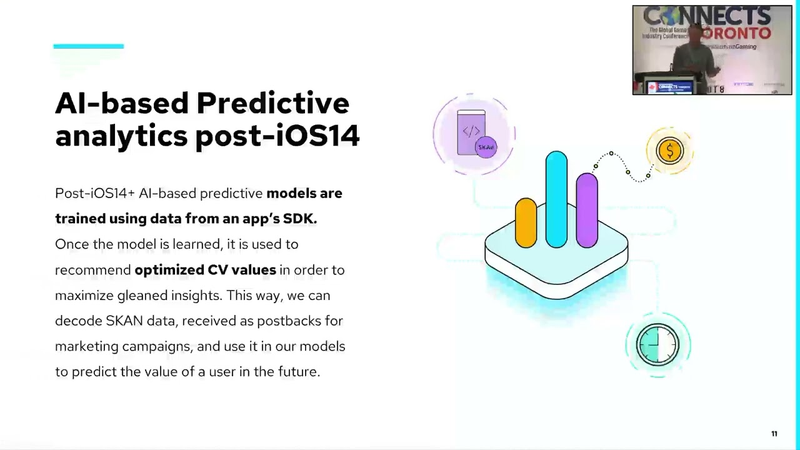
- Predictive LTV (pLTV) models replace static, blanket-coefficient methods by utilizing in-app behavioral signals—such as onboarding patterns and engagement depth—to estimate future user value.
- Marketers can use pLTV models to generate custom conversion value schemas for Apple’s SKAdNetwork, allowing for the categorization of campaigns by projected profitability despite the lack of deterministic data.

UA Apocalypse, Product Validation, Impact Global Recession, Employee Compensation (Philosophy #17)
The gaming industry is currently navigating a fundamental transformation characterized by the decline of traditional user acquisition profitability following the deprecation of IDFA.
- The deprecation of IDFA has rendered traditional user acquisition strategies unprofitable, forcing studios to adopt data-constrained models to survive the end of unsustainable growth.
- Product development is shifting away from high-risk, long-term bets toward iterative testing and early failure identification to ensure market viability.
- To mitigate risks from a potential global recession and market volatility, firms are prioritizing organizational streamlining and cost-efficiency over aggressive expansion.
Panel: How To Engage Communities To Grow Your Business
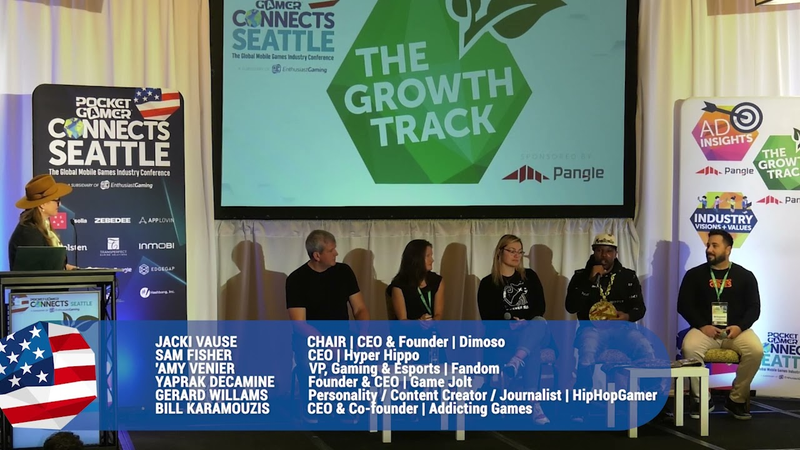
Community building serves as a foundational pillar of modern game development, shifting the industry paradigm from traditional marketing toward the cultivation of long-term, authentic relationships with players.
- Community building is a strategic necessity for long-term growth, shifting the industry model from traditional marketing to cultivating active player evangelists.
- Studios should involve audiences as early as the conceptual stage through beta testing, polls, and feedback loops to inform development without sacrificing the core creative vision.
- Community managers must act as essential, human bridges between players and internal decision-makers, utilizing platform-specific interactions rather than automated responses to build brand loyalty.

Keynote: Financing LTV Cycles
The financing of mobile game user acquisition (UA) requires a sophisticated understanding of the lifetime value (LTV) cycle, moving beyond simple equity-based funding toward a strategic, multi-layered capital approach.
- Developers should adopt a 'capital stack' hierarchy, prioritizing non-dilutive funding like ad network credit lines and existing cash flow before considering revenue-based loans or equity.
- Financing strategies must be aligned with specific game genres, as breakeven timelines vary significantly from rapid returns in hyper-casual titles to 90-day or longer delays in mid-core and social casino games.
- Self-published studios are significantly more likely to be acquired than those relying on third-party publishers, making mastery of internal UA and financial modeling a strategic priority.

Retention Is the New Acquisition – Retention Best Practices From the World’s Biggest Mobile Games
The mobile gaming industry faces a significant challenge regarding player retention, as approximately 90% of acquired players churn within 30 days.
- The mobile gaming industry loses approximately 90% of acquired players within the first 30 days, resulting in billions of dollars of wasted acquisition spend annually.
- Games24x7 achieved a 50% increase in player lifetime value (LTV) by implementing an automated, data-centric retention framework.
- Transitioning from manual, engineering-dependent campaign management to low-code, drag-and-drop platforms allows marketing teams to scale from dozens to thousands of concurrent player interventions.
Keynote: Next Best Action: Best Practices for a Winning Portfolio Strategy
The mobile gaming industry faces significant challenges in player acquisition due to the deprecation of the Identifier for Advertisers (IDFA) and evolving data privacy regulations.
- Due to the deprecation of Apple's IDFA and rising acquisition costs, mobile game studios must shift focus from external user acquisition to maximizing player retention and lifetime value (LTV) within their existing game portfolios.
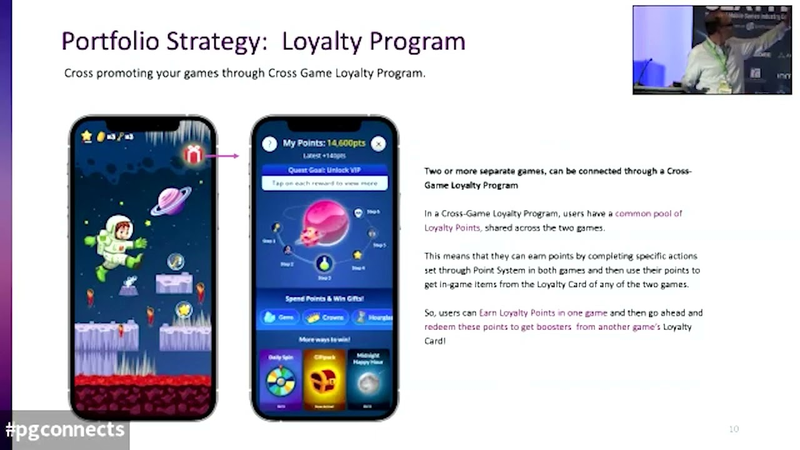
- Studios can implement 'feeder app' strategies by using low-monetization, high-organic-install games (such as hyper-casual titles) to funnel players into higher-LTV, IAP-oriented games within the same portfolio.
- Promotional pricing should be based on behavioral signals—such as device information, geolocation, and engagement metrics—rather than dynamic surge pricing, to offer the right price at the right time to specific player segments.

Beyond Myths: Influencer Marketing Is Not What You Think It Is
Influencer marketing serves as a rapidly expanding advertising channel within the gaming industry, yet its execution is often hindered by persistent industry myths.
- Evaluate influencer campaign performance over a six-month window rather than immediate post-campaign metrics to account for the delayed effect on organic installs and engagement.
- Prioritize audience-centric targeting over rigid niche relevance, as non-obvious categories like horror or mystery can yield higher conversion rates for casual mobile games.
- Balance influencer portfolios by mixing micro and medium-sized creators while maintaining long-term partnerships with top performers to ensure consistent results across multiple campaign waves.