User Acquisition reports and market data
Documents

Power Up Performance – How To Maximise Performance in a Privacy-First Advertising Landscape.
In a landscape defined by privacy-first regulations and the decline of user-level data, mobile game developers must shift their strategies to maintain growth and performance.
- Creative diversification is a critical performance driver, with data showing a 32 percent performance lift when assets are effectively differentiated and iterated to prevent fatigue.
- Developers must shift from granular, user-level attribution to a holistic framework that integrates automation, measurement accuracy, conversion schema optimization, and creative diversification.
- Automation tools like Meta’s Advantage Plus app campaigns are essential for optimizing ad placement across platforms while reducing manual operational effort.
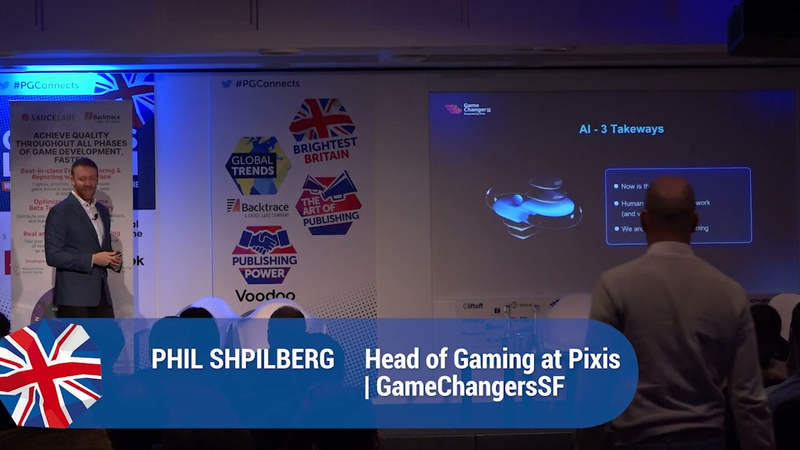
User Acquisition AI, Past, Present, & Future - PHIL SHPILBER of GameChangersSF
The integration of artificial intelligence into user acquisition (UA) represents a fundamental shift in the gaming industry, moving from human-led, rules-based management to automated, data-driven optimization.
- AI-driven user acquisition systems consistently deliver a 20% to 80% improvement in return on ad spend (ROAS) compared to traditional human-managed campaigns.
- Automated systems can process 1.5 million data points and execute 2,000 actions per month, replacing approximately 400 hours of manual human labor.
- The current UA landscape is divided into three modules: mature governance AI for bid and budget management, behavioral-based targeting AI, and evolving creative AI for automated ad testing.

Panel: The Ultimate Growth Hack: The Smart Approach to Paid & Organic User Acquisition Campaigns
Sustainable user acquisition in the modern mobile landscape requires a strategic shift away from reliance on traditional, high-cost platform advertising toward diversified, ecosystem-based growth models.
- Diversifying beyond traditional platform advertising is necessary to combat rising acquisition costs and privacy-driven data limitations.
- Carrier-led acquisition during device activation can achieve conversion rates of 6–8% by capturing users at the point of hardware setup.
- Peer-to-peer sharing and organic user-to-user recommendations account for up to one-third of daily application installs in emerging markets.

State of Mobile Gaming 2023 - Chris Uglietta, Senior Marketing Manager Gaming, data.ai
The 2023 mobile gaming market is characterized by a notable divergence between user engagement and consumer spending.
- Global mobile game downloads reached 90 billion in 2023, yet consumer spending contracted due to macroeconomic pressures and the impact of IDFA deprecation on high-value user targeting.
- Mid-core genres, including racing, shooters, and action games, experienced significant revenue declines despite maintaining or increasing their download volumes.
- Mobile advertising spend grew by 14% as total daily time spent on mobile devices surpassed five hours, highlighting a shift toward hybrid monetization models that combine ads with in-app purchases.

Device savvy, Growing Gaming Competition Along With a Volatile Economic Climate - Duncan Blackett
The mobile gaming industry is currently navigating a volatile economic climate characterized by a 30% decline in advertising spend and a 36% year-over-year drop in return on ad spend (ROAS).
- The mobile gaming industry is facing a significant downturn, marked by a 30% decline in advertising spend and a 36% year-over-year drop in return on ad spend (ROAS).
- Privacy regulations like GDPR, CCPA, and Apple’s App Tracking Transparency (ATT) have depreciated third-party data, forcing UA teams to expand from three to four members per developer to manage rising operational costs.
- Direct-to-device strategies are becoming essential, as new phone owners install three times as many applications as users who have owned their devices for a year.

Demystifying Machine Learning for Programmatic UA & Retargeting - Joseph Iris, Persona.ly.
Machine learning in programmatic user acquisition (UA) and retargeting is often misunderstood as a "black box," but it is fundamentally rooted in statistical modeling and data-driven decision-making.
- Machine learning in programmatic UA optimizes bidding and creative selection within a 100 to 300-millisecond window during real-time auctions to maximize ROI.
- Privacy-centric shifts like iOS’s SKAdNetwork require a transition to contextual targeting, utilizing NLP to create app embeddings that identify relationships without granular user-level data.
- Multi-armed and contextual bandits enable real-time creative optimization by dynamically allocating inventory based on specific user attributes.

What’s in store for hyper-casual games in 2023? Live reaction to benchmark report from Q4 2022
This analysis examines the hyper-casual gaming landscape in the fourth quarter of 2022, focusing on shifts in advertising spend, cost-per-install (CPI) metrics, and user retention.
- The hyper-casual market is shifting toward a hybrid-casual model, where the primary value for new developers is mastering the full development and monetization cycle rather than achieving immediate commercial success.
- Only a small percentage of hyper-casual prototypes currently meet the Day 1 and Day 7 retention thresholds required to scale profitably.
- While global CPIs trended upward in Q4 2022 due to seasonal competition, the United States market saw a counterintuitive decrease in median CPI, with tier-one European markets driving the global increase.

Trailmix’s Philippa Layburn on Identifying Winning Creatives
The modern landscape of mobile game user acquisition necessitates a departure from traditional performance metrics like cost-per-install and installs-per-mille in favor of granular attention-based data.
- Prioritize the 'hook rate'—the ratio of three-second video views to total impressions—as the primary metric to objectively evaluate the effectiveness of an advertisement’s opening moments.
- Move away from traditional performance metrics like cost-per-install (CPI) and installs-per-mille (IPM) in favor of granular, attention-based data to break through stagnant testing cycles.
- Integrate user acquisition as a fundamental pillar of the game development lifecycle rather than treating it as a siloed marketing function to ensure marketing efforts align with the core player experience.

5 x Secrets Behind Mr. Autofire's $40M Success
Lightheart Entertainment has established a highly efficient model for mobile game development, exemplified by the success of Mr. Autofire.
- Lightheart Entertainment achieved over $40 million in lifetime revenue and 10 million installs for Mr. Autofire within its first three years using a lean team of approximately 33 employees.
- The studio maintains a balanced monetization model consisting of 70% in-app purchases and 30% rewarded video advertisements.
- Prototypes are evaluated through a rigorous five-question framework and a strict three-month development cycle to ensure rapid pivots based on data rather than subjective attachment.

How Does SkyBox Support NetEase’s Global Strategy? - Naavik Gaming Podcast
The global gaming landscape is currently defined by a strategic pivot toward international expansion and organizational restructuring as companies navigate volatile regulatory environments.
- NetEase is mitigating domestic regulatory risks in China by acquiring Western studios like SkyBox Labs and Quantic Dream to scale AAA development for international markets.
- Major publishers, including Square Enix, are prioritizing stability by divesting non-core assets and restructuring internally to focus on high-performing intellectual property.
- Stricter data privacy mandates, such as GDPR and expanded opt-in requirements, are forcing a fundamental shift in user acquisition strategies that disproportionately impacts smaller developers.

How to Find a Unified, Single Source of Truth for your Marketing Team
Mobile measurement partners function as the essential foundation for modern game marketing by providing a unified source of truth that tracks the entire user journey from initial ad exposure to long-term in-game behavior.
- Mobile measurement partners (MMPs) serve as the essential foundation for tracking the full user journey, enabling developers to correlate acquisition sources with long-term retention and monetization metrics.
- The post-App Tracking Transparency (ATT) landscape requires studios to synthesize multiple frameworks—including SKAdNetwork, incrementality testing, and media mix modeling—to mitigate reduced targeting precision and rising acquisition costs.
- Marketing teams must shift from relying on automated black-box algorithms to hypothesis-driven, manual strategies to resolve data discrepancies and eliminate duplicate attribution.
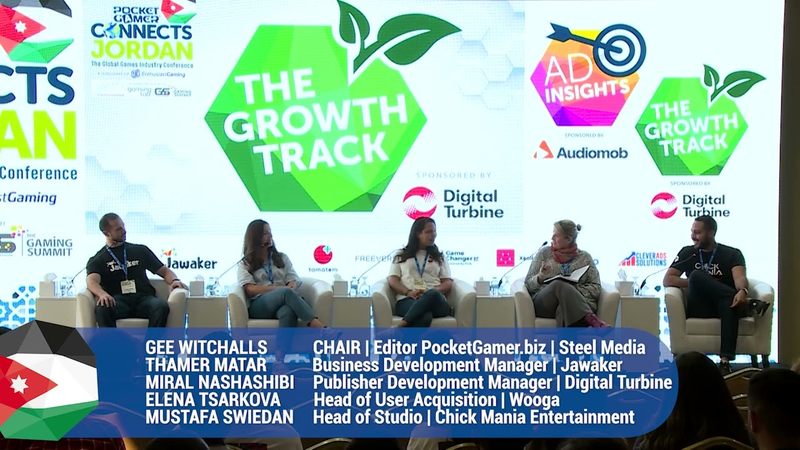
Panel: Growing Strong - Lessons in Levelling Up Your Games Audience & Maintaining a Strong User Base
Achieving sustainable growth in the gaming industry requires a rigorous, scientific approach that integrates marketing strategy into the earliest stages of product development.
- Integrate marketing strategy into the initial ideation phase of product development to ensure product-market fit and validate audience interest before committing significant resources.
- Balance aggressive user acquisition with high-quality retention, as even mature titles reaching five-year milestones rely on consistent live operations and seamless onboarding for long-term viability.
- Avoid misleading advertising practices, as they create false expectations that erode player trust and negatively impact long-term retention metrics.