Transcript
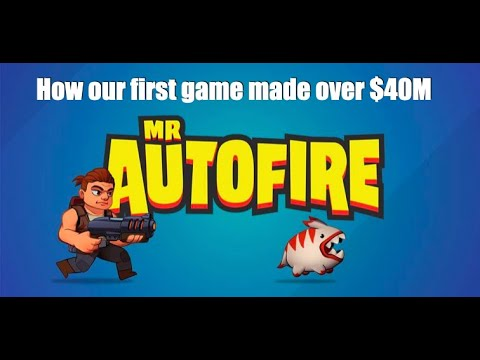
welcome everyone it's time for another exciting Spotlight interview this week and uh this week There's no way you haven't heard of this game or seen its ads if you have played a single mobile game with rewarded video content in the past year or two it's almost inescapable Mr Auto fire from lightheart entertainment and today so excited uh to have Mika ahonen here to tell us about light heart and Mr Auto fire and how this great incredible hit was born and built and sustained Mika welcome to the podcast thanks Ethan uh thanks for having me yeah I'm glad we're finally doing this I know it was uh it took a while to get this one scheduled I think I did I have to cancel on you because of a hurricane I think that's what happened yeah I think that was at least one of the reasons yeah all right well um let's let's start here can you just give us a a an intro to yourself and and
your history and background in game development and some of the projects you've worked on sure sure yeah so yeah my name is Mika I can start it in games in 2011 actually um so the Angry Birds company um Angry Birds had uh been out for a year so I was part of the first wave of personal growth I guess you could say um just to paint a picture I think I was like the 7th 17th employees so so seven zero uh a few years later we had like 700 employees so it was kind of crazy years yeah yeah like going from the point where at least you kind of maybe recognize people to like who are all these people around here it's an exactly company exactly and and uh initially I actually didn't work work in Antarctica with games I work in e-commerce so uh I work at e-commerce
and then kind of corporate development you know Excel PowerPoints Market data stuff um when Rovio transitions it's all the most fun Parts exactly yeah it's been my past couple months so yeah I've got a great spreadsheet I'm working on today super excited I actually do have an exciting game design spreadsheet today so I I mean yeah I never let go of spreadsheets totally I still have my spreadsheets that's something I'm gonna hold on to you know um but yeah yeah when Rovio transitioned to free to play uh so did I kind of so uh being a lifelong gamer combined with the background in product management outside of games ended up working out for me and uh yeah my first credit game is actually uh Love Rocks starring Shakira probably never heard about it now unfortunately not so it's it's a pretty pretty Innovative casual puzzle game with the Shakira IP uh I mean the game didn't uh like end up doing so well but uh it makes for a great story okay I
have to pause there okay in in your uh estimation did the Shakira IP help the game get organic downloads or was it just um just a mismatch of Ip and gameplay um I think a little bit of both I think I think like this is like uh interesting side track but uh uh I think we did get some organic downloads because of it but I don't think it helps the business in the end yeah um I mean I I wouldn't do that IP deal even with all the love that I have for Shakira for that game she's she's undoubtedly one of the biggest um uh music Stars celebrities well known around the world but you know a lesson I've learned kind of over and over again is that intellectual property has to have the right fit with the gameplay and the audience and and I think you could you could kind of
make you can make the argument it logically makes sense like Shakira has a massive Global audience the demographics of those audience match the demographics of puzzle game Gamers therefore a Shakira game Nick for puzzle game will work but you know the problem is the the what someone's looking for in a Shakira brand experiencer brand you know Shakira game is probably not puzzle so unless you have an incredible creative where Shakira just like lowers the CPI so much it's kind of a hard um it's it's hard to see how that leads to the the success yeah they were shopping hoping for yeah I think yeah I think you're right there um what kind of I I 100 agree um but he was also one of the first classical puzzle games at Rovio uh one of the first was it one of the first expansions outside of the Angry Birds
franchise I think yeah it was it was not not the first one but one of the first ones at least in uh freezer play and uh and I think like why I like to include that uh is that I ended up working on many other casual puzzle games and uh and agrovia got really good at making puzzle games now now they're actually like one of the best so so I ended up working on Angry Birds match small town murders I did work a little bit on uh on Battle Bay as well Angry Birds friends and I think like what it really was great what was really great about it was that uh I got to see very different genres in a relatively short amount of time um so it was a very good learning experience the whole uh I was actually ate eight years at Rovio in the end coming coming from that kind of e-commerce product manager background I'm so I'm someone who's like a game designer and a game producer who's
picked up many product management skills over the past decade as I've been working on live and free to play game I mean I guess it's 15 years or so but like I came at it from games and learned a lot of what you would consider product management and and now I think as much about marketing and as much about kind of data configuration and data design as I do about game mechanics and that was a challenging transition I'm curious what the transition was like for you as a gamer as a fan going from kind of more let's call it boring corporate world to the difficult and challenging world of mirroring creative creativity of game design with these traditional product management tools yeah so that's a really good question actually so I had a very fortunate supervisor when I did the transition and um I I he
basically kind of set it up to me like there's no shortcuts so so I kind of started as a Junior game designer at a game team to to pick up the basics um and I did a Junior game design stuff kind of just like you know interesting uh transition in the company coming from kind of middle management role to uh Junior game design role I did that for a while before then transitioning into like a more traditional uh product manager type of work so so yeah uh my then supervisor didn't allow me to skip the fundamentals right so I think since then you're gonna you're gonna design these 500 puzzle levels and then you'll start feeling like a game design not not maybe 500 but I I have I have done casual puzzle levels yeah I can still do casual puzzle levels if I have to I'm not the best at it but uh yeah
I can do it um so eight years well one thing that I I'll actually um highlight there is the importance of having a good Mentor and good coach as you as you made this transition and someone who is willing to make an investment in you and say like hey you're going to be doing stuff that feels a little Junior for you but it's the only it's the only way to do it the only way to be a game designer is to be a game designer um do you take that lesson with you into the how light heart was built or how it was operated as their um um did that you know kind of give you a nugget of wisdom going forward yeah I guess lightheart was started by people who wanted to make games so in short our mission is to be like the best place to to make games for enthusiastic and talented game developers got it um so we founded the company 2019
all of us Founders are pretty senior in fact the rest of them are something like 20 years in games each so so I'm from the junior side of of things here and 2019 there wasn't really you know a shortage uh of Game Dev jobs so just founding another game company wasn't very I already didn't make much sense what every one of us Founders had seen though the ring our carriers at that point was that uh sometimes uh you would see people that actually love making games get burned out making games and we had these experiences as well and uh and and it kind of made us wonder that uh like why why do you get burnt out doing something that you love and uh kind of the discussions ended or are we thinking ended that this is uh maybe do the things such as like effective organizations bad quality decision making and uh and and often decision
making becoming slow and uh wheelers of Power are spread somewhere in uh in a hard to navigate organization chart and uh the great game developers that that we all wanted to work with and kind of all wanted to be as well uh tend to not give their best in this type of uh environment and this was kind of the problem that we set out to solve got it um so was it a team that was working together Rovia like was it a bunch of uh late night griping at the bar about how things could do better and then one day you're like hey we could do it better like with is it kind of that classic story or how how did lightheart um go from um a set of ideas about how things could be improved to an actual company thank you yeah so there's a five of us co-founders working at the company plus one uh who's
our chairman so there's Mika who's an all-around game artist uh Chris and Yoni full game programmers uh Carla our CEO and me with the broad responsibilities and uh some only who's our chairman of the board and um actually everyone else but me already founded one company together that was uh housing a game works uh back in 2014 uh I was like like previously mentioned I uh I was at Rovio for the whole time but uh Carla who I met at Rovio had a had left Rubio to found uh Helsinki Gameworks uh 2013 2014 or something like this and uh actually Helsing again Works exited to next games or more like merged together in next games um 2014. and uh fast forward to 2019 uh some of these uh these Founders from that time were thinking what to do next and uh
basically the team was uh missing a product co-founder and that's that's where I came in yeah um and and um when when you started I mean well let's let's let's give a foundation here because I think uh Mr Auto fire has been a massive success right um and I think it's easy if you work in um more um mid-core games or uh you know even shooters or whatever things that have kind of lower user numbers higher um Revenue per user in success it's easy to look at Mr Auto fire and go like oh it's just kind of like a hyper casual thing and dismiss it but I mean you guys have a giant hit on your hands that's been live for several years so I'm hoping you could share some metrics with
us just to help the under audience understand the scope of the game and how big it is and how successful it is yeah so uh Mr Auto fire actually we've been out exactly three years we had a we had a three year anniversary with cake and everything uh just last week so uh we have uh over 10 million installs so far across Android uh and iOS and um more than uh 40 million dollars in lifetime Revenue that's great acros uh ads and in-app purchase how big is the team working on that uh so the total head count for light heart is 33. um and uh that's kind of split half and half between Mr rotofire and the new game team we don't have a lot of admin so so it's pretty much everyone is working on a game so so if you look at
just the people on on Mr Auto fire over the course of three years it's like two million per employee that's pretty good and um and can you do you have a sense for how that revenue is split between um IAP and uh rewarded video ads I mean you guys do a great job of implementing rewarded video and this is something I've learned um when I you know I've I mostly came from games that were you know 95 um IAP revenue and when I have the chance to work on one that flipped the script I was quite I was actually really amazed at how big the rewarded video ad Revenue can be with a well-designed game with great retention so I I'm just kind of curious like roughly what the mix is for you guys I mean it depends a little bit on the Geo and it depends on what kind of uh
campaigns we are running uh but roughly speaking it's like 70 percent in-app and 30 ads okay so if you're looking at it from the outside and you think it's hyper casual open this game up and explore its feature depth there's a lot more going on there and there are a lot of kind of Best in Class features to convince a player not just to stick around but but to um um spend spend a lot of money and I think I mean again just thank you for giving us that basis of the stats um I think that for a small for a small team small Nimble team going three years that's just like a great business um so let's let's go back in time to around that founding moment um you guys knew you wanted to start a company um they probably learned a lot of lessons your your co-founders from their experience starting and exiting and then
being part of next games for a long time um when you started lightheart um did did y'all did you all know that Mr Auto fire was going to be the game did you know this was going to be your first game or was it a process of let's build our you know how did how did it get started culture first game first you know how did how was the foundation of this company built we did not in fact know that this would be the first game it was very much a team first and uh college for first approach um prior to the kind of flight Hearts official founding uh Chris and Amica had already put some Sweat Equity on a couple of prototypes that uh helped us get our first Angel investment money in but we didn't have a game that we were comfortable committing to at that point we started prototyping um in earners with the full team in summer 2019 um I think we made about 10 digital
prototypes during the summer uh by the end of the summer we decided to commit to to miss roderfire or shooter as it was called back then and I mean you asked a little bit about process or like like how would we approach it uh to start this kind of prototyping uh fuzzy front-end Endeavor I did create this lightweight process to access early stage prototypes so I mean you you must have seen that there's some similarities to archery in the way that our game is structured so Archer had just come out we didn't set out to build the game like Archer but it was kind of one of the the reference games yeah when we when we were kind of thinking what kind of a concept to do um I don't have maybe or we don't have time to go to all the details but but kind of the the assessment boils down to just five
questions um and those are like first one is uh is the game fun uh very subjective still important um the second one was uh does it explain itself in a three to five second uh ad creative so can you just take take record the core gameplay and it looks something that I would like to try and I understand what it's about yeah I think I I can't emphasize how critical that is in in our modern um mobile game environment like if if someone can't understand it in a three to five second first impression of an ad like it's gonna be a challenge for you to get people to play your game so did you yeah exactly did you guys did you make did you run and like on those digital prototypes to see if people got it or was it more of a subjective hey here's five seconds of gameplay do I understand what's going on because I really think you know from all the ads
I've seen um that's a key part of Mr autofire's success is how easy it is to understand what's happening and to actually have a representative game experience in the playable ad yeah so at that point it was more just a a subjective assessment um so kind of our whole approach is that uh instead of doing a lot of uh upfront testing we try to get to the market as fast as we can and test it there so so so kind of uh once we commit to a game then we try the time box like a three months of time and in the three months we actually built the game um you know with enough scope that we can run ads and test it and we'll get up to like day one retention with that okay so so so we kind of keep you know the The Click testing part yeah and and try to rush it to the first playable on the
market it's very close I think that's kind of the unique thing in our approach so sorry I I um I'm gonna come back to that because again that's that's really um an interesting approach that I think other people if they're not stealing should steal but we've got two two of five on your assessment is it fun can I understand it in five seconds yeah I need the rest of this wisdom because I'm gonna steal it for my own evaluating the Prototype I'm building right now yeah yeah so actually the next one is is related to what I just said so the next one is can we ship a version in three months so so can we make a version of these that we can actually put out at the market in in three months and um the fourth one is can we use a progressing system from an existing free-to-play game so um what I found out is that uh designing and innovating with progression systems is pretty hard yeah um and the other thing that you should know about that is that if you do it you have to devote a
lot of time to it because your results will come in a year or two so set the cycles for learning are pretty long so so we figured that we can kind of uh move more fast with core game Innovation and then limit the risk by just taking something that works with uh with the progression systems so so that was kind of the point with there and the final one is uh this is also important do you see yourself working on this uh because if people don't don't say yes to that you're gonna not have a good game because they're not motivated to build build again yeah I am uh to under to go back to the point you made about burnout previously and why do people who love making games get so angry mad burnt out disappointed with game development I mean I I love games I love making games I love playing games I love talking to people who make games it's like the only thing it's it at this
point with this many children it's just like family video games that's that's kind of it the TV that's what I've got time for and I've been as I've been kind of building my own Studio from the earliest stages been reflecting on my career and thinking like why why was I angry so often or disappointed or frustrated like why wasn't it more fun to make video games and the number of times I look at myself having to commit a long stretch of time building a game that yeah maybe it should be a business maybe it is a bet I would make but it's not something I or the people who were assigned to it wanted you know not having that passion for it um makes the job so much more difficult yeah I mean an investor asked me a couple of weeks ago that like
Mika do you still think there's there's a like successful mobile free-to place to be made like or is it like done you can no longer make uh successful place and I answered to to them that uh I think there is endless amount of like viable Concepts out there and then you just need to pick one to your team that suits them so it's not like it has to be this specific one thing there's always viable Concepts out there if you can execute on them yeah I I love that five question framework um and and to go to the progression system as well you know I spent a long time as a as a monetization designer and my work and my success I'm I'm not ashamed to admit it it's not about Innovation it's not about business model Innovation it's about you know I look at almost like the
engine of a car it's like I play all these games to understand what all the free-to-play mechanics are and then it's a question of well for this game and this audience what is the right set of standard tools off the tool shelf right like many times sometimes monetization design is where to innovate but a lot of times that's not where you need to spend your most out there creative risks um you it's actually the place to be a lot of times just do a really good highly polished job with good ux known systems make things easy for people to understand it's not about like oh my goodness they've never seen this type of skin system before with you know taking all these skins and forging them into gems and then turning the gems in the in the Anvil of ultimateness into the new super like you just use what works I
guess exactly exactly it's more about creating than uh yeah than actually coming up with new stuff right and that's why that three months um metric is such a great one can we get it playable in in three months can we put it not so that it's not us making the decisions it's the players because if you work on something for three months and it had forty percent day one retention you'd be like well we've got something here and if you worked on it for three months and it had five percent day one retention you'd have to say we really have to believe in this to give it another three months because you cannot build a successful business on five percent day one retention and what a gift to learn that in three months instead of after three years you know yeah exactly you do have to have a how would I say intellectually honest mindset that you are you're actually looking for um you're looking for the game that you
should be spending your time on and not reasons to continue the current project so that's a kind of a game team starts to often love their own game including myself and looking for reasons why I want why why why why why could I continue on this uh you need to be very brutal to yourself and and the game um to make sure that you're looking for the facts and not just reasons to continue yeah and and as you're as light heart has grown from that initial set of was it six or eight co-founders sorry uh six from that initial set of six to over 40 people how if you reinforced and sustained your culture have you you know made sure to stay true to what um allowed you to be so successful so quickly yeah so we're 33 now so 33 not quite 40. but uh sorry I was generously rounded up yeah soon soon
um I think the biggest challenge has been actually the last 12 months um as we transitioned from everyone is working on one game to um we actually need enough people you know disciplines and uh not relevant skill sets to to to stuff to a full game teams so so that has been um I think we're actually starting to be there but um it was quite painful um we stood by everything that we kind of agreed on with our our cultures founding principles like transparency self-management all of these things but uh what we needed to do is uh to make a lot of the things explicit that when we were just the founders it was kind of obvious to everyone so so responsibilities and uh and and roles of each discipline and
how we communicate how we give feedback all of these we had to make explicit and at the same time we were hiring a lot of people right so so we we doubled our head count in the past 12 months yeah and that's that's got to be you know when you have a small group of people who have kind of an unspoken understanding the work to actually make that a written down aligned on clearly communicated set of expectations and behaviors you might find out oh actually we didn't have this clear understanding we just got lucky or you know we're almost we're almost all thinking the same thing but actually we need to make a critical decision about X or Y it's not a not an easy thing to double the size of your team your company while um uh operating a live game and building a new game team out
I don't know if the things you should do is is talk to the people that joined the company later talk to your new joiners and uh figure out how they are doing how they understand these things and um obviously you might learn something new but but also uh there might be some things that are obvious to you as a founder or an early employee but but uh a new Joiner doesn't have the same context so so you have to actively bridge that context yeah absolutely um you know going back to the point of that the game is easily understandable in three to five seconds I mean I've been playing one of the games I've been playing the most lately is uh survivorio and I see a Mr Auto fire ad once twice a day probably with the number of rewarded videos I see and I think it does a really great job
as you said passing that bar of I see it I understand it I know what to expect if I start playing it looks fun I can have a good experience in the playable um and and you guys have been running UA on that game for probably three years continuously I'm guessing if you just had your anniversary um what are what are some of the keys to being able to probably run UA on kind of this um hybrid casual you know it's not a hyper casual game it's like pick up and play with deep monetization systems you know yeah I think that's actually accurate so uh a great UA team is is where you start with right and and really good at creative uh we were quite lucky to be able to hire really really good people in these key roles who know what they're doing um that's it I do believe that your product is in the part of it so it sets
parameters for your usual acquisition team to to work with um and I think you kind of said it it's it's a it's a fun looking game that's also fun to play and and there is an actual free to play game behind all of it um I don't think it's anything much more complicated than that survivor.io by the way it's awesome like they really really nailed it um when it came out I was convinced that it'll do well but I I couldn't foresee the scale uh that they can do with that game um the scale really it is it is mind-blowing uh but if you look at this like historical downloads for for these uh action arcade games or action games or or platformer games or Runner games or or and anything you know from Stickman
Fight to Subway Surfers to Fruit Ninja um there's always been demand for for good action games for mobile it's just that not many developers have uh figured out how to retain and monetize yeah um and uh these games have a relatively broad audience but they retain and monetize better than the typical action arcade game so that's how you can scale right yeah um what are some of the features that help give long-term retention to Mr Auto fire this is something as I said once I started playing I was quite impressed by the feature depth and how clever you as a company were about taking kind of the right features from other successful games so kind of what did you have this core pick up and play shooter what did you add to it to give it that depth and retention I think um this is like a casual puzzle
Playbook answer but uh I tend to think that uh our competition uh undervalues content um retention is a lot about content so you need to have constantly really good quality content for the players to interact with typically it is you know level content uh campaigns events whatever but uh it needs to be relevant for the player um so we actually did invest a lot in in our content we have some really talented level designers uh working on both both games just making really good quality content um on the feature side it's actually quite interesting uh we uh when we came out with Miss rotofire it was very lightweight uh and we kind of attacked on a lot of uh freezer Play features later on um most of the time we actually uh improved the the kpis of the game
specifically actually in monetization um so so so kind of the gotchas and uh uh uh character banners and battle passes and all of that I think they are primary monetization features and and retention features only a second um we actually just recently released uh social features so we have like a guild feature but I have no idea what it does to retention yet I think we'll need to wait and see for for a longer period of time before that type of feature really kind of proves its worth um so I get I guess long story short I am a big believer in this uh I guess it's a contentricle approach for reception um and uh and these uh Power progression features are are more actually monetization features than than anything else um since since you run to go back to the UA part since you run
so much UA rewarded video ads and I'm sure other formats as well but that's what I personally see a lot um how has the company been affected by the ATT changes do you feel like you've been successful in navigating that I mean I I feel like um having that understandable gameplay probably gives it you have strong ad creative in a way that other games might not so what what has that uh this experience been like for you because it's changed a lot of different companies in a lot of different ways I mean we have for sure been affected by the changes uh we are spending less than years acquisition now than we were last year um I don't think that's a that's a secret uh generally speaking with the Privacy changes uh there's targeting and measurement right um and while measurement gets this gets a lot of attention uh it is in fact the targeting part that is kind of problematic and as at efficiency goes
down I think everyone loses there may be relative winners in this but they're kind of only just that relative winners so um in the grand scheme of things I don't think we're by far the worst of uh out of all mobile Publishers but uh it's definitely made our life a little bit harder as well I think it's notable though like that the business hasn't gone anywhere uh there's still uh people still download games people still play games people still pay in the games it is just the distribution that has changed and everyone is learning uh how to work with this uh 2023 version of of uh direct response marketing um and as as you've grown from one game team to two has the second game team been able to meet that same metric of
can we build it in three months like do you have something secretly out there in soft launch or have you built and kit you know have you soft launched and killed a game already based on the response what's um have you been able to stay true to that initial um five question um um rubric as you've uh grown the second game team um yeah so we decided to actually start a new game uh roughly a year ago um from the beginning we wanted to be a company that creates games and not only operates the first game that happens to be successful so so it was always in the plans but uh the first two years we we're only we're also a strong believer in Focus so we we are really focused on Mr Auto fire so we did have a marketing test out of the new game in February we didn't make
it in three months though uh we did it in four so we missed the mark by a month 33 off yeah yeah four months is still pretty good yeah yeah I I think in the grand scheme of things it's it's it's okay um I I mean like at the same like I said at the same time we were growing the company and it was like uh shuffling a lot of people some people were doing two games at once and that's not like the optimal thing there's there's some things that I would do differently now with the with the experience that I have now but we ended up uh still releasing a version of the game we ended up measuring uh day one retention and uh and marketing funnel um and yeah I mean it looked promising enough that we retited to also build the rest of the game so we are now kind of at the late stages of production of of the second game I guess the difference was that uh for me sort of fire we just built on top of the marketing test launch so uh we made a kind of a
prototype with lipstick and then we built on top of that um and for the second game we thought that maybe we can afford not to take a breather and do more like a proper production yeah build a strong foundation so you're not just um struggling with tech debt all the time yeah yeah exactly exactly so uh we're very close to to um we call it public beta so so so I guess the equivalent of soft launch awesome to hear about that public beta and and play it once it's um more well once it's ready to kind of unveil um there's been a lot of great wisdom today very relevant to me especially literally what I'm doing right now so thank you for all the free coaching and
mentoring right now um what are you doing by the way right now I'm building a new game Studio um building a web 3 game Studio I'm I know my business model I'm building some prototypes I'm looking for you know a technical director or lead game engineer to come help I've got some VC funding and it's got some really unique things about it but not that I should share with the entire audience but um you know if that if if that sounds like fun to you um you know reach out on LinkedIn but I'm I'm building something that um is very focused on just building a lot of fun games and so I I'm not um this was really well timed because Mr Auto fire is kind of on the dartboard of um inspiration games for kind of the first band that is what we're doing yeah um so I I thought we would leave with this um here I am kind of at the early stages
where you guys are at this uh great inflection point of doubling team having this three-year anniversary having this solid Revenue success um what's what's kind of a top lesson you could give to me as a a new uh game Studio founder on something you wish you had known uh when you started the company or something you knew but wish you had paid attention to more yeah that's a good one um maybe one that uh I I mostly believe in is assume that you are not good at recruiting and then make it your priority to learn to be good at recruiting um I mean it's something that everyone says and then still somehow more important than you think uh the impact of higher in startup
is so big it's so much bigger than in uh you know in a corporate environment and you don't have like the structure to do the hiring you don't have company reputation to get some inbound applications and you will be constantly aching to get people into key positions I think we've managed to do okay but it's still something we could have done better um and I think investing Founders time and focus in recruitment is is is what you should do um so I think I would uh I would leave with that wonderful well those are great great words to uh uh end on or great wisdom and on actually this this while we're talking about it are there any key positions you're looking for right now what are some of the folks you're looking to join the light heart squad
join either that live game or that new game that's that's getting the public beta soon um we are always looking for full stack game developers um really really high high level programmers who who can who can make games from scratch and can operate in a live cat environment uh we're also looking for the same type of people in in other disciplines so so uh really capable artists and uh really capable uh free to play product and design people so there's nothing any more specific than that but uh if you feel you know work with us uh uh and and like the type of culture that we're running uh feel free to reach out on on LinkedIn wonderful Well Mika thank you so much for uh for coming on and sharing your story thanks Ethan
Auto-generated captions from YouTube — names and numbers may be misheard.




















Comments