VideoDeconstructor of Fun
How to Find a Unified, Single Source of Truth for your Marketing Team
9 Jan 202360 min video
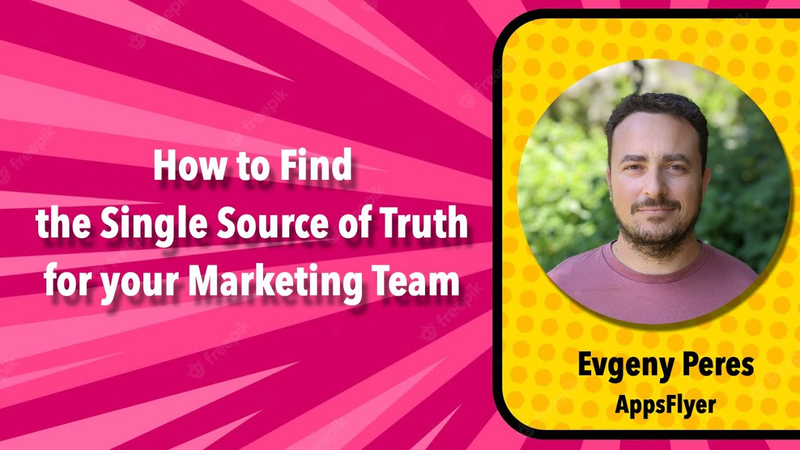
welcome everyone it is time for another Spotlight interview here uh a deconstructor of fun uh today is going to be a a confessional for me because I'm going to reveal how ignorant I am about user acquisition and how the whole marketing technology stack uh works because I'm here today with uh yevgeni Perez a uh the EVP of product strategy at uh apps flyer um uh evgeny knows this Tech and this world inside and out and we were talking about um what we could possibly uh uh what would be a great topic for an interview and he started throwing around words that you know I've heard before and Eric Seifert you know mentions all the time um and I was like hey I actually have no idea what what that means like I just
pretend I don't know what an MMP is I don't know the difference between apps flyer and something something in this company and that company and I've been on games that have spent millions and millions of dollars in user acquisition but I'm on the game Silo not on the marketing stack Silo and so I'm just really excited for uh yevgeny to be here and to um you know educate me and uh listen to My Confession of ignorance and help me just become a better game developer because I'll understand more about this critical uh component of running modern live service games so evgeny welcome to the podcast thanks for coming thank you thank you you uh happy to hear to be here as you make this confession [Laughter] holding your hands yeah this the the audience is just thinking like oh I knew Ethan was a idiot this whole time and now he reveals it and uh let's kick him
off the podcast makes makes it boring now yeah exactly let's speculate speculative less speculative now that you know that I'm ignorant all right so uh can you uh tell us uh start by telling us a little bit about your history and background in the games industry um sure so so currently I'm I'm with apps lar um soon to be six months uh leading its uh product strategy um I joined the industry uh almost exactly 10 years ago it was December 9th uh 2012 uh looking at the date today um and um I joined a company called Supersonic ads uh back then um a rewarded ad Network um kind of stepping into Mobile um and my role was to kind of kick start the way uh into uh Mobile in terms of
products uh products operations and and strategy and and this is kind of also in terms of timing where uh say mobile free to play started scaling up so I I was I was lucky to grow um kind of within the industry and with the industry uh during the last 10 years um within a couple years the company was acquired by Iron Source where I ended up leading product strategy and The Innovation lab and um I was kind of there you know working with great people from within and and and on The Game Dev side uh when big things happen big launches big uh uh kind of you know the evolution of the hyper casual uh I want to say business model rather than a genre uh you know big big games going up into the top girls scene going down uh over and over again and a lot of that was working with the with the with the teams on how to embed
um rewarded ad products into the games into the core uh uh gameplay uh the core Loops uh where their water products are essentially a list of a net product but rather an alternative payment method uh if you will um and um also kind of work closely with the marketing teams developing with them the the methodologies best practices and later on also the products together and how can they essentially grow their games into great businesses uh very uh very happy uh with that Journey very lucky um and grateful and uh yeah I'm here for the next at least for the next 10 years to to see how it's exploring careful and and just you know again because um I've only worked at game development companies so kind of the ad Tech side is a little more mysterious to me what is
your day-to-day look like as as EVP of product strategy kind of what do you what are you um working on what are you trying to push forward at apps flyer um I think I mean it's a great question essentially I'm trying to split my time between um you know since I'm um still in a kind of a getting to know a lot of the teams companies huge it's 1600 people so there's a lot of great people to uh to get to know and to understand uh their perspective and things um at the at the end of the day it's a combination of a lot of listening to people from within to to clients to marketing teams to uh Partners to um we have Developers um and and trying to digest that into um how the company should look like uh in the future and what should it be focused on when there's a lot of things that already uh you know when you look at the product line which is very uh broad
there's a lot of things that already mature and they need to evolve um around kind of how marketing should look like and how marketing the marketing text actually look like but also there's a lot of innovation happening kind of behind the scenes and there's a lot of new great things that are about to be launched great people are involved in in all aspects so um trying to provide value there as much as possible um that's my day-to-day having a lot of fun great that's great here so let's um let's anchor us a little bit in the history let's let's go back in in the in the way back machine um Pretend We're pre-att um I'm leading a game team I know we're doing user acquisition we're using apps flyer and we're using all these other AD networks and uh we're spending all this money every day and we can say you know we spent X dollars and installed y
people at zecpi but other than that in some kind of high-level dashboards like it's all I'm focused on the fun I'm focused on the monetization it's all kind of a black box to me um what's apps Flyer's role in this chain of events what are my user acquisition people using apps flyer for you know I hear plenty of acronyms um that I pretend to know what they mean uh I cannot tell you what MMP stands for right now uh is apps flyer and MMP and what is an MMP right so pre-att kind of where where did apps Fire fit in the ecosystem so I I I was lucky to be there when things evolved uh for App Store and for similar companies back then but there was uh since it's a great example for product Market fit but essentially you had this booming ecosystem uh ecosystem of apps uh that are turning
um uh to grow these apps into uh profitable businesses uh and this is kind of where AppStar started uh back in the early days as an MMP with MMP stands for for uh historically a mobile measurement uh partner I think it evolved into a mobile measurement platform over the years um and that was kind of the initial layer uh not only not only in terms of terminology but also in terms of the product Focus back then so it was how do you create this uh how do you put the right technology in place within the app itself to measure um the user Journey properly within the app and analyze how that user progresses within a game in the context of Gaming but also uh more important than that connecting it to the context of of the journey from outside of the app because in this life cycle of developing a game
as it as the game is kind of ready to be published uh and deployed in the App Stores um one of the first sdks that are usually integrated and uh I assume you can agree with that would be uh this small group of sdks that are actually therefore uh uh for the purpose of kind of surviving the initial soft launch making the right decisions and a big part of that is measuring where does where those music coming from and what context what created what Journey you know today it's what custom product page they're coming from uh you know what uh jira they're coming from uh what keyword are they coming from and in that context make uh the right decisions uh where do I deploy my resources tomorrow how do I allocate budgets how do I decide on bidding strategies and that that was kind of the initial kind of uh essential layer of the product and on top of that layer a lot of innovation has uh has been developed over the years yeah so it kind
of the the measurement part is just the pipes but how do you collaborate with all the different players I mean I think you mentioned like all these different ad networks and my marketing team is integrated with this and that uh so how do you enable the the and and Empower uh that collaboration within the ecosystem so once your game is out there your marketing team starts to uh invest uh into growing that game and everything is kind of working seamlessly behind the scenes uh marketing channels know what's happening users see ads they they engage with the product they come in and they enjoy hopefully monetize and so on and so on uh where the decisions are being the decisions of today are being uh recalculated re-analyze tomorrow and if things are done properly uh day over day the inbound cohorts are growing uh and the and their performance is growing and they also become profitable so you can hire more people
and make more games in in my games the cohorts always grow always retain always profitable that's that's good I mean that's because how great your games are right exactly I think actually in that context it's it's very interesting because you know you mentioned your uh you know your confession uh earlier on and I think it's very interesting because a lot of your decisions have impacted uh what the marketing team have measured if you are releasing a new update if there's you know a big sale happening some a B test gone wild uh and on the other side you know if you if suddenly you you come in and you look at your analytics and you see you see this huge chord coming in and it behaves completely different the retention is subpar they're not monetizing as well so you better know that that huge chord came from this new creative or this new influencer campaign or I don't know you got features so the
context of where are these user coming in is also critical for the game designers and the product managers and the monetization managers to make the right decisions for onboarding and live Ops uh to maximize that ldb so yeah exactly like a very interesting uh I I am familiar enough to you know I've had been there a number of times either as like as part of a team or a team leader when you know you have a day and just it's like the retention looks like dog today uh what happened you know day one retention is terrible and you you know you dig in and you look on the game side for bugs you look on the community side you look on the advertising side and it's you know sometimes the solution to the problem is we're testing this new ad Network they didn't X it drove a lot of low quality users and you just you know sometimes you have to react quickly and turn it off because you are managing the um you know the the the metrics and the
messaging of the thing and having a bunch of people that perform really poorly doesn't doesn't do any any good so I do know a little I do know a little but you do know something you don't you do know some of that yeah I think I think it's interesting because sometimes the the reality is that there's sometimes the equilibrium if you know if the marketing channel found this new super profitable channel that it's just driving uh uh a different Behavior than you were used to so perhaps that requires treatment on the product side so perhaps readjusting the onboarding making things easier adjusting pricing whatnot so so sometimes the equilibrium is not necessarily maximizing the the the retention and monetization metrics but rather uh kind of the overall business metrics absolutely so all right so now I've got a little more bearing a little more
knowledge um about the world pre-att how has the ass flyer platform adjusted as the various versions of SK ad Network have rolled out I think we're on version four by now and you know I as as part of the dof team I know we talk about this all the time it's one of the biggest ongoing stories in mobile game development and everybody is trying to adapt and change and perform uh in this post ATT world so you know how is apps Fire adjusted um how is the platform and product offerings changed yeah I think you just reminded me that uh my first dof uh uh episode was a couple days after sk2 was announced I think that was a so uh two and a half years ago um a lot of people listen to that one that was uh uh I I'm sure they they left it
as clueless as they came uh but yeah I mean it's it's it's it was an interesting period in time and we're still in the midst of that uh transformation uh which was very interesting um for the industry as a whole and I think that I mean SK is is a part of that uh I mean there are the changes on this on the track of privacy of how you know how uh how digital digital ecosystem should be um designed uh in a better privacy preserving Manner and SK network was one of the Frameworks introduced um back then and evolved since you know two uh to to the low to 2.2 uh three now four um and um I mean the the the the interesting part uh for us is that it created this uh additional uh framework another measurement framework that creates another perspective
um and as things have evolved and I I don't want to go into too many details but um the implementation of SK and hence the amount of listeners to that episode I assume raised a lot of questions so not only in terms of how do I Implement that into my organization and make the right marketing decisions based on that framework which uh in terms of adoption uh is still very far from uh or or not even getting close to that being the single framework and um and we addressed that with our single source of Truth uh um a product that I'll uh I guess I'll share in a bit but the um the implementation required a lot of hand-holding and a lot of uh um thought invested in how do we allow for the average app developer to implement SK Network in terms of managing the signal sent to uh through Apple uh to
all the different marketing channels called the conversion value what is the best strategy and how to implement that and how to communicate that properly it's very similar to what I mentioned earlier around how do we collaborate uh or enable collaboration between the app developers uh and all the different partners that they they engage with um on the behalf of the developer um and um a lot of innovation has happened there for us and a lot of um interesting adoption over the last years that evolved into this point where we uh we can confidently say that in this balance and I've taken that episode two and a half years ago we discussed kind of this balance between being privacy Centric and having actionable insights how will that balance uh evolve for the sake of the market and we can control these uh now say that I would believe it's not a zero-sum game so you can provide amazing actionable insights while still uh doing
that in a privacy present preserving matter um and a big part of that is at the end of the day is marketing themes especially marketing teams make their decisions based on aggregated metrics so they look at a certain campaign a certain creative a certain chord they look at how much they spend how did that uh what did that turn into in terms of yield and make the these optimization decisions whether it's changing bidding strategies changing bids allocating budgets optimizing creatives uh exploring new channels and all of these decisions are done on an aggregate level it doesn't really matter whether a specific user costs 12 that came from this ad but rather the whole sum of context uh of where did that group of users come from and how did they perform for that action to be uh actionable uh tomorrow morning for optimization's sake so the development of our
conversion Studio kind of supports the the how to allow app developers to implement the signal properly and at this at the same time uh how do we provide this new reality and and and and and a big part of our uh understanding over the last years also is that there is no one single framework that is the right one uh there's SK Network there's incrementality there's media mix modeling there's a lot of impact measurement there's uh conversion modeling so there's a lot of different uh perspectives I want to say they all provide it each provides a partial solution but when you kind of stitch it together in our current product stitches uh modeling to combined with the SK Network provides that confidence that reality um to make the right decisions and to justify spent because if you can justify spend a
lot of our game a lot of the gaming companies if they can not spend just as much they'll need to slow down uh you know that they need to lower their head count and make might kill a game or two um and the need for that layer to help you guide you through those decisions uh is even stronger now than ever before uh so definitely very proud of these uh two solutions uh that are uh being adopted uh very heavily so far right because when I'm on you know when you're on one of these live operated games with the heavy live Ops and heavy UA investment um you know I almost think about um user acquisition um and cohort acquiring as buying bonds like that's that's kind of the model in my head is it's almost like you're buying a bond with a variable daily dividend you're making an investment and depending on the type of game and how
retentive it is and how um how it monetizes um you might have a game where your bond you know breaks even uh 90 days from now 180 days from now if you're you know those are really good payback Windows if you're like a mid-core uh developer it might be a two a 360 day or 720 I've heard companies buying against 720-day payback Windows right and you can't you don't have the um luxury to make an investment today and wait for two years to see if it was profitable or not you have to uh from what I picked up through osmosis from being in the room is that people are making predictive decisions on you know day one day seven based on how you know a certain set of creative and targeting and bids are performing on whether to keep you know buying those bonds keep making
that investment or not so the more you know it's just it's one of those things where you need as much information and the best data as you possibly can to be making these investment decisions and having confidence that you can keep um spending the money and that you're not just setting it on fire yeah um spot on um that's that's the challenge that we're we're after um a lot of investment there in into modeling uh and and providing that visibility uh you know combine everything you said also with with the the macro economic uh downturn right how how these bonds like these chords that were acquired six months ago or a year ago that you were assuming that they will spend this much by now a lot of these chords will never be profitable will never become profitable uh in in some games it really impacts live Ops and and the economy of a game
over time uh sometimes might might generate more damage than good uh um definitely interesting times and I think it actually uh opens the opportunity to for us to innovate at least and provide value on which uh uh tools can we provide to lower cpis effectively and which tools can we provide to help with personalization increasing LTV answering those questions and supporting um uh things in-app after the users were acquired whether it's through uh retargeting or segmenting the user as an app and and uh you know think about even in the context of where the users were acquired um so there's a lot to do there especially now when the pressure is is on um and uh I think also on the level of
uh helping the teams that now have less resources less uh less hands on deck um to execute throughout throughout all these tasks um so how do we productize and and um and uh accelerate all these decisions making them better and uh and and uh and and helping the teams uh avoid uh the big mistakes as well so I've you know my my game design is kind of my core skill set and and demonic you know where game design and monetization intersect that's kind of what people know me for and so this whole time you know as I've been following the ATT changes and how it's changed user acquisition um I have a view and and maybe it's a naive one that um the result of these changes in targeting basically mean
uh that one you know game devs need to create uh better ads better creative to compensate for uh worst targeting tools that too it just that has the effect of raising ECPI by some percentage I don't know what it is but in my head I'm like okay so like our targeting tools are worse and uh every user costs probably 15 or 20 percent more is like kind of the end of the day guess um it's been it's been a while since I've been on the live Ops side so I don't know um because I was you know I've been building new products basically um and three it means that on the operation side and on the kind of feature development side and event side we have to do a better job retaining our users probably retention is more important than ever and we have to do a better job of monetizing those users to generate the same Revenue as before so probably you know in my head I'm just
like oh we have to retain people better we probably have to be a little more player focused a little less harsh on the monetization side and you know make better ads and and that's how we get to the same performance we did before um from your perspective is this am I right right-ish and is this totally naive like how you know nuts and bolts of it how has this change affected uh how live operations happen and kind of how the row is models all work mm-hmm yeah so you're completely wrong uh uh no I'm just kidding um finally someone someone is telling you finally truth to power right yeah no so I think it's a nice way to simplify the the Challenger so also uh one of the outcomes of um
you know ADT and ADT is just one part of many big things that are happening uh within these last couple years that are Transforming Our industry is the ability of certain marketing platforms um acquisition channels uh whatever you call it the ability their ability to um optimize and and and and uh reach the right audiences uh at the cost that we were used to uh and the outcome of that is some of these channels and some of them are very pretty big ones um essentially um um reached a point that uh you know the fundamental metrics just completely they behave completely differently so the amount of users you can reach at what cost and you mentioned it kind of okay so cpis are going up so that would be one of the main reasons
um and um not only that the ability to acquire um the audience says that you are used to so these look-alikes or audiences that you were you were used to that they were used to monetize as well so the ability to reach those users has been harmed because these platforms are are kind of uh Flying Blind and um so so the outcome of that is also while your cpis are going up your LTV is not necessarily in the same spot going down you know at you know add some some some uh macro economy uh elements so so just uh kind of the forces keep pushing uh the studios to make tough decisions um one of I mean there's many levers um that are kind of between the audience that you're trying to reach and the the
install there's many things that you can play with in terms of bidding strategies creative is definitely one of them um your app store Page the list the listing page custom product pages product page optimization uh make all the store listing the optimization there's a lot of steps in that funnel that can lower your cpis they were always there I mean custom product pages isn't a new one but but they didn't get the right attention so creative got a lot of attention um so I mean from Office perspective the biggest thing that we're seeing and that's kind of uh it's me coming kind of bearing good news is the impact of single source of truth because you know this this philosophy that we'll need to stitch many different measurement Frameworks together to provide this single reality to make decisions what we're seeing so far when we're kind of stitching SK Network um and combining it together we're seeing
that actually thanks to how SK Network measures things in terms of um attribution Windows how deterministic it is uh the the sources the transparency that that is providing by that framework suddenly the cpis that you thought you're getting which went up when you apply a single social Thrift you're actually seeing significantly lower uh I'm sorry and and and and these uh and and um I mean for some for some developers we're seeing an ECPI decrease of 60 70 percent and and uh with that you also have more Revenue attributed to those users because at the end of the day once you kind of stitch together these Frameworks and you remove the duplicates you still spent a hundred thousand dollars yesterday than a certain campaign you thought a hundred thousand users arrived but actually it was from those 100 000 uh uh dollars 200 000
users came and previously they were unattributed to Organics and now suddenly you get the understanding where they're coming from so the single social truth allows you to actually spend more allocate budget more to these incremental uh channels that are providing these touch points and that's that's big news uh and it needs to be implemented properly uh not an easy one um I think another interesting uh kind of best practices you know you touch the what can I do as the producer of the you know within the product within the game what can I do and you know I mean obviously there's live Ops and the different uh aspects of that um uh that the you know AppStar fuels a lot of the in-app audiences I mean rsdk is there it gets it understands the context and you know you can pull you can Define the audience Logic the rules behind the audience that you can pull that and and make decisions uh based on that Insight on where the which
audience does that user belong um based on what what you define and create this different treatment for users um and I think and this is actually not related to iOS whatsoever this is actually um something very very interesting happening or about to happen soon with the with the Google's privacy sandbox which is uh the fledge framework and and um you know I assume that not everyone are familiar with that but basically what what this uh it's the big it's it's a one of a few parts one of four parts that are introducing Google's privacy sandbox essentially it allows you know privacy preserving manner for you to take action on on users that have already downloaded your game and are playing it and uh re-engage with them and retarget them outside of the app uh a lot of times is you get further and further into the life of the game you're
doing I you know I'm not I don't know the actual percentages but you might be doing as much retargeting of people who've played and spent money in your game before lap players you might be doing as much or more of that as you are of trying to get new people to try your game exactly and I think it's actually going to grow even even further because uh a I guess the pressure on not only making things profitable rather increasing ltvs will arise I assume you will agree with that um and um and maybe historically was kind of balanced between the marketing and product teams but now I think my the balance might change but specifically this framework which I uh um you know I don't want to go into too much detail but it in a way I mean it's running on device but in a way it allows and streamlines for many many more uh people and many more and more channels to engage with this uh retargeting strategy because so
far it's been quite a headache in most Studios have not implemented it uh at all or at scale but this is a very interesting uh framework that should you know put allow for a lot of uh needle movement there because at the end of the day there's so many people that have downloaded your game that are not playing it that I haven't played it for like a week or two but they're still out there so you know you can you can try push notifications you know that's one way live Ops can address that but they're still out there and and now you can find them much easier and take action so this is super interesting uh looking forward to seeing that uh evolve and I think it will it will be a big needle mover for for the studios yeah one of the um interesting things is from what I understand this change is done is
um you know I remember hearing the term spear fishing a lot right like we might be you might say hey um here's a bunch of users that have spent twenty thousand dollars or more inside of my game now magical um algorithm go find more people who look like these people yeah and the algorithm does mysterious things and then like some people show up and and because the algorithm is doing mysterious things and producing results you can ignore some of the other tools you have um in your toolbox like taking better more targeted ads doing research on your users and finding out their motivations and interests optimizing your store Page trying different icons trying different things Etc what you mean doing your job all right you let the magical algorithm do it yeah um and so now you might have to uh do some
like say okay well let's find out who these people who spend fifty thousand dollars are or more in our game and or maybe just come up with hypotheses like you know I bet people who go fly fishing in Aspen which is an expensive rich person activity in an expensive rich person vacation city right like I bet people who go fly fishing in Aspen are high spending players in our game what advertisement can we craft to try and reach fly Fishers in Aspen or who've been to Aspen right yeah you have to do the work of that the magical algorithm did right and that's that's also you I mean you'll get less of them in your game so the game will change um economy will change onboarding will change uh live Ops will change uh it's less relying on these you know um whales that were you know the spear
phishing strategy but eventually it will be harder um um so you know we'll need to adapt um that's that's the fun part here this challenge yeah so you've you've used the term a number of times single source of Truth can you explain what you mean by single so you know what what do you mean by single source of Truth and why is it so important sure um so I guess the the the you know in a sentence I I touched this earlier but it's the the evolution of of of privacy um and how it impacts our industry um um allowed for um you know to to to it it allowed a different uh measurement Frameworks that you know most of them were always were already there even SK
network was there I think since 2018. uh but it opened this um um or forced the the industry into looking at different Frameworks and kind of looking through them and seeing a certain reality and each framework provides uh uh certain answers in a certain way and there's plenty of them and I'm sure there will be new ones developed over the years um and but it's very easy for us at this stage to say that there's no single measurement framework that answers all the questions I mean it's very easy to understand uh you know how much you know how much money was spent and where but to understand the impact of those of that investment in in each uh lever that was applied the bidding strategy the creative the the the Aspen uh fly fishing strategy whatever it is
understanding its impact each framework will provide a different answer um and at the end of the day you have these uh you know you have the marketing teams making very big decisions in terms of resources in many cases it's the biggest expense of a company uh you know spending uh six seven figures a day sometimes um they need to trust uh the reality upon their making their decisions on um so whatever they're seeing uh and making decisions if if they made a certain decision based on what they saw and they are expecting a certain outcome if they come the next day or week after and that outcome did not occur sometimes a big part of that is that they were only looking at a partial uh reality due to using a single framework or kind of putting all eggs in in one basket and when you um combine that with with understanding
that it the this privacy versus actionable insights is not a zero-sum game there's uh you know when there's many different Frameworks that are privacy preserving that are uh being deployed um the answer has to be a single reality uh for you to make those decisions because if you go to certain you know you ask the same question two different Frameworks you get a different answer how do you make a decision and stitching different different Frameworks is is an is an interesting uh Rubik's Cube Challenge and a kind of our initial uh take on that is combining SK network with what people are used to um and um and actually utilizing the SK Network itself you Stitch the data and kind of Mark the duplicates um and the outcome is is I mean just by looking at the adoption uh understanding how positive it is uh and and the big part of this just
because it allows you know in a trustworthy way people to make better decisions the next day um and uh you know there's a good explanation of how that you know black box works um and uh it's building the right trust to make those decisions and it's an ongoing process for us to keep evolving it we'll have a couple interesting releases uh coming up soon uh to provide this uh depth and and and and and and and uh and trust and Trust in that to to make it even more actionable and and embedded into the day-to-day of the marketing teams um yeah so let me let me see um this is where my ignorance superpower comes in I try and get see if I actually understand what I heard um if if I understand right um what you mean is you know I might
have I might be let's just pretend I'm running at some two different networks and on one day you know I see from my in-game analytics I had 5 000 installs right and network one says we installed 3 000 people for you today please uh give us ten thousand dollars and network two says we installed three thousand people today please give us ten thousand dollars and apple and the platform provider says um you had a thousand organic installs today you just look at there's three different things and you say well this is impossible um somebody's over charging me somewhere because I only had five thousand users today and there's no way that these two different ad networks each installed three thousand and I had zero organ like these year you know so the the if I understand correctly single source of truth is actually a product and it
ingests these different data streams and then does technology magic and says you got this many Organics this many people from a this many people from B and then you go hey advertising Network a I'm giving you this much money today because you didn't install all three thousand and I'm giving you this much is like am I do I understand it at all am I even close so I'm I'm enjoying this exercise I'm getting closer so so the problem you described is so you you got 5 000 users period on that date okay and and when you kind of combine with other people's claim that they they brought in that's that's not five thousand that's more um so what you're describing is that the problem is that even something is that something that happens or am I am I making it 100 and this is this is this was one of the main problems you know going back to the history of you know of kind of the evolution of
measurement back then this was one of the biggest problems that um these companies were out uh to solve is duplication of payment uh because the reality is that you know the the total needs to be five thousand uh and some think that they brought three thousand but I mean they did touch those users they did bring 10 000 but for I don't know 500 of them someone else was last click um so someone else gets the credit so today um that problem is sold basically uh for for many years now but the problem that um um you know when when you look at uh you know impact measurement or or SK Network and you spend you know you have five thousand users that came in but one one framework will tell you it will 2000
came from this Channel 3000 were organic and this framework will tell you 4 000 came from a page ammo and only one thousand were again so well well like what do I do where do I start um and and I think it's it's an opportunity actually uh with with the introduction of all these alternative uh partial measurement Frameworks um I mean there's a good reason for those discrepancies I mean for example not just ad networks being shady and trying to get on no no marketing budget uh it's it's uh yeah they believe that what they're they they're providing the best data they can using their methodology yeah with this product um ad networks that were investing a lot of resources in these strategies in these uh flying a fish fishing Expeditions in Aspen
um but um you know the the the measurement uh they were used to were giving them a string credit uh but when you look at uh SK Network XP it thinks it they deserve to X the credit so it's very interesting that a lot of these marketing efforts get the credit that they deserve with this new combined stitched reality uh and that allows for the marketing teams to go and spend more on these channels to bid higher to allocate budgets to optimize better and to justify that spend overall so tomorrow's score is not five thousand it's fifteen thousand and it's critical for these uh for these themes obviously you know if the right actions are being being taken based on the right decisions uh but this single reality answers the question I mean if you trust how it's built it's it and you understand and it's out there it's public information how it's built and and you create this basically new uh reality standard that
you're relying on now it unlocks uh new capabilities addressing you know one of the biggest things that you mentioned which is growing cpis and and the cost efficiency so that's what it's after and the initial stab is SK Network and it's Evolution but uh more to come obviously so interest ing I haven't really thought about that challenge of justifying your spend um on a daily basis right like if I think about um Matt Saunders who was my main marketing partner on Tetris and on a Donuts game and other games like uh as a as a producer I don't have to justify what I'm spending money on that often right yeah I might need to say like hey um we have an event in two months and because XYZ happened we're behind on our art schedule so I need to spend x amount more on this vendor than I was thinking
to get the background in time for this event right like that wasn't this isn't an exercise I was doing every day whereas on the marketing side you need the data the information the justification every day well why did I spend ten thousand dollars on this piece of creative in this market on this advertising Channel and why did I spend this much on like it's just a completely different um it's it it resembles um investing a lot is it's almost like your your stock trading or uh or crypto trading but you're just instead of a market you've you've got just the game and the different ads and the different inventory but you said it's interesting better earlier I think uh I mean uh it's the bonds every day you're buying buy buying bonds that you need to justifying to Monitor and you don't need
to make better decisions day over day um and uh and and uh it's it's a business critical basically this is where the Competitive Edge comes in so the the better teams with the better tools with the better methodologies win uh not necessarily the better games uh no no yeah well I I can you know I look at hyper casual yeah yeah I uh if if Cress were here he would help you uh uh he tell you that uh hyper casual is mice nuts but there are a lot of fun games that that do some of that stuff um I'm just kidding so yeah you know obviously one of the lessons of the past couple years and and this should be you know for everybody like nothing set in stone Everything Changes all the time especially when they're a powerful platform players regulation changing technology changing desires and
needs and macroeconomic conditions so you know obviously the the mobile advertising industry and the mobile measurement industry has has gone through an incredible amount of change um you know a lot more than I about what's coming down the pipe from Google and apple and others and you know how how do you when you look ahead we're to 2023 how do you feel like uh measurement will continue to change moving forward I um I think um we're we're we're in the middle of this uh I'm calling it a transformation for the lack of a better word but this like platonic shift whatever um whatever you name it um and it's fascinating to see how um you know which steps and what pace uh the different platforms take and you know there's there's been there's been a lot of action from from the platforms on Apple's side there there's been a lot of
action from Google side um and um you know um there's you know in this food chain at the end of the day if this economy needs to you know needs to keep thriving uh people are out there uh for this in the entertainment they're out there to keep playing games and in order to feel that um I believe it's very similar decisions uh will will need to be made to today so the methodology is still going to be around you know justifying those bonds uh and then how do you you know as a game producer how to extract the most out of each Bond cohort that arrived uh however uh with with privacy changing changes and we touched it a bit earlier on how it impacts different players and you know some more than others um you know we're kind of you know uh you know while the cars is is is is kind
of running uh 80 miles an hour and and you know the product manager and the the marketing team is behind the wheel we're kind of changing uh engines here um and um I believe that there's going to be a lot of innovation on that front a lot of new standards set um around how that engine should be built but also mostly around how collaboration uh is happening within the industry um with the understanding that that you know it doesn't have to be a zero-sum game so we can derive the right insights and make the right actions for the sake of my game my business but it needs to be in a private preserving man that matter and for that to happen there there's kind of the evolution of the platforms and the policies and and the regulation but also how does each marketing channel consume insights uh and make their
optimization decisions and for them to go back after those Aspen uh fly fishing fishing Expeditions yeah uh I'll I'll uh yeah I'll start using that more uh it can be kind of a you know uh a very unique audience somewhere in some user acquisition platform um so I think Platformers will need to do more and uh we're investing a lot heavily you know in in the standards but also in in in in in allowing for that the collaboration to keep thriving uh so we have a big big product track with a lot of investments called the data clean room that essentially allows for different parties to engage with their first party data their CRM uh combined in this data clean room and extract aggregated insights that are actionable uh and
perhaps even you know even even collaborate on top of even more uh first party data something that was not uh I want to say needed or or necessarily top of Mind before but actually uh create this new standard of collaboration I think we're this is something that will involve in the next two years a lot of that will be thanks to kind of the evolution of ATT and SK Network Google Google's uh base with us with the Privacy sandbox uh but you know uh regardless it's already here I mean this change is happening period and and and these new standards need to be uh developed and and deployed so a lot of uh room for Innovation and uh uh and and Partnerships uh around us uh very exciting uh on that front I think for us also I mean we're investing a lot on the I'm on the on the product side obviously
and the company uh is very well positioned to answer these questions uh um and it's focused um out of the viewer I'm gonna say responsibility uh to address these uh these challenges but I think also we're investing a lot in sharing the knowledge you know the different platforms different uh ways I mean right now there's a there's a big event happening in Berlin uh last week a big event happening in India a lot of kind of bringing the partners the developers the marketing teams together uh sharing the knowledge um bringing a lot of feedback in and kind of networking together building the building the trust and and and building these relationships to really uh unlock these um these capabilities in the future so definitely definitely an exciting times not only 2023 but uh further ahead and I know because I uh have become the
new I've supplanted mishka's the voice of the advertisements on uh on deconstructor fun and I recorded and and set to music the ad for uh F Flyers benchmarks knowledge base uh the other day and that's you know it's shell shell it's a freely available set of data that apps flyer is uh uh uh putting out there to help you do your job better is it Dev and as a marketer are there other tools or knowledge bases that we can look forward to that have Flyers uh working on I know you just mentioned the uh the data fun tool are there other things that you're able to tell us about that are coming uh to make our lives easier in the future yeah of course um I mean I mentioned the you know the the special events I do see that under the same umbrella of kind of things that yeah being shipped to Market globally uh pretty much everywhere very high uh frequency um um you mentioned the benchmarks uh I
haven't heard that happen before uh I'm gonna try and look it up but uh definitely interesting I mean because of our position as you know with with our market share uh with us being kind of this go-to solution for for this Mission um they're interesting insights I mean if you're developing a new game having your benchmarks set even modeling uh um kind of your your business model like how you know how much users do I need to come bring in and how how well will they monetize over time and how will they retain and how will the cohort stack on top of the other uh we have the performance index which comes out every six months I believe that helps guide um the the the marketing teams on on which channels they should be engaging with for what reason and kind of providing these benchmarks on the uh on on the partner level [Music] um obviously a lot of investment
um on the product side into you know part of this single source of truth is is also different user Journeys so people engaging with connected TVs right so that's not something for example SK supports yet uh um so a lot I've been missing on this multi uh platform approach uh uh you know consoles uh TVs the different uh touch points different Journeys uh for the users um and uh you know I mentioned this uh earlier but at the end of the day it's it's you know with with these forces of that are kind of focusing the teams to be more effective at investing a lot in in in in allowing that to happen for the teams to make better decisions collaborate better between you know hopefully now that you're you know better than you hopefully and then you knew uh one hour ago how did the teams internally
collaborate better make make the right decisions um and yeah essentially being there um uh with with the Developers uh to help uh them unlock these capabilities and keep growing their games uh to better businesses wonderful well evgeny thank you so much uh for being here and for educating me today I'm less stupid now than I was an hour ago and uh I appreciate it and can't wait to share with the audience thank you so much Ethan uh I enjoyed it very much
Auto-generated captions from YouTube — names and numbers may be misheard.
Mobile measurement partners function as the essential foundation for modern game marketing by providing a unified source of truth that tracks the entire user journey from initial ad exposure to long-term in-game behavior. By correlating specific acquisition sources with retention and monetization metrics, developers gain the visibility required to optimize budget allocation and refine live operations. This integration is particularly critical for aligning marketing strategies with the actual performance of distinct user cohorts, ensuring that product adjustments and onboarding experiences are tailored to drive profitability.
The current industry landscape, defined by privacy-centric regulations and the limitations of post-App Tracking Transparency measurement, necessitates a sophisticated approach to data aggregation. Studios must now synthesize diverse frameworks, including SKAdNetwork, incrementality testing, and media mix modeling, to navigate rising acquisition costs and reduced targeting precision. This transition away from reliance on automated black-box algorithms toward hypothesis-driven, manual marketing strategies allows teams to resolve data discrepancies and eliminate duplicate attribution. By leveraging these combined insights, developers can uncover more accurate user counts and identify the most incremental channels for investment.
Looking forward, the industry is moving toward collaborative, privacy-preserving solutions such as data clean rooms and emerging tools like Google’s Privacy Sandbox. These technologies empower studios to deepen their understanding of existing player bases and improve lifetime value calculations without compromising user privacy. Success in this evolving environment depends on the adoption of these unified measurement standards and the use of shared industry benchmarks. By reconciling data across disparate ad networks, marketing teams can justify performance, maintain a competitive edge, and ensure sustainable business growth despite the complexities of the modern digital ecosystem.

Deconstructor of Fun · 2026

Deconstructor of Fun · 2026

Deconstructor of Fun · 2026

Deconstructor of Fun · 2026

Deconstructor of Fun · 2026

Deconstructor of Fun · 2026

Deconstructor of Fun · 2026

Deconstructor of Fun · 2026

Deconstructor of Fun · 2026

Deconstructor of Fun · 2026

Deconstructor of Fun · 2026

Deconstructor of Fun · 2026

Deconstructor of Fun · 2026

Almedia · 2026
Deconstructor of Fun · 2026
Deconstructor of Fun · 2026

InvestGame · 2026

Deconstructor of Fun · 2026

Deconstructor of Fun · 2026

Deconstructor of Fun · 2026

Deconstructor of Fun · 2026
Deconstructor of Fun · 2026

Deconstructor of Fun · 2025
Deconstructor of Fun · 2025
Comments