User Acquisition reports and market data
Documents

Elia Games’ Clary Xiaodan Zhang On Saving Marketers 50 Hours/Week With No-Code Automation
Modern user acquisition and monetization strategies are undergoing a significant transformation through the implementation of no-code automation systems.
- Implementing no-code automation systems using tools like Google Sheets and Notion can save marketing teams up to 50 hours of manual labor per week.
- Automation should function as a filtering mechanism that removes operational noise, allowing marketers to prioritize high-impact strategic initiatives over repetitive tasks.
- Human judgment remains essential for cross-platform decision-making and brand management, as current AI and automation tools lack the capacity for nuanced creative consistency.
YSO Corp: How to get a billion downloads?
YSO Corp, a French technology-driven mobile gaming company, has achieved significant scale by prioritizing automation and internal tool development.
- YSO Corp achieved one billion game downloads in three years by managing a portfolio of 180 titles with a lean team of approximately 50 employees.
- The company maintains operational agility and profitability by prioritizing extreme automation and developing proprietary in-house tools for analytics, user acquisition, monetization, and creative generation.
- YSO Network, the company's internal advertising platform, is currently ranked among the top three in the casual gaming industry for user acquisition.

Is TikTok UA for teenagers? Soft launch sonar #4, Importance of Bid Floors, top Creatives in March
Strategic optimization of ad monetization and user acquisition remains the primary driver of growth in the mobile gaming sector.
- Implementing geo-tiered bid floors in mediation platforms like Max and LevelPlay can increase banner ad revenue by up to 38% and interstitial revenue by 22%.
- TikTok is a viable UA channel for a broad demographic, as the platform's average user age is 32.1 rather than the common perception of a teenage audience.
- Developers are successfully leveraging the TikTok Creative Challenge to source user-generated content, provided they use precise creative briefs to avoid low-quality or generic AI submissions.
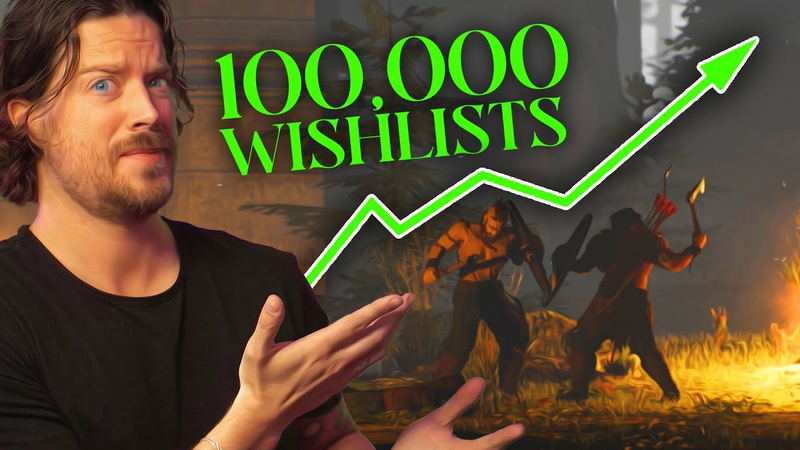
"I Had 100,000 Wish-lists for my game..." and then THIS Happened...
This analysis examines the challenges of independent game development, specifically focusing on the discrepancy between high pre-launch wishlist counts and actual commercial performance.
- Accumulating a high number of wishlists over a long period (e.g., two years) is less effective than gathering them in a short timeframe, as Steam’s algorithm prioritizes recent momentum over total volume.
- Despite achieving 100,000 wishlists prior to launch, the game sold approximately 40,000 units over two years, demonstrating that wishlist conversion rates can fall significantly below industry-standard expectations.
- A gross revenue of roughly $300,000 is heavily reduced by platform fees (30%), taxes (approx. 30%), and living expenses, meaning a 'successful' launch by unit count may still fail to provide long-term financial sustainability for a solo developer.

2.5 gamers x Live AM(F)A #1 - March 20
The mobile gaming landscape is undergoing a significant shift toward hybrid-casual models, characterized by the integration of robust economy mechanics, gacha systems, and meta-game depth into traditionally simple gameplay loops.
- The mobile gaming market is shifting toward hybrid-casual models that integrate complex economy mechanics and gacha systems into simple loops, exemplified by Legend of Mushroom generating approximately $2.5 million in daily revenue.
- Genre-blending is a primary growth strategy, with top-performing titles like Whiteout Survival and Last War successfully incorporating match-three and puzzle mechanics into 4X strategy frameworks to expand their audience.
- AppLovin’s Axon 2 has emerged as a top-performing channel for iOS user acquisition due to advancements in algorithmic signal processing.

4X (R)evolution part2. Last War: The biggest 4X in 2024! Crucial UA integration into core-loop
The mobile 4X strategy genre is undergoing a fundamental transformation driven by the integration of hyper-casual mechanics directly into core gameplay loops.
- The mobile game Last War has achieved significant market success, scaling to approximately 2.5 million daily revenue and maintaining strong download volume in 2024.
- User acquisition (UA) strategy is the primary driver of product design, with developers prioritizing hyper-casual gameplay elements in onboarding to maximize conversion rates.
- Successful 4X titles, including Last War, Top War, and Top Heroes, utilize consistent creative themes such as 'gate' mechanics and zombie hordes across TV commercials, billboards, and social media ads to maintain UA momentum.

Innogames’ Deniz Kekeç On Building Long-Lasting Relationships With Narrative Marketing
Narrative marketing serves as a strategic framework for enhancing user acquisition and long-term retention in casual simulation games.
- Narrative marketing enhances user acquisition and retention in casual simulation games by shifting focus from mechanical features to character-driven storytelling.
- Studios should use rigorous A/B testing via isolated Meta ad accounts to validate narrative personas, measuring success through install-per-mille and overall profitability.
- While narrative-focused campaigns may incur higher initial costs per install, they are justified by increased player lifetime value and long-term retention.

Sustain Creative Excellence to Drive Enduring Growth with Amit Pande & Jen Donahoe
The modern digital marketing landscape, particularly within the mobile gaming industry, necessitates a shift toward creative-first strategies to engage a global audience characterized by short attention spans.
- Advertisers must prioritize native-feeling, vertical short-form video content to capture user attention within the critical two-to-three-second window.
- Over 80% of advertisers are now tailoring creative assets specifically for short-form environments, frequently utilizing influencer partnerships to increase authenticity and engagement.
- Creative assets serve as the primary fuel for machine learning engines, requiring the upload of maximum-volume, diverse asset sets to optimize performance across Google’s inventory.

The Art of Achieving Peak Performance with John Wright, Jennifer Donahoe & Di Weng
This discussion outlines a strategic framework for mobile game development and user acquisition, emphasizing a lifecycle-based approach to achieving peak performance.
- Modern user acquisition relies on automated bidding strategies, such as value-based bidding and ROAS optimization, to hit specific day-three or day-seven performance goals.
- Game development follows a four-stage lifecycle: MVP for core loop validation, Alpha for testing long-term retention with four to six hours of content, soft launch, and hard launch.
- Monetization strategies have shifted from pure in-app purchases (IAP) to hybrid models that capture revenue from both paying users and ad-engaged players.
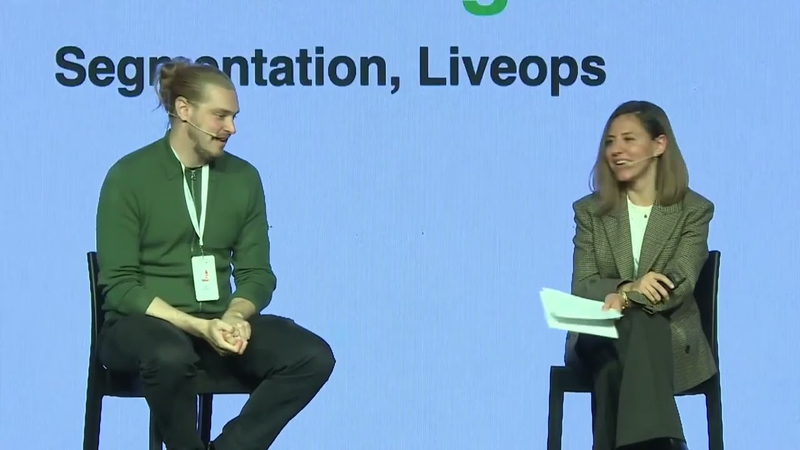
Turn Your Game into a Money-Making Machine with Fatma Güngör Okutan & Felix Braberg
This discussion provides a strategic overview of mobile game monetization in 2024, emphasizing the transition from rapid, hack-driven growth to sustainable, product-focused revenue models.
- Long-term mobile game profitability in 2024 requires a hybrid monetization model that balances in-app purchases (IAP) with sophisticated, data-driven ad strategies.
- Publishers must shift focus from simple eCPM optimization to maximizing total ad revenue and Average Revenue Per Daily Active User (ARPDAU).
- To protect retention and IAP conversion, developers should implement user segmentation tactics such as delaying ad exposure for new players and tailoring ad loads based on geolocation or acquisition source.

Unlocking Global Growth with Google Play's Robbie Hopkins & Romain Mardot
Global expansion represents the most significant growth opportunity for mobile game developers, as consumer spending in international markets currently outpaces domestic growth by a factor of three.
- International consumer spending in mobile gaming is currently growing at three times the rate of domestic markets, making global expansion the primary driver for industry growth.
- Custom store listings that utilize region-specific color psychology and culturally relevant imagery can increase monthly active users by more than 3.5 percent.
- Developers should implement automated pricing tools to adjust in-app purchase costs based on local purchasing power, while using integrity protections to prevent VPN-based price exploitation.

Fireside chat: How Scopely Fuels Growth and Outpaces Rivals with Jen Donahoe & Jamie Berger
The success of Scopely’s mobile gaming portfolio, particularly the 2023 breakout hit Monopoly Go, is driven by a strategic synthesis of intellectual property (IP) integration, social mechanics, and a disciplined approach to performance marketing.
- Monopoly Go generated $800 million in revenue during Q4 2023, providing the financial scale necessary to fuel aggressive user acquisition while maintaining operational discipline.
- Scopely treats intellectual property as a platform for authentic gameplay rather than a guaranteed success driver, exemplified by adapting the traditional Monopoly board game into a real-time social experience.
- Community management is treated as a core marketing function, resulting in significant engagement metrics including 8 million Facebook followers and 500,000 Discord members for Monopoly Go.