User Acquisition reports and market data
Documents

Learn the key fundamentals to social casino game design, monetisation and marketing
The social casino industry represents a significant mobile gaming sector, estimated at approximately $4.5 to $5 billion in total value.
- The social casino industry is a $4.5 to $5 billion mobile gaming market driven primarily by high-spending 'whale' players rather than mass-market user volume.
- Success in this mature sector requires prioritizing high lifetime value (LTV) and sophisticated retention strategies over broad user acquisition.
- Developers are increasingly differentiating their products by targeting underserved demographics, such as younger or male-oriented players, through quest-based systems and mission-driven progression.

Using TV to drive app downloads at scale
Television remains a powerful tool for large-scale mobile app user acquisition, yet traditional advertising models often fail to meet the needs of modern mobile publishers due to their inherent rigidity and lack of performance-based data.
- Mobile publishers should shift from traditional broad-reach TV buying to a performance-based model that prioritizes agility, real-time optimization, and clear attribution.
- Attribution for TV campaigns is most accurately measured by monitoring organic install baselines and daily uplifts rather than relying on short-term, granular click-through windows.
- Performance analysis should utilize 24-hour cycles to account for the delay between viewing a TV spot and the user completing an app download.

Lean game development – MVP in eight weeks, true player-centric iterations forever
The core thesis of this approach to mobile game development is that success is best achieved through lean, iterative processes that prioritize player feedback and rapid deployment over feature-heavy, long-term production cycles.
- Prioritize day-one retention as the primary metric for early-stage success, as it serves as the most critical indicator of a game's viability.
- Develop a Minimum Viable Product (MVP) within an eight-week timeframe to validate core mechanics and minimize financial risk before committing to long-term production.
- Strip away non-essential features like 3D graphics and complex social systems in the initial release to focus exclusively on refining the core gameplay loop.

An indie survival guide to self-publishing in the mobile free-to-play world
The mobile free-to-play (F2P) landscape is characterized by high market saturation, with over 800,000 games on the iOS App Store and thousands of new titles launching weekly.
- The mobile F2P market is highly saturated, with over 800,000 games on the iOS App Store and thousands of new titles launching weekly, driving user acquisition costs to record highs.
- Developers must choose between self-publishing and partnering with a publisher based on their internal capacity for managing UA, ASO, and community engagement versus the trade-off of revenue sharing and creative control.
- When selecting a publisher, developers should prioritize alignment on monetization strategies—specifically the use of offer walls—and verify the partner's track record and portfolio fit for their specific genre.
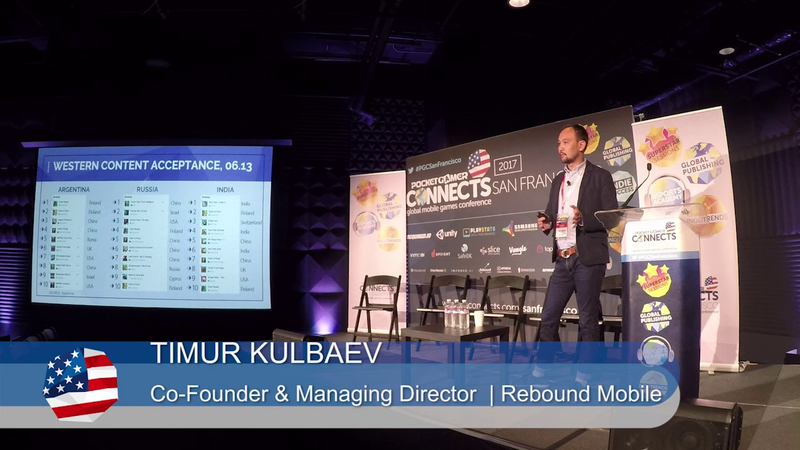
Where to tap next? Unlocking global potential for your mobile game
Mobile game developers face increasing saturation and rising user acquisition costs in Western markets, necessitating a strategic approach to global expansion.
- Developers should prioritize market selection by synthesizing macro-level indicators with game-specific ROI metrics, specifically the ratio of lifetime value (LTV) to cost per install (CPI).
- Western markets are experiencing high saturation and rising user acquisition costs, necessitating a shift toward emerging regions like Indonesia, which offer higher projected growth potential.
- Competitive density should be measured by calculating advertising spend per smartphone, which identifies Turkey, India, and Vietnam as markets with lower barriers to entry compared to the United States.
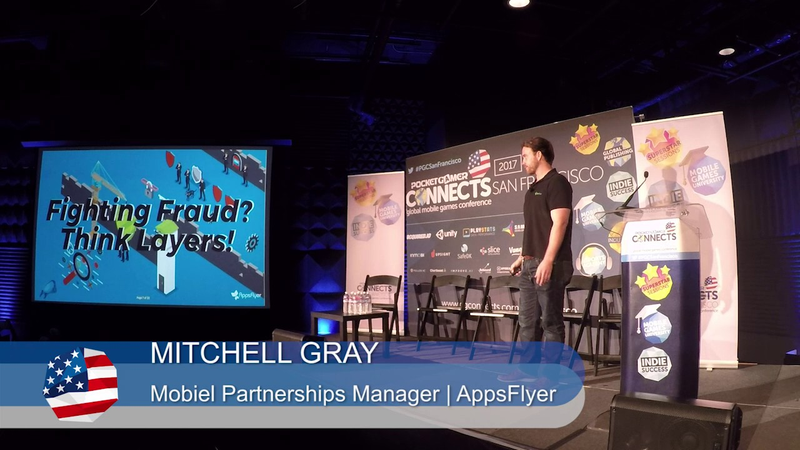
Rapid response to mobile ad fraud
Mobile advertising has surpassed web-based advertising in scale, leading to increased investment and sophistication among marketers.
- Attribution providers can mitigate fraud by leveraging massive datasets, such as those analyzing over half a trillion interactions per month, to identify and block malicious activity across entire client bases.
- Fraudsters frequently target organic installs to force marketers to pay for users who would have downloaded the application without paid intervention, creating a prisoner’s dilemma that complicates accountability among ad networks.
- Effective fraud mitigation requires a layered approach that combines real-time prevention with post-mortem detection, as simple blacklists of IP addresses or devices are easily bypassed by sophisticated actors.

Rebound's tips for launching your mobile game in Eastern markets
Successfully launching mobile games in Eastern markets, particularly South Korea and Japan, requires a fundamental shift in strategy for Western developers.
- Success in Eastern markets like Korea and Japan requires a heavy focus on brand advertising, including TV commercials and offline subway ads, rather than relying solely on Western-style digital performance marketing.
- Western developers often mistakenly believe that simply translating a game into the native language is sufficient for an Eastern launch, failing to account for the need for localized marketing strategies.
- Communication with players in Eastern markets occurs at a much faster pace than in the West, requiring more frequent in-game events to maintain engagement.

Papa Jake and Free Hive Games on influencer marketing for mobile
Influencer marketing has emerged as a critical strategy for mobile game developers navigating an increasingly saturated app market.
- Influencer marketing is replacing traditional performance-based advertising on platforms like Facebook, which has become prohibitively expensive due to a saturated market with over 500 new app launches daily.
- Successful influencer partnerships require vetting creators based on content style, audience demographics, and personal gaming preferences rather than relying solely on subscriber counts.
- Providing influencers with early access to games serves as both a pre-launch marketing tool and a feedback loop to identify gameplay issues before public release.

Dark Patterns: How Good UX Can Be Bad UX
Dark patterns in game design represent a critical intersection where effective user experience (UX) techniques are repurposed to manipulate player behavior for short-term monetary gain.
- Dark patterns prioritize short-term revenue through deceptive UX, but they ultimately damage brand reputation and increase long-term player churn.
- Common manipulative tactics include bait-and-switch advertising, UI designs that trigger accidental purchases, and notifications using guilt-tripping language.
- Exploitative design relies on psychological pressure, such as leveraging social peer pressure or low-probability rewards, to force player compliance.

Building Appstore pages and promo videos that don't suck
Optimizing app store product pages is a critical strategy for developers, as over half of all app downloads originate from organic discovery.
- Optimizing screenshots to prioritize actual gameplay over menus or login screens can increase conversion rates by 35%.
- Promotional videos that feature clear gameplay and descriptive text provide a 19% to 35% lift in conversions, with further optimization yielding an additional 22% increase.
- Upgrading amateurish icons to professional designs results in a measurable conversion rate improvement of 8% to 17%.

The growth techniques that all game developers should know about
Game developers often struggle to achieve a positive return on investment when the cost of user acquisition exceeds the lifetime value of a player.
- Prioritize organic growth through word-of-mouth and viral loops to mitigate the risk of user acquisition costs exceeding player lifetime value.
- Optimize onboarding by using A/B testing to evaluate tutorial necessity and applying the 'grandma test' to identify and remove interface friction points.
- Time push notification prompts to moments of high player value, such as immediately after receiving a reward, rather than requesting permission during initial setup.

How to identify, retain and engage the highest value mobile game users
This analysis explores strategies for mobile game developers and marketers to identify, retain, and engage high-value users through optimized buying models, attribution management, and fraud prevention.
- Securing 'first-view' impressions—the initial video ad a user sees daily—is the most effective strategy for driving high-value installs and maximizing return on ad spend (ROAS).
- Users who consume fewer total daily video ads demonstrate a significantly higher conversion probability and greater lifetime value compared to those who see many ads.
- Advertisers can guarantee first-view dominance by utilizing CPM-based bidding models for specific publishers, effectively bypassing the volatility of conversion-rate-based bidding.