USA reports and market data
Documents

US consumers are planning to cut back on buying video games
Economic instability in the United States, characterized by rising costs for essential goods such as food, utilities, and insurance, has significantly dampened consumer sentiment to levels not seen since mid-2022.
- The US video game market growth forecast has been revised from a projected 4.3% increase to a 4.7% decline due to economic instability and rising costs for essential goods.
- Approximately 30% of US consumers intend to reduce their spending on entertainment and gaming as financial pressure reaches levels not seen since mid-2022.
- Consumer engagement is shifting toward high-value, low-friction platforms like Fortnite and subscription services, which allow users to maximize utility while minimizing discretionary spending.

Tariffs and Affordability: The US Consumer In Limbo
The United States consumer market is currently defined by significant economic strain, characterized by a shift in discretionary spending away from general merchandise—including video games and apparel—toward essential categories like food and beverage.
- The U.S. video game industry growth forecast has been downgraded from an initial 4.3% projection to a 4.7% decline.
- Retail spending growth of 4.6% in Q1 2024 is driven by inflation-adjusted pricing rather than an increase in unit volume.
- Approximately 40% of consumers plan to reduce overall spending if tariffs increase retail prices, with nearly one-third of that group specifically targeting video games and entertainment subscriptions for cuts.

Planning the Game Day Experience Room for C.S. Mott Children's Hospital | Design Club
The Michigan Game Day Experience at C.S. Mott Children’s Hospital serves as a specialized therapeutic environment designed to integrate recreational technology into pediatric care.
- The Michigan Game Day Experience at C.S. Mott Children’s Hospital uses a symptom-based approach to integrate video games as therapeutic tools for mitigating pain, boredom, and anxiety in pediatric patients.
- The facility maintains a curated library of 'cozy' and low-barrier titles, such as Journey, Flower, and A Little to the Left, to ensure immediate satisfaction and broad accessibility for diverse cognitive and physical needs.
- Technical operations rely on daily hardware resets and shared, persistent accounts to protect patient privacy while allowing for gameplay progression.

Epic Defeats the Big Bad Apple - Here's What it Means
The recent legal ruling in the Epic Games versus Apple case marks a significant shift in the mobile gaming landscape, as a federal judge determined that Apple violated a 2021 injunction by imposing a 27% commission on external purchases and restricting developers from directing users to alternative payment methods.
- A federal judge ruled that Apple willfully violated a 2021 injunction by imposing a 27% commission on external purchases and restricting developer communication regarding alternative payment methods.
- The court has prohibited Apple from collecting fees on external transactions and from limiting how developers direct users to third-party payment options, despite Apple's ongoing appeal.
- Epic Games is leveraging the ruling to relaunch Fortnite on the US iOS App Store, marking a significant shift in mobile distribution access.

Week in Mobile Games E52: Tim Sweeney's epic App Store win & Tripledot's $800m AppLovin deal
The mobile gaming landscape is undergoing a structural transformation driven by legal challenges to platform monopolies and significant consolidation among major publishers.
- A US court ruling now mandates that Apple must allow developers to link directly to external payment systems on the App Store, a move expected to significantly impact mobile ecosystem revenue tracking and user acquisition strategies.
- Tripledot has acquired AppLovin’s games business, adding 10 studios—including Lion Studios, Machine Zone, and PeopleFun—to its portfolio, creating a combined entity with 2,500 employees and an anticipated $2 billion in annual gross revenue.
- The Tripledot acquisition doubles the company's daily active users to 25 million and expands its footprint to 23 cities, with the firm maintaining a 20% stake in the new venture alongside AppLovin.

Behind Roblox’ Unhinged Growth
Roblox continues to demonstrate significant growth, characterized by a consistent upward trend in key performance indicators, including a 25% to 30% increase in daily active users (DAU) and a 22% rise in the US and Canada market.
- Roblox is approaching 100 million daily active users (DAU), driven by a 25% to 30% overall growth rate and a 22% increase in the US and Canada market.
- The platform is successfully expanding its demographic reach by retaining users as they age past 13 while maintaining a stable acquisition rate for younger players.
- Financial health is supported by strong free cash flow, bolstered by an economics team that uses algorithmic price personalization, regional adjustments, and dynamic price floors for avatar cosmetics.

🚨 EMERGENCY EPISODE🚨 Game over, Apple? What you need to know & do NOW!
The April 30, 2025, United States court ruling marks a transformative shift in the mobile gaming industry by declaring Apple’s anti-steering policies anti-competitive and unenforceable.
- The April 30, 2025, U.S. court ruling declared Apple’s anti-steering policies anti-competitive, immediately allowing developers to bypass Apple’s payment systems and avoid the mandatory 30% commission.
- Developers can now link directly to web stores and promote off-platform pricing, with industry projections suggesting up to 50% of iOS revenue can be migrated to these web-based platforms.
- Studios are increasingly utilizing merchant-of-record services to handle the complexities of global payment processing, risk mitigation, and regulatory compliance associated with direct-to-consumer sales.

The video game industry is not ready to lose boxed games
The video game industry is currently navigating a precarious transition as the physical retail market experiences a sharp contraction.
- The UK physical game market experienced a significant contraction in 2024, with sales volume dropping by 26% and revenue falling by 34.5%.
- The decline of physical retail is being accelerated by a weaker release schedule for the Nintendo Switch, which has historically functioned as the primary anchor for the boxed game market.
- The industry faces mounting economic instability, including rising hardware production costs, volatile tax credit policies in development hubs like Quebec, and the threat of international trade tariffs.

Gaming Under Fire: U.S, China, Tariffs & More
The global gaming industry is currently navigating a period of significant volatility driven by macroeconomic instability, shifting international trade policies, and a challenging investment climate.
- The gaming industry is shifting from high-budget, multi-year production models to a 'survival mode' characterized by cost-efficiency, lean operations, and smaller, iterative development cycles.
- Western studios are losing their competitive advantage as global access to cloud software and high-end hardware allows Eastern studios to leverage lower labor costs and higher development efficiency.
- Investment in the sector has transitioned from a growth-oriented model to one of extreme risk aversion, making funding for new mobile and PC projects increasingly difficult to secure.

Session: Skills & Cash – How Real Money Mobile Games Are Shaping A Billion-Dollar Industry.
The real money mobile gaming industry, specifically the skill-based gaming sector, represents a significant and rapidly expanding segment of the broader gaming market.
- The U.S. skill-based mobile gaming market is valued at $9 billion, representing 14% of the total gaming market with an annual growth rate of 12%.
- There are currently 20 million active skill-based gamers in the U.S., but market research indicates that 46% of all mobile gamers are interested in playing for money, signaling significant untapped potential.
- The industry is targeting a broader ecosystem of 200 million real-money gamers, which currently includes participants in daily fantasy sports, social casinos, and sweepstakes.
2025 Game Industry Salary Report
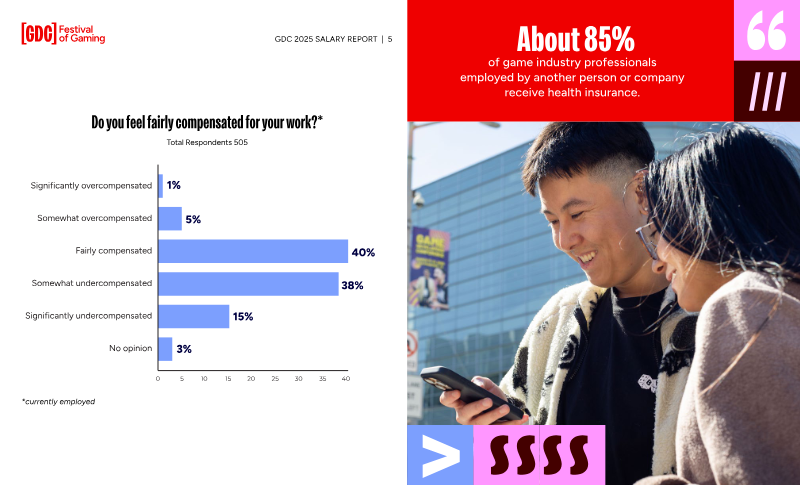
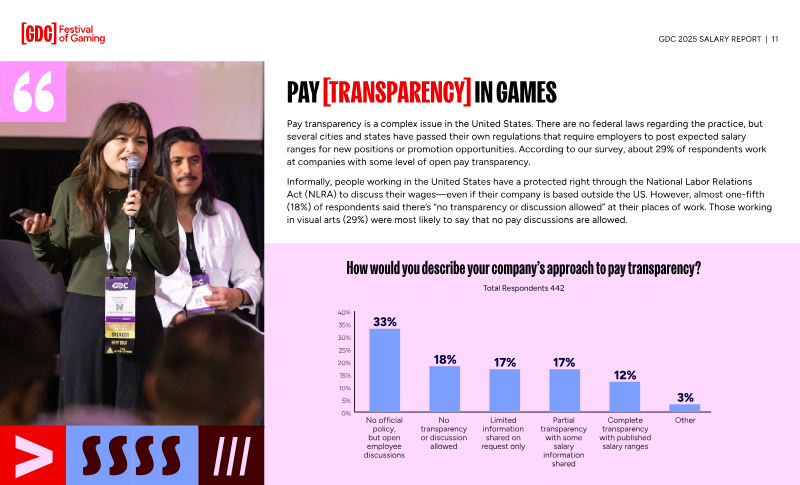
The 2025 Game Industry Salary Report provides a comprehensive analysis of compensation, job security, and workplace sentiment among video game professionals in the United States.
- The average annual salary for U.S. game professionals is $142,000, yet 80% of workers perceive the industry as less secure than other career paths due to widespread instability.
- One-fourth of industry professionals experienced a layoff in the last two years, with nearly 50% of those affected remaining unemployed.
- Significant wage disparities persist, as non-white workers earn 27% less than white peers and women earn 24% less than men.

TWIG #319 Scopely 💰 Niantic, Marvel Rivals Drama, and Xbox in Downfall?
The gaming industry is currently navigating a period of significant structural realignment, characterized by aggressive consolidation, shifting consumer demographics, and the struggle to maintain growth in a stagnant market.
- The console market has shifted into a zero-sum environment where Sony is consistently gaining market share at the expense of Microsoft.
- Niantic’s gaming division is currently the subject of acquisition rumors at a valuation of $3.5 billion, highlighting the ongoing struggle to sustain growth in the location-based augmented reality sector.
- Chinese firms like NetEase are pivoting away from costly Western satellite studios, signaling a broader industry-wide shift toward lean operations and away from speculative expansion.