VideoThe Game Business
The video game industry is not ready to lose boxed games
17 Apr 202554 min video
Transcript
You go to Astrobot though, 55% of Astrobot sales were physical. So more people bought that game in the box than they did as a download. We know that the industry has been struggling in general for the last few years. And the government of Quebec last year took a look at everything that was happening, decided like, you know, now is exactly the time when we want to be kind of like messing with this whole tax credit [Music] thing. Hello and welcome back to the Game Business Show. This week, physical games retail is on its knees, and I'll share why. Even in 2025, this is a real challenge for video game companies. Bungie's marathon has been revealed, and the internet, or at least the social media algorithms, are skeptical about it. The US tariffs continue to play havoc and threaten to play even more havoc on an already beaten up video game industry. And Shir Yoshida's extended retirement tour continues with criticism aimed at Nintendo Switch 2, a console I actually got to play this week. But first, let me introduce our guest host for the week. someone I spent the best part of eight years working besides and
remains one of the very best journalists I've ever worked with. It's Brendan Sinclair. Hello Brendan. Hey Chris, thanks for having me. There's the there's the there's the patent enthusiasm. I love welcome to the show. Um you're at the Logic now. Uh what's what's the Logic? What's that about? The Logic is a Canadian business and tech website. We cover just news with a distinctly Canadian angle. So, I'm I'm still getting to write about the video game industry here and there, but mostly where it intersects with, you know, Canadian interests. Well, I did see a piece um which you may have sent me uh a few weeks a uh the tax break situation in Canada. It seems like it's gone a bit wrong. Yeah. So, this is a fascinating story that's been playing out in in the industry here is just like what's happening with Quebec and Montreal for the longest time. When you talk about
the Montreal development scene, it's like, well, there's tax credits there. The government's paying them to be there and and that's why Ubisoft, Warner Brothers, Idos, Square Enix, that's why all these giant companies came. And we know that the industry has been struggling in general for the last few years. And the government of Quebec last year took a look at everything that was happening, decided like, you know, now is exactly the time when we want to be kind of like messing with this whole tax credit thing. They've changed it up. They haven't cut it entirely. They've made it a little bit less generous. And one of the big things that they're they're taking like the first 18,000 or something of every employees salary is not eligible for the tax credit. And the problem with that is that you've got a lot of businesses in Montreal and Quebec that have been there for, you know, decades relying on this cuz this tax credit was in the '90s that it was introduced and they've kind of baked it
into all of their business dealings for like this is how we make our profit. And some of them, you know, service providers of the keywords sort, localization, Q&A, testing, they tend to run on very thin margins. They get by by doing a lot of work. Also, you know, those people might not be paid the best. So if you've suddenly got, you know, a whole bunch of people making like $50,000 to do your QA testing and then a third of the tax credit on that is no longer you're not getting that money back from the government, that could very easily take what is a profitable and sustainable business and push it onto the other side of the ledger. So this is just like the tax credit changes at the same time Ubisoft, we know they're having issues. Yeah. And Ubisoft, they employ about a third of the Quebec game development scene. The studio in Montreal is huge. It's almost 4,000 people. They've got Quebec City. The Hybride VFX studio is is in
Quebec. Like Ubisoft is such a loadbearing pillar of the Quebec game industry and they are having a tough time of it right now. and suddenly these these changes come in and that that could uh threaten to destabilize the industry in some really uh interesting ways. I think we talk about the the wider story in video games right now which is tariffs. Yeah. And how the just the uncertainty of what it's going to be like tomorrow versus what it's like today and how that that just taints everything and and puts a blanket on any kind of investment. And for the most part, software developers have been exempt from these sort of tariffs. But this is a situation in Quebec with the tax credits where now that we've seen things like the Quebec government scaling back on them. In 2019, Alberta had a conservative party government that was elected and one of the first things they did was get rid of the tax credit
that Alberta had, which did not help Boware very much at all. these tax credits just because now companies know they can go away. Yeah. Which they always could technically, but if you didn't have cautionary tales to point to to say like, "Oh, wow. Yeah, that really messed over these companies." Yeah. Now, I think they're they're very much more uh aware of this and that makes the tax credits less enticing than they were before because there is some uncertainty surrounding them. Although it is a Canada, Quebec specific story here, I I think it has a lot of implications for the wider industry, any place that there are are tax credits or or any place that you have companies looking to find, you know, inexpensive labor pools to to send element off to. So, it's all tied up in this big knot of uncertainty surrounding the industry right now. And I worry, but
you know, I'm a worrier. So, well, I think it's interesting because in the UK, we hated the tax credits for years. There was this campaign about how the brain drain in the UK dev scene was caused by everyone was going over to Canada to work because that's where all the big studios were being formed cuz they had all the tax breaks. So, the UK's reaction to that eventually was to introduce it own tax breaks. And now we're starting to see more and more places just have these tax breaks. And there's a train of thought to go actually if we've all got tax breaks, do anyone do we need any tax breaks and and it and it I guess that becomes when you're just sort of canceling each other out a little bit. And now we're starting to see people open up places in areas that just have low labor costs or you know exchange rates and places like that where you're right, you know, you could open a studio in the UK, but the UK's got a series of different challenges linked to Brexit and stuff. Is it is it better off to outsource or QA to India or things like that? But it's coming at a, you know, with all these talent pools, these groups of people who have, you know, set up homes and places where
they, you know, where there's a blossoming game development scene, if that suddenly becomes under threat, you know, if Ubisoft was to close any any of its Canadian studios or do anything in that regard, I mean, I'm I should think they wouldn't or even if it was just, you know, they severely, you know, reduce the size of that team. That's a lot of, you know, talent in that space looking for work and and there's not much incentive necessarily to set up there, I guess, in the same way there was before. Yeah. I look at the tax credit issue. I've always been fascinated by it because on the one hand, like, yeah, like look at Quebec as an example of what tax credits can do for a a development scene. It it turned Montreal specifically into a worldwide development hub and some amazing games have come from it and there is a development scene there now that owes a lot to the tax credits even if they were mostly AAA kind of developers taking advantage of it originally. Now you've got like Sabotage, Thunder Lotus, Kip
Fox games. Like there there is a scene red barrels of independent uh developers, publishers in Montreal, in Quebec that are, you know, globally relevant and producing exactly the kind of successful businesses and culturally relevant work that was sort of like a best case scenario for the tax credits. But on on the other hand like is is this something that the government should be doing is like picking sectors that are you know we we are going to privilege this sector over some other generic IT firm or some other little corner of the economy. And I'm not sold on whether or not they definitely should be, but once you start doing it, once you build something like this, uh, then you have, you know, a thriving sector that is
dependent on these tax credits and and it really is, like you were saying, an arms race where a lot of other people have been accelerating their own tax credit programs. And British Columbia a couple months ago, they they extended their tax credit. They expanded it from like 17.5% to 25%. They made it permanent because before it was like a we need to renew this every few years and and so there's other other people going in the opposite direction with it. In some ways they painted themselves into a corner here. Yeah. It's like if you're going to do this, then you really got to kind of do it and stick to it for the people that have been attracted by the tax credit that that were like, "Okay, we're going to invest in your your region because of that and we're going to build our businesses or when you have the tax credit, you know, communicate that it is, you know, this is this is a temporary boost." One of the biggest biggest issue I see is that the tax credits and they change now that they're sort of encouraging people to hire more senior staff and not bring
through the juniors. Isn't that part of the changes? Yeah. So, it used to be that there was a cap on the total salaries. Like you'd get the tax credit on up to $100,000 of each of each employees salary. And now they're like cap's not there. And that really sort of pushes people to hire the the more experienced developers cuz they want more senior people, more influential decision makers to be located in Quebec. They want the heart of the business to be there. One of the biggest complaints about the tax credit that that critics have had, I think, in in recent decades is just that it has mostly been foreign companies that have thrived with the tax credit. Ubisoft is French company. Square Annex Japan. Idos was UK. Yeah. And and Behavior Interactive is the largest homegrown like Canadianowned success story.
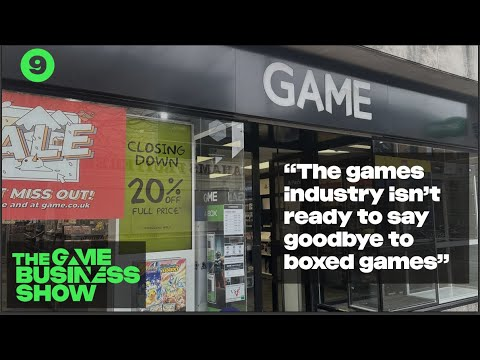
They've done fantastic especially with Dead by Daylight, but they are they are an outlier. And so the the thinking was that these these tax credits, they're really just helping these foreign companies. Canada doesn't own any of this. You know, we're we're making money and sending it off to the IP owners and other countries. Yeah, that's been an issue. Yeah. Well, let's switch to a even more challenging topic. Um, which our main one for this week, which is about video games retail. Now, reason why this was going to be our main topic this week. I had a story, not the biggest story in the world, but certainly a story unfortunately I sat on it for too long and it got out there last week, which is uh the UK retailer game is closing its HQ and its warehouse. Game is owned by a retail group called Frasers Group who most famous for the sports direct uh stores. They have been really causing havoc at game in recent times. They've emerged game systems of their own which means that game stores are unable to do pre-orders. They're unable to do pre-owned anymore. So game is no longer
able to do the basic things that games retailers are sort of known for. If you talk to game store staff, and I don't just mean the store managers, I mean people in that head office, they're quite they're a bit of dismay at the situation. They are hoping things will stabilize and they can start reintroducing some of the things that have been taken away. And although I do appreciate that optimism, my experience of uh this stuff is that rarely goes back. That's a negative story for the UK scene. Very specific story, but it's not the only one. on. If you've been paying attention to the news lately, GFK retail data, again this is for the UK, I do have some European data as well, says that physical video games fell by 26% in volume in 2024 and 34.5% in revenue in 2024, which is a startling figure. For the first quarter of this year, physical video game sales are down 29% in volume and 27% in revenue. It's not it's not stabilizing any way. Now, a lot of that decline is because of the Nintendo Switch. Nintendo is a dominant player in the physical
games market, which we'll come back to a few times. It had a weak release late last year. It didn't have as big, it had a Zelda game, didn't have its big Zelda game like it had in 2023. It had a Mario game in 2023. As a result, in the UK, 4.4 million Switch games was sold in the UK last year, which is still more than anyone else, but that's a drop of 1.8 million games over the year before. By contrast, PS5, which is also relatively retail friendly, not as retail friendly as Nintendo, but relatively, they saw a drop of 800,000 units in 2024. PS4 saw a drop of 600,000 units. They went from 1.8 million PS4 games sold in 2023 to 1.2 million. Xbox, they've never been the biggest at retail, but that dropped by 300,000 games 2024 as well. Everyone dropped, but if you kept up with all of that, the drop in the number of physical Switch games sold was bigger than the drop of PS4 drop, the PS5 drop, the Xbox Series X drop, and actually the Xbox One drop combined. So Nintendo has a down year, retail has a down year. Uh that
was just the UK and say similar story in Europe. In terms of units sold in 2024, physical game sales were down 22% to 56.5 million units. That's GSD data. And again, this was primarily driven, although not exclusively, but primarily driven by a drop in Nintendo Switch game sales. Now, considering this, you might be thinking, okay, but there are a lot more Nintendo games this year, including some pretty huge ones in Mario Kart World and also Pokémon Legends ZA, which are games that typically sell millions in in boxes. Across Europe, new game releases on Switch can account for up to 80% of its sales can come from the physical games market. I garbled that. But basically 80% of new physical games on Switch can come from physical. So it's a big deal. And there's also other games like Metroid and Donkey Kong. So it's potentially a strong year this year. But then came the other killer blow which is during the Switch 2 reveal which you we talked about this a little bit on the Switch 2 podcast, but Switch 2 games will be cheaper digitally than they are physically. And this was
actually a shocker for me, more shocking than anything that came out of that Switch 2 reveal because no major games company, no platform holder has priced digital below physical before in part to protect the physical retail stores, which you know, amongst other reasons. So for that to happen here and for Nintendo to be the one doing it, you know, one of the most physical retail friendly companies, I mean, I didn't see that coming. As I say, we had game on the podcast uh a couple of weeks ago when that news came out and he kindly said that he understood the decision but admitted it was a challenge for them and it is u if by doing this Nintendo significantly increases the digital market share for its games then that will be a real blow to what's left of games retail. It's certainly been a string of bad stories uh for for physical games retail and you can you can understand why Nintendo would do this. um cartridge costs are high and they want to try and keep the pricing down where they can. But also if physical games retail is dying, if it is going away, being so dependent on the box sector for game sales is not a great situation to be in. So growing those eHop sales has got to be a priority. So
yeah, bad news for shops. Physical game sales down by as much of a quarter last year and the company responsible for the biggest slice of the physical games is pushing digital with cheaper pricing. It feels uh it's it's if you're working in that side of the industry, it's it's quite um it's quite uh bad. I don't know what it's like. The physical retail seems drastically changed anyway. There's barely any presence of video games on the high street. I don't know what it's like in Canada, Brendan, but I'm I'm guessing it's a similar situation. Yeah, it's it's not good. I mean, there's there's GameStops here and they are the same as what I hear everywhere else, I think, where it's like mostly Funko Pop and other merch and then there's a show of the games. Toys R Us here got rid of their game shelving section. We still have a Toys R Us, which is which is nice, but they got rid of the game shelving section and they replaced it with a popup store for HMV so that they could sell vinyl. Yeah. Yeah. So, it's records. The the dominant entertainment
media form of the 70s and early 80s has replaced video games on the shelves cuz that's viable business than physical games here. And yeah, the the Nintendo pricing thing is is interesting to me because I think digital has always been cheaper than physical generally speaking, but mostly that's just because the you get deals afterwards that go Yeah. Yeah. deeper and you know, you wind up with Humble Bundle kind of stuff where they just shovel games you'll never play that you can add to your backlog for a few bucks a pop. It's interesting that they are splitting the price now for new releases. Uh like day one that digital would be cheaper than than physical. I think that sounds like the the actual significance here, but we've been paying a premium for the physical version in other media for a
while. You know, Blu-rays or the vinyls that you get at Toys R Us now. iTunes was just sort of like when it launched and it was like 10 bucks an album or whatever that was already undercutting the cost of a new physical CD. So it doesn't strike me as being that much of a oh now we're doomed cuz I think like physical was kind of doomed before and it will transition to the period where it exists but it is very much a niche sort of well that that charges a premium. And the question is whether well I you might be getting to this whether or not the hardware makers will actually still include cartridge slots or disc drives or things like that which drive up the cost so that you can enable a physical opportunity. Well, it's worth talking about the fact that so I mentioned that number that headline number like in terms of revenue down by a third in terms of video game sales but
I think it's worth stating this is a problem for certain parts of the market. So I mentioned Nintendo right? So I said Nintendo 80% of new game sales for them when they release a new game is sold in a box. So if the box set game set was just to disappear overnight if there fewer people selling boxes or if you know that kind of thing then then that's a problem for Nintendo. But it's not just Nintendo obviously video game consoles and accessories are dependent on retail. You can't download a headset. But even certain types of games. So here's some here's some data. I come obviously naturally this is me. Um big action shooter games are typically very digital. So in the UK last year nearly 81% of Warhammer 40,000 Space Me 2 sales were sold via digital retailers and this was also the case broadly speaking across Europe. Sports games is a little less but still very high. So 73% of EA Sports FC25 sales such to name were digital. 76% of F124 sales were digital and 70% of WWE 2K24 sales were digital. So still very digital. You go to
Astrobot though, 55% of Astrobot sales were physical. Um, so more people bought that game in the box than they did as a download. And there are others got there like Hogwarts Legacy. So one of the biggest games of the last 2 years in the UK, 45% of that game sales were physical. You go back to 2023, more people bought Spider-Man 2 in a box than they did at launch anyway than they did as a download. Now that might have been because of some hardware bundling, but it's still, you know, more people bought it from shops than they did from digital stores. Assassin's Creed Mirage, 49% of sales were in a box. Resident Evil 4, 45% of sales were in a box. Now, you might say that, you know, you go digital only or or the physical goes away. People will just move to digital. And that's probably true. And in fact, even in the physical space in the UK, over 80% of all the revenue made on physical video games were made via online retailers like Amazon. So, less than 20% of physical game sales are actually made in actual shops like we get on a high street or in shopping malls or in retail parks. But although some will maybe even a lot of customers will move to digital,
there will be some lost customers. And and today's world where the focus is on we're trying to get growth back to the games industry. And one of the things I think is a problem with growth is that every games company at the moment is focused on increasing the average revenue per user. Um so they're just trying to get people to pay more for the games rather than trying to necessary widen the pool of players cuz that's proven to be quite difficult at the moment. That's not necessary an issue on an individual company basis. and profit is obviously paramount at the moment, but from an industry point of view, we need to try and grow the audience for games. I just I think that's the only way we as an industry can get back to proper growth is if unlock new customers and the death of games retail does not help that. But at the same time, there's no going back. We're in the situation we're in. But I do think there's a lot we can learn, the digital space we can learn from retailers. I've seen a bunch of people that I used to work with when I used to work at MCV, which was a retail magazine. lots of the store managers, sort of retail buyers and people that worked in retail teams are now cropping up at game publishers. And I think that's quite smart because when it comes to discoverability crisis, when
it comes to um convincing customers, they're actually getting a good deal on the things that they're buying, which is a big topic at the moment. We can talk about that a little bit. I think retailers actually quite good at handling these situations. They're kind of the experts in this area. So, it might be worthwhile bringing some of these some of these people into the publishing. You know, there used to be a time where it was you could buy your game from 10 stores. You can go to Blockbuster, you can go to GameStop, you can go to Walmart, you can go to Best Buy, you can go to all these different places to buy video games. Now, if you there's basically in the console space, there's basically four retailers, three retailers, eShop, well for Amazon, eShop, PlayStation Store, and and Xbox Live and it's the marketplace and then that's it. I think there's room for us to get better there. um learn because ultimately we can talk about how bemoone the death of retail but it's it's it's happening and it's accelerating and we as an industry that's trying to manage all of these other challenges that we're facing growth challenges um tariff challenges tax break challenges we could do without losing customers um because we don't have means for them to buy
physical boxes that's what I think there's my rant I agree and every transition creat creates problems and there are people that are left behind. But a lot of the criticisms that I have of the industry for how they have managed the transition to a digital world are more about the ways they they've transitioned to a business model that allows for unlimited spending from each individual customer. I think the industry has has shown a lot of restraint in the other hand on keeping retail as part of the equation for as long as they have. Yes. Uh I think they had the technical ability to do you know straight digital distribution. I mean they showed it with the PSP Go. Yeah. Right. in the late 2000s and yet they still stuck with
supporting physical goods, not you know pricing them differently until this point and keeping GameStop which was a thorn in the side of the industry for years and years. They I don't think that they actively undermined them as enthusiastically as I would have expected given what GameStop's business model was and given the volume of complaints that I used to hear about GameStop's business model. What I find a little bit funny is a lot of that was around pre-owned and um one of the biggest complaints we get now, one of the biggest convers not complaints I guess but conversation points is oh legacy game sales are so strong now they're eating into new game sales and the complaint obviously back then was pre-own was killing legacy game sales but obviously there was there but the truth was there was a actionable data that showed that you know I think a game had a stat was like 91 or 92% of people
that traded in their games at game did so against new And obviously this is this is why we talk about pricing. I'm going to say so you may seen the Marathon news um this week. There's a new Bundy game by Marathon and fans are are again the social media um algorithms are telling me everyone hates it. I'm sure that's not really the case but um there's a lot of conversation around the price of it and whether or not it's offering good value. And a lot of people point to the fact that, you know, video game pricing has stayed the same for so long and, you know, you know, $80 for Mario Kart World. When we factor in inflation, we're not really seeing a price rise at all. We might even be seeing a price drop, blah, blah, blah. And they're saying the same with the hardware as well. But I don't really go along with that argument completely because that's what is technically happening with game pricing and what is really happening with game pricing. I'll give you an example of this. And this may seem like I'm I'm going to start off positive, but it's it's it's not entirely. So, you can't escape the negativity around the Switch 2 pricing at the moment. I can um I don't have to a purchasing decision on
Switch 2 yet. Well, it certainly seems to be if you're in the game space, every time I go on a Facebook wall, I see a big ask. Well, interesting. I saw this article being pumped into my face, which was the full version of The Legend of Zelda: Breath of the Wild and Switch 2 will cost you $90. And that's based on the fact the game costs $60 on Switch 2 and if you want the DLC it'll cost you another $30. And the idea being I think it's to try and give the suggestion that if you want to upgrade your copy of Breath of the Wild to Switch, you're going to have to pay an obscene amount of money. But obviously that the headline's technically true, but in reality that isn't that isn't true. Most people who want to play Breath of the Wild on Switch 2 probably already own Breath of the Wild and probably own the DLC as well, in which case the real price is $10. And if you happen to have a Nintendo Switch online subscription service, it actually cost you nothing at all. And indeed, that's how much it's costing me. I I actually think, oh, I'm getting these two big game upgrades for nothing. Mario Kart World is actually a similar thing. So, in the UK, Mario Kart World, the box version is £75. You've
never seen a game be that high. So, that's what all the headlines are. But millions and millions of people will be getting that game the way I'm getting that game, which is through the hardware bundle that um they're promoting at the start. And the hardware bundle in the UK prices Mario Kart World at £35. In fact, it's the cheapest I've ever bought a Mario Kart game of all time. And of course, if you buy it digitally, it's a little bit less as well. So, there's the technical truth in the headline that game prices are higher than ever. But the real price is actually less for a lot of people. But this was also the case 10, 15, 20 years ago. Games didn't cost £50 or $60 10, 15 years ago. They didn't. The recommended price might have said that, but that's not what people actually spent. Retailers would always knock a few dollars off. There'd always be a bit of a price war competition. There were trade-in solutions. I say I remember going into game with four old copies of title like FIFA and getting a brand new one for a pound. That's one of the offers they used to do quite a lot of. I think I bought Assassin's Creed 3 back in 2012 for £35 I think from Tesco
I think it was for Xbox 360 that was on. And in today's money that's 50 quid whereas the only option I have for Assassin's Creed Shadows is £70. So I think that's what the real price was. And then there's what the real prices are today. And there is for me there is an increase in pricing. So I understand that. And going back to our point on on the retail side of things. That's where retailers came in. They were really quite good at you know giving you that may in a way they used to call it basket spending. You might have seen it, you know, I don't know. I always hated it when I went into a shop and someone was trying to tell me hey do you want to buy a controller with that and buy this for that and buy that? And I know other people they felt end up spending more and they end up feeling good about it. Whereas now I feel people are spending more and feeling terrible about it. I do think there's a retelling skill here that we are we've lost a little bit. I mean I say that Ubisoft Plus the um subscription service they've got I think it's called Ubisoft Plus basically allows you to rent Assassin's Creed Shadows for like $15 or whatever or $15 which is you know an interesting digital retelling solution. Nintendo used to do those um vouchers you could buy where
you could get two Switch games for reduced price if you got this voucher. And obviously when it comes to legacy games, as you mentioned, there's always these Steam sales, there's always these big promotions. I just don't think we necessarily go deep enough on that kind of thing. When it comes to digital retailing, I think there's a way of getting people getting it sounds really uh uh mercenary, but sort of encouraging consumers to spend more whilst still making them feel good that they're getting a good value out of it and getting good getting a good deal. Um I'm not sure they're feeling that at the moment, which I think is where a lot of this stress is. You know, with Switch with the Switch One, I got it for 100 quid less because I traded in my Wii U. And that's pretty much the case for every piece of hardware I had before that. And with the Switch 2, I don't have any option. Nobody's nobody's promoting a tradein offer for the Switch OLED or whatever that I've got. I I I just have to buy it and have this old console sitting on my shelf cuz there's no secondhand gaming market to sell the the trade into now. Yeah. I will say your your point of view is a little bit different from mine because like uh you mentioned Tesco and that and I I I
remember a lot of complaining about that about like supermarkets in the UK discounting the new release games. My memory of it in the US and and Canada uh to a lesser extent is just that new games didn't really have sales like that around. No, it was definitely it was different in the UK. There was lots of prize wars for a period of time in the UK. And I think that's a lot of what we're seeing now digitally is that there just is less competition because if everything's going through, you know, the Nintendo e shop anyways, you're buying it from Nintendo. And I think people generally have like a platform that they prefer to play on, whether it's PC, Xbox, Switch, whatever. but they aren't likely to like look at the PlayStation version of this game is cheaper. So, I'm going to go away from my main platform if it's Steam or if it's Switch or whatever and get the
PlayStation version for that. I think it would have to be really like a deep cut to to actually win people over for that. And that you don't get those kind of cuts on new release games these days. I think the best you get is like what a 10% discount at launch from the digital storefront. And that's not about competing with other storefronts. I think it's just about getting you to actually pull the trigger on a purchase right away. So when consumers don't have choices between competitors that are engaged in the in the kind of aggressive pricing that you were talking about, it's not going to happen that these prices magically get Yeah. offered at a at a nicer price point. So like I I think the hobby is despite the advent of freeto play, I think it is getting less affordable and and you can see that even in the equipment that you need to buy it. It's super weird to me that they raised the price of the PS5 again. I look at the where the industry has been heading in the last 5 years and stuff
just doesn't get cheaper anymore, right? And then there was a pandemic, supply chain problems, and now there's tariffs and trade wars and everything. But we have not seen things budge towards being cheaper. Like, has anyone had price cuts? No. No. We're going the other way. Everything's getting more expensive. And I understand why. You know, I'm I'm business journalist. I get what's going on here. But I mean there's a a a prominent um games industry person said to me opera used to be the most popular entertainment uh form in the world or one of them. And he said we can't bank on video games forever being you know you can you can bank on it being around forever. You can bank on artists creating stuff and everybody wanting to support those artists and buy those things. But the the business component of it, whether you love it or not, is what drives all of this big expansive investments and and concepts and money and lots of people can make a living out of it. And that requires I just think it
requires an element of audience growth. And the fact that we've got to the point where it seems to have slowed and increasing those prices and making it more prohibitive, I don't think that solves the overall industry problem. But, you know, it might solve the problem in the short term. But I think there just needs to get to a point of how do you you know, it's interesting. I talked to I talked to Jackbox Games this week about their service they're doing with Amazon where they're trying to get games into the hands of everybody as easy as possible. Netflix talking about how they're trying to get their hands into the games. When I when they tell me these stories and I do these pieces and I get a few gamers commenting on it going, "Oh, he's going to play that stuff on Netflix." I'm like, "Yeah, but it's quite it's it's quite accessible, relatively cheap way of playing video games." And I I don't think there's enough of those generally, you know, unless except for the ones that are filled with microtransactions or things like that. You know, the ability to be able to play a video game from start to finish in an affordable way. I I think it's is something that we we ought to still be thinking about as a business. But, um, it's certainly a challenging time and I think the loss of games retail, it's not new. It's like I'm not
talking about something that, oh, games retail was here yesterday and it's gone now. It's been fading away and fading away and fading away. But as I some of that data I showed that for some games it's still really really really important even VI and so finding those ways of reaching those people and I think it's going to still be an important thing. Anyway, you mentioned Netflix. I' I've downloaded a few of the Netflix games on my phone and and played through them and there there's some really great games. It kills me because I look at it and I'm just like this is still too much friction. It's super easy to download the Netflix version of the game and if you're already signed into Netflix on your phone, then it's just, you know, sign in there and you're good. But even that in today's world feels like more friction than a critical mass of people are going to be willing to sign up for. It's wild to me just how you need to like connect the feedback straight up to the consumer's head and then you need to pump your slurry of
content directly down their gullet cuz if there is any kind of like activity required on their end it's just like oh yeah but I've already got all these other things that I'm hooked up to. Yeah. Well, that's the thing. One of I'll be honest, that's one of the thinking behind the game business. That's not I wouldn't phrase it like that certainly. But the whole reason why we're doing these in podcasts, we have videos. We have it's in the newsletter. You'll be able to read a lot of these people thoughts in the newsletter. If you if you haven't already, it's on our social media feeds is because rather than expecting consumers to come to us, they're so busy. They've got so much stuff being thrown at them all the time. I'm just going to go to them and l here you go. Here it is. And that is what entertainment is today. Netflix are trying to do new things with like TVs and phones and Jackbox want to be like on TVs and things like that. It feels more like a different conversation. Um shall we talk about tariffs very briefly? Um it's it's a comparatively quiet week for tariffs. Um we we did have um the the news at the weekend that
electronics are temporarily PCs and mobile phones anyway temporarily exempt from the tariffs is actually linked to a um the section 232 I think it's what called um investigation into semiconductors which means the taiffs are almost certainly still coming but but maybe even in a worse way than possible but consoles were never exempt neither were controllers neither were merchandise or any of the products switch two cartridges were which [Music] a relative boost for the physical sales of the Switch 2 games. But the the reality, it's getting quite messy now. It's getting quite complicated and it's still not entirely clear what impact. You know, this is the thing with a lot a lot of people have said to me on social media, well, can't they just manufacture these things in the US? And not only do it take years to get this stuff spun up to get, you know, get the expertise to build the factories and the warehouses and do all the things that's required, they still certain metals don't even exist in the US. They have to be imported anyway. So, you end up in a situation where you'd still be impacted by tariffs. the price of these products
with tariffs uh being proposed one way or another is just going to rise and that's a real problem for video games right now. It's a real stress point for at this point in the you know 2025 was supposed to be the year we got back to growth. It was supposed to be the year that a new console and a couple of big games was going to at least in a short term give us a bit of a bump and then this comes along creates this whole world of uncertainty and it's going to impact everything from investment. We're already seeing consumers in China protesting it by refusing to buy American goods. You're already seeing that actually in Europe as well. I'm not sure that's definitely going to extend to games. Even if these things, everyone sort of walks away from it somehow saving the face and and everyone and tariffs disappear, I still think there's going to be some sort of harm from a consumer point of view in terms of their perception and view of of things. I don't have much to say. There's an article on the game business um which I put up which is like an FAQ on what the latest is and I will be updating it as soon as something else happens which by the way may be the case that twice I've
done these shows Brendan had to cut out or add in something after after recording because something has happened by the time I've recorded this and the time we put it live and that may be the case now. So if I if this this sounds out of date to you then read the article in the game business I would have updated it. Yeah. So when you were talking there, it just reminded me of like, well, you know, in Canada, we're not exactly thrilled about buying American these days. No. And I I think there's the last few months, the turmoil of it, I think, have made clear to a lot of people that they can't rely on trade with the US the way they used to. It was it was taken as a given that there would be access to the US market, especially in Canada. We have a subscriber uh survey for the logic that we're running right now about um how have the tariffs impacted your organization? And the last question on it is do you think that trade relations with the US will ever go
back to the way they were? And it still running. I guess it'll be closed by the time that this actually airs, but uh taking a peek at the the early results anyways, it was something like 80% of the people were saying no, it just won't be the same. And our prime minister at the moment, we're in the middle of an election campaign, Mark Carney, saying like that era of close Canadian cooperation with the US and economic and military ties that we had, that era is over. We're absolutely willing to resume better trade deals and and and situations with them, but we cannot go back to the kind of interdependence that we had taken for granted for decades. And I think a lot of a lot of the world looking at this has to come to the same conclusion, right? If you're a manufacturer selling things from China
or Vietnam, you have to understand that even if there is an administration change here and you get someone that is more in the mold of past presidents, that return to normaly or whatever is is one election away from just evaporating. there is no no certainty with with the US in the way that basically the entire world used to think there was. So this is not a temporary situation that will you know everything goes back to normal. We are looking at a readjustment that will will change the way you know obviously games but everything operates going forward and the what genie is is out in the bottle. Um and you're going to see people doing more working around the United States. I think you'll also see a lot of a lot of
companies moving into the United States to to make things in the US and sell things to Americans. But I I don't think there will be the same utter reliance and dependence on the market that they're used to. Yeah. But from a games point of view, obviously it's the biggest market for video games in the world, particularly console games. And um if you can't sell the hardware there or you can't sell it at a reasonable cost, the impact is on jobs. And it's on jobs. You know, it's worth making noting that US make some of the biggest video games in the world. And this will impact those companies, those software companies. I mean, it's worth noting in 2019, the ESA and some others managed to convince the government not to impose tariffs on when their tariffs on China to impact games consoles. It's possible they could do that um this time. There's still opportunities and we'll obviously be keeping on top of all of that. Um I will end by it's a bit of a long one this one, but uh we'll end on one hopefully sort of lighter note, an unusually critical note, I guess. Shu Yoshida used to have his has his
extended retirement tour going around uh talking about everything. Clearly the the muzzle is off. Um but he um he had a pop at Nintendo this week sort of. He referred to the reveal of the Switch 2 as being a mixed message. I think Nintendo is losing their identity in my opinion. For me, they're always about creating some new experiences like designing hardware and games together to create something an amazing new experience. But Switch 2, as we anticipated, is a better Switch, right? It's the larger screen, more powerful processor, higher resolution. And they even had a hardware person starting the screen like other platforms do. It pops in to be that the Switch 2 isn't innovative enough. I'm not sure. I understand where this comes from, but I think someone like Shu has been around long enough to know that actually this is more in Nintendo's MMO than I think people realize the SNES was a more powerful NEZ with more buttons. The Gamecube was a more powerful N64 with more buttons. The GBA was a more powerful Game Boy with some more buttons. Even the 3DS, I would argue, I know it had a 3D screen, but just a DS, a more powerful DS. Um, the Wii U in a way is the only exception, following the Wii with with a with a new innovation as
opposed to just a more powerful Wii. For me, the Switch 2 being a more powerful version of the Switch is just what Nintendo often do with their second consoles. And so, I'm not entirely sure agree. Also, I think the game chat functionality, if you I played Mario Kart World, I'll talk about that in a moment. So, I'm not ent totally sure I agree with him, but it's um it's certainly a uh a bit of a consensus at the moment that the Switch 2 is is too similar to the Switch One. I'm not going to give you my opinion, though. I'm going to cut to myself from last week when I just played the uh Switch 2. I played Mario Kart, I played Metroid, I played Donkey Kong, I played a bunch of games at a event in London. and I was joined by Andy Robinson from Video Game Chronicle to uh share his views on it as well. Let's uh cut to that clip. We are at the Nintendo Switch 2 launch event in uh London. Well, uh preview event, I guess, press preview event. And I've played a bunch of Nintendo Switch 2 games for the first time. But Andy, this is your second time. Yes, indeed. Uh I'm joined by Andy Robinson of a video game two event stalwart at this stage. Yeah,
I genuinely have been demoing some demos through press. You did it to me just a minute ago. You told me where to go on the I told them to the actual staff to get out of the way. Showed you around. Yeah. So, is there anything changed your mind? Is there anything you do you liked? What was the I was the mouse controls probably convinced me more the second time around. I think it's easy to to be a little bit cynical that obviously a 30 40y old mechanic that we're all so used to on our PCs. Can that really be innovative, really be interesting on a console just by itself? But there's a lot of demos here that I got to spend a bit more time with, like Mario Party, for example, where they demonstrate that the force feedback that they're calling HD Rumble 2. And I know that was a big gimmick on the first Switch, but combining that with a traditional mouse actually does really work. It feels like more tangible. Like there's um a mini game on Mario Party where you pull a um toy car, you know, as you would in real life and charge it up and and then release it and you can feel the tension in the in the mouse as you do it through the force feedback and
it just becomes it elevates the experience more than if you were just on a PC for example. I use the mouse controls on Metroid and I was quite impressed at how you can you use the mouse controls and then to switch to normal controls you just seamless. You just lift it up and it's and it's seamless. And the way I played the Metroid demo was in the more explorative uh moments, I would play with gyro controls traditionally and then when I needed more precision, say on a boss fight, for example, I switched to the mouse. So that is quite cool. Yeah, it is. What did you make of cuz I played Mario Kart? Uh well, there's two types of demos here. I played the Grand Prix, which was great. Mario Kart, basically, and then I played the is it what was the name of the mode? The knockout mode, which is um it's excellent. Absolutely. uh game change. Also, did a bit of free roaming beforehand, which I I could see people enjoying um with a bit of game chat uh in between, but I was I thought that was astonishing. And my initial thoughts were I feel sorry for that Sonic racing game that's coming out this year. Oh, goodness gracious. Yeah, it's um it's it's just on it by itself, it's Mario Kart on such a larger scale. The
the the tracks are interconnected. They're seamless. That mode demonstrates better than anything we've seen in any demo so far what they're trying to achieve with this title. Um, in the knockout mode, you play through four courses that are directly connected. You'll go through a city and then you'll go through a desert canyon and then you'll be in a swamp and it's all completely seamless. Um, you don't really get to see that in traditional GP, but just by itself the race is there's 24 players this time. It's complete carnage by the end, right? You can playing is believing. I think it gets less carnage as it goes on. That's because it starts off with so many players because you knock out as you go through each checkpoint. So, it's it's a lot of it's a lot of fun. That really convinced me. I as a fan I wasn't sure before we got to see the big Switch 2 Direct whether a Mario Kart game could really carry for me a launch lineup. I was expecting Donkey Kong basically Mario but with Donkey Kong and it's not what that game is. And um and obviously because Mario Kart is clearly the hero title. It's not it's not will it get the same focus when it comes out. It's only
out a month later. I mean you always have to attach a caveat when you're being critical of a Nintendo game that we're judging it on a Nintendo scale, right? It's clearly going to be a very very good game. I have a lot of faith into it, but I agree with you. It's um it didn't it's very limited. It's a small demo for what's presumably a very big game. And I'm still unconvinced just how good the core mechanic is, the destruction, the smashing through stuff. I've been told that perhaps it would have be better in a normal playing environment cuz the sound is supposed to really elevate, you know, kind of the feedback of smashing through the scenery. But still, I've got a lot of question marks around it. I'm I'm eager to see more of what that game's about. It's interesting. I really enjoyed the Metro demo, but it felt more like a demo built for like a a space like this than a Metroid game. Um, and oddly things like Welcome Tour, which I quite enjoyed. Um, I I remember really enjoying one, two, Switch when I came to the Switch One event 8 years ago, and that obviously was a bit rubbish in when it came out. I think the press has become quite savvy now to which games are actually a lot more fun when you're playing them at an event with lots of
other journalists playing with you with basically staff excitedly cheering you on. I think we probably attach that caveat to the Mario Kart knockout tour as well. How fun is that going to be in a real world environment when you're you're getting absolutely battered by, you know, 23 other 13y olds from from Eastern Europe or you surrounded by people screaming, "Yeah, go and get a different kind of screaming presumably when you're playing on on real Switch if you played for your game chat anyway." Well, I say I mean I've pre-ordered it. I'm excited for the console. A Mario Kart does look like a step up. Donkey, I'm not too sure about. I enjoyed Welcome Tour. I enjoyed Metroid. It does feel like a continuation of the Switch story rather than a a reset. And I don't know why I always expected that. It's kind of what people wanted. It's what I'm asking for. But uh I think when I see it, I'm like, "Oh, I I this is just my console carrying on. A lot more powerful. Here's the next lot batch of games. Some of them Metroid will be playable on the older one." And uh go ahead. Which isn't quite as exciting as it used to be, but I I think that's
that's that's consoles now. That's consoles. Um, I mean, this is Nintendo's um PS5, Xbox Series X moment, right? Where we turn the console on expecting a brand new experience or older people like us do and you're like, "Ah, all my games are there and it's it's it's a smoother trans. It's not the big reset that we've been trained to to get used to." But maybe that's a maybe that's a great thing, right? It's a better a better switch. Um, I really think that pretty much anything is going to be able to run on this console now. If it can run PS4 games, then it can run pretty much anything, right? Yeah. Yeah. And obviously with modern developers going cross generation and uh and it's it fits that. Well, thank you Andy. Thank you for your opinions. And uh I'll go back to myself in the studio. That was my take on the Switch 2 after I played it. Brendon, have you have you been paying attention to Switch? You're not much of a Nintendo person, are you Brendan? I I am. You are an Nintendo person. I've been much more of a Nintendo person than I think the VA dying was was what did it to me. after
the VA I've been pretty much all Nintendo since then but yeah like I've I've been paying enough attention and I mean for years beforehand I think a lot of people myself included were saying look Nintendo we know about your whole innovation thing want to do new things this time please just more powerful the same thing do do the obvious for once don't don't do like an innovation and force it in there and it sucks. Don't do that. Um, don't try and catch lightning in a bottle a second time. And they listened to us. Um, so now this is, yeah, this is what we asked for, so be be happy with it. U, but I don't I don't I don't think of it as like a a sign that Nintendo was clearly lost its way or anything. I I do think um we are we're probably seeing like a a
more clear glimpse of what Nintendo is like in the future uh without I mean they haven't had Aada at the helm for a while now but Aada was you know behind the Switch. Um, Miyamoto is I mean hopefully he's taking these days making movies or or just making movies and museums and um he's in that he's in that space, isn't he? Yeah. Like he is not going to be driving Nintendo forward in the future the way that he always has been in the past. And there's Nintendo is was not just Aada and Miiamoto. there's, you know, an entire organization of of, you know, hundreds, thousands of people that have a lot of them been there for a very long time and are part of the the fabric and the DNA of the company. So, it's not like evaporating overnight or anything. But, uh, you you have a transition in leadership here and that is that's going
to have, you know, impacts on way the company looks. What is that? I guess maybe from a hardware point of view, but I Donkey Horn Bonanza is completely different to anything I expected it to be. I'm not sure I liked it, as I said, but um and um uh you know, there was Dragon Drive and there was all the sort of stuff that you expect from um the Nintendo weirdness. It just didn't necessarily come through in the hardware. It's a sort of, you know, it's the software side of things. I think the most innovative thing they did with the 3DS was never the 3D screen. It was the Street Pass stuff. That's the stuff I'm want to see about. Anyway, um that's that's I think we've run out of time by then, as is always the case. Always zips by when I'm talking to you or when we talk Nintendo. Certainly when we talk Nintendo. Um uh probably a little bit quiet on Nintendo for a few weeks now. It has dominated the uh uh the agenda a little bit alongside tariffs. Well, hopefully next week there will be a little bit, you know, we'll have some other new stuff next week or or you know, we've also talked a lot about movies lately and Minecraft films. Um,
but next week we will have a special feature show with another game studio which uh you can stay tuned for that on the Tuesday and be back for our news analysis show next Thursday. Brendan, thank you for joining us. It's a pleasure to be uh talking to you about video games again and for everyone watching at home or listening at home, thank you for tuning in.
Auto-generated captions from YouTube — names and numbers may be misheard.




















Comments