VideoDeconstructor of Fun
Epic Defeats the Big Bad Apple - Here's What it Means
10 May 202521 min video

Transcript
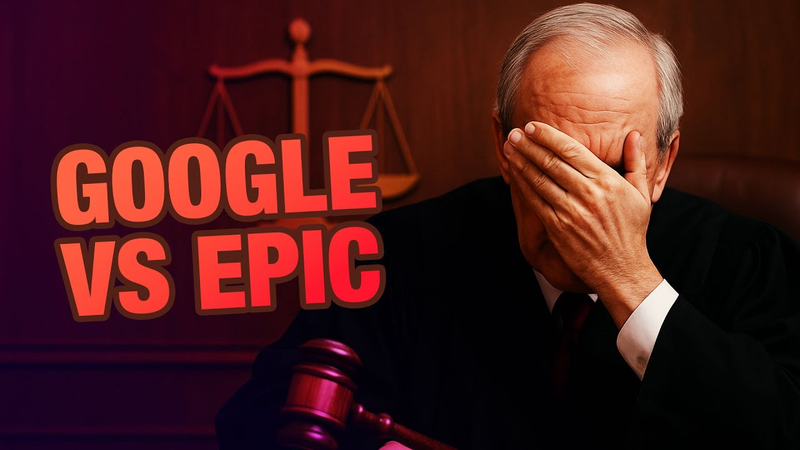
[Music] Let's get to finally the big Epic announcement is all right. Epic Games versus Apple. So, if you're watching, we have a little bit of a timeline up. So, let me just do a quick table setting of some of the facts just to catch you up and then Crest obviously has thoughts. So, first is a federal judge determined that Apple violated a 2021 injunction by imposing the 27% commission on purchases made outside of the app store and restricting developers from directing users to alternative payment methods. Now, we just talked a little bit about how some folks have been able to kind of maneuver around that being a little bit sneaky, but overall that is now gone. The judge labeled Apple's actions as a willful violation and referred the case to federal prosecutors for potential criminal contempt charges and Phil has
some comments on that a little bit later. He's been digging into the entire ruling and so a lot of interesting and nuggets in there. Effective immediately, Apple is prohibited from collecting fees on external purchases and from limiting how developers guide users to third-party payment options. It is payment palooa on Apple everybody like party time. So Epic Games also announced plans to relaunch Fortnite on the US iOS app store in the coming week. Tim Sweeney has indicated if Apple extends these changes globally because right now this is just in the US. Epic would consider dropping all of the ongoing litigation. To hear more from Tim himself, he's been on a podcast frenzy. So on May 6th, he was on the channels podcast with Peter Kofka and then also on a Lex Freedman podcast. Like super deep dive there. So that kind of catches you up on on where we are, which is of
course Apple is appealing, but there are no limitations while this is on appeal. If you love your Exolas and your, you know, your different web stores, call them up because, you know, you can get going on this. All right, Chris, to you. I obviously think that Apple's freaking evil, right? And they deserve everything they get. But having said that, they are trying to protect their own, right? They're doing everything that they can in order to do that. And it is very clear to anybody that's in the ecosystem that they did not respect the court's decision. And the court is basically saying they did not respect the decision. Right. And in the court battle, and I and Phil might go in this a little bit, they were discussing the meetings because I was part of discovery. They were actually talking about the meetings and it was [ __ ] evil. like they wanted to scare the scare screens. Like they really like were going ramping this thing up to a level that like is is just ridiculous, right? Clearly not at all abiding by the court's decision, right? And then
charging the 27% commission was absolutely ridiculous. Like we all know this, right? We all know that they are dirty birdies and they're just trying to protect their own, right? And this discrepancy with this communication is actually again lead to Alex Roman, the VP of finance lying under oath, right? This may be actually a criminal court violation. So what will actually ultimately happen is that this is going to allow developers to offer external payments, right? And it looks like the cat's out of the bag. It's going to happen no matter what. But I actually really agree with what this Andrew Green guy who's a good friend of mine who put this out on LinkedIn and I kind of took his stuff and like edited a little bit. But but ultimately I don't think this is the real boon that people think it's going to be. And back to what we were talking about before in terms of distribution being you know the biggest challenge in this industry or more of like the games and the big companies is that this is actually a benefit for the big not necessarily a benefit for the small. This is not going to open up the market to brand new innovations and new genres
and it's just not right because ultimately any money that's saved is going to get flown right back into [ __ ] UA, right? This is not going to be a saving for the consumer, right? This is not going to be some like kind of like windfall of margin improvements for the publishers and developers. This is going to go right back into UA. And you know who's going to win? Apploving Facebook, Google. not Unity because they're trash, but like the ecosystem is going to perpetuate itself and we're going to be right back where we were before, right? So, this is a good news for the industry as a whole. But I want to be clear, this is not like a wide openen door here to new new games and smaller publishers. Sure on the margin there could be some successes here and there but ultimately this is remains a battle of the big and again all this money is going to go right back into the established games and established players and the big will be able to execute on this far more quickly and flawlessly than the small and I think this just leads us to a more UA
arbitrage environment right just with more money able to spend so this is kind of my take on it hopefully I'm wrong but but it again I guess this brings me back to the whole distribution thing is like regardless of whether or not you get 30% savings if you're basically back to where you were like within 6 months then you know I don't know if it's Apple and Google have really caused you know the dominance of a few players in a few games so any other thoughts out there Apple's revenue from app store is quite significant I actually did not know that so it's services make 25% of Apple's overall $400 billion annual revenue now I don't know what all is part of services but for sure app store is part of services and there's a rumor that 15% of Apple's overall ebida is actually coming from app stores. So that's a significant portion and you would assume that they will fight tooth and nails to keep it and I'm just thinking about that and like what's the likelihood of this
ruling to uphold in the future because you know Apple has been a good boy the uh with the emperor of America Tim Cook took the knee at the inauguration event. So you never know you never know with the current establishment. I'm not going to touch that one. Uh, what I do want to touch on is is this the Berlin Wall moment for the digital world? Like, you know, did Tim grab a big giant Fortnite pickaxe and, you know, start to take down the, you know, in a sense of what the wall is that Apple has built and Google, by the way, and a lot of companies are going to kind of pick up the hammer and start, you know, making what the new digital world looks like. So Chris, I think you make a really great point about like, hey, this is going to funnel back into UA to drive more people in, but it's a modern-day gold rush of companies who are going to try to chase that margin. That margin is now going from, in a sense, Apple to
somebody else. And you're right, it might not necessarily go to the small game developers, but I think there's a whole host of web shops that are trying to chase what that is. And by the way, speaking of web shops, Epic just actually announced that they're going to do a web shop as well. So to further capitalize on the moment, Epic is going to launch web shops for devs. The web shops will be hosted by the Epic Game Store and enable developers to offer out app purchases. And they've updated their revshare. So developers will now pay a 0% share on the first 1 million in revenue per app per year followed by the usual 12% revenue share once they earn above that amount. So that's what I think. But Phil, you had so much I mean you were you know Sherlock Holmes in that ruling. What else did you see? So when I when I follow Tim Sweeney on Twitter and you hear him talk about his battle with Apple I mean he sounds unhinged. I thought it was like almost inappropriate. So I went through this
80page ruling and remember double spaced. So it's not actually 80 page. It's a it's much more manageable. And I would highly suggest people go through the raw PDF. I finished that 80page document being radicalized. I was ready to get Tim Sweeney shirts. [ __ ] Apple. I was ready to return my iPhone. It wasn't that Apple is protecting the interests. It's the lies. And those lies were directly called out in this court case. So one example would be at the beginning of the 80page ruling where they talk about the discovery process. So as a part of you know any sort of legal proceeding the plaintiff or the defendant can ask for documents related to X Y or Z internally. And one of the things that Apple did is that they claim something like you know all these documents were what they call privileged documents. So if a lawyer is in an email chain, you can call it privileged client attorney privilege, which means that you wouldn't have to hand over those documents as part of the search process. And what ended up happening is when they
got challenged around a lot of those privileged moments, they ended up retracting a lot of the things that they said were privileged. Why were they doing this? Because they were pulling [ __ ] where you just add lawyers to irrelevant email threads to claim it's under client attorney privileged. And we're talking about thousands of documents that they were doing this for. Now, there's always a little bit of shenanigans in these cases, but the scale at which Apple was doing this was breathtaking. That's one thing that immediately my engines were starting to get fueled. The next part was when Apple executives lied under oath. And this is why the case is being recommended for criminal proceedings. Now the court of California may or may not choose to pursue this but they have direct testimony from one of the Apple executives when they were considering this 27% change and he said that they had only considered you know this particular form of the entitlement program where if you did have a link out you have to apply for it and they would take 27%. He lied under oath because we have written documents internally at Apple that they were discussing this far
beforehand that they actually ended up implementing it. It is a direct lie. He perjured himself under oath. And not only that, it looks like there was a conspiracy with Tim Cook and the chief financial officer to implement this lie. It is documented. It is documented in this court case. The third thing that really pissed me off was the scarecreen stuff. So, they have direct quote from the UX designers who was giving feedback to the scarecreens. And so, he's going through and you can see in the court document different scarecreens that they considered. And one of the things that this UX designer had mentioned when he was considering one of the scare screens, he says, "If we want to scare users a bit, I like the addition of out, which is one of the text symbols on the scarecreen that he was considering because it raises questions and hesitancy. Haha, out. Out where? Oh my god, what do I do?" That is sabotaging a ruling. That is dirty, dirty [ __ ] Is incredibly disrespectful to this industry. One of the things that Eric Seaffort, I think, correctly pointed out
almost a year or two ago in his blog was that the app store is the game store. For the vast majority of time, the cumulative amount of revenue that the games industry has forked over to Apple is in the billions. And Mishka, as you pointed out, like that's almost all margin, right? And not only that, the what we've gotten in return isn't just them trying to protect their monopoly or the 30%. It's the disrespect, right? And this is why I I really hate Nantac and I hate Roblox. It's the disrespect to the medium of games. And this is what it always bothered me about Apple 2 is it felt like they were being disrespectful to what we do despite the fact that we're the ones giving them all this margin. And so there's some other tidbits that I thought was really interesting. If you go through the court documents, if you were ever interested in what Apple pays their lawyers, it turns out it was about 80 million for this case, which to me actually seems like a low number considering was at stake here. I mean, I would have instantly tripled that if I was Tim Cook. I mean, you're kidding me. Like, you're you're fighting you're fighting for like one of your biggest, you know, Iba growth margins here. Yeah. Well,
Phil, like sadly, they did triple that. Well, they're doubling it because Epic spent a hundred million on Project Liberty, which was the code name, and now Apple has to pay those fees. Yeah. Love to see it. Okay. So, so the real question that people are asking me anyway is what's going to happen from here? What's likely to happen from here? It looks like Apple's kind of [ __ ] like overall like just generally speaking clearly. But what some people think is that they'll reduce it to 15% and see if they can move forward with that and see if that eliminates the need for the majority of people to move off of the app store. Like that's definitely possible, right? 15 to 20%, like you know, then switching costs get a little bit more questionable. That's possible, right? The other thing is that we should see is more crazy [ __ ] going on with the hacks of the, you know, the early inapp purchase days with like these like, you know, artificial [ __ ] and like just crazy marketing and campaigns and stuff like that. Lots of like bad things for consumers that publishers did back then
without Apple kind of like protecting the consumer from that perspective. That could get bad. But it could lead, and this is the argument that Exola is trying to make and others is that it could lead because you have more flexibility in terms of promotion and doing dirty tricks and stuff like that. It actually could lead to better monetization overall because the tactics you couldn't do on Apple, you could now do outside of the Apple ecosystem. That's definitely possible. I mean, certainly we talked about it like Exola, Stash, Appcharge, all these guys are going to be, you know, the hot chick at the bar. Sorry for the the expression, but that's exactly what everyone's going to want to partner with them and make sure that that they have the opportunity to do so and to optimize as much as possible around offstore payments. Your analysis is completely right here. Like this I think this is GDP enhancing for Meta and Apploven and what happened to their stock on this announcement? They're both up because everyone knows where the gains are going to go. UA is going to get bit up again, right? Because now a lot of that that LTV number is more internalized. We're basically just shifting the GDP share of
gaming away from Apple towards us and towards advertisers. And Eric Seaffort had tried to be making all these arguments around personalization that there's functional things that you get in the web store that you weren't allowed to do in the app store and a lot of those barriers came down. So for instance, there was limits on how many SKs you could have in the app store. They expanded that last year to like something like 10,000. It's a ton of SKS. There was limits on what the max price could be. They increased that. So, a lot of those benefits that we had in terms of like increasing monetization rather than just the web share, like being able to use new tactics, I I don't really see materialized. I'd love to hear from, you know, our app charge partners, Exola or Stash on like what they think are like the unique ways that you can increase modernization rather than just getting the 30%. You're spot on on this one. There's no changes in innovation here. This is just us getting GDP back. Yeah. And the other big thing though, this has got to come to Europe, right? If it happens in the US like Europe will follow because they usually lead the charge, right? So yeah, it's very likely that that Europe will follow
really quickly UK and then EU and other bodies out there. But we've talked about this before, which is consumers are dumb and we have to figure out a way to be as frictionless as possible with all of these new systems. And I think in your emergency podcast, if you can just so elegantly and easily make sure that a consumer who, you know, a 60-year-old grandma who's spending, you know, the $9.99 on a Royal Match, you know, battle pass, gets in there and makes that purchase without even realizing that she has skipped over Apple's payment system with just I double click and it scans my face and I'm in. Not every single piece of this margin is going to a web shop. So, I want to make sure people understand that, especially for games where, you know, consumers are a little bit less tech knowledgeable. They aren't trusting of linking out or all of those different things or they just don't care and they just want it to be easy. So, Chris, what do you think
about that element of things? With this kind of flexibility, I think they'll be able to make it as seamless as possible. Like if you're integrating Google Pay, Apple Pay, and all the other different payment systems that they're already accessing, sure on the margin, there's some people that are never ever going to move over, but those are likely not the people that you give a [ __ ] about anyway because all we're really talking about, as I said million times, is a a percent of the overall population that spends ludicrous amounts of money on the mobile, you know, on the app store, right? And so it's converting those people and all of them will do it. The other thing again that obviously the third party services keep talking about is that now they actually can do differentiated pricing. They can actually do promos that are much more aggressive in terms of bringing people over to do it. Right? before they were severely limited by Apple by providing from my understanding the same type of offers on store and inapp right so anyway they just have much more flexibility to convert those people that matter right and that's probably what
ultimately they'll target first you know well you remember project liberty that that was exactly what project liberty was when Epic first came out with project liberty when they updated the Fortnite app they had sideby-side pricing where they crossed out the AP price and they had the web price. You can do that legally now. Like Project Liberty is is alive and well. Tim realized the vision. Like they can reship that. That was a real liberation day. Anyways, uh let's talk about the uh uh let's talk about the uh the like who is this good for? So you're basically Chris, you're saying that this is good for the incumbent. So if you have games out there with existing audience, suddenly your EBIDA goes up and you can bit higher and now you become even more of an incumbent. Is that the case? Yeah. Basically, you can do rather than two-year paybacks, you can do fiveyear paybacks and be all good. Uhhuh. And so, nobody who's basically coming to a to a market like if you're trying to compete in these categories with high level of concentration, now they're just raking
in 20% higher ebida. So, you are even more [ __ ] than you were before. So, hello concentration and goodbye new [ __ ] dude. Right. When Monopoly Go is spending [ __ ] $500 million in marketing in six months, do you think anybody can compete with that besides the big and even the big EA, Zingga, they don't they're not spending that kind of money, you know, like they have the public company, you know, guidelines for that spending. They can't just, you know, take celebrities and just [ __ ] blast it in the sky. No, they did. I mean, well, wait, Monopoly Go, they did some celebrity ads this this weekend. If you didn't see, Anakin Skywalker himself was in a few more ads for May the Fourth Be with you. So anyway, yeah, just blowing money, dude. Just [ __ ] blowing money, dude. Abandoned. Just throw that Saudi money out there. It's like a sand in the desert. Who cares? All right. Any any final epic thoughts? Well, hold on. We
need to say a thanks to Tim. like this guy this guy prevailed and took a huge hit personally personally to the company as we were talking about like mobile was a significant part of their DAU it was a significant part of their UFN strategy by the way that's going to be interesting to to kind of revisit and he prevailed at the end and and at the end of the day we all benefited from it and so I'm going to personally put a me memorandum on myself never saying anything negative about Epic Epic Game Store is [ __ ] awesome let it rip baby like you're killing it Epic You're great. Go public. Tim, you're my hero. Love you guys. Honestly, thank you. Thank you. You You defeated Goliath. I think we owe you guys a big thanks. Come back on the podcast. Tim is a former podcast of Deconstructor Fund. That's right. Yeah. Bring him on. Joe Kim got up on a while ago. Yeah. Yeah. Oh, we have the episode. He put us on the Welcome back. Welcome back. He's doing the rounds right now. So, Mishka, reach out. Like maybe maybe you'll get him.
We're we're we're like the 10,000 11th on the list. Oh, for sure. All right, everybody. Thank you, Epic. And we will see you next week. Bye. [Music]
Auto-generated captions from YouTube — names and numbers may be misheard.
















Comments