Serious Games reports and market data
Documents

Observation and Analysis of a Classroom Teaching and Learning Practice Based on Augmented Reality and Serious Games on Mobile Platforms
The integration of mobile augmented reality and serious games into higher education serves as a transformative pedagogical tool for teaching complex, abstract subjects such as electromagnetism.
- Mobile-based serious games significantly outperform traditional lecture-based instruction in improving conceptual understanding of complex subjects like electromagnetism.
- The mobile game 'Parallel' demonstrated a clear academic advantage, with users showing significantly higher average improvements on conceptual assessments compared to control groups.
- The core pedagogical value of augmented reality in education is its ability to render invisible, abstract phenomena into observable, three-dimensional models.


One Size Does Not Fit All: A Smarter Way to Develop Computer Assisted Interventions for Children with ASD
Computer-assisted interventions for children with autism spectrum disorder often fail due to a reliance on standardized, one-size-fits-all designs that ignore the significant behavioral heterogeneity inherent in the population.
- Developers should abandon one-size-fits-all designs for autism interventions in favor of a four-step methodology that segments users based on specific behavioral phenotypes.
- Motion-sensing technology, such as the Microsoft Kinect, can be used to objectively categorize engagement levels and determine if a child is a suitable candidate for computer-assisted therapy.
- Children demonstrating medium-to-high engagement levels during orientation games are identified as primary targets for digital interventions, while those with low engagement levels require alternative therapeutic approaches.

Games Are Motivating, Aren't They? Disputing the Arguments for Digital Game-Based Learning
Digital game-based learning is frequently promoted as a transformative educational panacea, yet these claims often lack the rigorous empirical foundation necessary to support such widespread adoption.
- Digital game-based learning currently lacks a rigorous empirical foundation, relying heavily on anecdotal evidence and speculative hypotheses rather than verifiable scientific data.
- The assumption that high player engagement inherently leads to effective learning is flawed, as game design often prioritizes rapid performance and immersion over the deep, metacognitive reflection required for knowledge acquisition.
- Game mechanics frequently lack the necessary instructional scaffolding, meaning that the freedom of movement in digital environments can hinder rather than facilitate learning.

State-of-the-art in Business Games
Serious games and gamification serve as transformative tools within modern corporate environments, functioning primarily to enhance professional training, recruitment, and consumer engagement.
- Serious games serve as scalable, cost-effective complements to traditional training and recruitment rather than replacements for established business practices.
- Successful implementation requires balancing technical mechanics with rigorous pedagogical design to ensure alignment with measurable educational objectives.
- Widespread adoption is currently hindered by high initial development costs, a lack of empirical research, and leadership skepticism regarding the perceived frivolity of gaming.

Teaching Pre-Service Teachers to Integrate Serious Games in the Primary Education Curriculum
Integrating serious games into primary education curricula serves as a vital pedagogical strategy for enhancing student engagement, particularly within mathematics, science, and history.
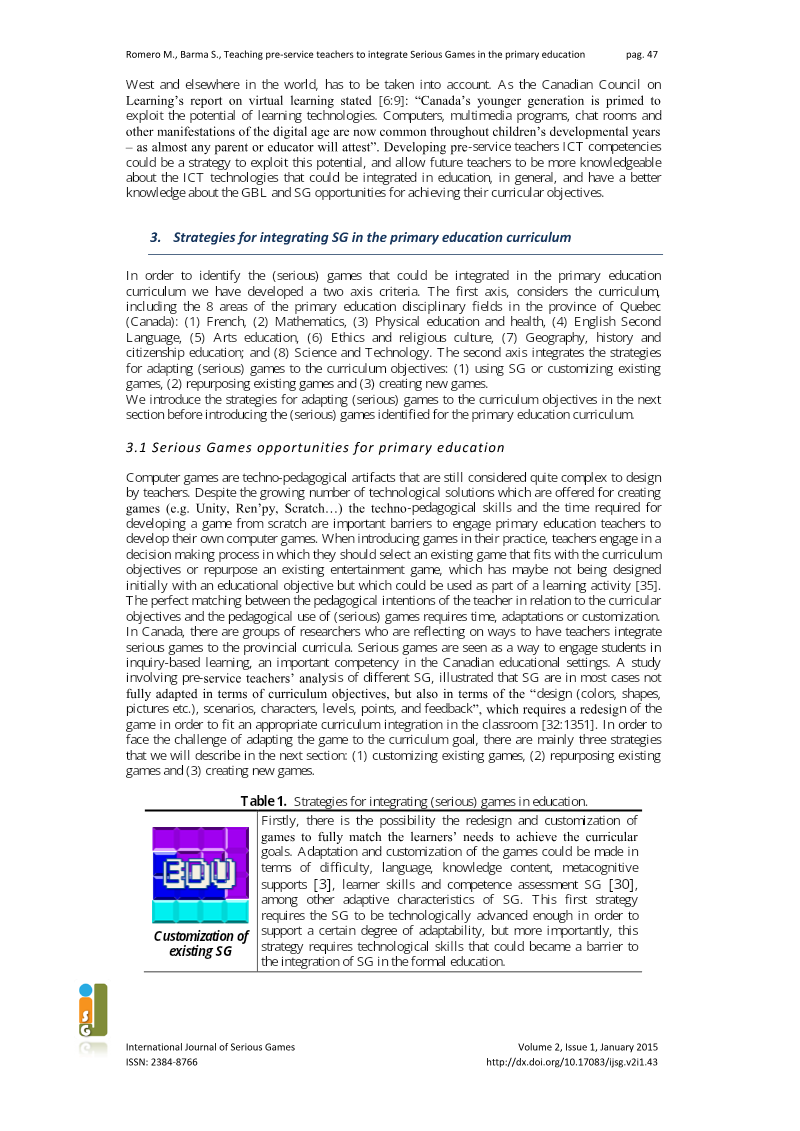
- Successful integration of serious games in primary education relies on teachers acting as facilitators in a community of learners rather than as developers of original content.
- A study of 51 pre-service teachers in Quebec confirms that technical proficiency and time constraints are the primary barriers to creating bespoke educational games.
- Educators prefer repurposing existing entertainment titles or utilizing established serious games over developing original software due to the high preparation time required.
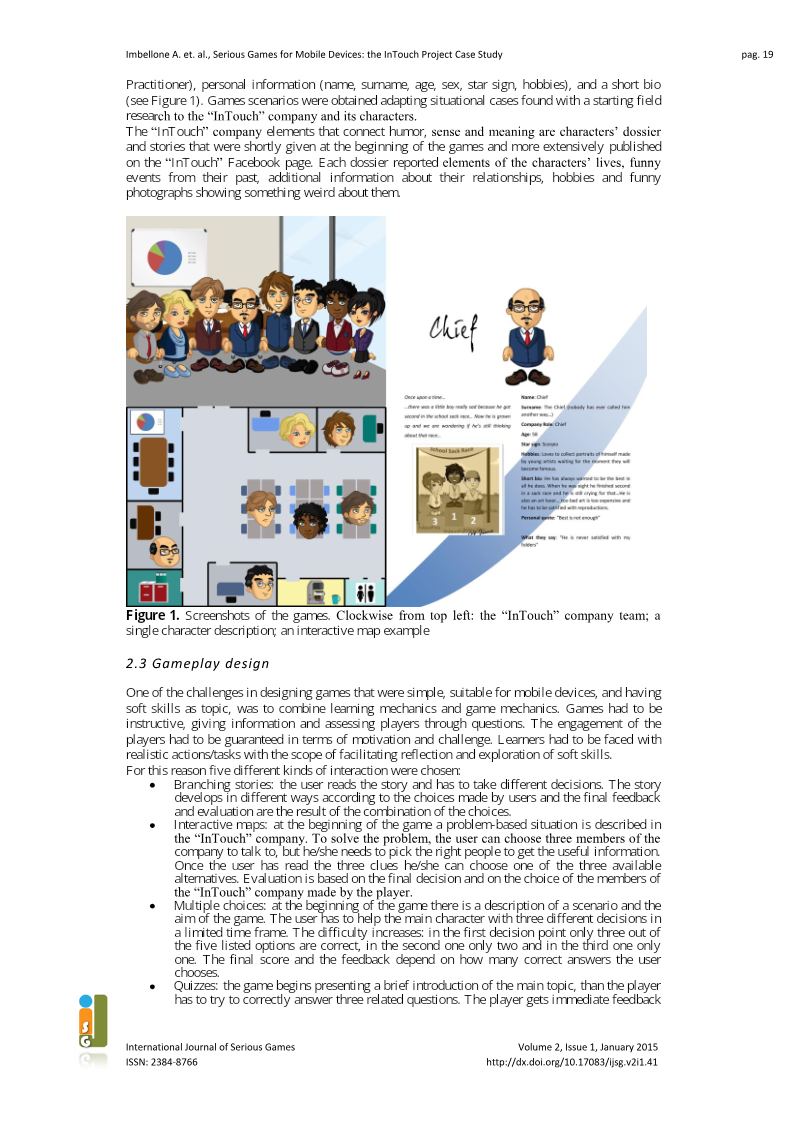

Serious Games for Mobile Devices: The InTouch Project Case Study
The InTouch project establishes a framework for integrating pedagogical objectives into mobile serious games, specifically targeting the development of ten non-routine soft skills among small and medium-sized enterprise professionals.
- The InTouch project successfully translated ten complex non-routine soft skills into thirty distinct mobile simulations for professional development.
- Player engagement and retention are primarily driven by the quality of the gaming experience—specifically fun, difficulty balance, and scenario realism—rather than the educational content itself.
- Intrusive instructional design and excessive feedback negatively impact user experience, necessitating a focus on fluid gameplay mechanics for mobile serious games.
Learning Analytics Architecture to Scaffold Learning Experience through Technology-based Methods
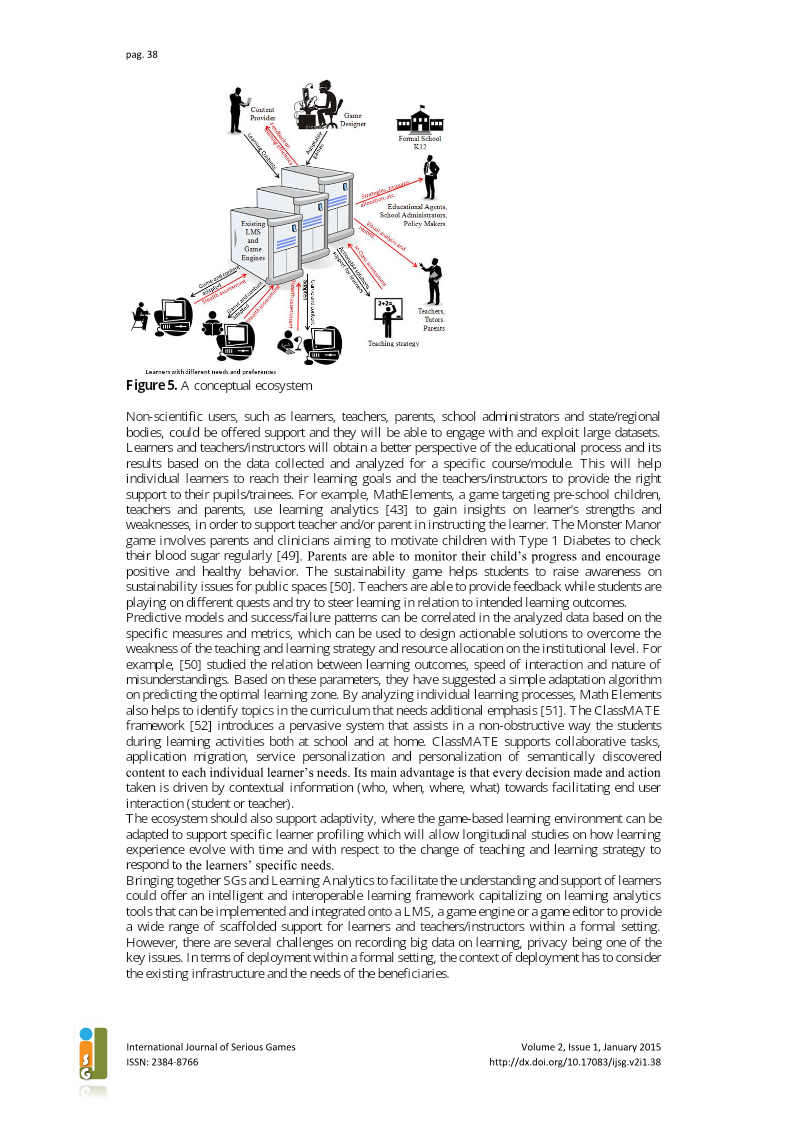
Integrating learning analytics into serious games offers a transformative approach to personalized education by bridging the gap between immersive digital engagement and formal pedagogical assessment.
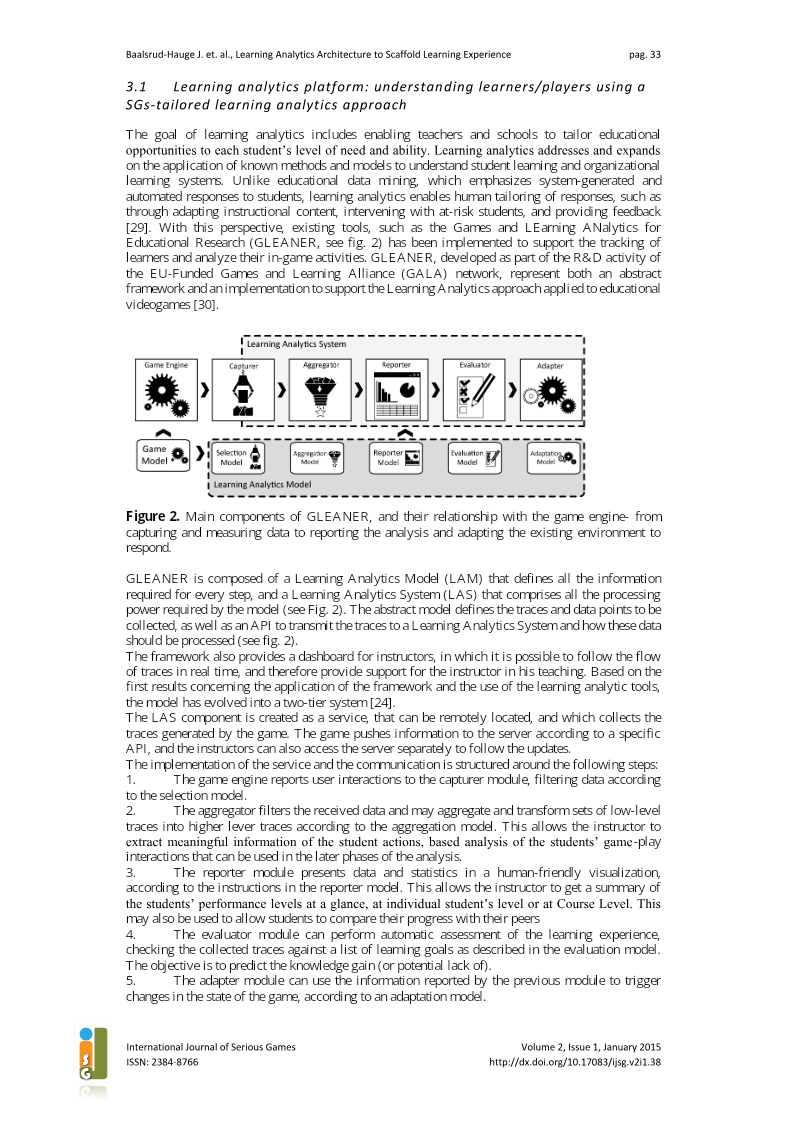
- The GLEANER framework provides a multi-tier architecture that maps in-game mechanics to specific learning objectives, enabling real-time, adaptive scaffolding for students.
- Integrating stealth assessment and automated data collection allows educators to shift from static instruction to responsive, personalized learning environments.
- Centralized dashboards aggregate both generic and game-specific data traces to provide instructors with actionable insights at individual, classroom, and regional levels.
Special Issue on Digital Games for Learning Mathematics
Mathematical proficiency serves as a critical foundation for individual career success and broader societal economic stability.
- A significant gap exists between the volume of available mathematics software and the application of theoretically sound, pedagogically effective design principles.
- The initiative aims to establish a rigorous, empirical evidence base for mathematics learning games to move beyond superficial engagement.
- Key research areas include the integration of learning analytics, mapping mathematical concepts to core game mechanics, embodied cognition, and adaptive difficulty.
Game Elements Improve Performance in a Working Memory Training Task
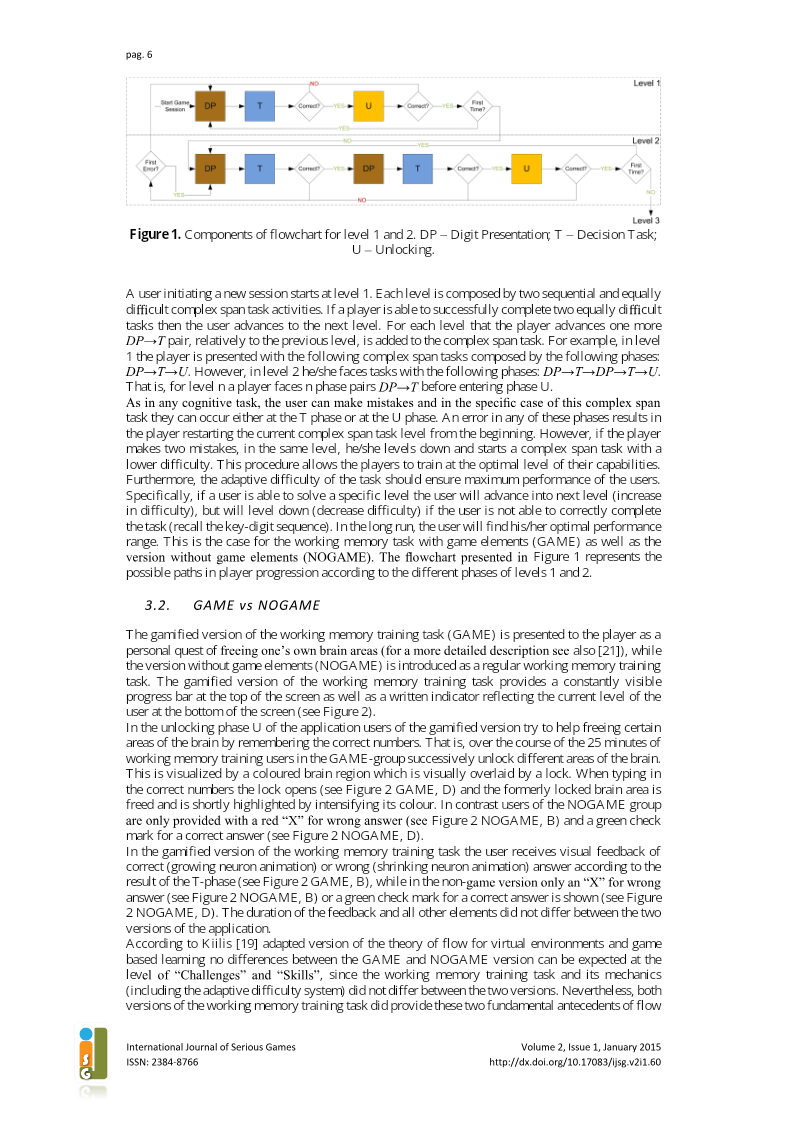
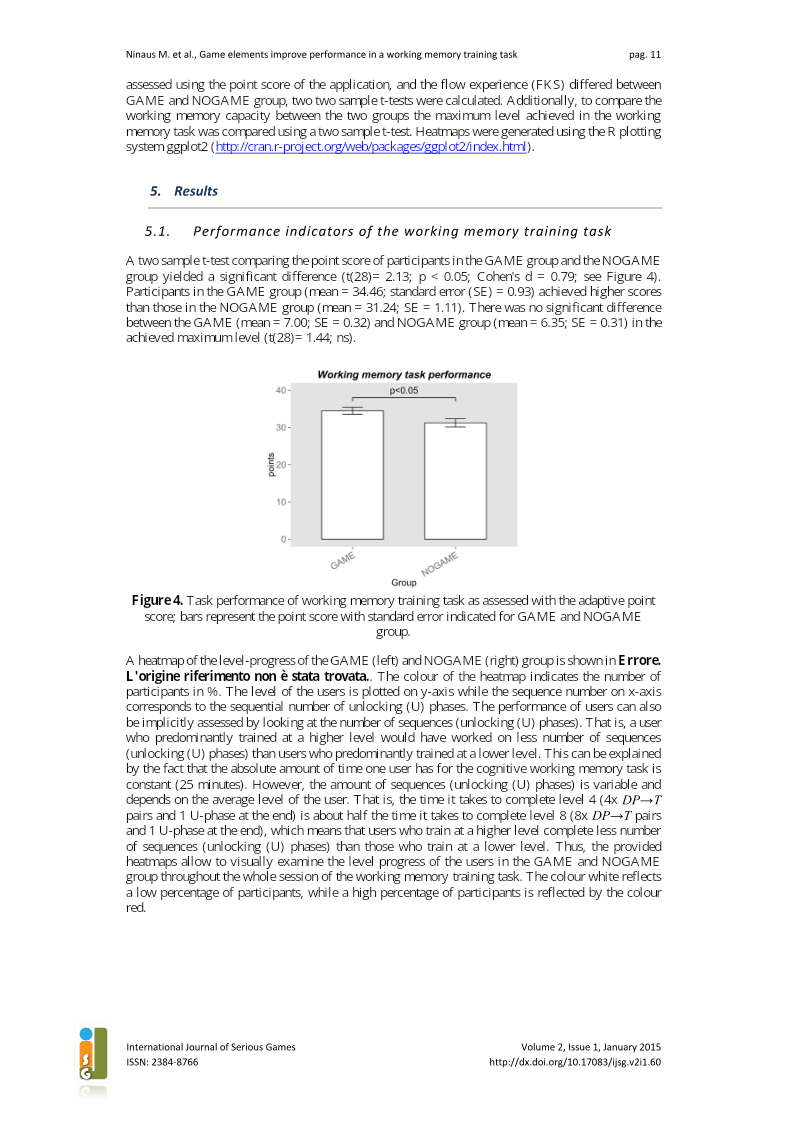
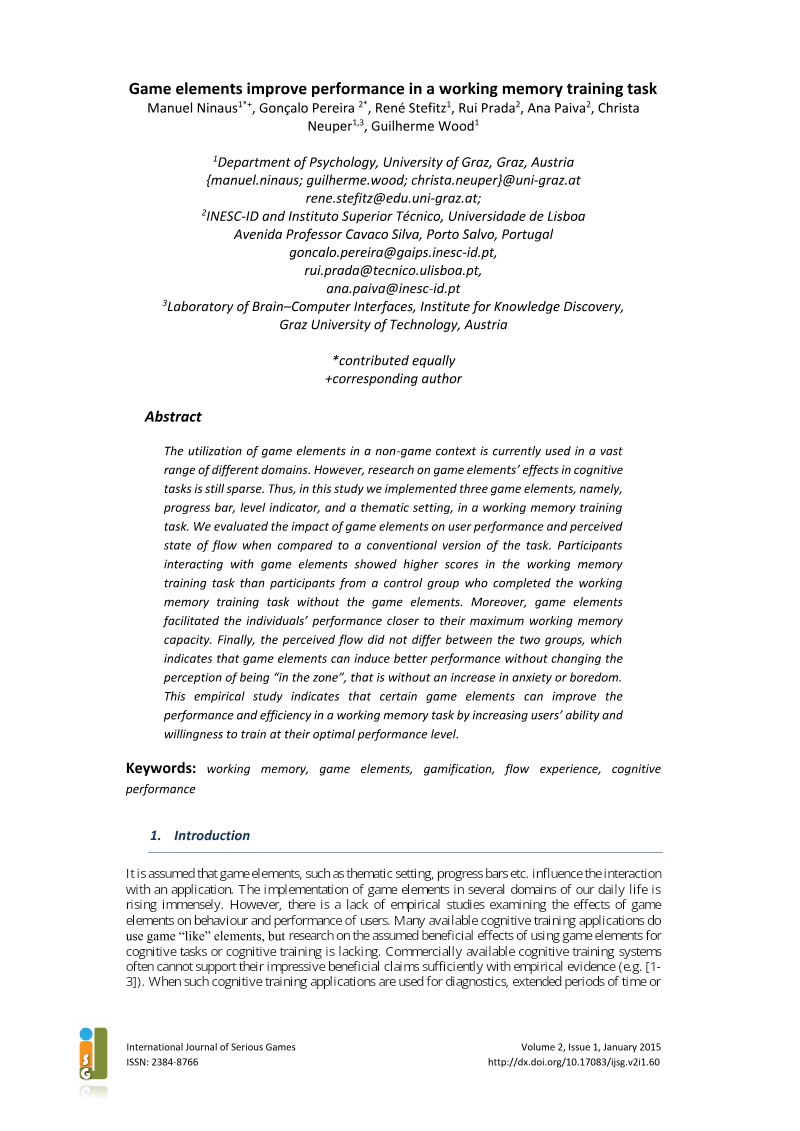
Integrating game elements into cognitive training tasks significantly enhances user performance and operational efficiency.
- Gamification elements such as progress bars and level indicators significantly increase user performance and operational efficiency in working memory training tasks.
- The integration of game mechanics encourages participants to utilize their maximum working memory capacity more effectively than conventional, non-gamified training methods.
- Gamification acts as a performance catalyst for objective output without fundamentally altering a user’s maximum cognitive capacity.
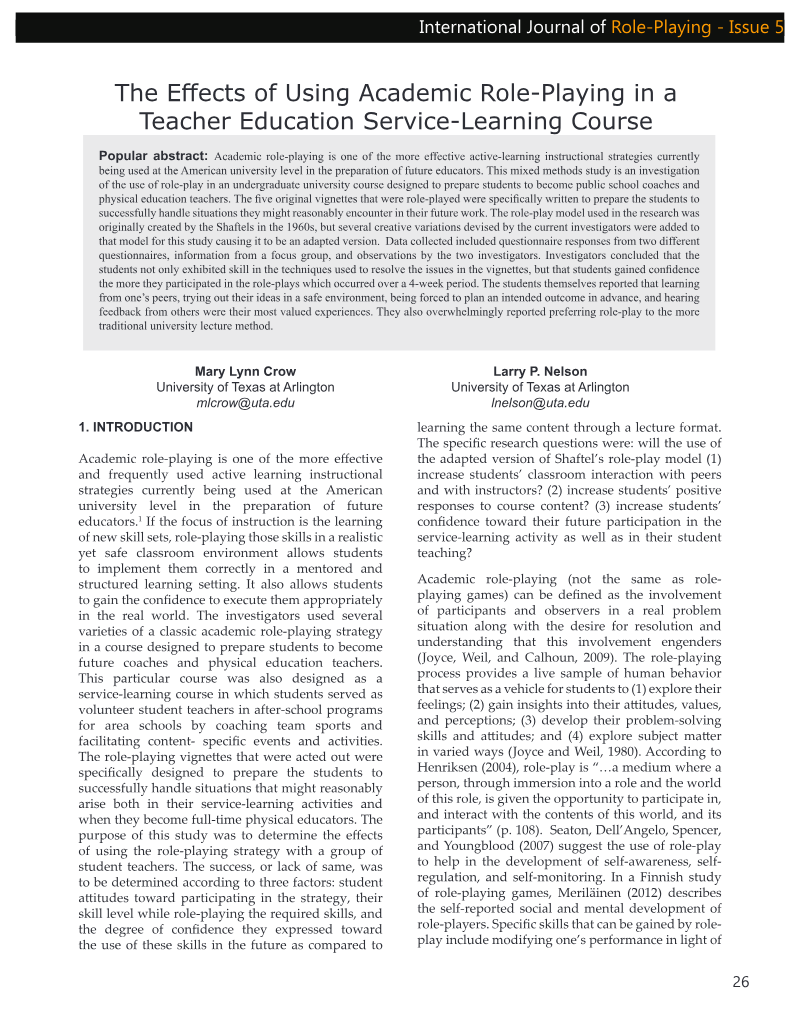
The Effects of Using Academic Role-Playing in a Teacher Education Service-Learning Course
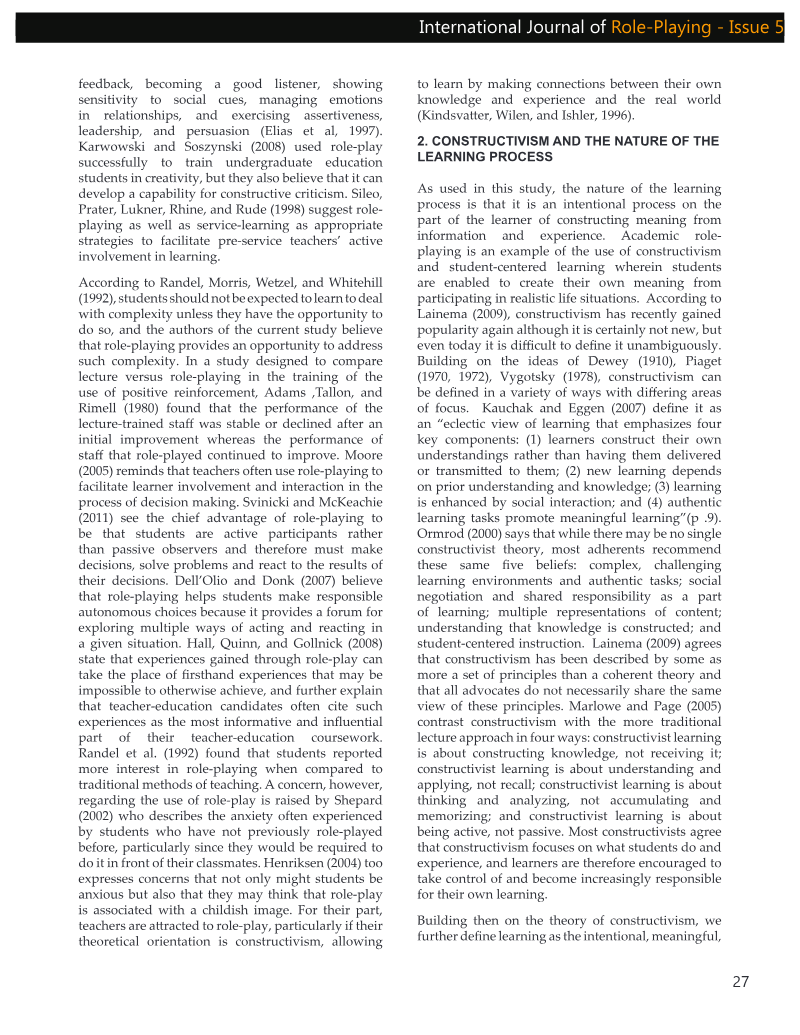
This study examines the effects of academic role-playing, using an adapted Shaftel model, in an undergraduate physical education and coaching service-learning course at a large urban university.
- Academic role-play using an adapted Shaftel model was tested in an undergraduate physical education and coaching service-learning course, comparing an intervention group of 52 students with a control group of 50.
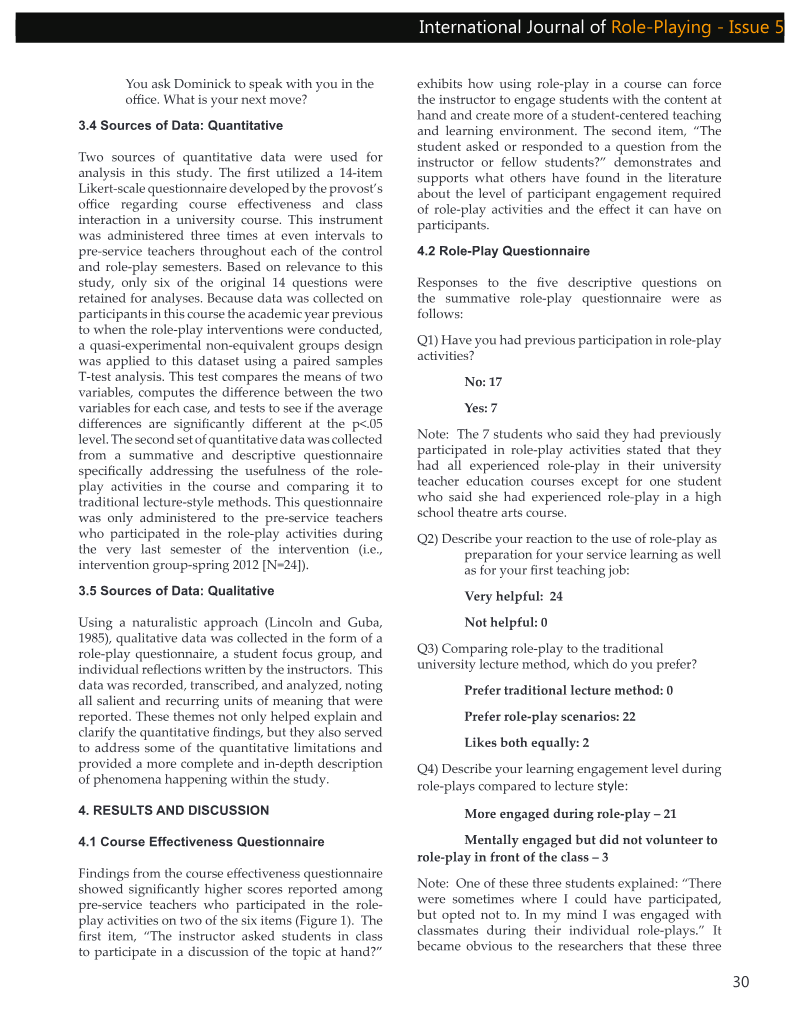
- Role-play participants scored significantly higher on two of six course effectiveness items: the instructor asking students to discuss topics (p=.037) and students asking and responding to questions (p=.039).
- In focus group and questionnaire data, 22 of 24 pre-service teachers preferred role-play to lecture, two rated both equally, and none favored lecture; 21 participants reported feeling more engaged during role-play sessions.
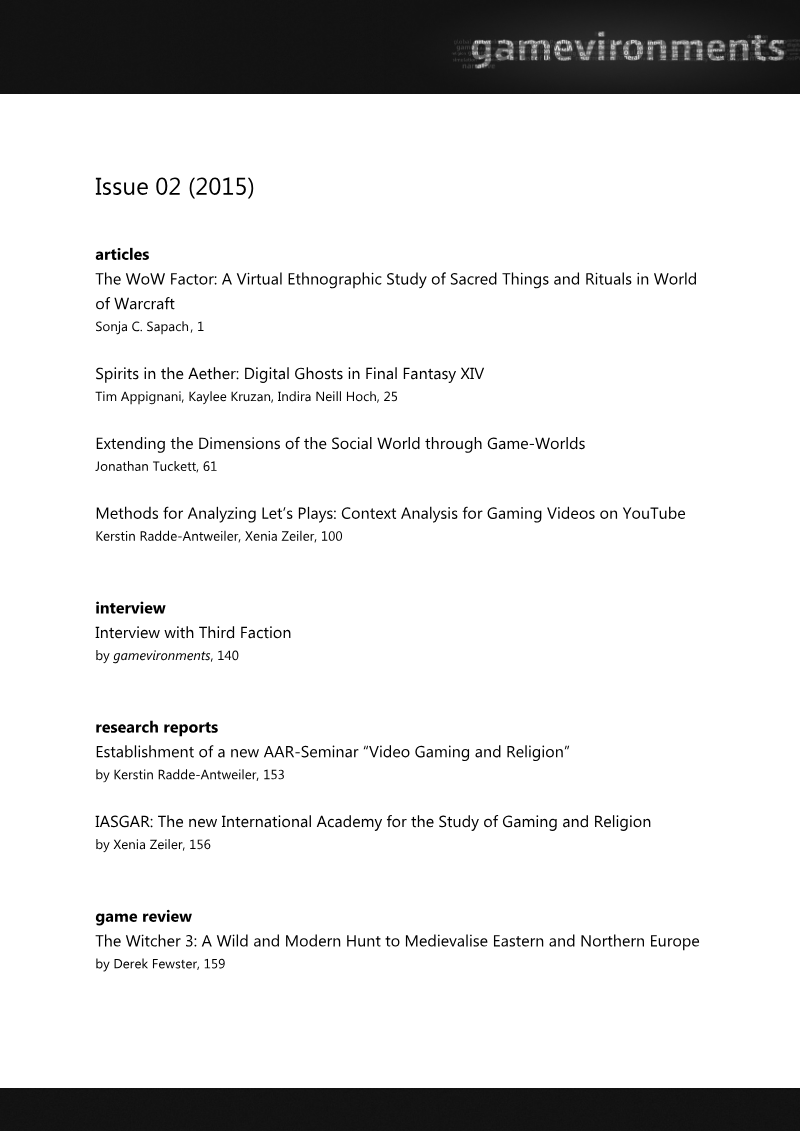

gamevironments 2015
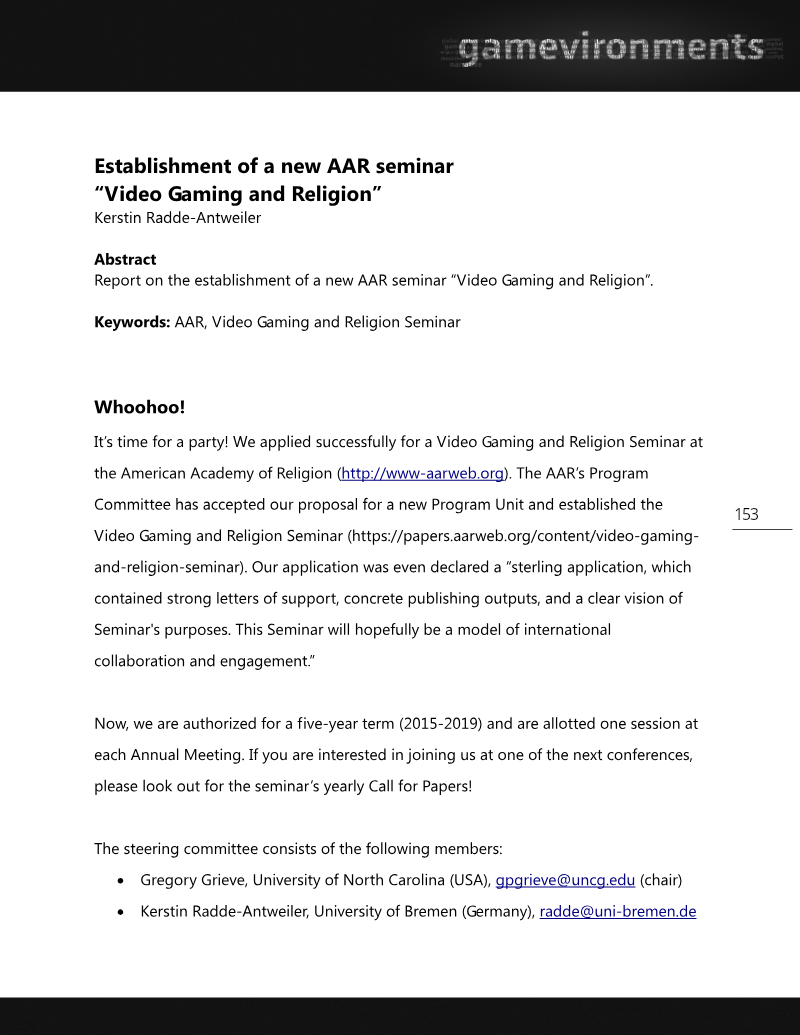
The document announces the establishment of a new Video Gaming and Religion Seminar within the American Academy of Religion (AAR), a major professional body for religious studies scholars.
- The AAR Program Committee approved a new Video Gaming and Religion Seminar for a five-year term (2015–2019), with one session at each Annual Meeting.
- The seminar was founded to address the marginal status of video games within Religious Studies, with author Kerstin Radde-Antweiler arguing that video games now depict religious themes just as film did in the twentieth century.
- The seminar aims to build a multidisciplinary, international network covering personal computer, console, and mobile games, with a steering committee of six scholars from the United States, Canada, Germany, and Finland.


Current Key Perspectives in Video Gaming and Religion
Gregory Grieve's contribution to this special issue on video gaming and religion argues that religious studies should examine video games through a "cultural dialogic mode," treating games as a space where religion and human meaning-making emerge rather than as objects that either hide timeless sacred symbols or serve merely as…
- Gregory Grieve argues that religious studies should examine video games through a "cultural dialogic mode," treating games as spaces where religion and human meaning-making emerge, rather than as hiding timeless sacred symbols or as mere products of the scholar's imagination.
- Grieve draws on Mircea Eliade, J. Z. Smith, Mikhail Bakhtin, and Ian Bogost's concept of procedural rhetoric, contending that in Minecraft religious meaning arises from the embodied experience of play, especially the survival mode's cycle of exploration, resource gathering, construction, and combat.
- Grieve proposes a documentary methodology called "close play," which requires scholars to actually play the games they study, since procedural meaning cannot be fully grasped through narrative or imagery alone.