Player Behavior reports and market data
Documents
Understanding the Social Values of Your Players
Gaming companies can significantly enhance community engagement and corporate social responsibility by aligning initiatives with the core values of their global player base.
- Research involving 3,000 players across seven global regions indicates that gamers have a strong desire for social impact and leadership, signaling a shift toward developers fostering meaningful, data-informed connections.
- Utilizing the United Nations’ Sustainable Development Goals provides a structured framework for gaming companies to identify and align with player priorities such as mental health, quality education, and economic opportunity.
- Data-driven validation through focus groups and representative surveys of 400 players per region ensures that corporate charitable initiatives remain relevant and effective.
Steam: What Sells - What Steam's Player Numbers Tell Us About Game Genres - Extra Credits
This analysis examines Steam player engagement data to identify trends across various game genres and titles.
- Multiplayer shooters are the most dominant genre on Steam, occupying nine of the top eleven spots in terms of lifetime player counts.
- Pricing strategies under $20 are highly effective for driving player acquisition, even though free-to-play models do not exclusively dominate the top tier.
- Survival games benefit from a cross-pollinating player base, indicating that fans of this genre are willing to experiment with multiple titles rather than sticking to one ecosystem.
Game Therapy - How Can Games Improve Mental Health? - Extra Credits
The discourse surrounding video games often centers on the potential for addiction, specifically the World Health Organization’s classification of gaming disorder.
- Research must shift from focusing exclusively on gaming disorder and negative outcomes toward the therapeutic potential of commercial, off-the-shelf video games.
- Current clinical research disproportionately favors specialized 'serious games' for physical rehabilitation, neglecting the millions of players who already use mainstream titles for emotional regulation and self-care.
- There is a critical lack of empirical data identifying which specific game genres or mechanics facilitate emotional recovery versus those that exacerbate stress, such as high-stakes competitive environments.
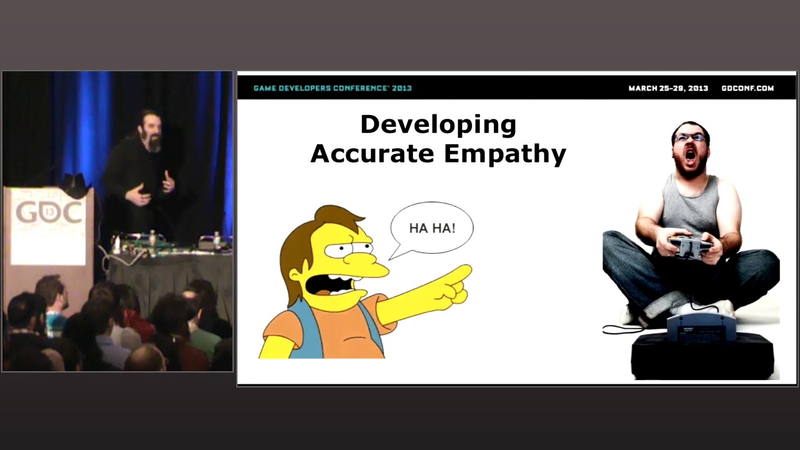
Applying the 5 Domains of Play: Acting Like Players
Game design often suffers from the designer’s inherent bias, where creators inadvertently build experiences that cater only to their own psychological preferences.
- Designers should utilize the 'Big Five' personality model (openness, conscientiousness, extraversion, agreeableness, and neuroticism) to replace subjective intuition with a framework for accurate empathy.
- Neuroticism is a critical metric for predicting player attrition, as high levels of anxiety or frustration directly correlate with users abandoning specific game experiences.
- The 'player acting' methodology requires developers to intentionally engage with and deconstruct genres they personally dislike to better understand the motivations of diverse player archetypes.
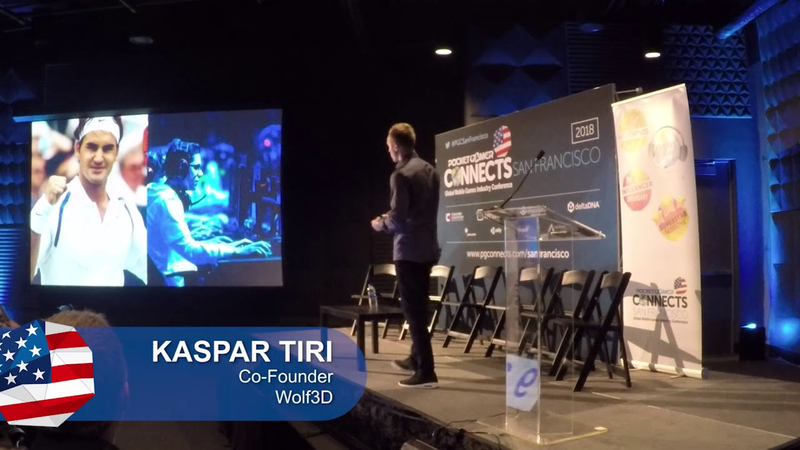
Personal avatars in competitive games
The evolution of personal avatars in competitive gaming reflects a broader shift toward self-identification and social expression within virtual environments.
- Personalized avatars significantly increase player retention and enjoyment, often ranking higher in user experience than traditional gameplay mechanics like combat.
- The 2017 League of Legends Mid-Season Invitational reached 360 million unique viewers, demonstrating that eSports viewership can significantly outperform traditional events like the Super Bowl, which had 111.3 million viewers that same year.
- PlayerUnknown’s Battlegrounds achieved over 200 million unique viewers within seven months of its release, proving that competitive gaming titles can attract audiences far larger than their active player bases.
Ladders and Team Games - Doing it Wrong - Extra Credits
Current competitive ladder systems in team-based video games are fundamentally flawed because they rely on adaptations of the Elo rating system, which was originally designed for 1v1 chess.
- Current competitive ladder systems are fundamentally flawed because they apply 1v1 Elo rating models to team-based games, failing to account for the complexities of collective cooperation.
- Individual performance metrics, such as Microsoft’s TrueSkill, often incentivize stat-padding over objective-based team play, which degrades the overall competitive experience.
- The high-stakes nature of modern ladder systems encourages players to grind while fatigued or tilted, directly contributing to increased toxicity and reduced team cohesion.
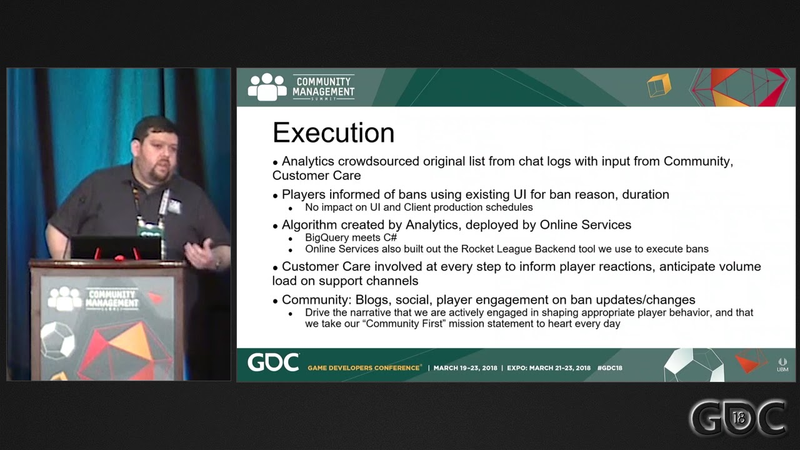
Rocket League: Language Ban System Postmortem
To combat rising toxicity within Rocket League, Psyonix implemented an automated, data-driven moderation framework designed to enforce community standards through tiered, escalating penalties.
- Psyonix implemented an automated language ban system for Rocket League that uses a data-driven 'gram' threshold, where players are escalated through a penalty ladder starting at 24 hours up to two weeks for repeated offenses.
- The system relies on active player reports rather than proactive chat scanning, allowing for context-dependent moderation that avoids penalizing friends who use informal language within private parties.
- To encourage behavior modification, the system includes a de-escalation mechanic where players who maintain good conduct for 30 days see their strike count reduced, preventing long-term accumulation of penalties for one-off incidents.
History Shaping Design: Inequality and Player Behavior
Game design functions as a powerful laboratory for behavioral economics, where psychological heuristics like loss aversion and hindsight bias dictate how players perceive value, risk, and agency.
- Designers leverage loss aversion, where players feel the pain of loss twice as intensely as equivalent gains, to drive engagement through inventory hoarding and reward structures.
- Systemic inequality in virtual environments causes players in dominant positions to develop an empathy gap, which reduces cooperative behavior and social cohesion.
- When game systems mirror real-world socioeconomic disparities, they trigger feelings of helplessness and disengagement, often turning intrinsic play into perceived digital labor.
Drives: Helping More Players Get from First-Taste to Satisfaction
The primary challenge in modern game design lies in bridging the gap between a player’s initial interest and their long-term satisfaction.
- Developers should integrate Self-Determination Theory with innate human drives like curiosity, mastery, and autonomy to create structured reward systems that prevent early-stage player boredom.
- The 'tend-and-befriend' biological response, mediated by oxytocin, indicates that many players prioritize social connection and nurturing over traditional combat-based mechanics.
- Social and care-oriented game systems represent a significant, underserved market opportunity for developers to expand their audience reach beyond traditional demographics.
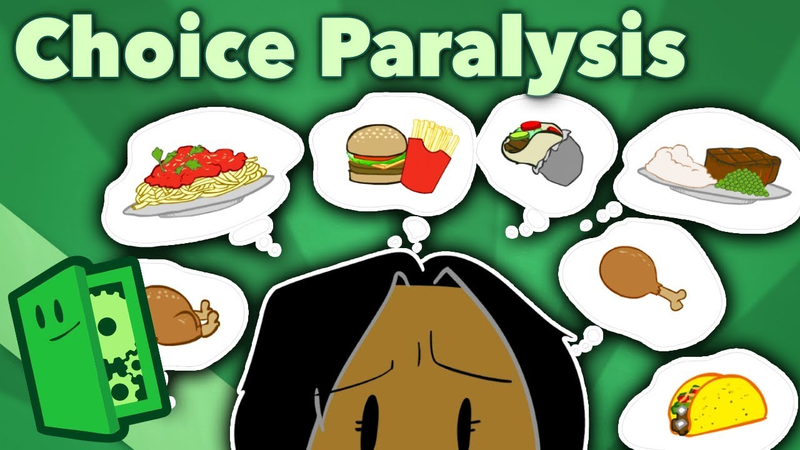
Choice Paralysis - Too Much of a Good Thing - Extra Credits
Game design often suffers from the psychological phenomenon of choice paralysis, where an overwhelming volume of options prevents players from making decisions, ultimately leading to disengagement.
- Choice paralysis occurs when an overwhelming volume of options causes players to abandon a game, distinct from analysis paralysis which involves the difficulty of calculating optimal outcomes.
- Designers should mitigate cognitive overload by offering default or prefab options that allow players to bypass complex decision-making during initial setup.
- Breaking down large, intimidating interfaces into sequential, manageable tasks prevents players from feeling discouraged before they have begun to play.
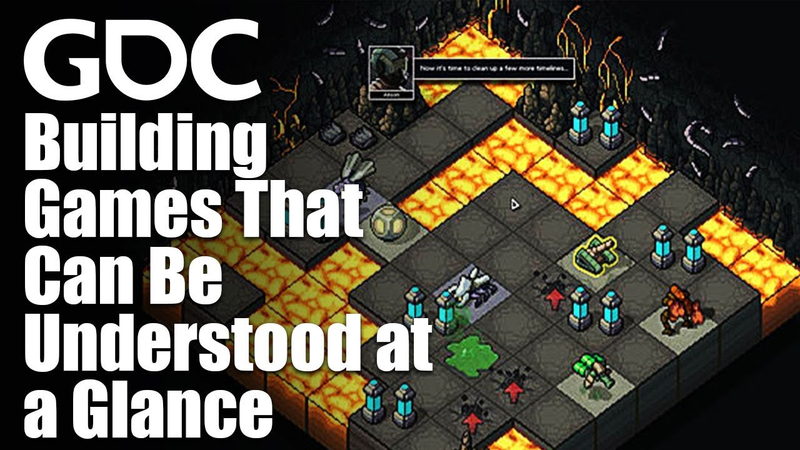
Building Games That Can Be Understood at a Glance
Designing games that are immediately comprehensible to an outside observer—a concept termed subway legibility—serves as a powerful tool for indie developers to improve tutorials, organic discovery, and marketing.
- Apply the 'three reads' principle to UI design: the first read establishes the genre or hook, the second communicates core mechanics, and the third provides secondary contextual information.
- Prioritize visual hierarchy by scaling and positioning UI elements based on their importance to ensure the game state is immediately understandable to both players and observers.
- Utilize 'subway legibility' to lower the cognitive load on new players, which simplifies tutorial design and allows marketing materials to convey value without needing extra context.
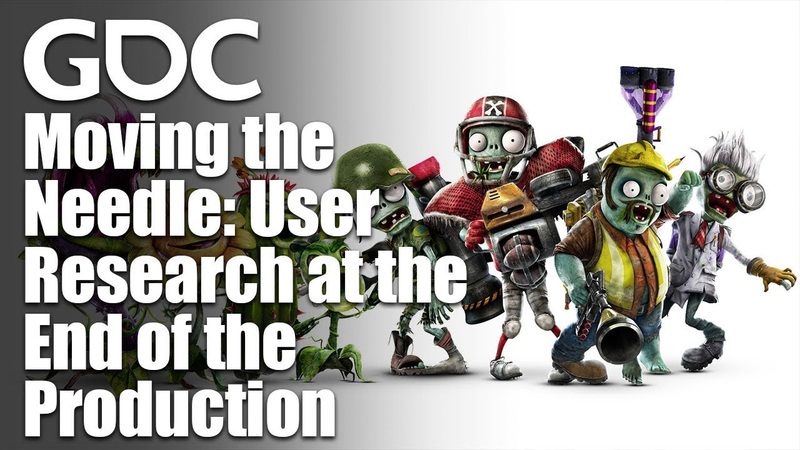
Moving the Needle: User Research at the End of the Production Cycle
User research remains a critical component of game development even during the final stages of production, when core mechanics are finalized and the project is committed to its primary design.
- Late-stage user research shifts focus from radical design changes to fine-tuning balance, progression, and polish to elevate a game's quality before launch.
- Development teams should transition from qualitative think-aloud sessions to quantitative metrics and telemetry during the final production phase to identify specific performance weak spots.
- During the final six months of Plants vs. Zombies Garden Warfare production, researchers used mixed-method studies with 24 to 48 participants per session to optimize map design and character balance.