1 free read left. Create a free account for unlimited reading + AI research.
Create free account
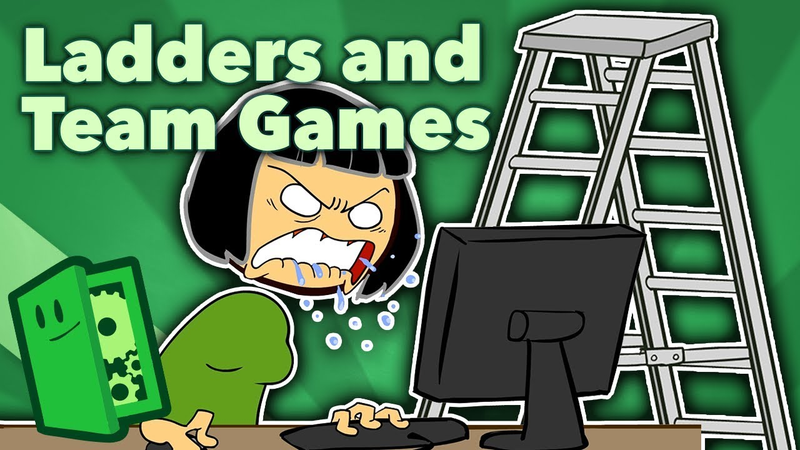
Ladders and Team Games - Doing it Wrong - Extra Credits
Key insights
7 takeaways- 01Individual performance metrics, such as Microsoft’s TrueSkill, often incentivize stat-padding over objective-based team play, which degrades the overall competitive experience.
- 02Current competitive ladder systems are fundamentally flawed because they apply 1v1 Elo rating models to team-based games, failing to account for the complexities of collective cooperation.
- 03The high-stakes nature of modern ladder systems encourages players to grind while fatigued or tilted, directly contributing to increased toxicity and reduced team cohesion.
- 04Developers should implement frequent micro-rewards, such as in-game currency or cosmetics, to provide consistent positive reinforcement that is independent of rank fluctuations.
- 05Infrequent reward structures lead to months of stagnant progression, resulting in significant player burnout and long-term attrition.
- 06Integrating fatigue-monitoring features, such as play-time notifications and win-rate tracking, can help players manage the negative psychological effects of extended losing streaks.
- 07Fostering a sustainable community requires shifting design focus toward team-oriented tutorials and mechanics that actively discourage toxic behavior rather than prioritizing individual rank.
Ask AI about this video
Transcript
You know what would be crazy? If we judged baseball players by how well they did when they played with teams of random people, some of whom refuse to communicate, and others that might be out to actively sabotage the game. Yet, this is how we judge our play in most video games. Big thanks to our sponsor for this episode, Skillshare. The first 500 that sign up with the link in the description below get their first 2 months free. Today, we've got to talk about ladder systems because humanity literally spends billions of hours grinding on video game ladders, and yet they don't make any sense. This is in part due to where they came from. Many video games use a modified form of the Elo rating system, a ranking system invented by a chess master named Arpad Elo, and first implemented in 1960 by the United States Chess Federation. This is important since Arpad Elo was trying to solve specific problems related to chess with his system, some of which work incredibly well in the world of video games, while others, uh, not so much.
One of the things Elo was trying to solve was the fact that you can't really rate how well someone performed within a game of chess. It's impossibly difficult to look at every move in a chess match and to say how close each move made was to the {quote} best move. So, you can't rate people based on how skillfully they played the game. Instead, Elo wanted to create a statistical system for comparing the only thing he felt you really could compare, raw wins and losses. This transfers over remarkably well to the world of competitive video games. In most video games, finding an algorithm to automatically judge how well players played within a match is an impossibility. Not only are there too many factors to judge, but you'll never find a system that all of your players agree with. So, implementing these types of systems will often just lead to more toxicity in your forums and in your game. But, these systems also lead to a bigger problem, stat padding. Any system that tries to rate individual performance within a game, often encourages players to do things other than win the game. After all, that
player who wandered off to rack up kills while the flag is getting captured or the team is losing the base, hot take, not actually the best player in the game. Which is why these systems that try to judge in-game skills as part of how they rate players create terrible environments for team play. But that leads us to the other side of the ELO rating. While ELO does help us avoid players just trying to stat pad, the ELO system itself was specifically designed for a 1v1 game. It's great for things like solo fighting games or Hearthstone, but in team games where you're not always playing with the same teammates, it starts to break down. So Microsoft created a system called TrueSkill that a number of other games have since emulated. The idea of TrueSkill is that it's supposed to aggregate the approximate skill of the team as a whole and then distribute points to players based on individual skill rating. The issue here is that it treats the problem of why we can't just use an ELO system for team-based multiplayer games as though it were simply one of point distribution. And that's just not the problem with our current ladder system in team-based multiplayer games. The
problem with ladders is that they feel awful. From the highest-ranked players to the bronzest of the bronze tier, everyone complains about ladders and with good reason. They are an endless treadmill with very little reward and a lot of built-in frustration. So let's talk about that. Every game is an opportunity for disappointment, but not every game is an opportunity for an equal feeling of reward. If you're playing to the best of your ability, but your team just isn't working together, it can feel incredibly frustrating and disappointing. And while the person who blames their team for a loss is usually wrong, for the sake of designing a ladder system, it doesn't matter. Because right or wrong, when players feel their team has let them down, they still feel frustrated and unhappy. And anything that leaves players feeling miserable is just bad design. And the way we design ladders just compounds this feeling by adding stakes to the game. Watching those hard-earned numbers go down feels awful, especially when you don't think it's your fault. But when you win, you watch a number increase by a few
points. Sure, sometimes you have a glorious game where you carry hard and have an amazing tale to tell your friends about, but that has nothing to do with the ladder itself. The ladder system didn't help create those moments, enforce those moments, or reward those moments in any way. So, the only times when a ladder win feels incredibly rewarding is when you get to a new tier on the ladder. And that's so infrequent in most games, it's almost shocking. There is basically no other area in game design where we'd let players literally go months without a real reward. And yet for many players, it takes months of their lives to go from bronze to silver or silver to gold, and somehow we're still okay with this. How do we solve that? More micro rewards, and rewards that stay with you even if you lose your rank. They don't have to be great, just small prizes every time you go up 50 points. A few in-game coins, a skin, or a card back. And for people who qualify at a high rank, when they finish their last placement match, just shower them with all the tiny gifts they would have earned along the way. This will encourage people to play ladder, and the cost of doing this for a company making
team-based multiplayer games is far, far less than the cost of people cycling out of competitive or actually quitting the game because they find the ladder so frustrating. Also, giving players a small amount of currency or a loot box to open every couple of wins, regardless of whether those wins are in a row or separated by a pile of tiny losses, is probably a good idea. It encourages players, and it reminds them that they do actually win from time to time. That's something that can be really hard to remember when you're on a losing streak. Next, we have the point system itself. It encourages a sort of gambler's conceit. Every game is sort of a wager of points. When you're losing, you want to keep playing just to get back those points you've lost. And when you're winning, you also want to keep playing because you're on a streak. This encourages people to play well past the point that they're playing at their best. In a team setting, this is the complete opposite of what we want because one frustrated or tired player negatively impacts the experience of everyone else on their team. This system is why today's ladders feel like a horrible treadmill. It's hard to 100%
fix this problem, but at the very least you can pop up play time notifications for players or periodically tell them their win rate over the last hour in the hopes that people will realize when they're too tired to keep playing competitive. Lastly, and perhaps most importantly, team-based games are about teamwork. Scott, cue the sign. That's how a team works. No matter your individual skill, a coordinated and cooperating team almost always beats a disjointed or bickering one. But very few games actually teach or encourage teamwork in any way. As awful as it sounds, things like a team play tutorial before you can actually participate in a ranked game might go a long way to help alleviate the grind. Also, anything you can do to lower toxicity creates a more team-oriented environment. And in a space where people actually want to get on the mic and talk to each other. We're out of time this week, but this is just the tip of the ladder iceberg. If a lot of you are interested, we might talk about it again, but we had to at least touch on it now because there's something underlying this whole thing that's a lot more important than just making our ladders better. It's the fact
that if we make our ladder systems less unpleasant, a lot less people are going to get angry or frustrated playing our games. And less angry and frustrated people means less toxicity and a better experience for everyone. And that's what every game designer wants. See you next week. Once again, thank you Skillshare for sponsoring this episode. They are a fantastic resource for learning and one of the most affordable learning platforms around. Before recording this episode, I just climbed out of a Skillshare wormhole myself where I learned a bit about logo design, portrait photography, and how to make some really tasty looking meatballs. The first 500 people that sign up with the link in the description below get their first two months free. So, check them out and tell them Extra Credits sent you.
Summary
Current competitive ladder systems in team-based video games are fundamentally flawed because they rely on adaptations of the Elo rating system, which was originally designed for 1v1 chess. While Elo effectively measures win-loss records in individual matches, it fails to account for the complexities of team cooperation, often leading to player frustration, toxicity, and a sense of an endless, unrewarding treadmill. Attempts to mitigate these issues through individual performance metrics—such as Microsoft’s TrueSkill—often incentivize stat-padding over objective-based team play, further degrading the competitive experience.
The core issue is that modern ladder systems treat every match as a high-stakes wager, which encourages players to continue grinding even when fatigued or tilted. This cycle negatively impacts team cohesion, as frustrated players are more likely to exhibit toxic behavior. Because these systems offer infrequent rewards, players often go months without meaningful progression, leading to burnout and player attrition. The lack of emphasis on teaching or incentivizing actual teamwork exacerbates these problems, as the current design prioritizes individual rank over collective success.
To improve these systems, developers should implement more frequent micro-rewards, such as in-game currency or cosmetic items, to provide consistent positive reinforcement regardless of rank fluctuations. Additionally, integrating features that monitor player fatigue, such as play-time notifications or win-rate tracking, could help mitigate the negative effects of extended losing streaks. Finally, fostering a healthier competitive environment requires prioritizing team-oriented tutorials and mechanics that actively discourage toxicity. By shifting the focus from a punishing, singular rank-based treadmill to a more rewarding and cooperative structure, developers can reduce player frustration and cultivate a more sustainable, positive gaming community.

























Comments