PC reports and market data
Documents
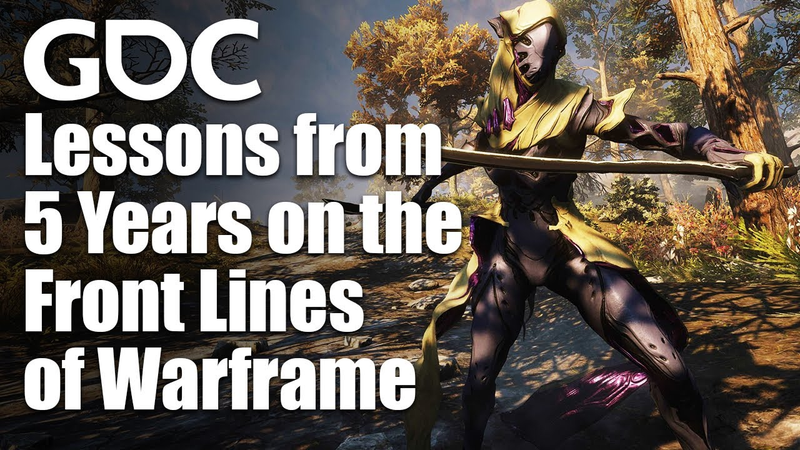
Whose Game Is It, Anyway? How Community Relationships Shape Games: Lessons from Warframe
The long-term success of the free-to-play title Warframe is rooted in a development philosophy that prioritizes radical transparency and a collaborative partnership with its player base.
- Digital Extremes maintains community trust by consistently communicating the status of updates, even when delays occur, ensuring players always have a reliable source of information regarding the game's development routine.
- The studio avoids 'pay-to-win' pitfalls by strictly separating monetization from gameplay mechanics, such as their 2013 decision to remove stats from cosmetic items to ensure fair play.
- When community feedback indicates a feature is failing—such as the 2016 console-friendly navigation system that negatively impacted retention—the team prioritizes player preference by reverting to more effective, nostalgic designs like the original star chart.
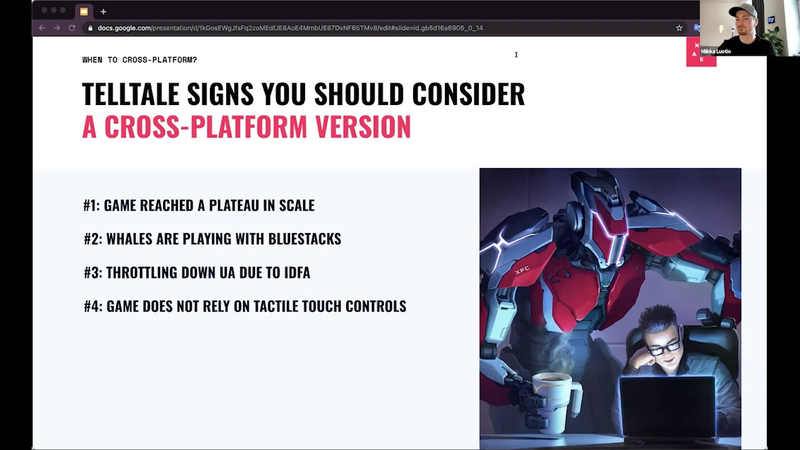
Finding New Audiences for Your Mobile Games
Mobile game developers are increasingly shifting toward cross-platform strategies to mitigate the challenges of market saturation, discoverability hurdles, and the limitations imposed by restricted tracking protocols.
- Expanding mobile titles to web and PC platforms generates an average revenue increase of 20% for every dollar earned on mobile.
- Cross-platform strategies allow developers to bypass restrictive platform fees, improve user acquisition attribution accuracy, and utilize localized payment methods.
- Web and PC environments reduce customer acquisition costs and eliminate installation friction, while larger screen real estate supports better social features and re-engagement of lapsed players.

I Made Animal Crossing, BUT WITH GUNS
The development of a modified, combat-oriented version of the Animal Crossing aesthetic serves as a case study in efficient indie game design.
- Indie developers can achieve high-quality, viral-ready results by prioritizing workflow efficiency and focusing on core gameplay loops rather than building every component from scratch.
- Visual cohesion across disparate assets can be achieved by applying a universal shader, such as Toon Colors Pro 2, to unify custom-modeled and third-party resources.
- The signature curved-world aesthetic can be replicated in Unity by utilizing Blender’s bend modifiers combined with custom projectile physics to account for non-linear geometry.
Triage on the Front Line: Improving Mafia III AI in a Live Product
The post-launch improvement of artificial intelligence in the open-world crime drama Mafia III serves as a case study for managing live product updates under strict resource and time constraints.
- Hangar 13 utilized a cross-functional 'strike team' consisting of engineers, animators, designers, and QA to execute a three-month post-launch AI improvement patch for Mafia III.
- Prioritization of AI fixes was determined by a three-factor framework: impact (player experience), complexity (potential for unintended knock-on effects), and cost (time and resource allocation).
- The team addressed AI responsiveness by refining event-based reaction systems, such as increasing the detection range for gunshots beyond the original 40-meter limit to ensure enemies properly escalated to combat.
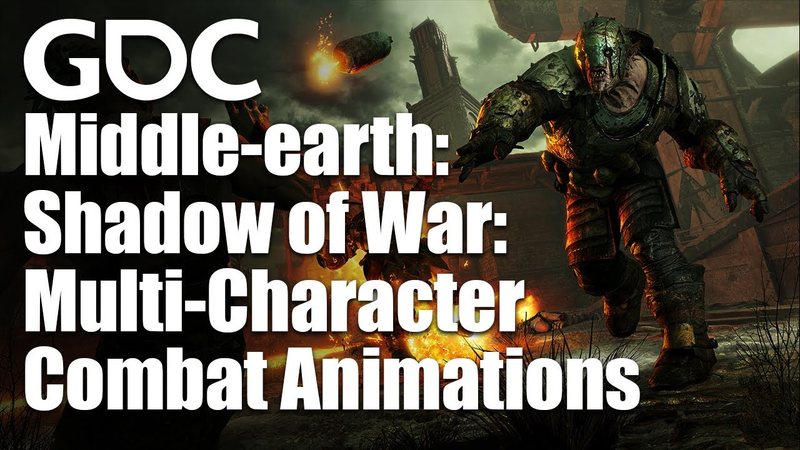
Middle-earth: Shadow of War: Creating Multi-Character Combat Animations
The development of Middle-earth: Shadow of War centered on the implementation of complex, multi-character combat animations to establish a visceral and brutal aesthetic.
- Monolith Productions managed a high-volume animation pipeline for Middle-earth: Shadow of War by producing 1,200 unique sync-action animations between the player and orcs within a three-year development window.
- To maintain production efficiency, the team utilized a motion capture-first workflow where in-house animators performed the stunts, allowing for rapid iteration and immediate feedback from designers on-site.
- The studio employed a 'destructive' animation workflow that prioritized baking keys and layering poses over traditional non-destructive rigging, enabling animators to quickly adjust timing and weight without getting precious about curve handles.
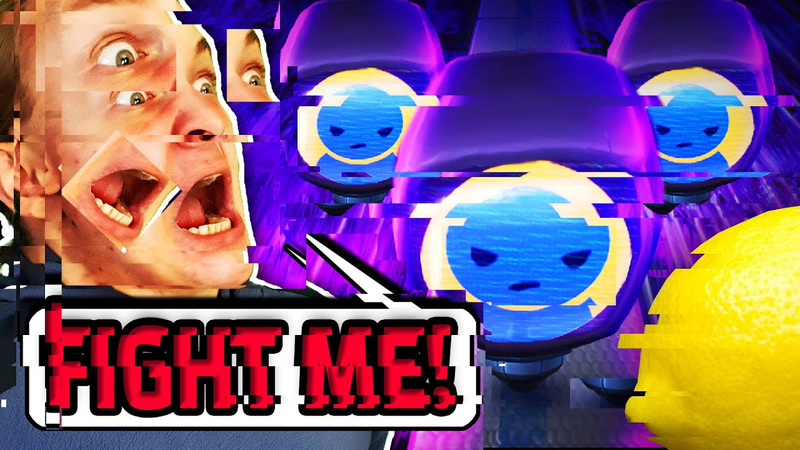
Fighting The Devs of a Broken Game
This analysis examines the evolution of indie game development through the lens of a speedrunning competition featuring Glitcheon, a title originally created during a community game jam.
- Successful post-jam game development relies more on sustained team synergy and iterative refinement than on simply increasing the volume of content.
- The transition from a rapid prototype to a polished product involves replacing placeholder assets with 3D models, implementing spatial audio, and utilizing advanced lighting and hand-painted textures.
- A one-year development cycle following a community game jam can transform a minimalist project into a complex, feature-rich title with competitive viability.
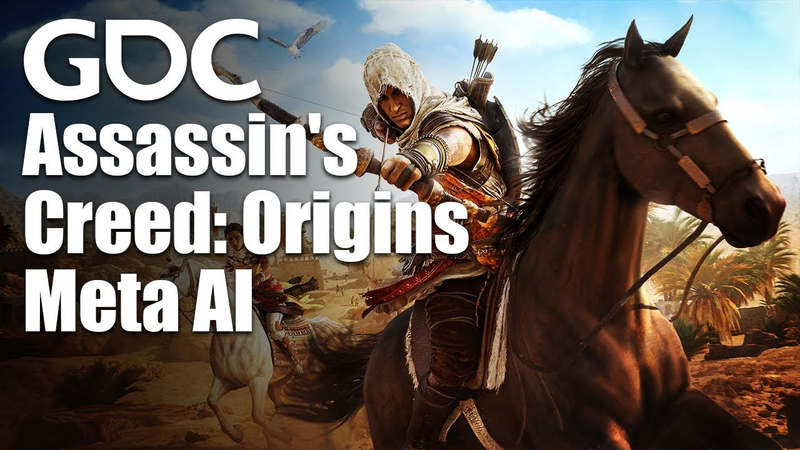
Virtual Insanity: Meta AI on Assassin's Creed: Origins
The development of Assassin’s Creed: Origins introduced a sophisticated Meta AI architecture designed to sustain a persistent, living ecosystem within a massive open-world environment.
- Ubisoft implemented a 'Meta AI' system for Assassin's Creed: Origins that manages NPCs and objects globally, allowing them to function autonomously, navigate, and maintain persistent states even when they are far from the player or outside the loaded nav mesh.
- The game utilizes an AI network graph to handle long-range navigation for entities, enabling NPCs to travel across the map and perform scheduled tasks like eating or socializing without requiring the player's presence.
- To optimize performance, the engine uses a component-level Level of Detail (LOD) system with six states based on distance and visibility, allowing the game to disable or reduce the update frequency of specific components like head-tracking or AI logic.
Getting Creative after World Changing Events with Dave Mervik | Game Dev Unchained Episode 255
The game development industry has undergone a fundamental transformation in response to the COVID-19 pandemic, shifting from traditional, office-centric models toward a flexible, output-based culture.
- The game development industry has transitioned from office-centric models to a flexible, output-based culture that prioritizes developer well-being and global talent acquisition over rigid nine-to-five schedules.
- Remote work has introduced the risk of 'self-crunching,' where the lack of physical separation between home and office leads to burnout and a narrowing of the personal experiences that fuel creative inspiration.
- Global crises, including the pandemic and social unrest, have shifted the industry's creative focus toward themes of social fragility, systemic failure, and the complexities of human experience under pressure.
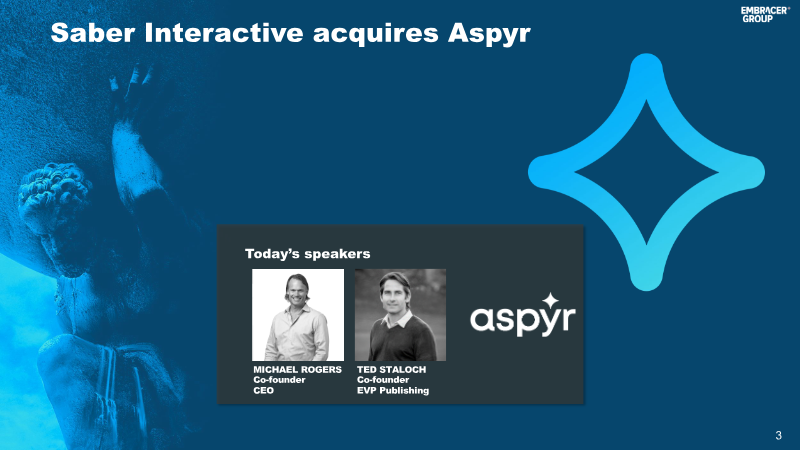

Embracer Group Acquires Aspyr Media
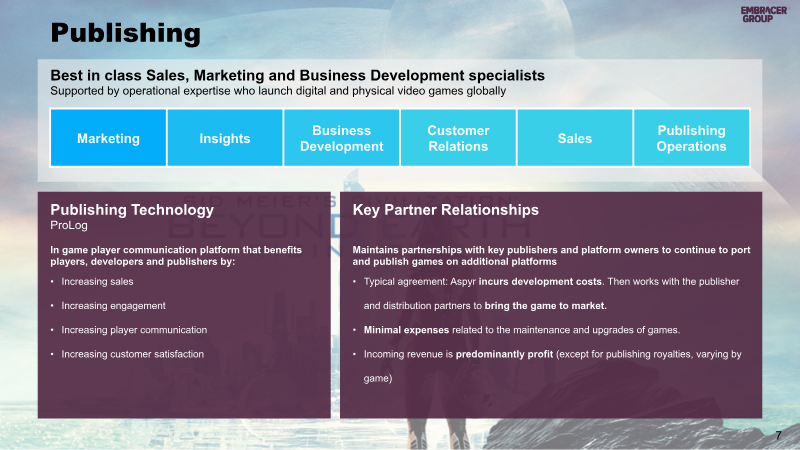
The acquisition of Aspyr Media by Embracer Group represents a strategic expansion of the latter’s development and publishing capabilities.
- Embracer Group acquired Aspyr Media for an upfront payment of $100 million in cash and shares, with potential performance-based earn-outs reaching an additional $350 million.
- Aspyr Media will operate as an independent entity under Embracer’s Saber Interactive division, retaining its Austin headquarters and existing leadership.
- Aspyr’s proprietary technology, the Aspyr Studio Libraries, is a primary asset that reportedly reduces game porting times by 75 percent across platforms including macOS, Linux, iOS, Android, and consoles.
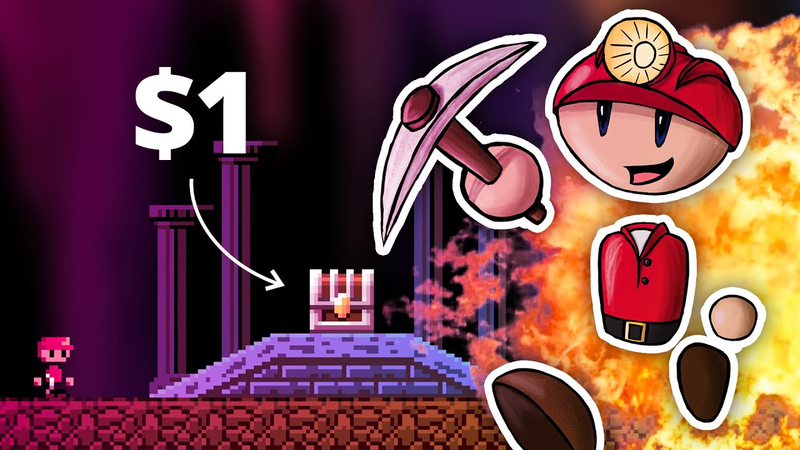
My intern's first game is JUST A DOLLAR. Too low or too high? Let's find out.
The commercial indie title Lost Caves serves as a compelling case study for the viability of the one-dollar price point in the modern digital marketplace.
- A one-dollar price point can be a viable commercial strategy for indie titles when the developer prioritizes high-quality game feel, precise controls, and atmospheric design.
- Solo developers can maximize limited budgets by using cost-efficient techniques like shifting color palettes and varied sprites to create environmental depth.
- Maintaining player engagement requires the developer to act as a psychologist, carefully pacing the introduction of new challenges to mitigate boredom and sustain momentum.
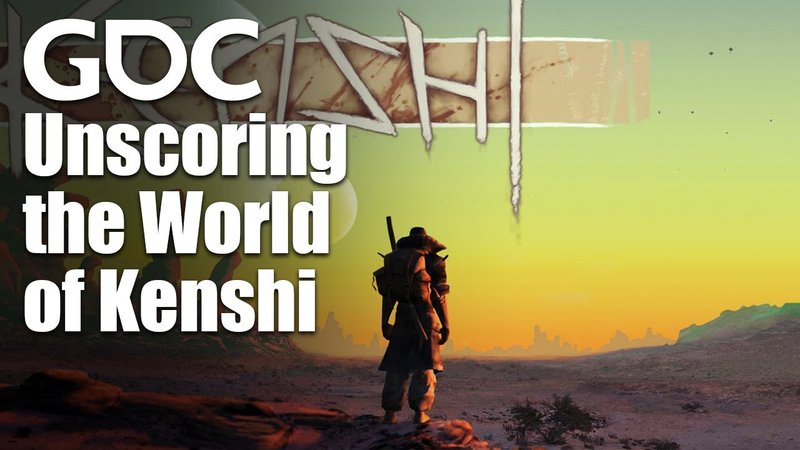
Unscoring the World of Kenshi
The development of the sandbox RPG Kenshi prioritized an audio landscape that reflects the game’s nihilistic, indifferent world rather than the player’s status as a hero.
- The Kenshi audio design philosophy prioritizes an indifferent world over the player, utilizing a self-generating music system that reacts only to environmental variables like biome and time of day rather than player actions.
- Players are given agency only through a music frequency slider, allowing them to define how often the engine triggers musical sequences, ranging from every minute to every hour.
- The soundtrack is composed of three distinct layers—drone, frame, and canopy—which are randomized and mixed to create an ambient soundscape that avoids the heroic, bombastic tropes of traditional RPGs.
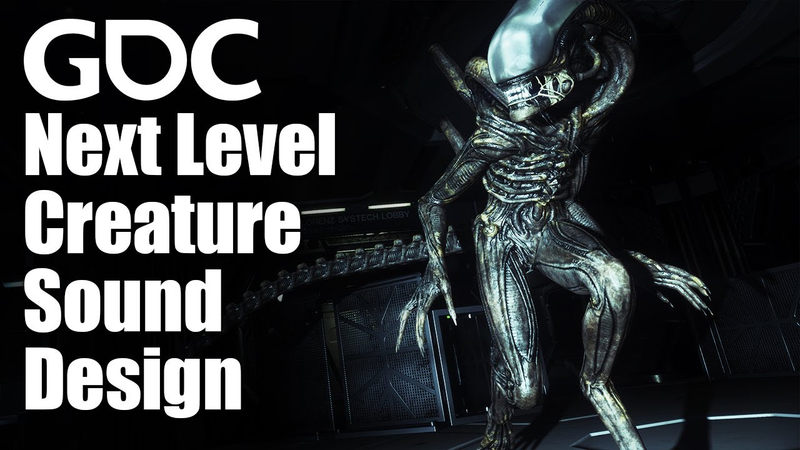
Next Level Creature Sound Design
Believable creature sound design hinges on the integration of character, variation, and perspective, requiring a rigorous pre-production phase that establishes a creature’s physical scale, origin, and vocal mechanics.
- Establish a consistent sonic identity by defining a creature’s physical scale, origin, and vocal mechanics during a rigorous pre-production phase.
- Create cohesive creature characters by layering diverse source materials, including human vocals, organic animal recordings, and non-literal textures like mechanical friction.
- Utilize high-frequency microphones to capture source audio that maintains clarity and fidelity after undergoing extreme pitch-shifting.