PC reports and market data
Documents

my game is at GDC and it's broken..
The development of the indie game Father serves as a case study in the practical realities of preparing a vertical slice for a major industry event like GDC.
- The development of the indie game Father relies on a hybrid asset strategy, combining Unity Asset Store environment packs with custom-modeled landmarks to balance production speed with visual identity.
- The demo currently suffers from significant performance degradation, including frame rate drops and inefficient asset loading, largely due to an over-reliance on post-processing effects like bloom and fog.
- The project's visual fidelity is partially 'faked' to mask simplistic underlying geometry, creating a tension between the need for a polished GDC-ready presentation and a performant, stable build.
6-FIGURE PUBLISHING DEALS Before Finishing Your Game (a chat with Zhenghua Yang)
Securing six-figure publishing deals requires a strategic blend of creative vision, financial transparency, and professional relationship-building.
- Securing six-figure publishing deals requires presenting a polished, genre-appropriate vertical slice or narrative demo that demonstrates a clear business opportunity.
- Financial transparency is mandatory, requiring developers to provide comprehensive budgets that explicitly account for marketing, porting, and public relations costs.
- Publishers prioritize developers who demonstrate flexibility and a willingness to iterate on project scope to align with market needs and platform requirements.
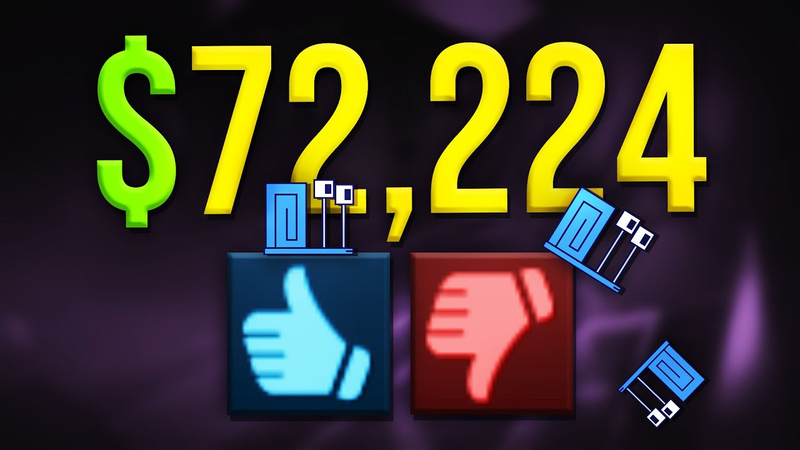
How my Game Launch Went on Steam
The launch of the indie game Will You Snail? on Steam provides a case study in the financial and operational realities of independent game development.
- The game generated $72,000 in gross revenue from 7,500 units in its first week, resulting in approximately $25,000 in net earnings after Steam fees and taxes.
- With total development and marketing costs between $30,000 and $40,000, the project reached near break-even status immediately following the launch window.
- The developer anticipates that future console ports will generate only 30% to 40% of the total revenue volume achieved on the Steam platform.
Will You Snail Original Soundtrack! - Full Album
The original soundtrack for the indie game Will You Snail serves as a thematic extension of the title’s core narrative, blending electronic composition with existential lyrical content.
- The Will You Snail soundtrack is licensed for both commercial and non-commercial use on social media, provided the music is integrated into derivative works rather than reuploaded as standalone content.
- To facilitate community engagement and remixing, the project provides public access to original stems and MIDI files.
- The album features electronic compositions by Jonas Tyroller, mastered by Jodhi Mather-Pike, with vocal contributions from Jason Hanes.
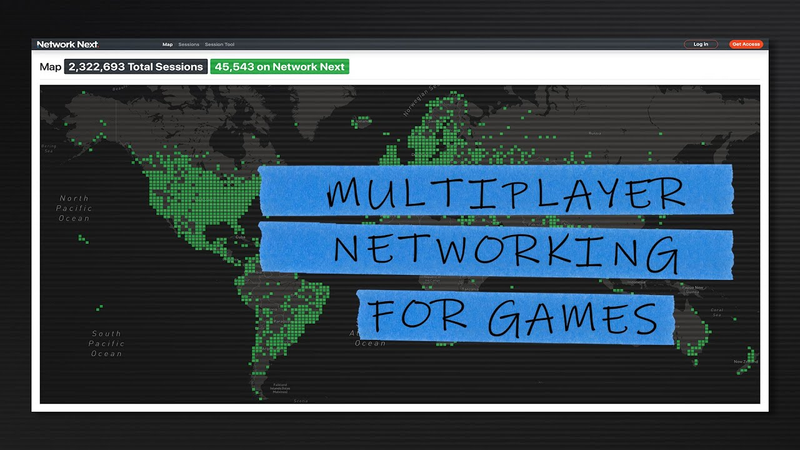
LIVE | Multiplayer Networking for Games with Glenn Fiedler
Successful multiplayer game development necessitates a multiplayer-first philosophy, where networking architecture is integrated into the design and production process from the outset rather than treated as an afterthought.
- Multiplayer networking must be integrated as a foundational architecture from the start of development, as retrofitting these capabilities onto single-player projects frequently leads to technical failure.
- Dedicated client-server architecture is the industry gold standard for high-fidelity, real-time interactivity, significantly outperforming peer-to-peer or decentralized systems in latency and synchronization.
- Blockchain technology is fundamentally ill-suited for large-scale multiplayer environments due to inherent scalability limitations and a lack of functional advantages over traditional, centralized databases.
Steam Deck, Blockchain & NFTS is bad for gamers, game developers?
The integration of blockchain technology and non-fungible tokens (NFTs) into the gaming industry has sparked significant debate regarding their utility, ethical implications, and long-term viability.
- The gaming industry remains deeply divided over blockchain and NFTs, as critics argue these technologies offer no functional improvements over existing centralized systems like loot boxes or auction houses.
- A primary concern is that play-to-earn models commodify leisure, effectively transforming gaming into labor and raising significant ethical questions regarding predatory financial schemes.
- Industry adoption of blockchain is currently facing high levels of player resistance, mirroring the initial backlash against loot boxes before they were rebranded into more acceptable formats like season passes.
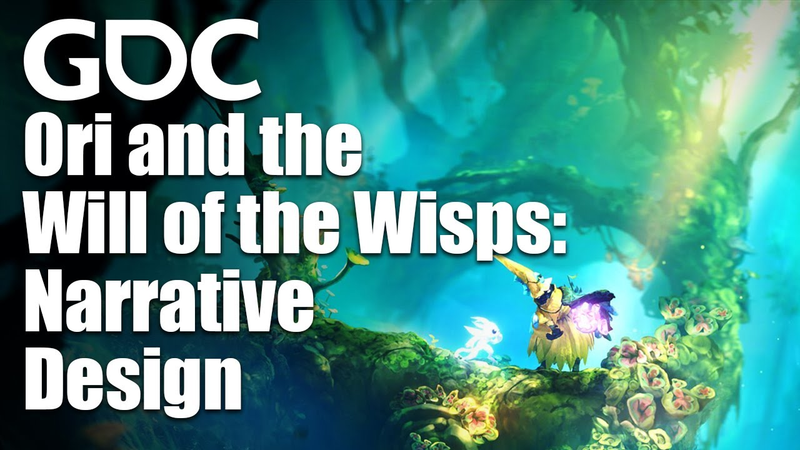
'Ori and the Will of the Wisps': Narrative Design and Visual Storytelling
The development of Ori and the Will of the Wisps demonstrates a sophisticated approach to narrative design, prioritizing visual storytelling and environmental cues over traditional dialogue to convey character growth and thematic depth.
- Moon Studios used the passage of seasons in 'Ori and the Will of the Wisps' to balance nostalgia for the first game with fresh environmental aesthetics, allowing players to revisit familiar spaces through a new lens.
- The team utilized 'environmental state as emotional state' as a core design device, such as tying the visual progression of flight sequences to the character's growing confidence and mastery.
- Collaborative narrative design led to significant creative pivots, such as the decision to have the character Shriek kill Ku to create a major emotional mid-game beat, despite initial concerns about player motivation.
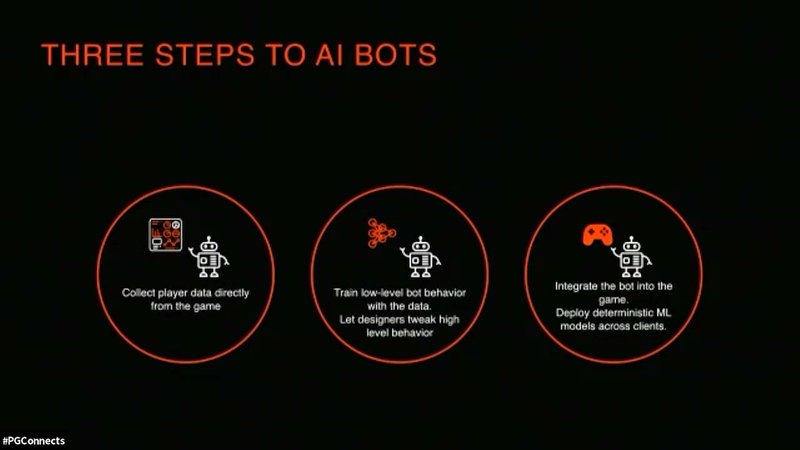
Engaging Bots for Multiplayer Games
The integration of artificial intelligence bots into multiplayer games serves as a critical strategy for maintaining player engagement, ensuring consistent matchmaking, and improving first-time user experience (FTUE).
- Integrating machine learning-driven bots into the game 'Forge and Fight!' resulted in a 50% increase in day-one player retention.
- A hybrid AI architecture—combining finite state machines for strategy and imitation learning for combat—achieves sophisticated bot behavior without the high computational costs of deep reinforcement learning.
- Training effective imitation learning models requires relatively small datasets, often involving less than ten hours of gameplay.
40 Truths You Must Know Before You Play my Game „Will You Snail?“
Will You Snail is a single-player, precision-based platformer centered on a unique artificial intelligence mechanic.
- Will You Snail is a precision platformer featuring a rule-based AI that predicts player movement to spawn real-time hazards, rather than utilizing machine learning.
- The game features a minimalist three-button control scheme and incorporates diverse gameplay genres, including tower defense, racing, and shooter mechanics.
- Developed in GameMaker Studio 2 over a four-year cycle, the title launched in March 2022 across PC, Nintendo Switch, PlayStation, and Xbox.
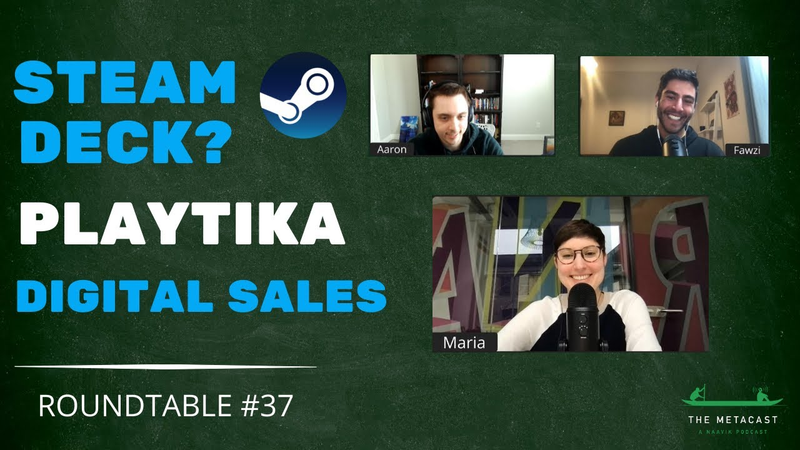
The Metacast by Naavik: Roundtable #37 - Will Steam Deck Become a Success?
The gaming industry is undergoing a fundamental transition from physical media to digital-first ecosystems, a shift driven by the superior margins and control afforded to platform holders.
- The gaming industry is shifting from physical media to digital-first ecosystems to improve margins, increase platform control, and support the storage requirements of modern titles.
- Valve’s Steam Deck is a strategic move to deepen user engagement within the Steam ecosystem and insulate the company against platform taxes, rather than a direct competitor to the Nintendo Switch.
- Mobile gaming firms like Playtika are facing significant growth stagnation and shareholder pressure due to the impact of IDFA privacy changes on user acquisition.
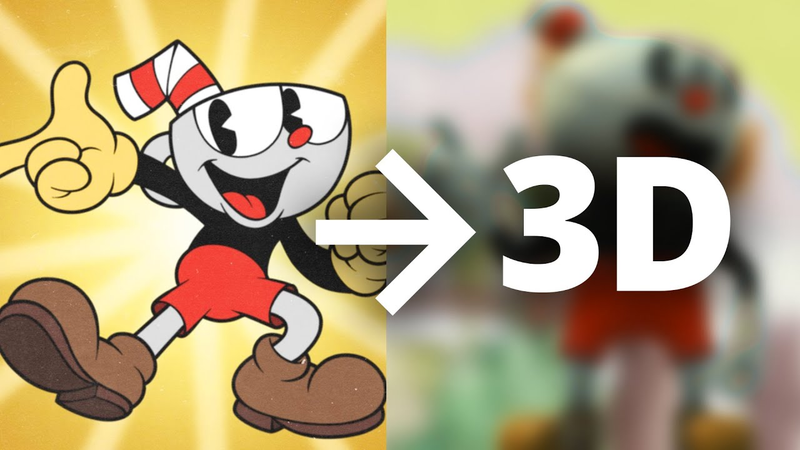
3 Tips for Stylized Character Models in Blender (Cuphead in 3D!)
Achieving high-quality stylized character models in 3D requires a disciplined workflow that balances technical precision with deep historical research.
- Prioritize the blocking phase to establish a strong, readable silhouette before adding intricate details to ensure structural integrity.
- Conduct deep historical research into the artistic origins of a style, such as 1920s cartoons, to improve aesthetic fidelity and inform design choices.
- Implement a consistent workflow of regular backups throughout the modeling process to safeguard progress and encourage iterative experimentation.
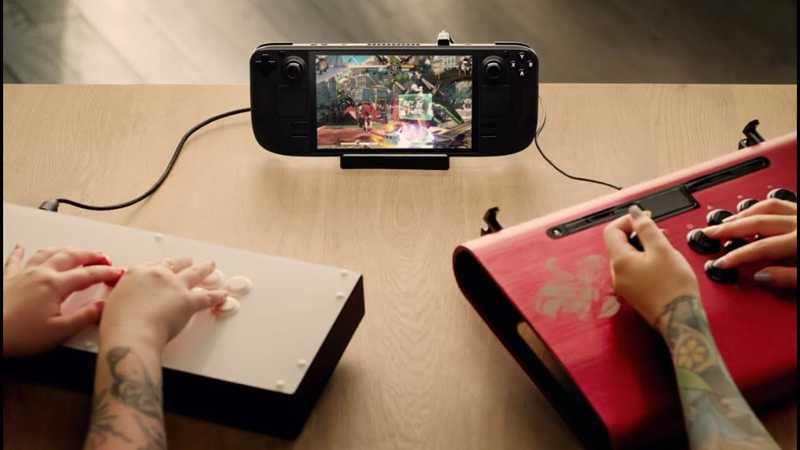
Valve's Steamdeck | Roundtable News Episode 277
The Steam Deck represents a strategic evolution in the gaming industry, functioning as a portable bridge between traditional PC gaming and the convenience of handheld consoles.
- The Steam Deck functions as a portable bridge between PC gaming and handheld consoles, allowing users to access existing Steam libraries without repurchasing titles.
- The device features an AMD Zen 2 APU and 16GB of RAM, positioning it as a high-performance alternative to tethered gaming laptops.
- Valve’s open-platform architecture allows for the installation of third-party software like the Epic Games Store, directly challenging the closed, walled-garden ecosystems of Nintendo, Xbox, and PlayStation.