PC reports and market data
Documents

Gaming Industry Report: Q3 2023
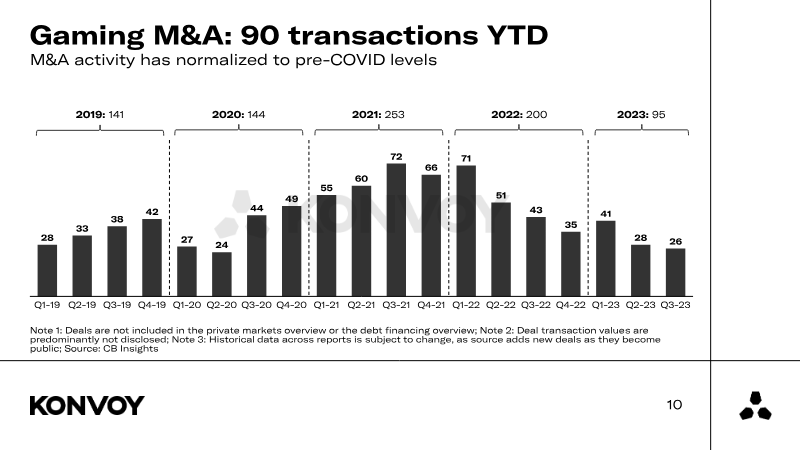
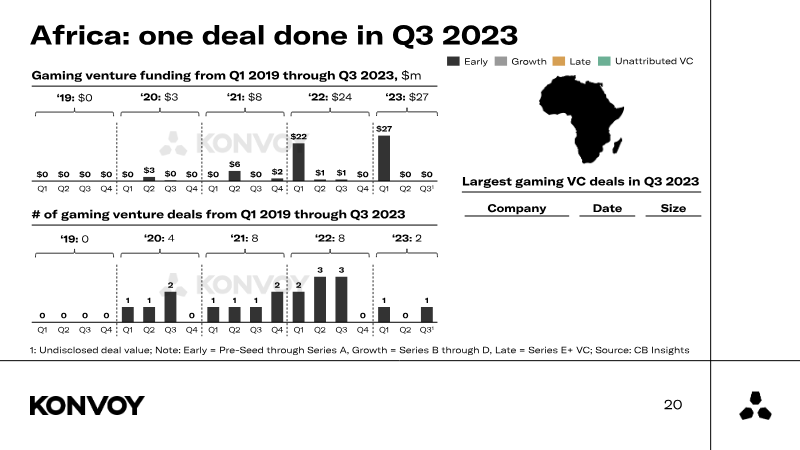
The gaming industry in 2023 represents a $188 billion market, reflecting a 3% year-over-year growth with a projected compound annual growth rate of 8.94% through 2028.
- The global gaming industry generated $46.5 billion in Q3 2023, marking a 3.2% year-over-year revenue increase driven primarily by the mobile segment, which holds 49% of the total market share.
- Investment strategy has shifted toward consolidation, with $12.4 billion in total deal value despite a 15% decline in the number of transactions, as firms prioritize established intellectual property over early-stage ventures.
- Generative AI adoption is now a core operational strategy, with 65% of studios integrating these tools to streamline asset production and mitigate rising development costs.
Why My Game's Demo Cost Over $100,000
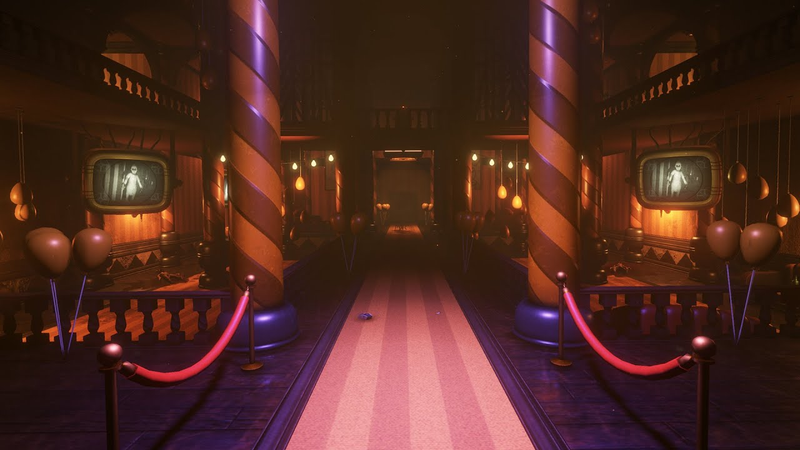
Developing a high-quality first-person shooter is a complex, resource-intensive endeavor that requires significant financial and temporal investment.
- Developing a high-quality first-person shooter demo can exceed $100,000 in costs and require multiple years of development time.
- The development process is inherently fragile, requiring a highly structured approach to integrate thousands of assets without causing project collapse.
- Level blockouts are the essential first phase of development, used to validate core gameplay mechanics and spatial flow before investing in expensive artistic polish.
2D Game Art Tutorial In 10 Minutes
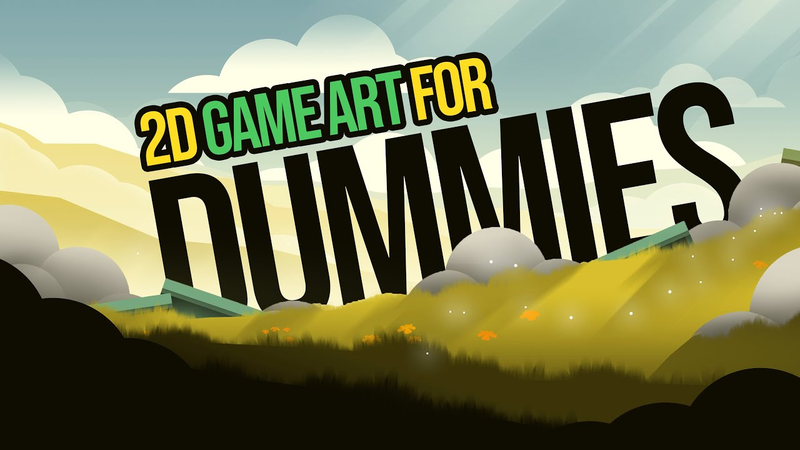
The primary objective of this guide is to demonstrate that high-quality 2D game art is accessible to creators of all skill levels, even when limited to basic hardware like a computer mouse.
- High-quality 2D environmental design relies on the disciplined application of a pre-defined, harmonious color palette rather than complex manual drawing techniques.
- Visual cohesion and three-dimensional depth are achieved by layering primary, secondary, and neutral tones, even if individual elements appear washed out in isolation.
- The composition process begins by establishing a horizon line using gradients to provide a consistent color context for all subsequent environmental elements.
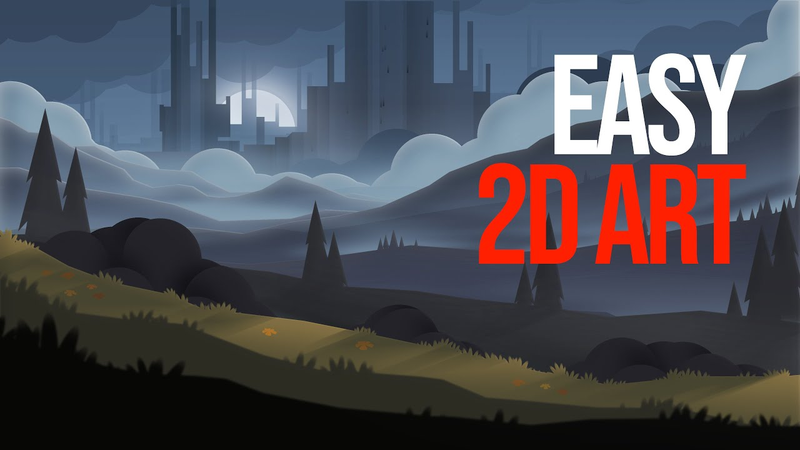
How To Create Breathtaking 2D Art For Dummies
The creation of professional 2D game art relies on a structured approach to color theory, atmospheric perspective, and layered composition.
- Establish visual cohesion by extracting a primary, secondary, and shadow color palette directly from high-quality reference sources like Elden Ring screenshots.
- Implement atmospheric perspective by ensuring foreground elements are highly saturated and dark, while distant objects gradually blend into the sky through atmospheric fog.
- Construct scenes using a layered approach that builds from the background forward to maintain depth and environmental scale.
The Wild Tale of Dark and Darker's Dev Battle - Extra Credits
The legal conflict between the indie developer Ironmace and the major publisher Nexon centers on allegations of intellectual property theft regarding the game Dark and Darker.
- Nexon has accused the indie studio Ironmace of intellectual property theft, alleging that the game Dark and Darker is a derivative of a cancelled Nexon project codenamed P3.
- The dispute centers on claims that a former Nexon employee misappropriated company assets, including thousands of shared file names, to build Ironmace's title.
- Ironmace maintains that the similarities between the games are due to the use of common asset store resources and that the core gameplay loop constitutes a generic genre trope.

How To Avoid Development Hell
Development hell is a pervasive issue in game design, often characterized by feature creep and the unnecessary complication of core mechanics.
- Development hell is primarily driven by feature creep and the unnecessary complication of core mechanics, often stemming from a developer's fear that their game is too simple to resonate with audiences.
- Unnecessary features significantly inflate production costs, as evidenced by one developer who wasted approximately $75,000—half of their $150,000 budget—on scrapped content that never made it into the final game.
- The 'trinity hook' framework acts as a rigid filter for decision-making by requiring all features to directly support a mechanical hook, a story hook, or a sensory hook.
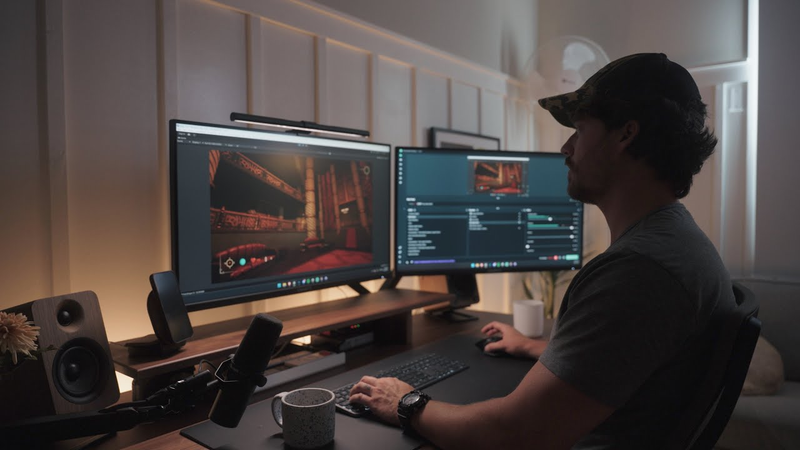
How To Create A 3D Level FAST In Unity
Efficient 3D level design in Unity relies on a structured, three-tiered workflow: establishing a structural blockout, applying custom textures, and finally populating the space with furniture and props.
- Implement a three-tiered workflow for 3D level design: structural blockout, texture application, and final prop population to ensure modularity and iterative flexibility.
- Utilize Unity’s ProBuilder for structural geometry, strictly adhering to a grid-based system to maintain precision and ease of future modifications.
- Use vertex snapping (triggered by the 'V' key in Unity) to ensure accurate alignment of prefabs during the structural phase.
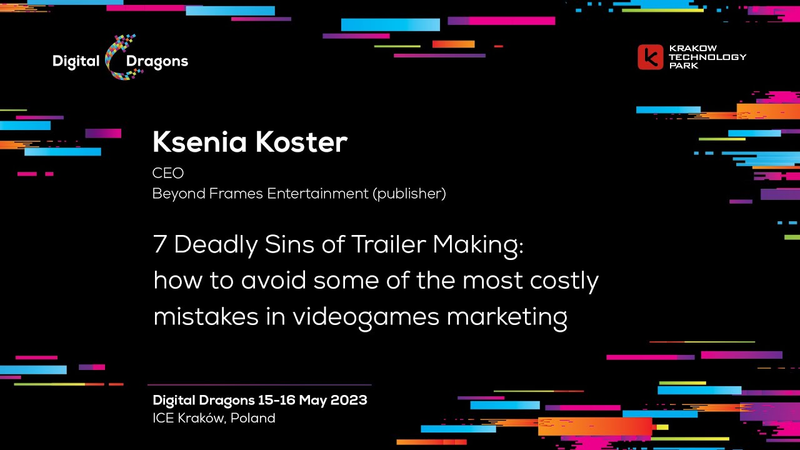
Deadly Sins of Trailer Making: how to avoid some of the most costly mistakes in videogames marketing
Video game trailers serve as critical drivers for store page traffic and conversion, yet their efficacy is frequently undermined by internal compromises and vanity-driven production choices.
- The primary purpose of a trailer is to drive a purchase decision, not to summarize the game; the goal is to get the viewer to stop watching and click the 'purchase' button as quickly as possible.
- The first 10 seconds of a trailer are critical, as viewer attention drops off rapidly; developers should test multiple versions of this opening segment, including versions without sound, to ensure it captures interest immediately.
- Effective creative briefs should include platform-specific requirements like square and vertical aspect ratios, and utilize text plates to explain game mechanics that cannot be clearly conveyed through visuals alone.
Marcin Świerkot - How to iterate and use crowdfunding / Early Access
Crowdfunding and Early Access serve as fundamental mechanisms for modern indie game development, shifting the focus from internal assumptions to data-driven design.
- Crowdfunding and Early Access are essential tools for indie studios to self-fund development, as demonstrated by Awaken Realms growing from a five-person basement startup to a 200-person company over 10 years without external investors.
- Steam visibility spikes are highly dependent on platform-driven traffic; reaching 'Popular Upcoming' or 'New and Trending' categories can generate thousands of wishlists that are otherwise prohibitively expensive to acquire through paid marketing.
- The most reliable validation of a game's 'fun factor' is financial commitment; players voting with their wallets provides more accurate data than focus groups, which are often skewed by cultural differences in feedback.
Michał Dębek, Nicola Kamas - How do players think about indie games and use Steam to purchase one?
Mid-to-hardcore PC gamers define indie titles as experimental, niche, and creative experiences that prioritize unique mechanics over the polished, large-scale production values associated with major publishers.
- Gamers prioritize long-form reviews and user comments over short descriptions, dedicating significant visual attention to these sections when evaluating a game on Steam.
- The game description is often scanned very quickly, with an average reading time of approximately 1.7 seconds, making narrative and story-driven elements vital marketing assets for indie titles.
- Steam users employ specific navigation strategies to find games, frequently utilizing genre-specific tabs (e.g., metroidvania or platformer) to narrow their search results.

Jakub Pacura - Marketing Postmortem for House Flipper
House Flipper demonstrates that long-term commercial viability in the simulation genre is best achieved through a disciplined DLC release model and a commitment to organic community engagement.
- Frozen District achieved an average of 150,000 wishlists for House Flipper DLCs by announcing them 9 to 12 months in advance rather than the industry-standard two-week window.
- Influencer marketing was a primary driver of growth, with the largest House Flipper YouTube video reaching 21 million views and creators like jacksepticeye producing 10-video series that sustained long-term engagement.
- The developer utilized consistent naming conventions (e.g., 'House Flipper - [DLC Name]') to eliminate consumer confusion and maintained a detailed sales log to track discount performance across all DLCs.
Michał Azarewicz - How to profit from (what appears to be) a flop - Shing! story
The commercial trajectory of the action game Shing! illustrates that a disappointing initial launch does not necessitate a project’s abandonment.
- Persistence in platform relations is critical; securing promotional slots on consoles like Sony, Nintendo, and Xbox requires consistent, weekly outreach to platform representatives for months until your title is included in their internal promotional spreadsheets.
- A failed initial launch does not necessitate abandoning a project if the studio has enough runway to support subsequent releases on other platforms, such as the Xbox and Nintendo Switch, which can significantly outperform initial PC and PlayStation 4 performance.
- Long-term product management, including releasing a definitive '2.0' version with bug fixes and quality-of-life improvements years after the initial launch, can extend a game's lifecycle and maintain its commercial viability.