The global gaming industry experienced a period of stabilization and strategic realignment during the third quarter of 2023, characterized by a modest recovery in consumer spending and a significant shift in investment patterns. Total market revenue reached approximately $46.5 billion for the quarter, representing a 3.2% year-over-year increase. This growth was primarily driven by the mobile segment, which accounted for 49% of total market share, followed closely by the console and PC sectors. Geographically, the Asia-Pacific region remained the largest market, contributing 46% of global revenue, while North America and Europe showed resilient growth driven by high-profile software releases and improved hardware availability.
Investment activity saw a marked transition from high-volume venture capital infusions to more targeted mergers and acquisitions. Total deal value for the quarter reached $12.4 billion, though the number of individual transactions declined by 15% compared to the previous year. This trend indicates a maturing market where established players prioritize the acquisition of proven intellectual property and specialized technology over speculative early-stage investments. Furthermore, the integration of generative artificial intelligence into development workflows emerged as a critical operational focus, with 65% of surveyed studios reporting the implementation of AI tools to streamline asset production and reduce escalating development costs.
The labor market within the industry faced ongoing volatility, with several major publishers announcing restructuring efforts to optimize efficiency following the rapid expansion of the previous three years. Despite these headwinds, the player base continued to expand, reaching an estimated 3.38 billion gamers worldwide. Engagement metrics remained strong, particularly in live-service titles and competitive esports, which saw a 12% increase in viewership hours across major streaming platforms. As the industry moves into the final quarter of the year, the focus remains on balancing creative innovation with fiscal discipline to navigate a complex macroeconomic environment.
Konvoy · 2025
Konvoy · 2025
Konvoy · 2024
Konvoy · 2024
Konvoy · 2024
Konvoy · 2024
Konvoy · 2023
Konvoy · 2023
Konvoy · 2022
Aream & Co · 2026
Epyllion · 2026
Aream & Co · 2025
Newzoo · 2025
Epyllion · 2025

Aldora · 2024
Newzoo · 2023
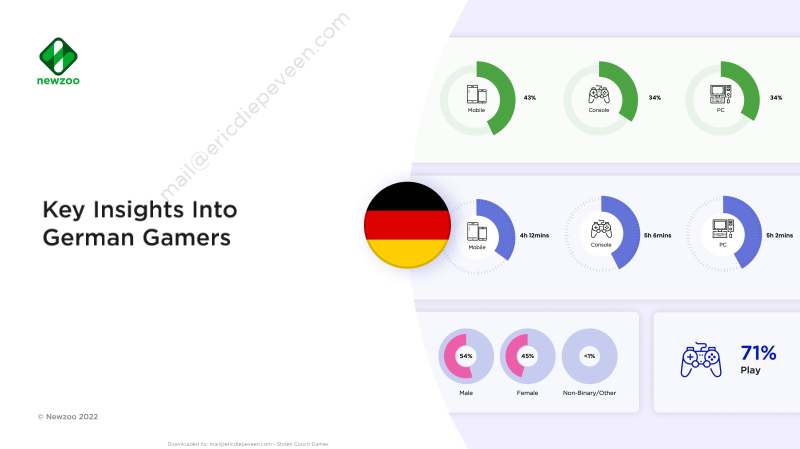
Newzoo · 2022
SuperData · 2020
GungHo Online Entertainment
Koei Tecmo

Ubisoft · 2026