PC reports and market data
Documents

"My Name Is Ozymandias..." - How to Archive Games for Future Generations - Extra Credits
The preservation of video games represents a critical challenge for the medium, as the rapid evolution of hardware and software threatens to erase the cultural and historical record of game design.
- Video games face a high risk of permanent loss because they are tethered to obsolete hardware and degrading physical media, unlike traditional art forms that remain accessible over centuries.
- Mandatory online connectivity and server-based multiplayer create 'dead-end' software that becomes functionally unplayable once developers shutter the supporting servers.
- The reliance on specialized input methods, such as trackballs or unique arcade controllers, prevents modern ports and emulations from accurately replicating the original design experience.

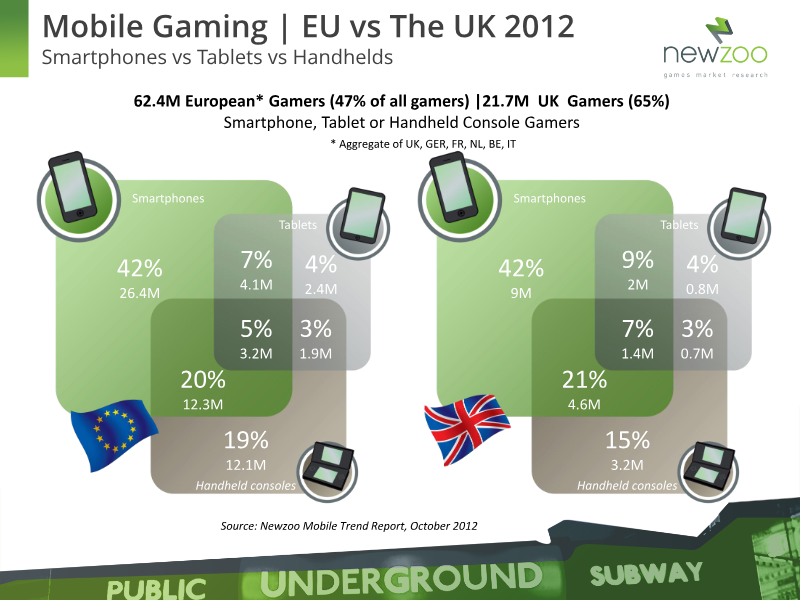

The UK Games Market: 2012 Summary Report
The 2012 UK Games Market report provides a comprehensive analysis of the gaming landscape in the United Kingdom, focusing on player demographics, platform usage, and evolving business models.
- The UK gaming market reached 33.6 million active gamers in 2012, representing a 9% year-on-year increase.
- 64% of the 33.6 million active UK gamers engage in paid gaming activities.
- UK gamers exhibit fragmented consumption habits, with the average individual utilizing 3.9 different platforms.

Digital Rentals and the Online Arcade - How Will We Buy Games in the Future? - Extra Credits
The gaming industry is currently undergoing a significant transition as traditional retail models, centered on sixty-dollar boxed products, give way to digital distribution and diverse monetization strategies.
- Monetization strategies must be integrated into the game design process from the start, as payment structures fundamentally dictate mechanical requirements and the overall player experience.
- The industry is shifting away from the traditional $60 boxed-product model toward diverse digital distribution methods that move beyond a one-size-fits-all approach.
- The 'online arcade' model, which charges per life or session, is best suited for short, skill-based genres like fighting games or platformers.
Mechanics as Metaphor - II: Creating Narrative Depth - Extra Credits
The integration of mechanics as metaphor serves as a critical strategy for elevating narrative depth in video games.
- Developers should prioritize mechanics as metaphors to convey complex themes, moving beyond reliance on traditional cutscenes and dialogue.
- A singular, well-defined conceptual focus—such as alienation or psychological delusion—must be established early in production to ensure art, sound, and code align to reinforce the narrative.
- Designers should shift away from rigid, hand-holding gameplay models and instead create spaces of possibility that encourage player interpretation.
Mechanics as Metaphor - I: How Gameplay Itself Tells a Story - Extra Credits
Game narrative extends far beyond dialogue, lore, or visual aesthetics, as the core mechanics of a game can serve as a powerful metaphor for storytelling.
- Core gameplay mechanics serve as a primary narrative tool, allowing developers to embed storytelling directly into player actions rather than relying on dialogue or scripted lore.
- By prioritizing mechanical metaphors over binary decision points, games enable players to explore complex emotional states through their own behavioral choices.
- The flash game 'Loneliness' demonstrates that movement and interaction patterns alone can convey a narrative, effectively turning gameplay into an analog experience of social psychology.
Digital Resale - Can You Borrow a Friend's Steam Games? - Extra Credits
The digital distribution landscape is approaching a significant shift as legal precedents, particularly within the European Union, begin to classify digital goods as property rather than licensed services.
- Legal precedents in the European Union are shifting the classification of digital goods from licensed services to property, which mandates that consumers eventually gain traditional ownership rights like resale and transfer.
- Digital storefronts are under pressure to develop infrastructure for digital resale to comply with evolving laws that bridge the gap between physical property rights and modern digital distribution.
- A centralized trade-in model, where distributors offer store credit for returned games, is identified as a viable strategy to retain customer loyalty and keep capital within a platform's ecosystem.
Perfect Imbalance - Why Unbalanced Design Creates Balanced Play - Extra Credits
The concept of perfect imbalance posits that game design benefits from intentional, subtle deviations from strict numerical parity.
- Perfect imbalance prevents games from becoming 'solved' systems by replacing rote memorization with a dynamic, self-correcting meta-game.
- Designers should limit power deviations to a 10 to 15 percent range above a mathematical baseline to ensure variety without creating broken, game-ruining elements.
- Cyclical imbalance drives player engagement by creating a natural feedback loop where dominant strategies attract counters, which then shift the meta-game.

Games You Might Not Have Tried - ep 4 - Find New Games - Extra Credits
This analysis highlights a curated selection of video games that offer unique, novel, or under-the-radar experiences for players.
- Crusader Kings II differentiates itself in the grand strategy genre by prioritizing complex interpersonal dynamics, familial rivalries, and dynasty management over traditional territorial conquest.
- Artemis Spaceship Bridge Simulator innovates by utilizing a LAN-based cooperative structure where players perform specific bridge officer roles, emphasizing communication over standard controller-based gameplay.
- Avernum: Escape from the Pit demonstrates the successful adaptation of tactical RPGs to mobile platforms, proving that touch interfaces can effectively enhance complex, turn-based mechanics.
Games You Might Not Have Tried - ep 3 - Find New Games - Extra Credits
This overview highlights a curated selection of diverse video games, emphasizing titles that offer unique mechanics, experimental narratives, or unconventional genre blends.
- Game design innovation often occurs through unconventional genre blending, such as the fusion of physics-based action with historical humor in Rock of Ages or the integration of grand strategy with RPG elements in King Arthur II.
- Meta-narrative and subversion of traditional tropes can redefine established genres, exemplified by Recettear’s approach to RPGs and the fast-paced, top-down shooter mechanics used to disrupt traditional MMO structures in Realm of the Mad God.
- Mobile platforms are capable of hosting high-quality, immersive experiences, as demonstrated by the horror title The Dark Meadow.
Mass Effect 3 DLC - Can Day 1 DLC be a Good Thing? - Extra Credits
The practice of releasing downloadable content (DLC) on a game’s launch day is often viewed as a predatory business tactic, yet it serves a functional role in the modern console development cycle.
- The console certification process creates a mandatory six-to-eight-week gap between the completion of a game and its retail release, which developers use to produce day-one DLC.
- Day-one DLC serves as a functional economic model to keep development teams employed during the post-gold, pre-launch window when the base game is already finished.
- Publishers rely on day-one DLC because consumer interest in a new title drops precipitously shortly after the initial release, creating a narrow window for monetization.
Skyrim's Opening - How NOT to Start a Game - Extra Credits
The opening sequence of Skyrim serves as a case study in ineffective game design, specifically regarding how a title’s introduction should establish its core engagement.
- Game introductions must prioritize mechanics that reinforce the title's core identity rather than borrowing structural templates from unrelated genres.
- Skyrim’s opening sequence fails by forcing players into a passive, scripted cart ride that contradicts the game's fundamental appeal of freedom and exploration.
- The attempt to mimic the cinematic, linear opening of Call of Duty 4: Modern Warfare is ineffective because it ignores the mechanical differences between a high-stakes shooter and an open-world RPG.
Deus Ex: Human Revolution - How Games Explore Hard Real World Questions - Extra Credits
Deus Ex: Human Revolution serves as a compelling case study for how interactive media can explore complex philosophical and societal questions.
- Deus Ex: Human Revolution uses its cyberpunk setting to examine the societal implications of transhumanism and the ethical costs of replacing biological evolution with technological augmentation.
- The game functions as a parable for modern wealth inequality, highlighting the growing divide between those with access to life-altering technology and those left behind.
- By mirroring real-world disparities in education and economic opportunity, the narrative forces players to confront the consequences of a future where technological access determines social status.