Transcript
[Music] Welcome to the Navit Gaming Podcast, where it is our mission to explore the business and future of video games. We bring together the industry's brightest builders, investors, and thinkers to keep a pulse on current events, dissect emerging trends and games, share lessons learned, and have a great time. This podcast is also part of Navik's growing ecosystem which ranges from free and premium research to consulting and advisory services. For more information, visit www.navic.co. [Music] This episode is brought to you by Heroic Labs, which powers some of the world's biggest games with its heroic game stack. Its composable products are Nakama, the open- source back-end game server, Hero, the game development framework for all your live service game features, including the complexity of managing offline mode, Sattorii, the
worldclass live ops product for maximizing monetization and retention. And lastly, the Heroic Cloud to provide massive scalability. After nearly 10 years of operation, thousands of studios trust Heroic Labs to help them focus on their games and not worry about game tech or scaling for success. To learn more and reach out, make sure to visit heroiclabs.com or check out the link in the show notes. This episode is brought to you by Lysto. Listo is an AI native play testing platform helping game studios capture unbiased player feedback and convert it into structured actionable insights. Whether you're validating new features or catching us friction before launch, Listo empowers the entire game team to move faster with clear insights and less guesswork. To learn more and get in touch, visit listto.gg or check out the link in the show notes. And with that, let's jump into the episode. Hello everyone. I'm your host Devin Becker and today I'm delighted to
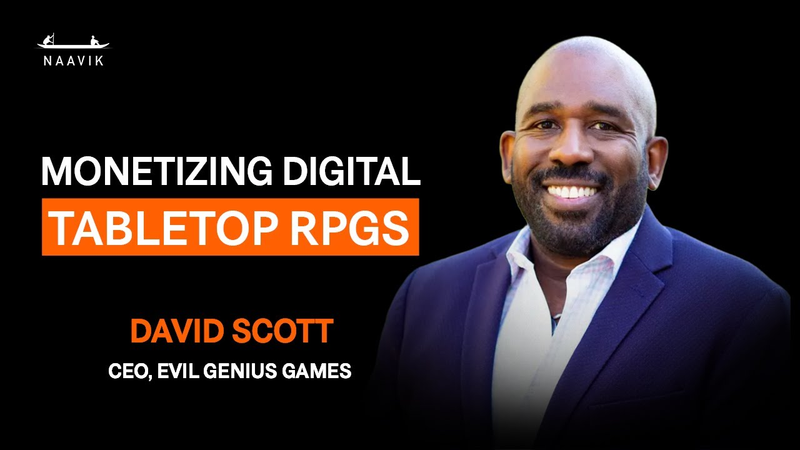
be joined by Dave Scott, the CEO of Evil Genius Games. Evil Genius Games publishes a popular tabletop RPG system that includes content for a number of popular IPs including Pacific Rim, Highlander, Rambo, and much more. And so today, we're actually going to discuss an interesting intersection between tabletop gaming and digital platforms. So just to start off with to get people familiar with you, could you just go over your background in games real quick and what Evil Genius Games does? Yeah, absolutely. Hey, thanks for having me on the show. My name is Dave Scott, CEO and founder of Evil Genius Games. Uh, you know, listen, I'll give you my my my my resume for games, which is I was 11 years old. I went away to Sleepaway Camp. They're playing this game called Dungeons and Dragons. They're playing White Clume Mountain, if you remember that module. And I was forever sold. And so, for the past 35 years, every Tuesday, I've been playing Dungeons and Dragons. So, I've been a huge uh tabletop role playing game nerd since I was 11 and uh and and uh and
have not turned back ever since.
Cool. And so, what is Evil Genius Games doing kind of overall right now besides the you know the tabletop RPGs for the the IP that I mentioned?
Yeah, I mean so as much as I love Dungeons and Dragons, Dungeons and Dragons is a one property business. It focuses primarily on what I would consider European fantasy. So, if you wanted to play an elf wizard or a gnome rogue, uh that's your game, right? There's there's it is unrivaled in the aspect of a fantasy type tabletop role playing game experience. But for me, I was always that kid that liked that, but then also wanted to do other genres like science fiction, which is great, but then also modern. I was always obsessed with these modern tabletop role playing games growing up. What does that mean? That means champions, gersps, mutants and masterminds, Marvel superheroes, DC
superheroes, and my all-time favorite, D20 Modern. And so, for those of you guys who don't know what D20 Modern is, D20 Modern was Wizards of the Coast's attempt to move away from just fantasy. So, back in uh uh 2001, uh some of the best designers at Wizards of the Coast, including Jeff Grub, one of the people who helped me start this company, uh went out and took third edition Dn D, and by the way, it's on fifth edition now. It's gone through five editions of the of the refinement of the mechanics and decided that they were going to apply that to other genres other than Dungeons and Dragons. That's what birthed the OGL which created this industry in general. But what it also birthed was it birthed D20 Modern which was the modern-day action hero take of Dungeons and Dragons. And so what we here at Evil Genius Games has done is we've recreated that modern-day action
hero system uh that competes with Dungeons and Dragons, but specifically focuses on the shoot them ups, the action, the John Wicks, the Dieards of the World, so on and so forth.
Cool. Well, well, hopefully we can get a John Wick or a die hard in there at some point. And just to mention because you did mention the name of uh of the system, I wanted to make sure people know what that's called as well was Everyday Heroes is the name of the system and there's there's a number of different modules for it and things like that. Uh very cool system. Uh definitely I appreciate a little bit of the history of the platform as well there because uh uh not everyone is is familiar being, you know, this a little more focused often on video games. But I mean before we go too much into the digital space, what's kind of your highle take on the tabletop RPG market in general right now? because it's gone through a lot of interesting things over the last few years and it's kind of in an interesting space overall.
Yeah. Well, you know, the tabletop role playing game space is a juggernaut and people don't really understand that, right? And so, uh, if you take a step back, the tabletop gaming industry is around $30 billion in size and it's
growing faster than the video game industry. So, it's growing at 11.8% bigger. You know better than I do how fast the video game industry is growing. And I think a lot of part of that is that people are looking to find ways to unplug and reconnect with family. And COVID was a large part of that, right? So people couldn't go to the bars. People had to social distance. A lot of my friends personally moved away. And so we were trying to figure out wholesome ways to connect. Uh and a lot of families started buying board games and started playing Scrabble again and Settlers of Katon and you know, Pandemic, you know, and Risk. Uh, and they also started playing role playing games and people would play role playing games with their families or they play role playing games with their friends on some sort of Zoom call and then all of a sudden people started thinking about that as another form of entertainment that is less isolationist than than video games because it really takes community to really to come together and play one of these games. And so um and
so that's where I think there was this exciting resurgence on tabletop games and role playing games you know it it also had the exact same uh rise in popularity.
Well cool. Yeah I mean I definitely think you know if you're trying to be remote playing a tabletop role playing game over Zoom or whatever is a lot easier than a board game right where you're trying to like I move my piece then you got to move it as well. Like you know it reminds me of people trying to play chess by mail kind of thing. It's it's not easy right? whereas the tabletop roleplay games, theater of the mind, a little bit easier to do that. But, you know, how how do you think they overlap with video games and digital platforms in general?
Yeah, I mean, I think there's some similarities. I think there's some distinction, right? And so, what I typically try to explain to people is that um playing a a tabletop role playing game online does not necessarily mean that you're recreating you're creating a video game- like experience for it. And I got to say like I am role playing game enthusiasts in and out, right? So I just want to give some ups
to CD CD Project Red uh for Cyberpunk for all the amazing game The Witcher. Uh I still play The Witcher here. Uh for boware because I love Mass Effect 3. Uh I love Dragon Age. I was a huge fan of the Star Wars uh return uh um um Knights of the Old Republic. Like I love a good video game RPG, but that is not the experience that we're bringing on line when we're talking about playing a game with my friends and family. When you play a game with your friends and family over a VTT, virtual tabletop or what have you, you are the star. Your friends are the star. It's not the technology that's the star. And so all that the technology does is enable an experience that allows us to do all the cool things that we do in a tabletop gaming experience. And I think that's the real key distinction.
Yeah, I mean it's definitely um especially over time kind of shifted I think because that technology has
changed as well and what it can can and can't do, right? Obviously like I said it's changed a little bit since like play by mail kind of thing. We can do a little bit more with zoom calls or discord or whatever it is right now. uh what is Evil Genius Games specifically doing in the digital space just and you know since it's obviously an area you guys been exploring.
Yeah, so uh my my background is technology, right? So I've started and sold three startups um all within sort of the consumer and entertainment space. My last company was a company called Laughley which did on demand streaming comedy. We sold that company in 2018 to Kevin Hart and Lionsgate and uh and so uh I love technology. That's my bread and butter. But when we started to think about building this company in general, the first thing we had to say was that we had to first and foremost build a good game and that's when we started down the journey of building everyday heroes and we built it as a physical product. That's where we started and we wanted to create a game that competed with Dungeons and Dragons. It competed
with all the other greats out there and we went analog. Then after we knew we had a good game, and by the way, our game has over a thousand fivestar reviews across the various review sites and people play it on a regular basis. I then went out and sort of said, um, now let's figure out how to be able to recreate that experience soup to nuts online. So, we're sort of a two-part company. First is we're a traditional publishing company. We build great games, right? Uh, our core system is Everyday Heroes. Everyday Heroes allows you to play any form of action action game you want, whether or not that be Jack the Ripper in the Victorian age or whether that whether that that be Edge of Tomorrow in a near future setting. And then we actually created a framework for people to do that. Then we created campaign settings. So very similar to Ravenloft, which is a really famous campaign setting for Dungeons and Dragons, or Eberon, which is another famous campaign setting. uh we actually
created campaign settings and what we did initially was we decided to work with Hollywood to create campaign settings based off of famous movie franchises. So we have nine of them out which includes Pacific Rim, Kong Skull Island, The Crow, Highlander, Escape from New York, Universal Soldier, Total Recall, Rambo, and then we just released I'm really excited to announce this which is Return of the Living Dead for the 40th anniversary of the film. Uh, and so what we've done is those slot right on top of our everyday hero score system and it creates a pantheon of really, really great storytelling that's on top of it. But we're not stopping there. Once we've actually created those games in an analog format, we began to recreate them in a digital experience, allowing you to be able to bring that exact same fun and excitement, but do it online. Uh, and when you go on to our our our subscription platform, which is called Sidekick, not only do you see those games, but then you also see 80 more games that we've created based on
all these various genres. So, if you like Apocalypse, we've got Everyday Apocalypse. If you like Jurassic Park, we got Jurassic heroes. If you like slasher movies, this month we're coming out with Everyday Slashers. So, um, we, so we're really sort of proving the model that it's truly extensive and that any modern-day story could be told on our platform in person or online.
Nice. I mean, definitely a lot of flexibility there. Uh, a little a little easier to sort of reskin than a video game, at least in a a timely manner, right? Uh,
well, except for, you know, like like what I I we took our inspiration from Fortnite. Fortnite, I think, does an amazing job, right? So all the physics and the game engine is all built in that Fortnite system. Uh but then you could jump on and you could sort of play, you know, the Walking Dead version of it or what have you. Um and so that was very much one of our inspirations going into how we thought about how extensible our system should be.
Well, then you're going to have to talk to Epic and see if you could do a a Fortnite licensed one in Everyday Heroes. That would be that would be a
very interesting crossover to say the least, considering the the sort of back and forth they have. Uh there are there are a lot of people trying to get into this space, right? The virtual tabletop space, both sort of like entrenched uh people like Dungeons and Dragons under Wizards of the Coast, which is under Hasbro, so on. Uh they they're trying to do their sort of thing in their space. And then you've got uh you know, companies that are doing just the virtual tabletop side of things like Roll 20, Foundry with their V VTT, uh Alchemy, things like that. What what do you see coming out of these competitors? What are they doing that's that's working well? What isn't working well? like what's your kind of take on that space as it exists right now especially postcoid where like a lot of that I wouldn't say a gold rush but just like a lot of push in that in that direction.
Yeah, I think you're absolutely right Devin. So when co happened and people realized they couldn't get get together there was a technological revolution among tabletop role playing game technology providers, right? And all of a sudden everyone was scrambling to figure out how to bring that gaming experience
online. Uh and then there were guy there were the OGs like Roll 20 which had had already had a platform which you saw an amazing explosion to what now maybe 10 million um uh uh monthly active users. Uh but then you also had like dozens and dozens of new uh of new companies that just started out that created these technologies within within just a couple of years. And I would actually tell you it was a relatively crowded space. I think unfortunately a lot of them have gone by the wayside now, but at one point in time it was incredibly crowded with upstarts that were trying to figure this thing out. And I think the the one fundamental problem that I think all of those folks had was that they were trying to solve one problem but not all the problems that you needed in order to bring that experience online. What do I mean by that? I think that you need five things to have to happen in order to create a cohesive gaming experience. Number one is you need an actual game and the game has to be in digital format. Uh number two is you actually need a way to build a character easily.
Number three is you have to have a way to be able to build an encounter, right? So if you're the game master, setting up maps, uh creating stat blocks, uh finding tokens for your enemies, that kind of stuff. Uh fourth is if you're a really big fan of userenerated content. So, and by the way, uh, what I love about this industry is how much fan content is built out there, you need a way to be able to integrate your userenerated content or your homebrew, right? So, if you have your own specific rules that you run in your game, that has to be reflected in the system. And then fifth is you need a virtual tabletop to run the game. The problem is is that a lot of these guys came out and they only did one of the five. uh which meant that an average game and and even with my average game, you need three to five technologies to play the game. So in in some cases, the the audio and video is not great on a lot of these VTTs. So you're playing it on Discord and then you're playing it on VTT uh VTT
itself and then you really really like the D&D Beyond version of the Character Maker or the Hero Labs version of the Character Maker. And so now you have a third-party character generator. And so now I'm sitting on three minimum three games. Oh, by the way, I also have a PDF copy of my game which which is running on Adobe Acrobat. So now I've got four technologies running to play one single game. And I think that that process is broken. That makes sense. And especially if there's kind of a common thread through all these games, like you talk about characters are just a common thing to all these games. encounters and combat and and that sort of like problem solving conflict system is obviously, you know, I wouldn't say all of them because there's there's some interesting creative narrative takes in the indie space, but in general, the majority of them are going to have some sort of conflict resolution system that that you're going to be going through. So, I mean, it makes sense to write kind of break it down into those cores. Uh, and so I'm interested to see like kind of where that goes. Um, but like I'm I want to figure out like how does this
integrate with sort of the business model of tabletop RPGs, right? like why don't you kind of just quickly explain like how does the business model work in general for tabletop RPGs because it is a little unique compared to a lot of other like even board games and things like that and how does it fit in with digital platforms or even just digital versions of the product.
Yeah. Well, you know, and that's what one of the things I was pleasantly surprised with, right? As a as a tech CEO, uh I I I have to be very well verssed in business models, right? Understanding SAS platforms and flywheels and day one mentality, that kind of stuff. And what I was really love about this industry is I think it's got all the right bits and pieces to be an extremely profitable business while still being able to serve the community. Why? Because the 150 million people that play these types of games are passionate. Um, and so when I say that I've been playing since I was 11 years old, that means I've been playing for 35 years. This game, this one game with one,
a lot of hours.
A long game, baby. It's a log game, baby. And the thing about it is name any other sort of thing, any other hobby where it's it's like that, right? And so you have these really really loyal customers. I've got customers, we're about two and a half, maybe three years old. I've got customers that have been playing my game for three years and they're lifetime players because they're looking for a modern game. They're looking for one that is good, easy to understand. Ours fit the the mold and this is what they play now forever. They're my forever customer. And what does that mean? You know, if you're a VC, you're you're trying to calculate my LTV. It's a pretty good LTV.
I was going to say LTV, but I wasn't sure if you wanted to bring that up.
Yeah. When I've got when I've got an average buyer that spends $585 a year on these types of things and they never churn. Um, and so and so, so it's a it's a great customer. The business model is great. I think that D&D Beyond and Roll 20 and others have sort of built my business model for me. So, I'm a fast follower, which means that it's not uncommon for me to offer a subscription
to be able to provide the virtual tabletop gaming experience that people love. That subscription tends to be low, right? Because it's providing a minimum layer of functionality. Uh, and then it's not uncommon for people to buy games on top of it. So, I've got a dual model, right? So, you pay a flat, you pay a recurring revenue fee, and then on top of that, people pick up games, those games are purchased, and they get integrated into the virtual model. and then that virtual model then they can and launch them to be able to play that particular scenario or source cinematic setting on top of the subscription. So one area that I always find kind of interesting as there's sort of this shift into the digital space especially as people just live farther apart you know a lot of people as you said move during co so even if it's hey we could we could be closer than six feet now but everyone moved a lot farther than six feet away from each other uh so it's a big you know it's a big deal for people to be able to do that but where I get kind of a little or I see a lot of concern is cannibalization right where like if I could buy it cheaper digitally
or I'm buying it in this product or I'm getting it via a subscription uh is that cannibalize the physical ones. Like just to give an example of what you're offering, right, where I I'm paying say like a $5 month for Sidekick and I'm getting the Everyday Heroes this big thick rule book that normally costs what is it like 50 4050? I I don't remember the retail price,
60 bucks,
right? And so you're you're you're potentially canceling that out, right? Like and then you're looking at like, okay, maybe some of the add-ons as well, like the books or miniatures or other physical accessories like custom dice. Is there that cannibalization or is this are you seeing it as like an extension where people are buying it twice, three times? You know what what does it look like in the market?
It turns out that people are buying our game an average of three times. They're buying the physical game because they want to sit they want it to sit on their shelf and they want to show people their library. They're buying the PDF or the digital version of it because it's more functional and more easy to use. And if they're using a virtual tabletop, they got to buy it on there as well. The
travesty that's going on in our industry right now is that if I'm using a virtual tabletop and I'm using a character builder, for example, let's say I'm using D and D Beyond and Roll 20, I'm actually buying my game four to five times. I'm buying the physical D and D's players handbook. I'm buying the PDF version of it would because I've got a, you know, because it's more transportable. I'm going on a D and D beyond and I'm buying it again. And then I'm going on a roll 20 and I'm buying it again. So, that $60 uh players handbook that I bought at Barnes & Noble, by the time I'm playing it, I've now spent $180 to play that game. And I think that's a travesty, right? And and so, but I do think that um what we're experiencing is that people like to have both the digital version of it and the physical version of it. And the way that I actually liken it is I like I liken it to the music industry, right? So, you know, a billion years ago, we used to buy CDs. I used to carry around my CDs
and a little zip folder and and hope that no one stole my little zip folder of of a thousand CDs, my my UB40 CD or whatever. H and um and I spent 30 bucks a CD, which was like super dumb, right? Because I'd like one or two songs per album. Uh and then Napster came along and ultimately Spotify and all of a sudden I could just pay for one song at a time, which I think, you know, and then now you have a streaming experience. And I think that streaming experience now is dominant. Not necessarily because um it's better not it's dominant because it was better. It's a better user experience. It's it's it is more natural to how I would necessarily want to listen to music. Um but now people are going back and buying the vinyls again and they're buying the vinyls because they want to collect they want to collect them and they want to show them off to their friends and every once in a while they want a better experience and a more tactile experience and they throw it on to their record player and play it. I I actually think that that's how we're going to be going as an industry. Uh is that people are going to prefer the online experience
because it just simply is better, but they're still going to buy the the collectible because it is cooler. Makes sense. I mean, you've got stuff like Limited Run even now for like old, you know, games that have been running for a while, things like that. I I myself actually I I was so technology forward I thought you know I could just get away with just buying PDFs and just reading them on like an iPad or some other like and I still find myself buying the physical books too. So I I have to second that. It's it is a weird thing and there is a tactile like a lot of books know but books like that like it's where it's like this tone.
There's nothing better than like licking your finger and flipping the
new smell right that you get of the that smell and the ribbon you know
the the bookmark ribbons. That's one of those nice feature ads that have that have sort of grown in over time that I think is nice. But I I I guess that I got to ask like do you see like I obviously piracy is like in theory quite easy for the space, right? especially if you could buy PDFs that might be unprotected. It might have your name on it, might not. Um, is that something you're seeing being a problem?
Obviously, like you're not like probably at the the DD level, right, where it's like mass market, but they also probably could absorb some piracy costs, whereas you guys are smaller, maybe more communitydriven. What do you like how do you see that space right now in terms of piracy?
Yeah, you know, it's it's it's interesting, right? Because I think there there's two dynamics that are going on uh in the space, right? One is uh I think that this community is one of the most law-abiding communities I've ever I've ever played, right? I mean, we're playing a game which is based on a system of rules. Uh and I think people are very ethical and I think that they they they they actually want to spend money where it counts because they want to support their local artist. Um and so and they care about that. So when I go to conventions like Gen Con, which by the way is one of the largest conventions in the world and if you haven't gone, go. um you know I people will log up and go I'm buying this game because I want to support you so you keep making other great games. Um and so um and so I think that that is going for
us. On the other hand uh I think there's tremendous amount of piracy going on but I think it's going on for the right reasons. Um now so listen I'm gonna make a confession. When I was a student in college I had no money. Was I buying the Microsoft suite? No. I was ripping it off. Right. Um, but I do think that Microsoft, for example, was turning the other cheek for that. And I think the reason why they were turning the other cheek was because they knew that when I got into the workplace when I had money, I was now trained on Microsoft and I wasn't going to be working on something else. Uh, and I was going to pay my my dues and I was going to pay the license when I could afford it. And I think that's very much the sort of system here, which is I think what ends up happening is is that when I'm the game master, I buy a g I buy the book and I read it through it. And when I'm trying to convince my cousin and my sister and my brother and my dad to play it, I I'm not gonna ask them to spend 60 bucks to plot out a game they've never played before, I'm going to give my book to them and let them make a character off
my own game. And then only after three to four sessions and they know that they're going to like it, they're going to go out and buy their own version of the book. And I think that's kind of the way that's the customer journey that we see with our space. And I think that's perfectly fine. So one of the functionalities that we put in our game went into our system which I think is important is uh if you have a subscription you could share your game you could share your product with other players and they get full access to the product like they bought it themselves. They can do that for up to four other players. Uh and and so as a result we have uh five times as many free users on our platform as we have subscribe subscribed users. And I think that that's okay.
Yeah. It's interesting to see like we've seen a few games try and do like video games try and do recently like that idea where you only one person has to own a copy and they can play co-op with other people and then
but there's that interesting sort of phenomenon of like well okay I could play it with you for free because of your copy but what if I want to play with this other friend now one of us has
to buy it and there's there's this interesting sort of network effect that's like maybe a slow grow sort of longtail network effect but it is interesting because it's like yeah it in order to run a game I might be playing a a table tabletop RPG game with six people total and only one of those people bought it but does it then maybe then one of those other five slowly buys it and then maybe another one of those five. It is an interesting sort of system where the players themselves often don't have to and someone you know then just buys it and and I had heard similar things uh to your Microsoft story about like Adobe other people said the same thing where Adobe kind of sometimes maybe looks the other way uh because people then get you know stuck on Photoshop and everything else and then when they go into the workforce is what they know and
like do do you think do you think Netflix tomorrow could actually shut down all the piracy that's going on with people sharing their passwords
and you They've definitely started to try a little bit, right? And you see some of that crackdown. It is interesting to see them try and go that way, right? And it's like you do wonder like is there sort of a a like okay
we'll allow a certain amount of sharing, you know, where they go like maybe four households or something like Disney Plus had 10 devices when it first started. So there is sort of an interesting business model around sharing there uh that you can see and like like an allowable amount of piracy, right? where you're like, you know, if some people download the PDFs, chances are they're probably actually going to eventually buy the physical book or play with someone who did and they're just maybe previewing the game. So, it is an interesting sort of like I guess assuming people are eventually of the alignment lawful at some point uh is an interesting take on it from a business perspective looking at it though like when it comes to like then transitioning over to uh video games and and looking at maybe these games as more of like an IP said. So, like take for example uh Dungeons and Dragons, right? where uh in some ways has become almost more of an IP than just a game system, right? Where everyone's heard of it. You see it in Stranger Things and everything else. It gets referenced. Obviously, there's the Chris Pine movie, things like that. But you've also got video games. Like I think the biggest example we've got is Balders's Gate 3. And not everyone
realizes that's that's a D&D property, right? And that is hugely successful. Not all of them, not every, you know, game in that property is always going to be as huge successful, but there are a lot of Dungeons and Dragons games over time. We've seen going back to like the Goldbox games early in the day and stuff like that. I think that was when it was TSR still. Uh, do you think there's a path for because we don't see it as much for other uh IP, you know, tabletop games. Do you think there's a path for some of these smaller tabletop RPG games to go, hey, why don't we actually consider, you know, doing a whether that be licensed or or in-house some games? Obviously, I think the other big example I I don't want to gloss over that you mentioned earlier is Cyberpunk was a huge one for bringing back the tabletop game in a major way and then edge runners as well that dipped into that you know for Netflix. So I mean do you think there's like a path there for small like for yourself like let's say you were to consider it for your game system for example? Yeah, I really do. Right. I mean, so um
um there's this concept of trans media, right? Where once you build an IP in one area, that IP then could be leveraged in other areas. And a lot of times that IP uh you know, the the the sources of that original IP are really drying up, right? So 30 years ago, you used to make movies based off of books, right? The Godfather, you know, Twilight. Um and now you're finding that people are making less and less books. And so Collie was trying to figure out where their next IP is coming from and they started and they discovered comic books and now all of a sudden every single movie is a comic book for the past 20 years and now no one wants to see comic books anymore. Uh comic book movies, right? So um I think that now they're searching for the next great story. I think what you're seeing now is video games are becoming a very fertile ground for the next movie franchise. But here's the trick. Not every video game is made equal. So, there's a huge difference between The Last of Us, which was an amazing series, to Twisted Metal, which is not such an amazing series. And that
is is that one of them is coming from an RPG roots where the entire world has been built out. The Last of Us, The Witcher, Fallout are all great examples of that. Whereas others were coming from an action film where there's not a lot of story or history to really build a plot around. uh and those are a little less a little more challenging like Halo, Twisted Metal and others. Uh and so what you're seeing is is that that that what D&D has done really well is that they have they're just like a marble they have figured out the storyline for for Dungeons and Dragons and they've told that story over and over and over again, right? Um there have been D and D video games for the past 40 years. I remember playing uh you know uh Neverwinter Nights. Uh I remember playing Balders's Gate one. Uh and then there have been really incredible knockoffs which have used the exact same gaming engine. I remember Bard's Tale, uh you know, Might and Magic, Wizardry, uh Zork, uh you know,
and so so that that's been around forever. I think that that any smart publisher like myself, we're going to start taking advantage of those relationships and figuring out ways to unlock the code like the amazing R. Tulsorian, the producer of Cyberpunk Red did for Cyberpunk 2077.
I mean, it makes sense. These games are game systems. They're sandbox game systems and it's like a video game is just content then. And I think people even forget like we had like Shadow Run games going back to like Super Nintendo and Genesis as well. Like a lot of these RPG games the masquerade. That was I love that game. That was so fun.
There's so many and like even you mentioned Fallout and it's like a lot of people forget that Fallout's original roots were in Gersps before they had to change it because of a whole snafuy they had. So it's like these there's so many of these with with roots in those systems. uh as you said, fertile ground perhaps like especially when the systems become IP and are not just systems anymore. Like Cyberpunk was a good example that and Fallout was a good example that where like these systems uh
had enough content within that bred sort of their own unique take cuz I mean you've got a ton of different cyberpunkesque ones, right? that one managed to sort of build its own sort of lore around Night City and its specific take on things and you know it's become its almost like a juggernaut now off of that and then gone full circle back to the RPG and back into and like now we're going to get like another edrunner season because that just won't seem to stop right so it is interesting in that sense what do you think though of like uh instead of just building whole games from scratch in these systems actually using video game platforms like say Roblox or even if if you were to do it in Fortnite's UEFN or um you know there are other platforms where you kind of make single player ones like RPG Maker but just these these platforms in general that are sort of sandbox creation platforms UGC platforms and obviously RPGs as you say are a UGC platform already. What do you think about using those as you know hey I want to go play uh you know everyday heroes in in video game form. Could I just go
make it in Roblox and then like or at least an adventure for it and things like that? What do you think of that whole take on things?
Yeah. I mean, so listen, I I I I don't I don't know if those sandbox platforms um uh really are are are able to bring that experience to that full throtted experience on online, which is why we exist. We are creating that sandbox experience that anyone can create that role playing game experience for a couple fundamental reasons, right? So role playing game is basically a convergence of what I would say three things. One is role play. And the power behind tabletop role playing games is the fact that um I could be in a dungeon and I can go left or right or I could leave the dungeon and hike up a hill, right? It's not on rails, right? Uh you know, I could encounter a bunch of orcs and I could talk my way out of it through singing and dancing. Um and that flexibility is hard to program. Um and so you have to build a system which
is designed to allow that flexibility to breathe. That's number one. Number two, uh is that um the the game is based on a system of rules. And it's the rules, it's the fifth edition, which is the magic of Dn D because it's the rule system that allows you to be able to explore the four walls of creativity and not break through the four walls of creativity. Um and so um and so um uh a system that doesn't have that set of rules or is too confining or or interpers differently um does not have the ability to to provide that freedom of expression that you need to to chuck a fireball into a dungeon and close the door, right? That fun stuff. Uh and then the third component is the tactical aspect of it, right? And so one of the beautiful things about turn-based games is the the tactics. uh using a pole arm which has a 10 ft reach is a very different gaming system and gaming dynamic in a combat than using a pair of daggers. So um so so what we're doing is
we're creating that infrastructure platform to allow us to do that partly because we knew that Minecraft and Roblox and others couldn't do that the exact same way.
I mean do you think there's uh something kind of in between? So like right now like the the systems you're trying to build, the systems a lot of competitors are trying to build are trying to be very flexible, right? They're trying to like allow you to, if you want, to sing your way out of combat, right? Because they're trying to sort of empower the GM rather and and like bring in the players rather than build a a sort of video game system. Do you think there's something sort of in between like a fully, you know, a Balders's Gate 3 and a VTT? Like so I think a good example was like Neverw Winter Nights toolkit. You mentioned Never Winter Nights earlier. They the adventure creator, right? So there's there's there's people trying to sort of like build authoring tools that are like, hey, we we have this the game system like Never Winter Nights, you know, using Dungeons and Dragons. Uh so the game system's already in there and then now we're just providing a sandbox for content and you can provide content and we can help, you know, with certain amount of physics to that content, a certain amount of rules. Uh do you think
there's like I because I don't feel like I'm seeing that space getting tapped as well uh as as opposed to either end of it. Do you think there's some space there in the middle and what would that kind of look like?
Yeah, I think you're right. Right. So, so if if you look at the two extremes, right? So, you got roll 20 which is basically a real a flat map with a bunch of tokens on it. Uh, you know, and a and a textbased dice roller. Uh, and then you got Balders 3 which is built on the Unreal Engine which is very which has 3D models and 3D environments and has dynamic gameplay. Right? So, there you know or you know you can even say XCOM, right? I mean, there's lots of different examples of turn-based games that have been successful over time that create a better better, more comprehensive experience than potentially something like a Roll 20. Um, there's got to be something in between, but I think that there are obstacles, right? So, first and foremost is most game publishers are very, very small entities. Most game publishing entities are under five employees and they are writers and
artists. They're not game developers. And so there has to be a convergence, a meeting of the minds between those people who are creating those tools and those people who are creating these tools. The second component of it is I think it's expensive for me to be able to throw up a map on Roll 20 and throw up tokens. I can actually handdraw a a token, stick a circle on it, upload it in the Roll 20, and now I've got a bad guy.
The mines is a little lower budget, right?
It's a little lower budget, right? as opposed to like you know if I was trying to do that on Unreal Engine I need a 3D modeler I need a leveler I need you know and so those tools so there has to be a bridging the gaps of those tools now the the reality is is that that perhap there are a lot of people out there who are trying to do it with artificial intelligence but I actually am anti- artificial intelligence when it comes to this sort of thing and the reason is because it doesn't allow freedom of expression of the creator the game master the designer and I think that's the the lifeblood of of of tabletop role playing game. So, we're very very much procreator when it comes to it. However,
I do think there are tool their ability to allow the actual GGM to become what I call superpowers and to give them the tools to be able to realize their vision and to do that in a very automated potentially an automated way that allows them to become better at and and and and to help them realize their vision quicker, faster, smarter, cheaper. And I think that's where you're going to see the bridging of the gap is where you start to to provide those tools to the game master and make it easy for them to tell their story in a very better graphical and expressive way.
I guess you also have that sort of like in between where like you there's there's a game and an engine and then like sort of like the Never Ward example, but like taking it say like Skyrim or Fallout modding, right? where it's like people could create all kinds of content in there. Uh, and the rules are already there, all the systems there and it's a very sandboxy environment already. So maybe maybe there's like some more room in there where it's like well you don't want to like so uh far
back of a platform that people have to build all that from scratch like Roblox or an engine. So, it's far enough along where the rules and stuff are already there, but then there's like plenty of room for content authoring and then maybe as you said, there's something some tools that help empower people to get over because, you know, you talk about, okay, maybe I'm just making a Skyrim mod or whatever, but to make a full-blown adventure in that, you're looking at a lot of work, a lot of content, stuff like that, and then it's like, yeah, maybe there's some tooling and other things that can start to help with that. Obviously, there's, you know, assets already that exist in the game. So, yeah, maybe maybe there's some way to navigate that space in between. And then you've got to navigate the business model side of it as well. And uh and that that's another interesting area when we're talking about the business model side of things and and it'd be interesting to see how that goes digital is and I know you guys do it as well. You have this sort of like uh wheel licensed or open game license like there's different ways of of putting it like you know you go from like D and D's version to like Morborg's version where it's very very different. Uh where do you guys kind of sit in that sort of space with the with the licensing?
Yeah, a lot of it really comes down to personal preference, right? And so I personally like the uh fifth edition. I like I like the structure and the crunchiness of that type of engine. And there's a lot of people out there who don't and so they go more towards like a Morc Borg or dungeon crawl classics, what have you. Or they go really really far and they go to like an amber diceless system, right? Where it's all storytelling and there's no rolling whatsoever. Um but I actually like a little bit of crunch. Um, and I also like the fact of how mainstream uh some of those elements are, right? Everyone knows what a fireball is. Everyone knows what a T20 dice is. Um, and so I think that familiarity wins the day. Um, you're probably familiar with the fact that there was an OGL debacle where Wizards of the Coast who created the open gaming license and and spawn this amazing industry which generated 16,000 small businesses. uh they tried to pull that away and um they were unsuccessful,
right? It this there's too much backlash. Um but that really caused a lot of people to rethink what um uh what type of relationships they had with the open gaming license. We were one of them. So we originally started designing on the OGL and then we moved to ORC uh which is an open gaming license which was pioneered by several publishing companies including myself as well as Piso which is sort of the second largest sort of uh role playing game system
built off the OGL originally.
Built off the OGL originally. Yeah. And so now we you know we serve you know we work off of our own independent uh licensing community. Uh and so and so that's where we sit. We're we're sort of D and D adjacent, but we we control our own destiny.
Yeah. I mean, it's just an interesting space where it's like it's sort of UGC, but with like a little bit more business side to it than just people could do whatever they want, right? So, there's there's usually rules and restrictions to some extent. There's uh you know, sometimes royalties or you know uh
whether or not it depends if it's on a platform or not, right? Because there's DND Beyond and and things like that. Uh depending on how it's served, right? Are you paying for you to sort of go through a content store or like an app store kind of thing or are you paying for just to say, "Hey, it's compatible with this." It's it seems like there's like a kind of a diverse space for this sort of thing to treat these games as platforms rather than just as a particular game you're buying, right? Uh whereas the video game industry seems to struggle a little bit with monetization in that space and licensing. I mean, you even got like stuff like with with Blizzard trying to claw back mods in Warcraft 3 at some point and then that whole debacle with Warcraft 3 remastered and that that struggle, right, where you're like, "Okay, I put out a platform, but I'm like, I'm even curious to see what what GTA 6 looks like in the modding community, right? Because that is become a notorious mod platform." whereas TTRPG seem to have fi found a little bit more of a middle ground where we're like look the game itself is always UGC. So like
we're kind of okay with you taking it in a direction but up to a certain extent.
Yeah. You know it's funny it's like I you know we you sort of open up the community to be able to build their own games. Everyone dreads the day that someone creates the the Nazi America you know version of their game or whatever. Uh and so and so as a result right like like it it's a very scary place to be. But what but but I think what's interesting about it is is I still think that we're in the first or second inning of this technological revolution that's going on in the tabletop gaming industry and a lot hasn't been figured out right um in terms of how do you really bridge that gap and and I've actually been surprised how much innovation has actually gone on to be able to close the gap between what Roll 20 has done which is by the way they've been doing the exact same thing for 10 years uh to where Balders's Gate 3 is which is a perfectly acceptable version of D and D. In fact, as authentic as authentic gets um there that gap has not been closed and we're really one of the first companies start to think about that uh
in a very meaningful way. Uh so I'm excited about the future and and what what's going to happen when we start to think about uh being able to create that video game like experience but still preserve the beauty and essence of what a tabletop game is supposed to be about.
Well, what do you think the next two years kind of looks like then? Uh, I mean maybe you could go three years if it's a little more further out, but just assuming the intersection of video games and tabletop gaming continues, right? Whether that be through RPGs or miniature games or board games or whatever it is, virtual tabletop, all that stuff. And especially assuming tariff situation, for example, continues as as a sort of impetus like you know like CO was for, you know, some of these things. Tariffs are also a little bit of an impetus towards uh, you know, these people looking at more digital products. What what do you think the future looks like then over the next few years? Sure. Yeah. I mean, it's it's it's no surprise that that my industry is struggling because of the tariff trade policies. Um and in fact, a lot of really prominent businesses are going out of out of business. Like, uh gosh, who ever
thought that uh you know, um Sean would go out of business, you know, cool or not, those guys are on the top of their game. Um and I think that ultimately manufacturing and shipping uh problems ultimately got them. uh and uh and I and I think that's just another reason there's another feather in our cap saying that uh technology is going to be playing a larger role. It has to play a larger role. Uh and in fact, me personally, I prefer it. I I don't I actually like the fact that I'm sitting in front of my computer. I can have on one screen the map. I have my character sheet on the other screen and I could be jamming, right? And I'm not sitting in a crowded gaming hall and I can barely hear the GM and so on and so forth. So, I don't think we're going back to 100% physical gaming. I still think physical gaming has a place. Uh, I still travel to gaming conventions and play cuz it's fun. Uh, but I think that I think that there there I think we're still got a ways to go. Um, and I think there's a lot of uh, you know, tailwinds to really
start to push the envelope as to where tabletop gaming could go uh, online, right? Like I I just want to give it up to a company called Mirrorscape which created the very first AR version of a virtual tabletop. So you could hold up your your um your tablet on a on a on a on a on a dinner table and it shows the map 3D version of the map very similar as if you had one physically in front of you. I actually think that that virtual reality is an is an absolutely natural way to play Dungeons and Dragons, right? I can actually dawn on my VR headset and I can actually look like Alder Baron, my paladin. Uh, and I could actually cast fireballs and I can't Al doesn't cast fireballs, but uh, you know, lay on hands. Yeah. And smite and and I I could see it and I'm there and like that is the ultimate form of cosplay, right? And so we're going to get there at some point in time. The question is how and when. Uh, and I think it's going to be really exciting uh, next decade for this uh, for this industry. Yeah, it's it's always interesting seeing stuff like Deio, for example, on V in VR that's kind of that sort of like old school
Dungeons and Dragons vibe in VR is a very interesting play experience. Obviously, it's a little bit different than like the Dawning the Garbon and playing as the person, but it's still
interesting. Yeah.
Yeah. And it got 4.9 stars, you know, on Oculus Rift and and uh you know, as people started to do things like create business meetings on virtual reality, why not play these games on virtual reality,
right? It's just it's just a transition period, right? as we get there eventually hopefully.
That's right. Yeah. Yeah. That's a the we could have a whole session on virtual reality,
right? I'm sure I'm sure uh Meta would love that. Uh but so we'll just do a quick rapid fire finish though. Uh get, you know, get the last couple questions going real quick. Uh short answers before we uh let you go. Uh so this one I I want I want to skip all the answers we gave earlier. So, best video game adaptation of a TTRPG you've seen that's not Balders's Gate, that's not Cyberpunk, something maybe you haven't mentioned yet.
Oh. Oh gosh. Best adaptation. Well, those are the best, right? But like I mean honestly like like The Witcher 3,
uh, you know, I think I put 300 hours into that game. That was unbeliev. um you know but um you know but but but you know Balders's Gate and uh and Cyberpunk 2077 are really the the the icon the the pinnacle examples um there are very few others that really have done it have done it which is a shame. Pathfinder put out a game uh based off of Kingmaker which was amazing uh until it crashed on me and I lost my entire I lost my entire kingdom right but like um there needs to be more you know guys let's let's make more. Wow. I mean, obviously the path's been laid out from from those guys, right? Uh just don't launch like Cyber Punk did. Maybe take the time to finish it. Uh what do you think is uh is probably the most underrated virtual tabletop feature that no one's really paying attention to or that you think like uh is is something really people need to be thinking about more? Uh obviously, you mentioned some stuff a little bit earlier. What do you What do you think is kind of the the
really underrated one?
The Oh gosh, the most underrated feature. You know, I I I think that um uh tabletop games could be doing more on that charactermancer side. So, if you ever play Roll 20, Roll 20 has a great charactermancer. Basically, it's a w it's a wizard to allow you to build your character. Uh and I think that's a really really nice innovation. Um and being able to find ways to be able to to increase the opportunity to to to integrate expansions would be a really really cool feature to add to a character maner. Maybe maybe we'll get someone to do one that'll be like um the old school like Fallout kind of thing or Daggerf Fall kind of thing where it just ask you questions uh about yourself and like if you remember the old school like Elder Scrolls stuff.
Yeah. Yeah. Well, what is it? Was it wizardry where they actually you had to read tarot cards,
right? Just some of those more creative systems. That'd be be pretty interesting just to make a game of it itself, right? Like I I always hear the term preface play, right? And sort of making that a thing. Uh what's what's your favorite than non Evil Genius Games, non D and D
tabletop RPG? And if you got a if you got a real juicy hot take, the one thing about it even better.
Well, you know, like I said, I'm such a mainstream guy. Like I love Pathfinder. I've been playing Pathfinder now for nine years. Uh I've got an amazing elf archer named uh named um uh Emmanuel. That's super cool. Uh so I'm a huge Pathfinder person. I love the community that's built around it. So I think I'm going to say Pathfinder.
Cool. I mean, it's perfectly viable. Uh, it's it's on D and D. So, well, awesome. Thank you so much for your time today. Uh, I mean, I think it's a it's a really interesting space. It's probably not looked into a lot. Uh, which, you know, as you mentioned, and, you know, as we get into the intersection of UGC and, uh, RPGs in general and and sort of building off IP, I think this is hopefully a topical thing for people to really start going, wait, maybe we're not paying enough attention to that space. So, hopefully uh, people can go check out your guys' games as well. I think fantastic uh products that you guys put out and as you trying to build into the future, not just the past, but
still games that hopefully could be played 30 plus years. Uh so thanks again for for coming, you know, stopping in and and chatting. Uh thanks to the listeners as well for hopefully checking out this whole thing and checking out these products and and all kinds of great games out there. Uh and hey, go build the next one. So so we can all play it as well and enjoy that. But uh till the next time, you guys, uh have a great one. [Music] If you enjoyed today's episode, whether on YouTube or your favorite podcast app, make sure to like, subscribe, comment, or give a five-star review. And if you want to reach out, or provide feedback, shoot us a note at [email protected] or find us on Twitter and LinkedIn. Plus, if you want to learn more about what Navic has to offer, make sure to check out our website, www.navic.co. There you can sign up for the number one games industry newsletter, Navic Digest, or contact us to learn about our wide-ranging consulting and advisory services. Again, that is www.navic.co. [Music]
Thanks for listening and we'll catch you in the next episode.
Auto-generated captions from YouTube — names and numbers may be misheard.



















Comments