Transcript
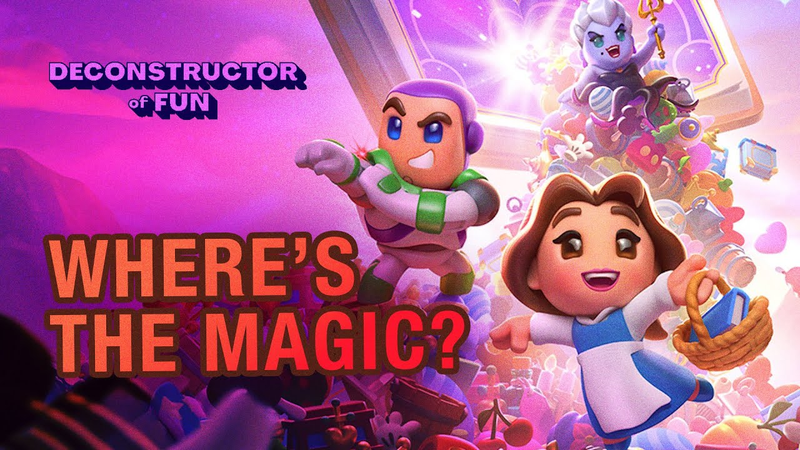
Woo! We got Magic Match. Okay, so sorry. I'm going to steal your thunder a little bit, uh, Phil, but feel free to jump in. So, we have a new game by Jam City, Disney's Magic Match. You know, I I came in kind of like ready to kind of be like, "Ah, but there's a couple things it does really well, but then there's also a lot of things that's missing." So, as you can see, standard match 3D game. This game is fully launched. It's available in all countries. There's early data in Sensor Tower. It's not a super strong launch. I benchmarked it against kind of the other match 3D titles when they went out. And I think that's mostly cuz like again circling back to themes here, it's a little bit late to the party. This casual sub genre is kind of already popped. And so if you want to come in as a strong player, you got to come in with a strong thesis. As I feel like I'm quoting Phil. Maybe I'm channeling too much Phil. Match Factory, as a reminder, was the strongest game in this category. Um, and as just a
refresher, it launched in 2023, end of 2023. Soft launched in um, October of 2023. So, again, this genre's been around almost actually now it's October 2025, 2 years. So, you can see here, I was just looking at the revenue per download uh, compared to launch date. Match Factory kind of comes in pretty hard. What you can't see here, it looks like Triple Match 3D is performing better, but if you look at overall revenue, it's Match Factory. But those two are kind of going head-to-head. So, pros playing this game, it's polished. I've actually compared Match Factory and Match 3D side by side. They created a more polished version of what Match Factory did really well in terms of mechanics. So, I'll give them that 100%. But cons, and this is the part that drove me crazy. So, I'm playing this last night. I played the first 50 levels and as you can see when Mash 2 came out it was like it was this spitting new amazing um and now you can kind of see the polished level. They didn't they didn't innovate on that polished level going back. So playing these games I'm
like loving this Disney all the Disney throwbacks. But then I open a level and the play the Moana level and I open I start to play and I'm expecting to hear like and the sun and the sea and the oh my and all of these
we're not doing that.
We're not doing
Yeah, we are. I Well, fine. You know why I have to do it? Cuz Jim City didn't. So if they came in with these songs, I thought they'd be leaning more into the music for these IPs. Like, and then they have they have great quotes like the Aladdin quote. Like, I assume they have all those tracks. Why didn't they put those in? That would have been a great tie-in for parents to play with their kids for, you know, for people like me millennials going back and like, "Oh my god, this was my childhood." And for kids to get really into the music. So, I thought that was a real a real miss. So, Gym City for listening, find a way to get those IP rights to get the songs in because like then you then you don't have to listen to me sing them.
Yeah.
So, yeah. So, Phil, did you break out into song two playing?
Not not quite. I actually thought this was this is an interesting I I wanted to talk about like 3D match cuz like ever since we talked about Match Factory, I mean that game has exploded. I think it was, you know, around $200 million run. Don't quote me on that. And it's like really this this 3D match genre is starting to figure itself out. Like don't me wrong, still a small sub genre pair. Like Match Factory is totally doineering in terms of like revenue as you pointed out, but like when you enter these subg genres, there's all these like new paradigms. You can't just copy what you did in other versions of match. And the reason you can is because the dynamics are so different. So like normally match three economics are how many times can I get you to fail state and then what can I convert you on in terms of fail state? How do I raise that percentage? So like how many level ends can I get you to? How often do you fail where you have the out of move screen which is 95% of match revenue? And then ultimately how can I increase your conversion rate for those extra moves? So like that's where win streaks, super light ball that [ __ ] comes into play. And so when you're operating in this paradigm, remember fail states are so different because a lot of the times you have timers which is how the fail
condition happens is that time runs out. So that's one fail condition which is completely different than being out of moves because remember you can go through out of moves very quickly. And so this potentially reduces the amount of end fail states you have. And you also have this board where when you collect objects when three of them are the same object, it clears parts of the board. And so when you overflow the board, that's a second fail state where you can buy things. So, so the entire economy model completely changes for that, which I think is really interesting. And there's these design constraints because remember in match you have new objects dropping, you have new colored tiles. And so a lot of the innovation that like Royal Match did on adaptive drop was doing things like reading your board state, understanding your probability of success, and then tweaking the color weight. So like, okay, if we tweak making red more likely to drop when there's a board clear, then oh my god, like their win state or win probability will go up. So then we can kind of push them to near loss and near win and that will increase conversion, right? Obviously, if you buy five extra
moves and you know that will put you over the top, great, you win. And so in match, in this 3D match, remember there are no new objects that are entering the field of play. You're only removing objects. So you like lose this whole adaptive drop [ __ ] which I think is like really important optimization lever and so I think the genre has like been trying to find itself and I think they're getting more interesting answers like one of the things you covered was UX and what we see on the board here is that they have a really dark background and that was something Matchactory did which is to increase the prominence and the contrast of the images because you need to see depth here for the first time cuz it's 3D shadows matter colors matter like all those things are the things that the genre has started to figure out and so like let's see if This is remember Disney Solitaire. Like I didn't think that IP was going to work. I didn't think that game was going to work. That thing is that thing is [ __ ] slaying right now. My only confusion is like why does this get shipped to Jam City versus just giving this to the Match Factory team in Istanbul? Like that I don't understand. Why not go run the playbook they did for like they just reskin Domino Dreams? Why
why didn't you why would you do this [ __ ] for this? And like I know Jam City did like Emoji Blitz, the Disney game which has actually done like 200 million in revenue. Or the Tsum Tsum people maybe uh you know the Taiwanese one that's made a [ __ ] ton of money. Like I don't like give it to Jam City. Like I know Jam City's got Cookie Jam but that's like dead. That was like dead a long time ago.
I feel like Jam City does a lot of IP work though. Like if I look at their portfolio and just full disclosure, I haven't looked at a little bit but the last time I did they're not like pushing the boundaries in new genres. I feel like this is a safe space for them. They kind of they look at what's popular. they can maybe slap an IP on it and then they kind of port out a game that is a mechanic that already works. This is why I think the innovation is low in this game. So, usually when I play these for for this uh for the podcast, I try to I try to match like figure out how many how many levels can I complete without failing. And what Phil says is entirely correct. The revenue is based in match games on endgame purchase. That's like kind of like the known the known fact for this. The first time I failed, which would trigger an endgame purchase, was actually I didn't. I had no fails in the first 51 levels. My playing 51 levels
took me an hour and then I was looking at the revenue chart. That's probably a very big reason of course anecdotal very big reason why their revenue is not where it should be. But balancing this is difficult. They have to make difficulty as you say by timers and then have you ever seen any of the levels in Match Factory where everything's pink and then you're just trying to parse the objects by shape? Like let me tell you that gets the difficulty level so different between this type of game and a master game. It's about like it's about like your You're flying [ __ ] to your board. It's clearing really fast. You're under time pressure. Like flow state is more literal here. It's in world match. You can pause, right? Like you can pause if you want to and examine the board state and plan. Here you can't really plan. You just got to you just got to go.
This is dexterity. And if any just a pro tip advice, if you're going to play these types of games, I highly recommend using a stylus. That is my cheat. That is how I picked this up so quickly. I have to my finger. I don't have dexterity. I can't play Call of Duty in those games. I get sniped immediately. It's like mouse and keyboard versus
controller.
Yeah.
Oh, I can't play a mouse mouse and keyboard either. I need I need a controller.
All right, let's take this home by breaking news if if possible. I I just received something that Crest would absolutely love. So, a funding round led by Coastal Ventures and General Catalyst participation from RAIN. So, essentially this is a new AI company called General Intuition. They raised $133 million in seed. And who do you have here? Crest's favorite person.
Oh, no. Oh, the the the game investor who's not a game investor anymore.
No, he's a game investor. No, more Inspire Lens is one of the people who's on this. So, he's one of the co-founders. He hasn't left Lightseed. This is going to be his additional gig in addition to the 70 hours he pulls for for Lightseed. So, good luck for that. He's a superhuman. He can do that. But we have Pimit who's a CEO of metal essentially started a new AI company and raised 133.7 which is must be some kind
of a nerd number that we should know why but um yeah good luck for them and I think the CEO is coming on the podcast so that's the breaking news. It's under embargo but I think this embargo ends.
Is this one of the guys that wears the uh the uh what do they call the vests? The vests with the little decal?
I don't know. I don't know. Don't look at me like crazy.
I don't know, but that's a lot of money. That's
Chris. Do you remember the whole spiel after GDC?
No, you're talking about a ream.
Why are they all wearing black shirts, though?
All right, let's let's cover this next week when I actually can look at what this company does because it sounds completely preposterous and $133 million.
You don't have any general intuition about it?
All right. All right. Uh, everybody, thank you for listening.
We're done.
Next week, we got Jen back and we'll be much more professional and maybe even proper internet. So, until then, Showdown.
Anime show. Goodbye everybody.
Auto-generated captions from YouTube — names and numbers may be misheard.

















Comments