VideoPocketGamer.biz
The EU's Digital Fairness Act and what it means for the games industry explained
21 Oct 202560 min video
Transcript
[Music] Hello and welcome to the podcast. This is a special recording which we're doing with the folks at Pocky Gamer. My name is Oscar Clark. He him pronouns and I am on a podcast learn everything you want to know about gamedev but never dared to ask. And in particular, this week has had some interesting conversations happening, particularly kicked off by uh the CEO of um Supercell, Ela Panin. But before I kick off into the detail, I am delighted to be joined by Celia Pontin. Celia, tell us who you are and what you do.
I'm Celia Pontin. I work for a policy and public affairs consultancy called Flux. That is a really obnoxious way of saying that I help companies understand what regulations apply to them. if those regulations might change and if they look like they are changing, how to get involved in that process so that you can tell the regulators what the industry is
and how the things they're proposing will impact it.
And I think this is particularly interesting because we've had kind of a sea of things that have directly affected the games industry. I mean, I hawk back to the age appropriate design code and I think that the behavior of the um the folks at the information commission office was fantastic and their engagement with the industry was great. I say that, but I'm biased because I work with them on providing information, advice on best practice for game developers to store and use data in a way that was appropriate for young people, you know, vulnerable people. So then we've had um the slightly less comfortable experience in my opinion of the online safety act, which I personally consider to be a charter for the biggest wave of identity theft we yet to see. But we will see if I'm right about that another time. But today what's what's inspired us is a couple of things. The first one being a a letter an open letter by Il Capan as I mentioned um talking about the digital
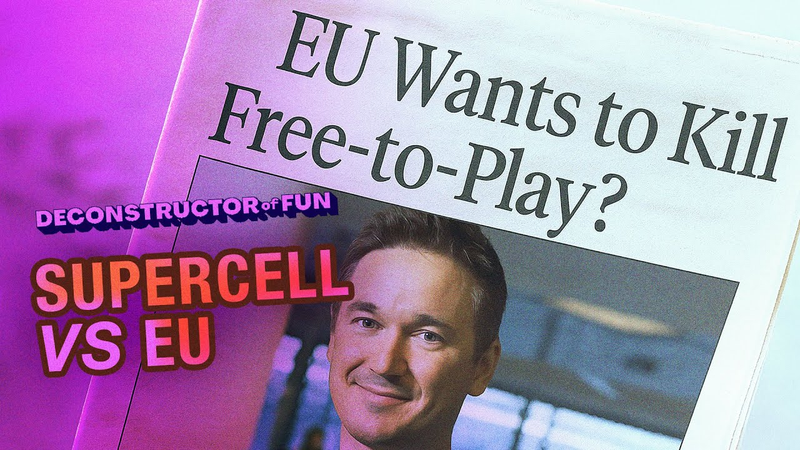
fairness act the init EU initiative around pricing and structures and various other things around customer care and behavior. So Ilka used the language of why is the EU trying to destroy one of its most successful industries. Now obviously you have a bit more of an understanding. Important thing is this is not done yet, is it? This is a conversation being had. Is that is that right?
To a certain extent. Yes. I mean the European Commission has a lot of power in terms of how long the conversation can continue for and who gets listened to. But yes, this is a very early stage. The current stage is they are consulting on proposed actions. So they haven't even drafted legislation yet. In fact, they haven't even decided what they are definitely going to legislate on. It's really early on in the process. That is the point at which some of the really clear lines need to be drawn and it needs to make sure that the commission is going ahead on a foundation of really good knowledge about all of the sectors
that are going to be covered by this. I mean, we should get into the detail of what it covers, but just to give people a context, you and I had a conversation about this subject where I was complaining about the online safety act and you said, "Yeah, but you have you seen this one coming yet." I think that was a I mean I don't want to dump you in it but I mean essentially that I think summarized my first exposure to this and it was it's like on the surface I think when the EU first talked about wanting to provide some guidelines around uh fair practices for consumers the language that seemed to be used at high level seems fairly reasonable that we should be have a duty of care to vulnerable people thoroughly agree with that. In fact my 2015 GDC talk was all about that. It was about free to play is not evil but we do have a responsibility. I I mean so let let's get into it. So you know what is it that this proposal this initiative is trying to frame and then afterwards let's get into some of where the problems are.
So the existing framework for consumer
protection within the EU and used to be the UK in the before times is something called the unfair commercial practices directive. That is what is there at the moment and it is 20 years old. It is significantly older than a lot of the games that it now covers. It was so in the UK it was enacted through the CPRs the I always get this wrong the consumer protection from unfair trading regulations and those are principles based pieces of legislation and they say really good things that are you've got to deal fairly with consumers. You can't lie to them, including by emission. You can't take advantage of them, particularly children and other vulnerable people. All of that. And there's like a list of things you're definitely not allowed to do. Exactly.
Yeah.
That applies everywhere. Uh it applies everywhere within the EU and it applies to all products and services. So, it does currently apply to video games and it applies to the digital context. But
there have long been concerns in the European Commission and European consumer interest groups about whether it's good enough for the current online consumer ecosystem. So last year the European Commission released the results of what they called the digital fairness fitness check which I struggle to say a lot which identified some areas of concern in terms of online consumer protection and informed the commission's direction towards the digital fairness act. It's not necessarily the case that areas of concern are not covered by UCPD, that they're not covered by the existing framework. And so one of the questions for the European Commission will be, do we need new rules or do we need to specify how existing rules apply to sectors that didn't exist when these rules were written? And so that's that's what the Digital Fairness Act is going to do. is going to whether it makes new
rules, whether it mandates new guidance or whether it tells regulators to go and do something like this, it will create a new framework and a new ecosystem in some way and video games are specified in the consultation.
Yay. So, I mean, I wonder though, I mean, there's a couple of things I think we should make clear, but I think one of the things that is in our commercial interest as game developers is trust. We are building entertainment products. Those entertainment products are for consumers to enjoy. If consumers don't enjoy our products, there is nothing mandating them to keep using them and they won't. In fact, they don't. They just walk. So, we have a a necessity for trust inherent in our art form. That being said, we have seen bad actors. And one of the key areas of bad acting that seems to me to have stimulated this debate cuz we can't be targeted for causing violence because there's enough actual data to prove we don't another subject. I'm not bitter honest. Um but
this is now a new mechanism we can be targeted for because there have been bad actors in some of the implementation design of some of the monetiz monetization processes of some games. Now um particularly because of the issues of of um uh young people but also I think because and again in my opinion the mis uh attribution of the gaming games addiction uh sorry games what's it there there's this gaming disorder
I think it might be
which is a I believe and I'm not saying this out of randomness I've you know read papers from people who are psychologists that is is a labeling of a behavioral addiction process and assigning blame to the crutch of the behavioral addiction rather than the symptom of the behavioral addiction rather than the causal factors of the gaming addiction. Now again, that's not just my opinion. That's based on other things, but we're not going to debate the wise and ways of it. But what I'm
trying to describe here is a cultural backlash or attack on gaming as a in general has seemed to happen. and the success of games in particular. We're now the largest form of digital entertainment on the planet. We are quite an easy target, I would argue. Now, am I being, you know, am I being a kind of what's the word? Overly defending the games industry. Am I I'm biased? Obviously, I'm biased, but is this just pure bias and I just don't, you know, I just don't see the the damage? I mean, is there something? Am I missing something? think that the what might be termed irresponsible behavior of a minority may have influenced the direction of some of the legislative action that might be taken. And I don't think the games industry can deny that that's the case. I don't think they're going to be seeing with integrity if they do. And also, let's be honest, no sector has had a perfect behavior record. And it's it's not that everyone
is expected to be a paragon of virtue, but there is a reason that a sector comes under the regulatory crosshairs right now. I don't I don't know exactly the root of it. And I suspect it is very complicated, but I do agree that the video game sector is viewed with some kind of suspicion, not just on a commercial basis and inapp purchasing and advertising and the bits that people think of as consumer protection. There's that side to it, but I think it is still being treated with almost cultural suspicion, right? It's not seen as the same form of entertainment as TV and film and even books. I mean, I have a PhD in video game narratives compared to film and TV and and why they are justifiably the same kind of thing.
Well, Reaper Madness, um, you know, that was the classic one. know I mean there's so every every cultural phenomenon has been followed by suspicion without
exception even I think printed books had something similar
yes exactly and I mean how dare people have access to knowledge but yeah and I I think particularly when it comes to I mean the DFA mentions addictive design and I was complaining to a friend about this yesterday and the the idea that if you design a game for people to want to spend time in that's that's not a bad thing. And you can't penalize a company for creating compelling gameplay. I mean, like my son complains when we get to the end of a chapter in a book and it's a it's a cliffhanger. It's got unresolved plot points. Like I mean, somebody think
how could you how could you write cliffhers? I mean, that's addictive. And again, I think this is the other really weird thing is the transition with the word addictive gameplay from being an amazing thing
to now being a curse. Yeah, I do wonder if we're I mean, yes, we've got a bunch of irresponsible developers who
absolutely rightly should be held to account, but we've also been terrible at sharing data. our industry partly because we can't because of the platforms not actually letting us share data but also an oversensitivity to commercial constraints. I you know don't not saying any individual should share their company you know you know books but as an industry we had a history of having good meaningful data and with something like loot crates which I personally believe and I I don't have evidence for it for obvious reasons has been largely resolved with most of the responsible companies if not all of them but we can't prove it because we can't show the patterns of behavior that have changed as a direct result of us removing the connection between random experiences and spend. You know, the us having clear communication about the contents of an asset and its value. Those things are think I think are are now mostly industry standard. But I was
having this very conversation with Nick Paul at a recent event and you know he can't share that with government.
Yeah, it is a big challenge. I think research in general is behavioral research is complex and of course there's the well-known saying that correlation does not equal causation and because of the long-term nature of research that can show causation it means you don't have the data and by the time you get the data on stuff like that in this kind of thing the discussion's moved on
yeah and I think there's more around um there's material on like video game disorder and healthy behaviors and stuff that is topical and that is useful. A lot of it also talks about how you can have people spending a lot of time playing a game but actually it is still a healthy behavior and and that's it for me which is like and we we're going to go into some of the detail in a bit but I'm thinking more about something you said about the
how long you try to engage people in a game. Why how you because it's a really important thing in a game that I give you a reason to want to come back tomorrow. That's a reason for you to want to come back to and there's some good psychology that already in fact I'm I'm going to go back to 1960R Bower talking about consumer behavior as risktaking in that he talks about the obnigation the setting aside of my other responsibilities as part of the decision-making process. So I've got to have aspiration, fear of missing out and social capital as reasons to act. But if I cannot set aside the other things I should be doing, I will not buy. And that is something that as a developer of a game or a developer of a product, we have zero control over because it is part of what people do. It's a people thing. Often people have tried to bring in things like Skinner's operant conditioning or think or Pavlo but actually all the evidence shows if you have
multiple sources of psychological motivation exttrinsic or intrinsic motivation it still comes down to a balance of decisions of the interests of the individual. And to me this realization does something really important. It allows us to realize at the end of the day we do not control people. And if we manipulate people, it damages trust. So that means that any design process that we're doing has a a ceiling in which it can have an impact on our control over the outcome. Is that makes sense?
Yeah. Yeah. No, I I know what you mean. There's um there's an awful lot more that goes into a decision to play or a decision not to than just the design of the game itself and all of the surrounding things and even just down to your preferences. And I think in particular, I don't think it's appropriate for something like that to be swept up in a piece of work on like
consumer transactional behavior and the need to take that. I get that sometimes that is bound up in gameplay and that where you have a game that is effectively trying to get you to spend time in because it is so interlin with spending money. I get the consumer protection concerns around that. If there are other concerns around addiction in terms of things like gaming disorder where the jury is still out on the degree to which it is a thing in itself or whether it's behavioral, you know, that again that's like a public health matter. That's not a consumer protection matter. And it worries me that in some aspects of the DFA consultation, those are becoming really blurred.
Yeah. But I think you can go a bit further than that because again something you said earlier about kind of mechanics and I'm going to use FOMO as an example. FOMO pattern stuff. So go ahead.
It's in the dark. So is FOMO a dark pattern? Is it? Is it really? Because every transaction, if you go back to our barrel from 1960, requires a sense of
fear of missing out or you do not act. And imagine playing Asteroids in 1970, whatever it was in your local chip shop like I did. I'm putting my, you know, my 50p into the machine and I'm going to put another one in because I want to do the next level. That was inherent fear of missing out. Now you could argue there are elements there but every single transaction we do like what pair of jeans we buy, what hat we buy has an element of fear of missing out. Scarcity is an essential factor of assigning value. But I do understand how going too far and using exploitative language or over undue pressure somehow that can go too far. But there aren't that many examples that I can think of that where we actually have an actual lever of power. Let's take an example of the sneaker kind of um collecting that might be only available for a certain period of time. I I might have a particular
brand that might be only 50 copies of the those sneakers. Are we seriously going to be banning that as an exercise? Well,
really
allow me to read to you from
the digital fairness act questionnaire where they go through dark patterns. It is the first yeah
first section of it and they talk about dark patterns and one of them is pressuring the consumer through urgency and scarcity claims such as countdown timers
even when the respective offer is yes even when the respective offer or available stock is clearly limited in time. So even if it's true now currently UCPD bans false senses of urgency. So you are not allowed to create a false sense of urgency. That would be a
which I think is reasonable.
Yeah. Like fair.
Which is why I talk about the UCBD as a bit of legislation that says don't lie to people. But there is a massive difference between that and the dark pattern of preferring someone into buying things because you're making a scarcity claim. Whether that's time or
availability, that will, if not properly implemented, that runs the risk of banning promotional marketing and limited edition items.
Oh, it totally bans it entirely. There's no way you could justify having a limited edition item under those circumstances,
which means that a lot of the things that people love and value disappear.
Yeah. And no benefit. It's at the core of a lot of people's concerns around the DFA is that it will create huge limitations and restrictions but not benefit consumers and in some cases actively work to disadvantage them or to take away something that's of genuine benefit. And obviously people don't want more regulations, right? Let's be fairly honest about the fact that everyone would prefer not to have as many rules, but realistically that is not how this works. And there have to be checks and balances and there have to be boundaries and people need to know where they are. But if you are going to add more, you need to demonstrate that they are going to have a positive impact and you better
be sure that they're not going to have a negative one on the people you are trying to protect and on the people you're trying to benefit.
Precisely. Precisely. And and for clarity, I'm not saying in every circumstance that there is no reason why having a time limit is isn't a bad you can't be a can't be a bad thing. It can be a bad thing in certain circumstances, but I'll give you my my favorite example is Halloween. I'm going to have the 2025 Halloween things. It only has value during the Halloween period or shortly afterwards. Now, if I happen to have a battle pass type experience, um, and I'm going to have chase items that are exciting that people can earn through play. And then at the end, I can give them the chance to buy the things they missed out on before they disappear. To me, that seems like more than reasonable. In fact, exciting. It makes it feel fair. If it makes it actually diminishes the pressure for those of us who are time poor but have disposable income, it diminishes the pressure on us. It makes that less oppressive
potentially, whatever oppressive means. However, now I won't be able to do that. If I if this follows through to its logical conclusion, somebody could hold me up over the coals over doing something which is a better player experience.
Yeah. And I the thing is far be it for me to ever defend a regulator that I don't work for. I think I think that in all honesty there is nothing about this that is the commission or in any case any other regulator that's them genuinely trying to do something bad for consumers.
No. No. I don't understand.
Of course. No. I'm not saying you. I think there is a temptation to look at this and say well the commission is trying to do this thing and this thing and manipulate the market and maybe maybe there is truth in that and maybe and probably there isn't really I think that all of it is well meant but I also think and particularly when it comes to video games that it is an outcome and an
intention that is based on a perception of the industry that we don't think is correct. So we know what our industry is like and we understand why this stuff will disbenefit consumers and why it will break things and that's almost I mean there is a lot of that that is objective but if you are the regulator and you don't have the same view of the industry that we do and you have this different one that is a lot more suspicious and a lot more concerned about some of the practices then this outcome and this approach seems reasonable from that perspective and this is why it's really important important for people from the video games industry to respond to the consultation, right? So,
100%
this won't work because and this is what players value. Players want this stuff. It's not dodgy. We promise, right? And and of course, there's going to be a degree to which people say, well, you would say that you're the industry,
but we're not sharing our data, so we
can't prove it. We're not um you know, we're not engaged in the conversation. Particularly in the UK, we have had a history of not having a single voice. Now, there is now the UK um games council, which I know Nick Burn is doing his best to try to provide that kind of clarity of voice. Obviously, we've got the Yuki and the Tiger teams who have got their own particular kind of angles on that part as well. They're both want to do the best by the industry, but we haven't had a single voice historically. And I think that that's that's the UK, but in the wider EU, I think there have been it's been more complicated as well. But I I'm also going to say this, the rise of freeto play, the dominance of freeto play and live service game models um been challenging for a lot of people. Not just because there are those people who are, you know, bad actors. I mean that that's a smaller proportion, but they they do exist. But that's not the reason why I think this has become so hard is because when you have come to from an environment where you pay upf
frontont for a game and you pay a ticket price and you get to keep the thing when you now enter the world where it's digital and it's on demand and you pay for things within the game and they tend to be smaller more repeatable prices with lower barriers to transaction friction for one of a better phrase. It can look a little bit like magic and it can be very easy I think for a regulator who hasn't understood what those things do to understand that it is just another storefront but the storefronts inside the game not outside the game and and that means that they think again maybe wrong but my feeling is that there's an expectation that there's more control over the player. Now that could be true if there wasn't always a requirement particularly on mobile to separate out the purchase transaction from the gameplay moment. So I think it is absolutely critical that we have that
separation of real money transaction from iname currency transaction. In-game currency meaning things that we can earn through play which we may or may not be able to top up. We're going to come back to that one as well. Um but if there is a separation then it is easier to understand and most importantly to have that cool down moment and when you look at the kind of research and as I did like I say 2015 my my talk at GDC there are two core factors psychologically that have to happen one is transparency you need to be able to know exactly what it is you're letting yourself in for. And by the way that's all in the loot crate best practice stuff as well by the way. Secondly, you need to be able to have a break, the ability to break out of your current context in order to be able to then make a separate and informed decision. This all ties back to a principle called the hot cold empathy gap. It's not quite how it works, but I'll still it's the same underlying
factor. Basically, if we are an emotional state, we respond with decisions based on emotional information. If we are in a cold state, we will tend to have those decisions logically. So transparency and the ability to break from the moment to me are the protections and if I understand correctly are largely now in the current legal framework the expectation. Is that fair?
Yeah. Um it is I Okay. So
a lot to unpack. I know
some well I mean the first thing to say is that I completely agree that in-game currencies provide that natural break point. They are also uh things like a budgeting tool, right? You say, "I'm gonna put a tenner's worth into the game, and when it's gone, it's gone." And I have to go, like you say, out of the game once it's gone. The also parental spending limits, right? I will put some whatever the Minecraft credit is on my kids account when he can have free reign within that, right? Like, you know, fill your boots.
Teaches him how to use money, fake money, but it still teaches them to use it.
Exactly. And so, I don't think that in-game currency is inherently a problem. Now under the current framework, we are going back to 2014, back before the CMA, the competitions and markets authority was created from the ashes of the office of fair trading. So this is back even before the Brexit vote. So we were still completely aligned with the EU. UCPD is what's called a maximum harmonization directive. That means every member state is expected to get the same outcome when they regulate and when they enforce. And the reason I stress that is because it means that the principles set and agreed should be harmonized. In 2014, Office of Fair Trading set out principles for I can't remember exactly what they called it. I think in browserbased purchasing something like that it shows its age in that regard. It talked about games and
apps where you could buy things in game and it talked about in-game currencies and it in particular it talks about in-game currencies as a tool to separate gameplay from commercial activity and that that was particularly valuable for children because children sometimes struggle with that. And if you are talking about buying in an ambiguous way within a game where you can make a purchase within the gameplay environment as opposed to going outside of it for a moment that's really difficult for children to navigate. And so that was in 2014 and it was considered to be a very good thing. The consumer uh like enforcement network at the time said that this was best practice. So the like EU level um group of enforcement bodies they said that the OFT principles were best practice and everyone was very happy. Uh this has also been reflected in the 2021 CAP rules on in-game purchasing. So the
original version of that was that was consulted on was going to require sterling price statements. And then after consultation when everyone explained all of the problems with that, CAP changed it and the final version aligns with the OFT principles and with the way that it all works. But in March, the CPC network, I can never remember what CPC stands for. Sorry, there are a lot of
protection committee I guess
I
can't remember. But they are
they are the network of consumer enforcement organizations across the EU. So the OFT well now the CMA by the way when the competitions and markets authority replaced the office of fair trading they formally adopted the OFT's guidance. So even though it was written by the OFT like it is still current it's still used.
So
sounds familiar. Yeah.
Yeah. And it the some of the bits of law particularly around data use have
changed a bit. So you know it is used with an eye to current legislation and frameworks but it is still the principles are in use. So in March the CPC network which is a so it's like an e an EC created it has powers right of of enforcement like it's not just a little club it is a proper important organization made of individual states enforcement bodies. They release their principles for the use of in-game virtual currencies. This is separate to the digital fairness act. I can understand why people might think they're connected and probably the CPC principles will influence the DFA and people are very concerned. The CPC principles are a commentary on how that group of enforcement bodies will interpret current law and so it's what they think the law means in regard to in-game currencies. Industry consensus is that they're wrong uh and that they have gone beyond the law. I'm not a
lawyer so I cannot say that but that is what is being said by various like companies and trade groups and stuff right like that is not a controversial opinion
and you work with people who are game lawyers so
exactly but I'm not going to give you my official legal advice
of course you can't absolutely get in trouble possibly
and if anyone's in any doubt this whole podcast is not legal advice and you should get proper advice yeah
we're not regulated by the SR anyway Anyway, so the general consensus is that this isn't this isn't okay. The way that these principles are constructed means that games companies are being told to do stuff that doesn't make sense in most contexts. Personally, I think it risks making things worse for consumers because you're giving a price statement that isn't relevant to them, might not be relevant to almost anyone playing your game.
But I think it's worse than that. I I this again this is my opinion but if you
are being made to make a price statement that is incorrect it can't be correct because some of that currency could have been earned through play some of that currency could be bought you can't know for that particular person what that ratio is very easily it's very complicated to work that out and no one will have that data you're essentially setting a valuation for that account and whilst you shouldn't sell that account because it's against the terms and services and you technically could we're essentially mis valuing you could almost say fraudulently the value of that account by that by that action. Now again I'm using that language to be deliberately provocative but you could argue that we are being required to defraud the the player. I mean again I'm being really mean and you're not a lawyer and you're not going to answer the question in terms of like the legal status of my comment. My point is from a from a player experience point of view, I can't trust the number you put to that.
Yeah, I think that the player experience is the missing piece of this because it's a well-worn argument that if you are going to give a price for something, it has to be then a relevant price, a sterling price, fiat currency, cuz it's not about the UK. It's not always about the UK, is it? Um, a fiat currency price. If I am not paying in fiat currency does not help me when I would not be buying the amount of in-game currency that that fiat currency represents
precisely.
I don't know if that sentence the right way saying
either.
Yeah. So it's not it's not relevant to me. If I've got 100 credits and the item is 150 don't need a sterling currency price for 150 credits cuz I'm not spending 150. I'm going to spend 50. it becomes complicated the way
you're actually making the whole pricing structure less transparent
and I think there's a temptation for people to say oh well if you're
inflating the price then consumers aren't going to be impacted because they'll just get to the checkout and find oh actually it's cheaper that's great but you are still distorting economic behavior and actually distorting economic behavior is at the heart of the regulations that reflect UCPD
yeah And how is that workable?
Right? Because if I see that something is more expensive, I'll say I cannot afford that. I'm not going to buy it. Whereas actually, if I had known what price it was, I would have made a different transactional decision. And I have an issue with that. Now, there are things that can be done in terms of making this stuff transparent because really transparency for players is the absolute core of this. You can use indicative pricing if indicative pricing is relevant and it's clear what it is. That's going to look really different for different games and it doesn't make sense for all games. The cap approach is that as long as it's clear how much in-game currency you need to get
something and how much you have and you can easily access how much it costs to buy bundles of it. That's enough because the heart of this is the principle that if you cannot calculate a price in advance which you can't hear then the consumer needs needs information about how that will be calculated so that they can understand their position and this is just like a really clear example of that and that's why that's CAP's position because they have rules their regulations reflect consumer protection legislation and their rules say that that's how this works in this area and there will be other ways of doing this.
I I can imagine the my immediate guess the solution the work around this is I have currency A that is only available for free. I have currency B which is only available to buy in the game. I have a machine where I can put in currency B and get out currency A. Why
wouldn't that work? CPC guidance doesn't ban that per se, but they are not a fan of layered currencies.
Yeah.
Um, and so it
I don't blame them, but aren't they just creating reasons why we have to use them?
Well, because they don't like them, it's not a solution to their issue. Now my one of the biggest risks I think there is with it is the a lack of maybe recognition or acknowledgement of the capability to use a mixed purchasable and earnable currency to the consumer's benefit. I think this is really lacking from the principles and I I realize that this isn't the DFA but like I said it'll influence it
because if you have a currency that you can earn and buy and you've got a consumer first of all some of them may never spend money on the same things that people will spend money on because they don't need to.
And you've got consumers
well they don't feel the need to that's
a subtly different thing but it's it's still different. Yeah,
exactly. There's this whatever your motivations for maybe wanting an item, you've got you've got a route to it that is free and it also means that if you have almost enough currency to get something and you don't want to buy more, you can go and earn it in game. It's a it's a really good model and it's one that I think works for a lot of instances. But if I am a player who has no intention of buying in-game currency, I have earned it and I am earning enough to obtain some of this in-game content. I don't need a fiat currency price because it implies a value on an item that it doesn't have. And then you get into the whole thing about how loot boxes are only gambling if what you get out of it has money's worth, which means it can be cashed out.
Some form of cash out. Yeah. Yeah. Yeah.
And there's an implication then that you can cash out when you can't.
Exactly. I think it's complicated. I think it adds a level.
I'll chuck another one at you. I create
a battle pass. Sorry, monthly, you know, monthly repeatable purchase that is a multiplier to how many coins I, you know, actual currency coins I earn. It's the same effect for the player, but bypasses the regulation. And I guarantee someone will find a way to use that badly.
I mean, humans will always find a way to use everything badly. And the thing is the regulatory response to that is commonly well if it's that complicated consumers won't understand it. Whereas actually I think the reality is it's not the individual mechanics that are complicated. It is not the games that are complicated. The ecosystem is but a player isn't navigating the ecosystem. And just because regulation has to be complicated. Well, that's for good regulatory design to worry about. A good regulatory design for complex issues is to do something principles based is to say you have to be fair and fairness means, you know, like not omitting
material information or not obscuring it or not saying something that is just untrue. Right. These
like putting a fiat price to something you can't value. Sorry, I didn't say that.
I definitely didn't.
Yeah. No, exactly. But so where where we going with this I think is that there is these are examples of elements very specific elements in this discussion which have not been fully resolved but it's all happening in a sea of what I would I would tend to think of as misinformation. I know that's a very popular word right now for various things, but in the context of this, what I mean is that there is a bunch of people who are have never been happy about free-to-play models or about microtransactions in general who are seeing this as an opportunity to bring the the giants down. And I I mean again, maybe I'm using a little bit too emotive language here. Yeah, that's half the fun of doing a podcast on the topic. You take an example like Ilkarum and Supercell where they have been extremely successful with microtransactions and I
feel like people are misattributing people like Ilka's um intention here and again I don't know I I haven't spoken to the guy for a couple years but every encounter I've had with him has been nothing but brilliant. You know I'm I'm a super fan but only because I I he used to sell me games. I I know him well enough I think to be able to say these things. He will tell me off if I if I've got it wrong and I will happily take that. But my feeling of talking to him and the people who work for him that there is a real problem for consumers here. This is not just about what happens to Super because people in his teams are incredibly clever and very effective, but they've only been interested in creating great games. Now, they have a threshold on what they call a great game, and it happens to be a billiondoll experiences, but that's a scale and luxury that most people don't get to do. But I see so many responses that are about bringing down freeto play rather than actually understanding. I think this has a deeper profound impact
on everybody making games, everybody who's got some kind of gaming experience that's commercial because it's now going to be interpreted against these kinds of languages. And if they're not understanding primary game mechanic tools, at what point do the stars you earn in a I don't know Farmville or some other even Farm of Stardw Valley, you know, or a Animal Crossing, when do they become currency because someone decides they they they look a little bit they smell a bit like a currency? So the first thing I always want to say when people talk about when they try to start talking about like the addictive design and people wanting to come back and back and back to monetize games is that every game that I have been unable to tear myself away from like to the point where I'm seeing it in my sleep, they have all been pay upfront, right? like I I could not stop thinking about things like Return of the Orain, which is
so compelling that I just I may or may not have um over spent lunch breaks playing it and things like that, right? And I
telling, don't worry.
I mean, technically, no one else knows. Um, but it's it's not always about commercializing a player being in your game, right? Sometimes, you know, games are just good. I played over a 100 hours of Stardw Valley when I was supposed to be writing my PhD thesis, but
I haven't played over 600 hours of Skyrim. Honest.
And that is the thing. These are compelling pieces of entertainment. They are created for people to enjoy. are, you know, we don't think it's weird if somebody, I don't know, wants to watch a an ep a series of 24 in real time. Definitely didn't do that at uni, right? 24 hours of TV. It's a That's
should be a problem, but
I have watched Blazing Saddles over 300
times in one go.
No, no. This is uh my dad and I my dad used to be a karate instructor and uh we used to come back on a Thursday and a Tuesday and a Thursday every week for like three years in a row, we would watch Blaze and Saddles.
And that's the that's the thing. People have the same emotional connections to games as they do to films like that. Right. And spending
and don't ask me how much of placebo I've listened to.
Yeah. The uh the ADHD I will listen to a song on repeat until I've rung every drop of dopamine out of it, including several weeks spent listening to A1's version of Take on Me. I'm in the 99th percentile of listeners to them on Spotify, right? But that's that would be I mean to be honest that is highly problematic behavior, but that's flippant in one form of media. But if I turn my ADHD hyperfocus to something like Tetris, other casual mobile games
are available. Like that's that's suddenly putting it in a different context. Now, with regard to some of the suspicions around free-to-play and monetization in particular, I think there are two strands happening here. I think people do not like microtransactions because they are not real content, right? Like there's a sense of why would anyone put money into this? Therefore, if they're putting money into it, it must be because they're being manipulated. And I think that really I think that really undermines both the games and also the consumers. Um you know the people playing it.
But why aren't we getting the same question for listening on Spotify? Why are we not getting the same question for downloading a movie?
Because those are real media.
They're real,
right? Like there is still this perception and it is my hill to die on. I think the other, and this is kind of related, um issue is that people also don't understand idle games, right? They
don't understand the ones where you have them ticking on along in the background. So, they'll see a really long timer that you can pay to skip and think, well, no one's going to wait that long. Actually, a lot of people do, right? They log in in the morning and they do their I don't know like my husband plays one and I don't understand it but like he'll do his
It took me a long time to get my head around idol games but the idea of it being a companion app thing at the side that's going on that I feel I've got some control over but I don't have to have constant control over it. That's actually ridiculously interesting.
Yeah. So, and that's the thing like there's there are layers to things like this that some people get and that click for some people and for some people it doesn't and for the people it doesn't you kind of split into I I don't get it but like fill your boots.
Well, why do you have to regulate it?
Yeah. But and that's the thing then there will be people who see it don't understand it and because they don't
understand it think that potentially this is a problem for consumers. I don't know if that's a motivation behind some of this stuff. I'm just pontificating.
But I think it is a motivation behind some of the noise that is pushing back those of us who are trying to raise the alarm bells. Um and I I mean maybe I'm being unfair. Maybe there's people who genuinely believe that there that you know the level of restrictions are necessary. I just don't think that that it's it's conducive or appropriate because I feel like it's it's going to inhibit positive innovation, positive player experiences that already exist because it's not understanding the nuance. Is that fair? Yeah, I think there's definitely a risk to innovation and a lot of that risk comes from comes from the potential for there to be a regulation that's very black and white that attempts to be one sizefits all and doesn't accommodate the capability of
different methods achieving the same consumer outcome. I think transparency for players and what that looks like in a game is the absolute key to making this regulation work. Personally, I don't think new rules are needed in this space because I think the UCPD and it's its look at fairness and transparency does the job fine. But the guidance on how that works needs to be in consultation with the industry and it needs to be set out and these principles need to be aired and need to be justified. And one of the reasons that that is so important is because you can only I kind of hate the term but futureproof regulation. You can only make it extend, you know, beyond the next 10 minutes if you make it based on principles like be transparent, don't be unfair, because then something new comes down the line
that doesn't fit with a prescriptive model. If you can't do that thing, you can't have innovation. Even though the innovated whatever it is probably involving AI because everything now
does. Yeah.
And it's new and scary and but that can have other methods of making something just as clear, but because it's not available now, descriptive regulation can't catch it. And that is that is one of my concerns. Have I said principles based regulation enough in the last 40 minutes?
Oh, I think we can say it a few more times. But this to me is absolutely critical because I mean again I think one of the issues here is that I I think that a lot of people need to understand the severity of the consequences of getting this stuff wrong. And it's very easy to assume, oh it's just the big boy freetoplay folks are going to get. No, it's going to swallow up and disproportionately impact smaller game developers who do not have the legal and uh regulatory expertise at hand. And they the economy of scale of access to that expertise does not work for most indie game developers. And just
like every other regulation, it's the small ones that are going to find this as the biggest barrier to entry. and they're going to get the ones who are going to be hardest hit by this because they have the Dunning Krueger. They don't know what they don't know. So, to my mind, people dismissing this as a free-to-play problem literally just missed the point. There are some fundamentally bad proposals in my opinion, my opinion only. Um, and I think I've expressed some of those and my fear of some of those consequences and some of which I've probably overegged, but I still think there's something in the language I've used that's still relevant. But to my mind, the biggest thing to me is that what I think Ilka in that original letter, for those who haven't read it, I'm sure we'll find a way to get the link in the in the podcast. Um, he's calling for the regulators to talk to the industry. Now, is that still possible?
Yeah. I mean, the um well, depending on when you're watching this podcast, um, so the
at time of recording, is this still
possible? time of recording, you have two weeks left to respond to the consultation on the digital fairness act. And I this is this is where I have my soap box about policy and public affairs and being involved with this kind of thing. When regulators put things out to consultation, they are they are saying here's what we've got. We want to know what you think. That is not just aimed at consumers and NOS's and things. that is aimed at everyone and it is a chance for affected industries to say hold up can we look at this please um we don't think you've got this right or I mean with this because it's just proposals and suggestions it's still quite
vague yeah um it's it's very early days it's more about the direction that they're going to take so things aren't set but with these I think it's more about there is a risk that if this stuff is approached in the wrong then there could be issues. So when we're talking about you know transparency over things
that's great and I will always support transparency for consumers but how do you achieve that? There is a risk that if the whole ecosystem of the industry and the capabilities of individual games is not taken into account that you will end up with a regulation that breaks things. And it does, as you touch on, really concern me in terms ofmemes and new developers and studios because how do you monetize a new small game? You use microtransactions or you use advertising or both. sometimes microtransactions to get rid of the advertising which is frankly a model.
You need to read my book in when it comes out in February all about how to do that better.
Excellent sales pitch there. I haven't done one yet. You will know. But it's I think people see then that big organizations and trade bodies are the ones who have responded and maybe they feel like well they are the ones who can they have lobbyists and stuff and they
there's a picture of that as kind of some like oh do we want to be involved in doing that kind of thing? Isn't that a bit underhand? No, you're supposed to. The consultation is an opportunity to give information to the people who are going to be developing this regulation. Yeah. And yeah, if you've not done it before, it can seem a bit like that's not for me,
but it is supposed to be and it can be
supposed to be. Yeah. Exactly. And you know, if you happen to be based in the UK, we're not part of the EU anymore. That does not mean you're not going to be affected because your customers are in the EU. So, you will absolutely be affected. Now, of course, the fact of this legislation will have an chilling effect or a wider effect on other jurisdictions. So, now is the time to have those conversations and if you're not able to directly respond, maybe you talk to other teams who are based in the EU and get them to talk about it. If you're in the US, the same thing applies. I mean, you know, this is about
where our customers are and how we are expected to behave for our customers. At the end of the day, you know, we have a again I feel as a producer of content that I have a duty of care for my players and I get trust, community and sustained experiences by being fair, transparent and providing them with content they want. So again, I think this comes down to at the end of the day, you know, there's a reason why 80% of the revenue in games currently is coming from live experiences. It's because we've built up trusted communities who are willing to continue to invest in the games they're playing. You don't get that if you piss off your player.
Yeah. And I and I think that really speaks to some of the the aspects of the games industry that it's going to be really important for the commission to take into account if they're going to design regulation that works and that in particular works for players. I think there is a risk of not deliberately but
in effect mandating that some game design elements are just no longer used. I one of the things that's put in their addictive design definition is about spending time and money like more time and money than you wanted to. And for social media like I get that cuz it's about data and it's about eyes on ads and things. And sure there are some advertising models in games but it's different. It's fundamentally different. And for some games, their monetization is nothing to do with the game play, right? Getting someone to spend hours doesn't necessarily translate to advertising, data, gameplay, right? It's so different. And players are looking for a game that they want to spend time in. Yeah.
And like you say, they will just leave it if they don't like it.
Exactly. So again I think to sum up for me where I want there to be some kind of framework is to prevent the inshitification of games. What to coin a
different phrase it says you know stealing someone else's you know coining but hey um I don't want to see the kind of initification of games that we've seen in search and other other aspects of tech. I absolutely don't want that. And I'm delighted there are folks out there like Celia Hoden is trying to set up a kind of group to define a code of conduct of ethics around game development. I thoroughly thoroughly hope that comes up with something really useful. I'm not even against there being regulation. You know, in fact, I I think there are some good grounds, but let's hold the people who can make a difference to account. So far when we look at the digital markets act when we look at the um uh online safety act we are not holding the platforms who have the capacity to deliver to account. We're passing that buck to developers who don't necessarily have the expertise or the pricing kind of framework to be able to effectively deliver safely. So I don't think we've we've actually protected consumers as much as we should
be protecting consumers. And this particular initiative to me seems to be yet another barrier to small businesses rather than something which is actually going to hold bad actors to account.
I think that there is like you say with platforms and particularly transactional like third party transaction services things like that. I think that piece of the player experience and the consumer journey I think that is missing both from the CPC principles and from what we know of the DFA so far and of course like the consultation is still in an early stage and that's another area where if the regulations are going to be effective then there needs to be an understanding of what part does what bit and that's a really key thing that again needs to be put across right people need to tell a commission or whoever is making any regulation, this is how it works in practice and we don't think
that this proposal can work if it's implemented in the way that we think you're going to because we know the context, right? And that's the thing. These are proposals. These are suggestions. They're areas of focus. They're not set regulations yet, but we know enough about the context and the background, particularly as regards the current framework, for example, the CPC's take on the current framework. We know enough about that to kind of have a sense where we think a lot of this might go. And so we want to make sure that at this point before it's gone there, there is as full a picture as possible available to the commission and the diversity of models that you get and that is across the games industry but also in terms of monetization and how that is balanced that diversity that needs to be recognized as well. So now my hope is that the people who some of the people who are going to be working on this process, there's going to be administrators, there's going to be
people who are working on it and some of them will be games players. I'm hoping they at least can help us uh get them to pay attention to the needs of the player, the needs of the industry rather than just having these blanket approaches. So on that note, I'm going to say C, thank you very much. Is there any last minute thing you would like to anything you haven't had a chance to say yet which we should chuck in? I want to encourage people I suppose this isn't really something I haven't said but I want to encourage people to look at the consultation um to look at the questions to engage with at least understanding the background to it and what it is saying because even if you don't want to get involved with it and I think you should get involved because of all the things that we've been talking about but even if you don't get involved with it you need to be able to keep an eye on it so that you know what it means for you so that you are aware of the fact that some of this stuff might change. And part of the reason that then you possibly will want to get involved is
because there is a risk that you will end up with regulation that is directed at the video games industry because some of this is directed at the industry but might not be reflective of it. And I think you can only have something that is strong and practical and fair and that works if you can make sure that it reflects the industry that it is attempting to regulate.
100%. On that note though, we've been doing this uh recording on behalf of the folks at Pocket Gamer. Hopefully you found that interesting. If you want to find out more information about what we're doing, I'm sure they'll be all be in the show notes. I'm Oscar Clark. I can be found on most social platforms as a tan na tus. But I'm also very easy to find on LinkedIn and various other places. Celia, if anyone wants to find out more information about yourself, what's the best place for them to do that?
So, I am incredibly easily findable on LinkedIn because there are only two Celia Pontton and one of them is a humanist cbrant in Lincolnshshire. That's not me, although my profile
picture is out of date. But you can find me on LinkedIn or you can look at our website which is fluxdigitalpolicy.com. There's a lot of information about what we do. There is also, if you delve into our newsroom page, there is a briefing somewhere that I wrote back when the consultation first came out that outlines what it covers at a very high level. So, you might find that quite useful. Also, if you subscribe to our newsletter on our website, then you get to know about this stuff on a monthly basis.
Sounds good to me. I get that. So, again, you know, don't take our word for it. Don't take our views and our opinions as facts. The fact, the reality is that this is something that you need to understand. Go find out. Like I say, C's got some fantastic resources available to her, but there are other resources out there. You know, we need to be more informed about what happens in this space because we want to fight against the slop. We want to fight against the bad practice and create the most amazing game playing experiences we can. On that note, thank you very
Auto-generated captions from YouTube — names and numbers may be misheard.
Key insights
Distilling the key insights…
Ask AI about this video
Cite this video
Citation
Generating citation…


















Comments