VideoPocketGamer.biz
Fireside Chat: Surprising Drivers For D2C Adoption & Success - Chip Thurston & Peter Gerson.
24 Oct 202519 min video
Transcript
[Music] Heat. Heat. I would now like to invite to the stage uh for our next presentation which is about the surprising drivers for DTOC adoption and success. Now uh I think it's going to be like a fireside chat. We'll get some comfy chairs on and I'd like to welcome to the stage Chip Thirsten from Fastpring and Peter Gerson from Keyword Studios. So round of applause for those guys.
Oh wow. I didn't know we'd actually have a fire.
Warm you up. Uh so I think we can just jump in here. Uh so we're going to be talking to you about some surprising drivers that we
found for direct to consumer adoption uh and success. And this really stems from a survey that we've recently run at Fastpring. And I'll give a little context on that. Uh but first a little bit about us. Uh Peter.
Hi guys. My name is Peter. I've been with Keywords for six years. Um we're focused on what we call the player engagement. grew up out of player support, support, moderation, community, social, all comes together, everything's driven by community. And of course, the next step now is then being proactive and engaging with players and making the experience that much better. And so that's what the player engagement division at Keywords focuses on. Enough of that cuz we're here to talk about the knowledge and share. So if you need anything, just talk to me about that later.
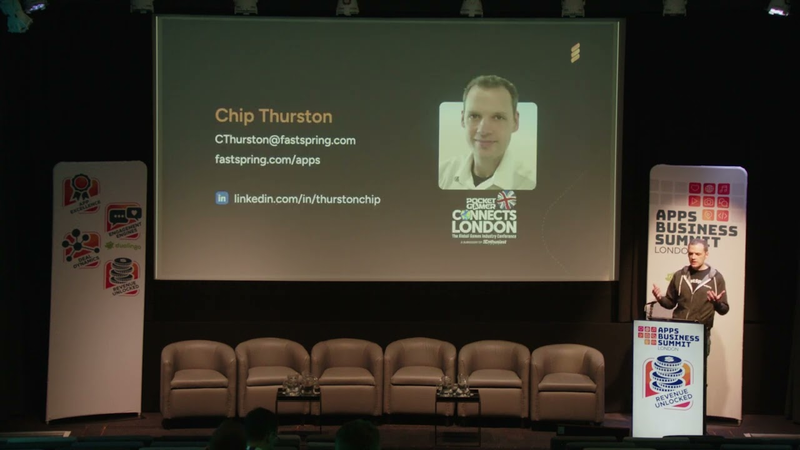
Yeah. And uh I'm Chip. I'm the head of gaming here at Fastpring. At Fastpring, we're a payment provider for game publishers looking to sell directly to their players. We power web stores. Uh we have over 3,000 customers globally. We've been around for 20 years and we work with some of the biggest publishers in in gaming. Um we're also you see our
beautiful branding at the top here. We're big fans of Pocket Gamer and also of Helsinki. So happy to be here today. Uh so we recently ran a survey where we surveyed over 100 key decision makers in gaming and it was split basically 50/50 across North America and Europe and we asked them dozens of questions about direct to consumer. Do you have a web store? Why do you have a web store? Why don't you have a web store? How are you pursuing that web store? Um got a lot of really interesting findings from this survey and this was across July and August of this year. So it's very recent and we actually just published these findings less than 24 hours ago on fastpring.gg. So if you want the full report, you can go check it out. Uh but for today, we cherrypicked a few of the more interesting findings for that or as we said, some of the surprising learnings from that survey. Uh we'll deep dive a few of those today. So the first thing to talk about is uh of the respondents that we had, do you currently make use of a web store? We got 57% said yes. Right? So over half of the respondents do say they are currently pursuing a web store. Um, but
what was more interesting to me is of the 43% that said no, they don't currently have one. We asked, are you planning to make use of one and there everybody said they were at least considering that, right? And 60% of them said within the next 12 months. So they are imminently planning this web store. So the takeaway for me on this is that everybody is either currently active with a web store or actively pursuing and considering having a web store. Uh, Peter, I wanted to see did this result surprise you? Was it surprising to you to see that nobody said no? Because no was an option here. You could say no, I'm not considering that, but nobody said that.
So, um, it was a little surprising and it was surprising in that um, uh, I wanted to ask the audience a question just by show of hands. Who of you guys here actually run a web store or are actually doing a with DTC webs where you work where where you actually are involved in a web store or you just here to learn? Who are here just to learn? So, okay. It's it's it's amazing how
wherever you go, you talk to people about DGC, you get a bit of a blank stare across most industries. So, it was surprising because it's a very high uptake. I didn't expect that many had already got a store. Uh and then the second part is everyone says yes, we're going to get a store. And I'm wondering if that's to do more with the environment we're in, the sagas of all the web store stuff, the changes in all the legislation and the compliance and whether it's a popular thing to say or how genuine it is that people are actually going to do it in the next 6 months because it's it's not just okay throw up a website and you got a web store. So I'll pass it back to you because I know we're going to get more deeper into it in others, but it was quite a surprising statistic. Yes.
Yeah. Yeah. And I think you're keying in on one of the other questions we asked, which is how much revenue are you driving through that web store? What percentage of your revenue is is shifted there? And I think to your point, it's uh currently pretty small. It is maybe under 10%, under 20%, we don't see as many uh of the respondents to this
survey who are really seeing the majority of their revenue shift over. There are definitely those cases where there are publishers who are seeing a lot of success in this space, but it's clear that it takes time to invest in these and grow over time. Um so the other thing we then asked to dig a little deeper on this was he said okay if you have a web store today why what what made you pursue that investment because it is an investment to go in and build this web store and grow that over time um and I don't know about you but I thought profit right that's going to be the easy answer but the question for me is what's number two right because every message you hear about direct to consumer is anchored around profit instead of paying 30% to Apple or Google you pay maybe a 5% to a fast spring, right? So, it's much more profitable as you shift this revenue over. And that's certainly some of the messaging that we've delivered as well, but profit was not the number one answer. And so, uh, we see on this slide that it was actually number three. And the top answer was to improve access to customer data and insights. And that was why
people had invested in direct to consumers. Secondarily, it was to gain more control over pricing and promotions. And so, here, Peter, I thought we could maybe go line by line. What does this mean to you? what does improve access to customer data and insights actually mean in practice?
So I I think that this is where we speak about the player engagement and I think that of course profits are great and you can make more money if you run your web store correctly and people come directly to you for that revenue rather than the traditional stores. But you don't gain the insight or you don't gain all of the data and you don't own the data around how your customers are interacting with you. And this is another very direct way specifically with engaged customers who are prepared to invest or spend time and money in the game. So um the improved data and insights is dramatic and it's one of the questions why I ask Bill why do you want to have a web store and if this is one of the reasons which it has been in the survey which is what we feel it is is
that's kind of that's why we say it leads to you know what do you want out of your web store? How how do you set that up? you if you were here for the previous talk some of you were you saw the detailed way to build out I mean there was very very detailed step by step into the loyalty program we're not going to there isn't time here for us to do that we really want to unpack what what's happening or what the trends are for you and that's where we want to spend the time so the improved access or data insights means that you've got to start thinking about privacy compliance how we capturing the data where are we capturing the data where are we storing the data what are we going to do if a client comes assistant says, "I want you to scrub all my data." These are all of some of the impacts that are now whilst it's good to get a web store and get the extra profit. There's also extra cost or time uh and so you just got to bear that in mind and structuring that I think is what what what is. So if you if you run through some of these things and profit was third, right, Chip? Profit came in at third. Um,
it's going to it's going to help drive putting money back into web store and stuff, but you got to think about the logistics of getting stuff to customers, abandoned cart strategies. How do you interact without looking like you're actually trolling or or or or or stalking your players? uh and differentiating between the tiers of players and how they interact with you and what do you actually want them to buy or purchase through the store that you can't do in game because obviously keeping in game keeping them active in game and getting anything you could do in game is far better for you in terms of long-term g player experience and and engagement. So um it does give the ability to go broader into the community with brand with positioning with specific processes. as I think you saw in the loyalty process the time before that you can like when new things are coming up you can show loyal players something before you can show anybody else and it doesn't mess with the game.
Um those are the kinds of things where you get the customer interaction or insight where you can test things. What do you think about this kind of skin and see the reaction and and who buys and why? Uh and of course surveys and rewards of course giving the rewards back to some of the customers. Um, and then the last part is the one that's probably the most important. That's building a more direct relationship with players. It's very difficult. You, you know, the reason we often forget that we're all developers, studios, and putting games out there is because we're doing this for the players. And then you've got to be able to talk and engage with the players. And so a a direct to consumer strategy gives you that. So I think that's what showed up there. Um, throwing it back at your side, Chip, which were the ones that sort of resonated with you because for me, the the direct relationship with players, driving in the community and and the data access or understanding the customer were the ones that I felt, yeah, that makes perfect sense.
Yeah, I think to me it's almost the combination. I I look at how these
interact and how it encapsulates to me what I think of as the flywheel of direct to consumer and the impact that that's having on the gaming industry. Um, I think if we had asked this question a year ago, it would have just been increased profit margin and then maybe 10% answer B, C,DE, E, right? Uh, it was all about profit. But now we're more deeply understanding that, oh, there's actually much more benefit to a direct to consumer revenue channel than just, oh, the the revenue I get there is more profitable. Um, it is that I can have this more robust data and insights. And so when I think about the flywheel, I think it's yes, I'm shifting revenue to my web website or my web shop or direct to consumer channel. Uh, and I can take that revenue and then invest that back into user acquisition. Okay, great. Well, now that's helping me to to grow the game a little bit. And as those users come in, I can migrate them to the web shop and it feeds into itself. And now there's this data component on top of it where now I'm getting more robust data from the players that are converting from the web store, more robust than what I'm getting on mobile.
And so that means more sophisticated user acquisition. So not only am I putting more money into UA because I'm becoming more profitable as I'm shifting more revenue over here, but the UA I have is getting more effective and now I'm actually being able to grow more. And so I think that also feeds into the uh control over your pricing and promotions as well because again it goes back to data. The these aren't two separate things. it's that the data is informing how you can then leverage that control over your pricing and promotions and be laser targeted in the offers and the experiences that you're giving to your players. Um, and so I think it's really to me that each of these intertwine with one another to ultimately help grow games and uh uh just become more profitable over time. I I think it's also um really understanding more about your players experience or your player journey and actually owning that journey much more. Um, if you're just having up the game and going through the traditional ways that you you uh you through the normal
the normal app stores and and and reviews and processes and interacting on that level, you you don't actually as your player or your customer own that player experience or journey which means you can design a much more interactive journey and it also means you get much more longevity. We've seen that when it is done and set up correctly that and the engagement is higher that the game has much more longevity the retention and uh is is higher the attrition away from the game is much lower etc. But you also get much more insight into the player behavior which means you obviously can then set up correctly for events that are further encouraged or or make the game much more pleasant for the players because that's the whole idea. So it's that customer journey process. Um and it's funny that on the previous slide you saw the 57. So they have got when questioned about like well have you implemented a lot of these strategies. Funnily enough I would like to see and I don't know if that's something that you
should download this report. There are some questions that deal with that. There's still a huge amount that is left where the people have got web stores but are not putting in these strategies or owning the player journey but it's just an extension of the intention is but it's not quite there yet. I I I think really attention needs to be paid to that and the 47% that say they have intention of doing it um it's because of these reasons when you question them a little deeper but none of them are really actually thinking about how what's the how to and so the question we throw out when we ask people well I I would like to be involved more in DTC or I want to store is like so well why what outcome are you trying to achieve and if you don't have a very clear picture of that I think you you find that you're struggling um brand visibility and and what does that mean? Is it by game? Is it by actual studio? Is it by the publisher? What what what what is important? And of course, I think it's usually more by game. So, I I think
you've got to be very careful about, you know, what do you wish for? Because it's a two-edged sword. Um when you get the data, you have a responsibility. Uh as I said, in terms of lots more compliance coming, lots more things like age verification, all these things are upon us. So, um, on on that note, I wanted to just sort of throw a question out there. Uh, but I I see that it's, uh, we lose time, so I think we'll hold that. Um, I don't know if that's the right time. Is that all we have left?
Yeah, I think the time has flown by. But I I I think that was very well said. And I think the the stores that I've seen be most successful, the games that I've seen be most successful at driving direct to consumer are those that created as a complimentary experience to the mobile game. Right? It's not just putting those product listings on a website and saying, "Okay, great. we we give our players a way to purchase revenue through a website. And so now we have a web store. It's saying, how can we, to your point, make that player journey uh uh engaging and something that players want to do in a way that's beneficial to the game over a longer period of time, too.
Well, it's a great segue into the last takeaway we wanted to share, um, which is the main challenges. And um as I said, I I mentioned some of these, but I I think if you're not really thinking about it, it can actually be a bad experience for players. And that's the last thing you want. You've got a great game, things are going well. There's some in-game purchases, things are going well. You put a website up and it's a bad experience. What does that do to the game environment? And how does that drive activity or how does that drive engagement? And the key areas you got to focus on or we see in the feedback coming back there is you know how do I look after things like fraud uh payment processing and prevention uh complexity of integration from the game how do I make sure that people aren't dragged away or it's it's it's high friction so they're not really getting a great experience. Uh of course we've spoken about the legal uh and and regulatory compliance. Really understand if you're going to roll that out what does that mean? What do I have to do? Um and and
and of course how do you drive the traffic from the game? How do you market? How do you create an awareness? And how do you engage the players to do that? The last part is often overlooked. You already have customer support. A lot of you are doing the sport either in-house, outsourced, accommodation. You have some systems and that's triaging around the game and issues around the game. And so you put a web store in a customer care team just going to be able to just answer those questions as well. And how have you integrated that? How is that linked? How are you sharing the data to the people that have to answer those questions? Uh and then of course the last thing is player safety and agent safety in terms of things like around moderation because every time you have touch points anywhere on a player journey there's an opportunity for toxicity to creep in uh and words to be used that you wouldn't want to be heard especially if people are upset about something. So that um I think in terms of all of those key points, you can see the numbers here are what people are finding is the most challenging. And the
whole idea of this was to talk at the level of think about these things and ask the right questions because if you're going to make the investment in a store which does take time, does take money, does take resources, can extremely peeve your players off. I won't say a bad word, peeve your players off dramatically. You'd better actually do it right. So, you know, giving it back to you, Chip there, etc. I mean, this is the area of of what you guys do best, I think.
Yeah. Yeah. I I think fasting's area of expertise is in a lot of these areas especially helping our sellers solve for payment processing and fraud prevention and things like that. But I think the broader takeaway is um these are the perceived challenges because the context on this question is it was asked for people who have already implemented a direct to consumer web store solution. So it's saying you've implemented that what were the challenges in implementing that? What were the challenges that you actually experienced? And so if I were looking at this slide, I would say, okay, these are the things I need to consider and I need to make sure I find a partner that helps me to overcome
these challenges so that I don't encounter those in the same way. Um, and so that's ultimately what I would leave you with is to say make sure you account for that. Make sure you find someone who can be a partner with you throughout this journey. That is not just a transactional relationship where you're paying for that service and getting that in response, but someone who wants to work with you and say, "We'll help you process these payments, prevent the fraud, understand your players in your game, and do this in a way that best suits you." And if you do that, then you'll already be overcoming some of the main challenges here. But that's all we have. So, thank you, Peter, for joining me here. This was great,
guys. We're around for the two days. Go to Chip at Fast Spring and have a chat with him. find me. Thank you. Appreciate the appreciate being able to share this feedback, answer any questions cuz I think we have to hand it over to the next folks. [Music]
Auto-generated captions from YouTube — names and numbers may be misheard.
Key insights
7 takeaways · ~3 min read- 01Nearly all game publishers surveyed are either currently operating a direct-to-consumer (D2C) web store or plan to launch one within the next 12 months.
- 02While increased profit margins were the primary driver for D2C adoption in the past, current motivations have shifted toward gaining deeper access to customer data and insights and achieving greater control over pricing and promotions.
- 03A successful D2C strategy functions as a flywheel where revenue shifted from traditional app stores is reinvested into more sophisticated, data-driven user acquisition, which in turn grows the player base and further increases web store revenue.
- 04Direct-to-consumer channels improve long-term player retention and game longevity by allowing publishers to own the player journey and offer exclusive experiences that are not possible within standard in-game environments.
- 05Implementing a web store introduces significant operational responsibilities, including managing data privacy compliance, age verification, fraud prevention, and complex payment processing.
- 06To avoid negative player experiences, publishers must ensure that web stores are integrated as a seamless, low-friction extension of the game rather than a standalone transactional site.
- 07Publishers should prioritize finding a long-term partner for their D2C transition rather than a purely transactional service provider to effectively navigate the technical and regulatory challenges of web store management.
Ask AI about this video
Cite this video
Citation
Generating citation…





















Comments