VideoThe Game Business
Nintendo has generated nearly $2.2 billion from mobile games so far
16 Oct 202535 min video
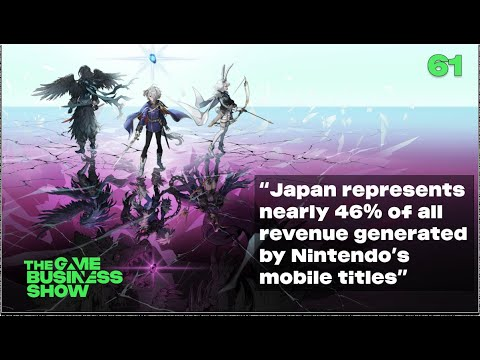
Hello. This week, remedies woes continue. Builder Rocket Boy's woes continue. Supercell CEO is worried about some EU regulations. And our big topic this week, Nintendo has returned to mobile games. Hello and welcome to the game business show. My name is Christopher Ding and I am joined by is it the editor of mobile gamer.biz or was it?
Yes, founder. Founder and editor,
creator, one of the best mobile the best mobile journalists working in video games.
Thank you. Yes,
it is Neil Long. Hello, Neil. Hello.
I love having you on the show.
Oh, thanks. I I like being here.
Anyone that's watching this going to go, "What is What's with this?" We're at the middle We're at the Riverside Stadium, the Middlesbrough Stadium in the in the UK cuz there is a games event here, which is actually really big. Like I was I'm genuinely impressed. They've sold out like 300 seats and
they've sold out the whole stadium.
Stadium. Yeah.
It's pretty impressive stuff.
Maybe just the conference room. Yeah. Are you you're not doing any you're here just to cover it and meet people and chat and do some interviews?
I'm here to Yeah. just to cover it, meet
people. Um I actually spoke to uh Lassa from Supercell London uh in advance of this event for a story that's on mobile gamer.biz right now.
What's the story?
It's just kind of what's going on at Supercell London. Supercell kind of bought out Space Ape uh at the end of last year and then kind of transformed Space Ape into Supercell London and a couple of sort of studios span out of that and I spoke to Lassa about it um for a story on on my site. Well um I'm here to talk to Maisy Adam the comedian which everyone who watches me in America are going to go who? Um she's in the new series of Taskmasters. She's a comedian. when Jamie Jamie Septton's one that runs this event and he said um he said to me early in the year I want to do a big keynote talk and could you host it and oh yeah that'd be great and we went through a few names and eventually he said I've got the standup comic Maisy Adam
and my immediate reaction was why what I got I got now I've got it in my head I kind of fascinated by how because they've got the same problems like standard comics they've got to engage
with an audience and they've got to they've got they've got the same attention economy problems we all have
and I just thought you know actually be interested to know how that industry works a little bit and maybe we can learn something or maybe it would just be interesting. I don't know.
Yeah, I I I I'll be honest. I've never thought comedians and business journalists are of the same ilk, but here we are.
Anyway, let's um stop talking about this event. We've got some house messages. It's like feels like a wedding this one. Um the the game business has signed a new new partnership with GSD game sales data, the European charts company. You may have seen it on our site last two weeks. We've been releasing the exclusive European sales data for PC and console. This features actual digital data from some of the many of the biggest publishers in video games as well as all physical game sales across Europe. If you get the newsletter, we do put it in the newsletter that comes out on a Thursday, but we're also it's supposed to come out on Friday. So, on Friday, we should be doing that. So, we've got a new new a new piece of content. Great. And we're in London next week at MCM Comic- Con. I've brought this up a cast a couple of times. We're interviewing Peter Moore on stage at Comic-Con. It's going to be live
recorded. For anyone that can't make it, we will be available on the game business sometime after. He is always good value as as us journalists say.
Yeah.
Isn't he? Um so that should be good.
Oddly, I didn't I interviewed him like twice when he was actually in the games industry. Now that in his sort of post Liverpool days, I've spoken to him so many times.
Yeah.
And the shackles are off with him. He's written a book, right?
Yes, he's written a book. So that's part of the reason why he's doing it. Um I actually bought the book. It's 25 quid and it's uh it's not a very big book,
but I'm sure it's he's a salesman.
I'll read it before next week. Yeah. Anyway, should we dive into the news?
Yes, let's
Well, one of the stories, and I I hate this story really because game developer Remedy has issued a profit warning to investors after the poor performance of its live service shooter game FBC Fire Break. The company warned it'll have a non-cash impairment of 14.9 million euros, which represents the majority of uh Firebreak's development, publishing, and distribution costs. A remedy was expected to deliver an increase in profits over the previous year this year. Um, but now it won't. The title
did attract a million players quite quickly, mostly on PlayStation Plus and Xbox Game Pass. The game has actually done very well on console because of that. Um, news estimates total players at 1.8 million. Ampair goes a bit higher and says it brought in 2 million, but it's just the revenue hasn't been there for them. There's a bit of commentary online that Remedy should just focus on what they do best, which isn't um live service shooter games, or at least that's not their experience.
Yeah, live service games is hard.
Yeah,
you do need years of knowledge, institutional knowledge. What you see in mobile is uh just a wang on about mobile. Um you see studios specializing in a niche and really drilling down in that. And if it from the outside seems to me like Remedy's niche is trippy horror
horror adjacent action games.
Yeah.
And they're really good at those. Um, and yeah, making a live service shooter in today's environment is hard and it's easy easy for us to say, but you're kind
of seeing the
results of that.
Respect to anyone taking the risk, you know, it's a ballsy move.
I did think I mean, even the head of the game, the press coming out of it was saying, "Yeah, it's all right." And I thought, "Yeah, it's all right. Doesn't cut it." Cuz this is a company that that doesn't hasn't made these sort of games before. It this is always a hard learning curve. And every time you talk to any studio that you know successful in the live service space today, well, by the way, they quickly become unsuccessful again. They go through these cycles of of getting it wrong and then having to course correct, but you need to get it right as quickly as you can in today's market.
But here's the thing with um Remedy is what Remedy's good at doesn't really work for them either.
Because you think Alan Wake 2 Well, Alan Wake 2 Alan Wake 2 is an astonishingly good game. No, I don't mean it harsh. I don't mean it.
No, commercially.
Commercially. Yeah, I think you're probably right.
And it took 18 months that game to get profitable.
Um, and Controls done pretty well for them. But what's interesting about them is they've gone they're self-publishing their future games. And I think that if
you look at something like IO Interactive, who Pitman had become unsuccessful for their and I know Hitman's a very different game, but they're a sort of they're sort of a European game studio, but their game was unsuccessful. They took it back. They understood what their players wanted. They really they got what they got, and then they they weren't beholden to any publishing deal or agreement. they could they could adapt to things and they did do that and they've managed to make it a very successful IP now. And I just think one of the things I was thinking about Alan Wake 2. Alan Wake 2 is I looked on how long to beat cuz I thought it I thought this was the case. Alan Wake 2 is 20 hours long, right? Which I find for a horror game is long. Like Resident Evil 2 for instance is 9 hours long.
Yeah.
And I did wonder to myself, you know, and Alan Wake and my again so many assumptions I'm making here. Alan Wait 2 is a Lynchian horror game and I think who's interested in a Lynchian story-driven horror game? It's probably me. It's probably people I imagine the age group is 25 to 25 the youngest probably and up to 40 plus.
And these people 25 to 40s they have money but they don't have time. And what I often find when someone says to me, "Oh, I've got this new game." Well, that looks really good. I'll get that. I'm not worried about the price. But if they then say to me, it's 100 hours long. I'm like, I have the money to buy your game, but I don't have the time to buy your game. And I started to wonder with Alan Wake 2 cuz Alan, I don't want to I don't think Sam Lake should cut that game. It was It was amazing. But could they have cut the game in two? Could we could we had Alan Wake 2 part one, Alate 2 part two? All 2 and Wake 3 a year apart. They they all know their audience better than me. So, anything I'm suggesting, but I I started thinking about how could they make if they're only going to sell 2 million copies of a game or three million copies of a game, how can they make that profitable and still deliver on the quality? and is it, you know, maybe give it in smaller chunks. And I don't know, that's an example of what maybe they could do as a studio to make that stuff work because they are really good at that stuff. And and they do have die hard fans that they've got, you know, there's a remedy shop that has like Alan Wake um accessories. They've got this Alan Wake flask if you've seen it, which is from the game sells out in
seconds,
right?
They've got proper die hard fans, which is
they should double down on their merch.
Yeah. Rather than service computers.
Yeah. Yeah. Remedy is a great studio. Um FBC fireback I don't think was quite good enough and um they're still giving they're still giving it a shot but um I it sounds like they're giving up.
I saw a thing on social media about Marvel Rivals uh yesterday and I was like oh yeah that game exists. That was like the hot thing uh for a little while. Um freetoplay shooter, new exciting shooter, everyone's into it. Uh within two months no one's talking about it anymore. Um I'm I don't know if it's doing okay. I I think it is, but
it's a hard business and people are entrenched in their kind of
their routines uh and the playing the games that they're familiar with. So,
hard to break in.
Yeah. The next story, I think we probably This one's going to be quite a short one, is the Supercell CEO, uh Ilka, I can never pronounce his surname.
Let's say Ilka.
Ilka has hit out EU proposals that he says could cause serious harm to European games industry. Taking to
LinkedIn, he took aim at the EU's digital fairness act and the guidelines put forward by the consumer protection corporation network. You covered this story, Neil. The proposals recommended that the buying of digital currencies tokens are more strictly controlled in order to protect young and vulnerable people. He says if this can makes it through, it could deliver a critical blow to the industry and break how free-to-play games work. He compares the use of in-game digital tokens to that of theme parks. He basically says the dismantling of these mechanics in the name of protecting customers represents a fund fundamental misunderstanding of how digital entertainment works. This could worsen the player experience without improving protections or would cause widespread collateral damage to one of Europe's biggest technology success stories. Um I think this might be a bit of a fuss for nothing. Um do you
I totally agree. Yeah. Um I think this was him getting ahead of I mean the there's a there's a cons consultation period um going on um and this is him getting ahead of that and just raising awareness for this you know proposal which may not even come through in like autumn winter 2026.
So I would imagine like with a lot of these um kind of EU regulation type things, it will cause a little bit of concern in the near term and then over time it will kind of slowly go away and we'll all kind of get on with our lives. I I had this almost exact same thing with the digital markets act, although obviously that actually happened and and has um unlocked, you know, Epic Game Store being able to release Epic Games Store uh in the EU on iOS. But um you know, I covered kind of every beat of that
unfolding narrative and then the legislation arrived and honestly as it has not made a great deal of impact
on the market. And the reason for that though is because of people like Ilka. They they they go ah and they start shouting and everyone shouts and then eventually that causes the that that's the journey these things on. They make a pro bunch of proposals. People from various industries say no you can't do
that and it gets watered down water down water down. And I think this is what Ilka is on like he's on that journey of making sure that they know if you do this exactly like this it will be a problem. Mhm.
probably knowing that because he said this and because other people will be saying this and the trade bodies will be saying this that um it won't come to be. So he needs to be saying it but the way it's been picked up perhaps is that I think
I think it was
not worth being too worried about.
Yeah, it was a little bit kind of slow news day LinkedIn algorithm obviously he's a very powerful and important man and and everything he says is picked up on by the press and by the algorithms that run our lives. And it was a little bit one of those where it was kind of a Tuesday morning, Wednesday morning, not much going on. Ilka says something interesting. Let's all
get in get our knickers in a twist about it. Uh I think it will fizzle out and nothing will really happen.
Well, talking of things that may not fizzle out, um the independent workers of Great Britain has launched legal action against Build a Rocket Boy on behalf of staff who lost their jobs after the critical commercial flop of Mind's Eye. In a complaint from 93
current and former employees, the firm was criticized for lack of communication, unbearable levels of overtime, and disastrous handling of redundancies. Now, uh, Builder Rocky Boy, of course, is the studio that was formed by Leslie Ben. He's the former GTA producer and and Rockstar Man. Um, they developed Mind's Eye, which wasn't necessarily the original pitch. The original pitch was a sort of a metaphor style creation tool um called um Everywhere, which still exists and sort of exists within Mind's Eye. It gets complicated. Uh, Mind's Eyes is a game that was supposed to showcase that, they decided to release it as a standalone game published by IIO Interactive and it's awful and nobody likes it,
sold very badly.
Yeah.
Amp estimates the player count at 240,000. That's where it would peak. The amount they got news goes slightly lower at 225,000.
They're 500 employees. That's the sad tragedy of this.
Yes, that's a lot.
And they've laid off over half of them. The union is demanding a public apology, proper compensation, and a commitment by the developer to fix it workplace culture. Um I don't actually have too much to say about this. Um Leslie Benzy's build rock was actually supposed
to appear on the show at in you remember this summer game pulled out at the last moment. Uh maybe not because of this particular story but the challenges they had around Mind's Eye.
It seems like such a disaster. What baffled me about that game if you watch the trailers before it came out. They were like talking about it as if it was some form of ginormous revolutionary never thought you know here's a scene of a guy jumping behind a box and shooting over it and they're treating like it was a revolutionary mechanic. I couldn't I thought are they am I missing something? They they really it really felt like I was being gaslighted by a game trailer.
Yeah.
Uh but yeah, it's it's a it's a pretty rough story and this story's been brewing for a while because um I know that um a bunch of media had similar um people going to them and wanting to express their concerns about the workplace culture there. I don't have anything to say about it other than um it's just been a bit of a calamity. Yeah, I don't I think it's maybe not a surprise to most people sadly. Um, also I mean Rockstar back in the day was
quite well known for having pretty hardcore
Yeah.
working um situation
which may or may not have been cleaned up a little bit.
Yeah,
I think the reporting that's come out since has suggested I think Jason Shri had a report on Bloomberg saying that, you know, things are a lot better there now. Yeah.
Uh obviously um under under different management.
That was the culture of the games industry back then. I I I had an issue with the Golden Eye developers and they told me they could put music on. They they told me uh I said they said we were they they weren't put the radio on at rare or they could after 5:00, right?
And I went right which to be fair was about halfway through our working day is what they used to say. And I was like and it wasn't a joke. It was they were being serious.
Yeah. Yeah. I I similarly I Yeah. I sat in a talk from uh John Romero where he talked through some of the working conditions when they were making Doom and ID in general. Pretty hardcore. I mean, that's how a lot of these games were made and are made still. Um not
that it's, you know, it should be okay, but I think it's a deadline industry. So, I thought, you know, people having to do with maybe a bit of overtime around the launch of a game that's that's probably still going to happen a little bit. But I think the the practices back then, I don't know, like I remember working on Ratchet and Clank Tools of Destruction as a QA tester. And I would we'd start work at 9:00 and we'd finish at 3:30 in the morning.
Now I was paid by the hour. Okay. So I didn't I didn't I love and I was 20 years old and I was like, "Yeah, this is the best fit 21. This is the best thing ever. I'm playing a really cool game
basically all day." Um but uh and I guess that was kind of I guess a lot of people felt when they were but now the industry is older and there's older people in it.
I does feel like it's mostly faded away. But when I hear about stories of crunch, it's often in the last few weeks and um and and the level of overtime is not
quite you even the stories in Build a Rocket Boy is like, you know, they were mandated to do what eight extra hours a week or something and I was like that's not that used to be a day in the uh in
the in the real real troubled times. But, you know, it's not not great, but it's um
um anyway,
we've all worked long hours and and to hit a deadline, I think. Um
particular if you had a weekly magazine to put out.
A weekly. Yeah. Uh yeah. And then moving to monthly which was which I did uh after we worked together. Um yeah that was quite an Yeah. I mean you had two weeks of late nights basically uh doing a monthly magazine. Um website running a website is a constant deadline.
Yeah.
You know we've all done it. Um, but yeah, with the amount of money raised and the improvement in working practices that have happened across the games industry, it's it's still uh pretty tough to hear this is happening now in 2025.
Yeah. Well, let's move on to our main topic. And uh I was very interested in diving into the world of Nintendo mobile games. And there's really nobody better suited for this than somebody who is a who worked at Apple and uh worked on a Nintendo magazine, an internet official
magazine. Um uh and um and uh uh and now runs a mobile games uh website.
Yeah. It's like the three things uh I've done in my career combined.
Yeah. Nintendo and mobile. Well, um before the Nintendo was eyeing mobile as a means to grow its brands and its revenue before the Switch derived. And you were at Apple at the time, weren't you, with with
Super Mario Run. I was actually, yeah, at the summer of um I remember it well because my son was born uh September uh 2016 and that was the summer of Pokémon Go. Uh and then which was obviously a complete phenomenon and then at the September keynotes when Apple reveals its new phones and devices and things like that. Um, Apple had uh Miiamoto on stage um revealing Super Mario Run, which felt like a really sort of huge moment for Apple in games. Um, you know,
coming coming off the back of Pokémon Go and then you've got Miiamoto. I don't think that's ever happened before.
Miiamoto revealing a Mario game at a non Nintendo
Marian Rabids Ubisoft press conference.
Yeah. Yeah.
But certainly a Nintendo developed Mario game.
Yes. Yeah. And it it persists today. It's still out there. I think it's getting updated as sort of almost like a marketing thing now. But um
they do they do little events around um I I Mario Run is a game I play regularly still to this day.
It's good. And
it's good.
They uh they every time a new Mario game comes out, Donkey Kong Bonanza being the last time. They do a series of challenges.
They do like themed content
and um you Well, you you have to complete the challenges and the challenges get you these statues you can place in your world which are based on the game. But yeah, not not really updated, I guess. Yeah, but it's funny you mentioned that this sort of world building you can clearly see I don't know I don't know for sure but from the outside it really looks like that was a free-to-play game with a building element um which was had all the free-to-play elements you would imagine and then right at the last minute it became a what Nintendo call a free to start game which is you download for
free and then you pay once and all the content is there but with that built like it is a very sort of mobile tro hope that there's a building meta game and that is there. It's just not sort of monetized in the way that a mobile game typically is.
Yeah. Well, Mario Run followed Mitomo which is actually their first mobile game and then over the next I think we three years they released Animal Crossing Pocket Camp, Fire Emblem Heroes, Dragalia Lost, Mario Kart Tour, Dr. Mario World, and then in 2021 they launched Pitman Bloom. Pitman Bloom was the last time up until last month they'd actually released a mobile game. They've done some mobile apps. There was a Nintendo today app. There's the Nintendo music app. There's a Hey, hello Mario where you just poke Mario's face app. Um, which is only available in Japan. But um, they've done some apps, but nothing that's not a game. And um, and then uh, and then obviously I'm not counting Pokémon in this different slightly different thing. And then last month they dropped Fire Emblem Shadows, a strategy social deduction game. um which um saw them return to mobile games
after 4 years away. Cuz you you wrote a piece earlier in you heard there was some platitudes made by Nintendo executives that said we're still making mobile games are still interested in mobile, but it actually very much felt like they weren't.
Um um and maybe they're still not, but they they did drop a surprise smartphone game um last. Were you surprised?
Yeah. Uh I mean I thought they'd given up honestly. I mean, what's happened to like Mario Kart Tour? It's effectively kind of on autopilot. There's no new content coming to that.
Yeah. Animal Crossing Pocket Camp is uh now a paid for premium game. There's no live service that they still supporting Pitman Bloom. They'd still do bits of Super Mario Run, which is again, as you said, was never a freeto-play game.
Um uh a free to start.
Yeah. I mean, and then you got Fire Emblem, which is the money maker.
Yeah.
Um that is,
uh by far the most lucrative game. you I think is your statistic which was like over half of Nintendo's um revenue in mobile games comes from Fire Heroes. But I actually had an incredible stat. I'm
just trying to get it up here. Um according to Sens tower whether or not they're well or not they they say that one billion dollars is that is what that game's generated. Now I did a bit a bit of a back of packet maths by by assuming $60 for Nintendo Switch games and tingling it by the number of sales they had. that would make Fire Emblem Heroes based in it will be in the top 10 most successful Nintendo games of the last 8 years. It's in there with Mario Odyssey and Zelda and Mario Kart at the bottom end of that. But it's it's it is one of Nintendo's most successful games in the last
Yeah. Yes. But I mean the the sort of asterisk you have to put on that is like you know as with pretty much 99% of mobile games most of the money is coming from a very small number of players
and you know those players are really sort of subsidizing the rest of those players who play for free which will be like 90 95% of those
yeah the actual players 19 million
downloads I think is is what u um sensor tower say and That's
and it's quite Japan heavy as well.
Yes. This is the thing. So when it comes to downloads, this is all Nintendo um mobile games. When it comes to downloads, the US is comfortably comfortably the biggest market. Okay. For 20.4% of all downloads. Japan only accounts for 8% of downloads. However, when it comes to revenue, the situation is reversed. Japan is number one with 45.5% of all revenue. So nearly a half of all Nintendo
mobile game revenue comes from Japan. And the US accounting for just 34% or just under 34%. Um, and I actually believe the numbers because I they they the state data that the Censor Tower sent me, um, they actually revealed the European numbers and I I follow the European games market quite a lot. I do a lot of stuff around that. And the UK is usually the biggest market for most companies in Europe, but not for Nintendo. In Nintendo's case, um, France and Germany are bigger markets for Nintendo than than the UK is. And that's true of their mobile games as well. Uh
in terms of spend or
in terms of download in terms of spend
Germany is number one and France France goes from number one to number three. I actually is are the French just they not like microtransactions are they is that
um I I think the the sort of cliche is that Germans don't like micro transactions but that doesn't seem to
No. Okay.
Maybe it's different for a trusted brand like Nintendo. Um
maybe the Germans are because obviously some of the games are premium games. Maybe it's it's that kind of it doesn't break down the games.
Yeah. On the Japan like yeah there's a there's a sort of useful shortand that a lot of people in mobile use which is revenue per download. Yeah.
So you know revenue divided by downloads and um yeah you will find that more often than not revenue per download is very high in Japan because Japanese players tend to spend a huge amount of uh money on their mobile games. Um and the you know the downloads will be relatively small whereas this is very
broad I'm broadstrokes uh statement but if the you know in emerging markets for example uh who are less inclined to play for inapp purchases the downloads will be huge and the inapp purchase revenue will be low so there will be a very sort of low down uh revenue per download number there and generally US Europe is kind of in the middle somewhere Japan, China, Korea, very heavy spenders um on mobile games um and and other sort of other smaller nations in in Asia as well. Um so yeah, a lot of that spend in Fire Emblem for Nintendo is coming from the hardcore Japanese
Yeah, it's a Japanese game. Yeah. Yeah. It's interesting. the the most downloaded game is Super Mario Run with three almost 385 million
downloads which you can see why they would be using that as a marketing vehicle for new Mario games.
Yeah, I mean there's an alternate reality where they went free to full
freeto play with Super Mario Run and made an absolute fortune.
Yeah, I don't The game is good though. I don't want them to I guess
Yeah, I mean it's all there like it's it's there's that whole building mechanic. If you've played a mobile game before, there's there's this sort of building meta game.
The problem with that, so I've you talk about the building element of this. I don't want to get too much into the game, but Super Mario run um you play the game, you complete the game, you get coins, and then you can use those coins and you unlock statues as you go to basically buy statues to put in your Princess Peach's garden basically.
Um
that's not that I don't know. I wouldn't It's not that big a deal. It's not.
But yeah, I mean, as with Pokémon, as with Nintend Pokemon and Nintendo both have
really devoted fan bases who will collect absolutely everything those companies make. Um, and you know, we have friends in the business who
Yeah.
The boys on VTC, for example, they seem to buy all the Nintendo stuff.
So, if you put that if you put out collectible stuff related to Nintendo or
Pokémon, a lot of people will download it. Fire Emblem Shadows hasn't had the it's well I don't really know if this is a good start or not. They're on 800,000 downloads of that game.
Um it's not much. It's about 200 grand in revenue.
Um which is I believe is a lot less than what 500 Heroes did. It's a different type of game though. It's not a it's not a direct
um sequel to Heroes. Uh it's a social deduction game which I'm not entirely sure what that means. Um I think it's a bit Among Us Among Usy.
Yeah. It's a bit more multiplayery. Yeah. Yeah.
But yeah, it's a bit of a puzzle really. I don't know how I don't know Fire Emblem that well, but as far as I'm aware, it's a strategy game with some uh story story line with a with a deep story and characters
where how that fits into
um this kind of Among Us traitors kind of gameplay mechanic. I don't know. Feels to me like it maybe was an idea
Nintendo had a couple of years ago in the wake of Among Us being a massive thing. Yeah.
And
I know they didn't know what to do with it and they'd also I mean the lack of fanfare around this game.
It was dropped around Tokyo game show which was like was I think was part of the thing.
I mean did you get a press release? Did you get
did did did did the press teams seed it to journalists? Did any of that happen? No. So, I mean, it's it looks like a kind of side project that somehow ended up being released for some reason.
Well, I also went through the numbers, right? And some of these games are clearly like Dr. Mario World is gone. It got 13.4 million um downloads.
A shame. It was good.
Um Mitomo's gone. They don't do that anymore. Uh Dragalia Lost gone. Actually, the revenue on that was quite good for the amount of downloads. Um um
that was a kind of RPG kind of thing. Um, Animal Crossing Pocket Castle exists. Um, it actually did all right revenue-wise. It's quite quite impressive, but um it uh um they just
stopped sporting it. Um and uh yeah, I mean for most other companies the numbers for Mario Kart Tour the numbers for Animal Crossing um Dragalia lost pretty successful and they would keep supporting them but um for most mobile companies would um but it seems like Nintendo has never really had its
upset on mobile and do
Switch 2's been Switch has been a massive success and Switch 2 has obviously been a massive success. This is what I was going to ask you because when they were first moving into mobile, the 3DS had done half of what the well not half actually half of what the DS had done.
Um the Wii U had been a failure. There was questions around its future. It had very conservative expectations for Switch One.
Um that's when Mitomo launched in 2016. Switch launched 2017. Mario Run launched in September 2017. You know, we're still 6 months away from the Switch launch.
The Switch launches and it becomes a mega success. I guess that's going to dampen your
investment and you're going to start moving resources from one side to the other, right?
Yeah. I remember around the time it was like mobile's going to save Nintendo because, you know, 3DS was kind of I didn't think it was a flop, but it just wasn't as it didn't
it suggested declining handheld market
and mobile had come along and it was the uh you know the big successful thing and still is obviously but um yeah it was the the narrative and it was Nintendo was being asked in investor calls and things like that like when are you doing mobile? When are you doing mobile? So, it's almost like, okay, we we're going to have to do this kind of half-heartedly, and then Switch comes out and it's massive, and it's almost like they, okay, we don't have to do this anymore. We can concentrate on our console business. Um, but yeah, again, in in the world where Switch comes out and it's not a success, there's probably a lot more mobile games from Nintendo out there.
Yeah, I think it's a bit of a challenge for them. ever. Interestingly, I asked ages ago, can you remember Animal
Crossing comes out around the pandemic? That's huge numbers. And then a year later, they said, "Yeah, we're not going to make any more DLC for it."
And it's 30 million players or something obscene like that.
Yeah.
And um I remember going so many people in the media like, I don't why Nintendo doing this? And I actually asked somebody at Nintendo and I don't know if they were speculating or if this was a genuine answer, and he went because we want people to play something else. And that goes it's almost against the mobile ethos in a way like you know they want to keep you playing every day
but Nintendo are like no we want you to play the next one we want you to move on to the next game and I think that's just a a be quite I think
that's quite yeah that's an interesting like I think
yeah maybe that's true
maybe maybe the whole games industry should be should have the same attitude
just yeah draw a line under some of these games and move on I I think if you're Nintendo you can do that like if you look at like you know no other company has had uh the su you know it's completely unique company and um uh
would do they not would they still be a neat company if they became a mobile company if they were
that's the thing I I think there's a little bit of um certainly in the press around the time I think Miiamoto was doing interviews about Mario Run and he was like he obviously got asked if it was a free-to-play game and there was some like squeak ishness around, you know, asking players for loads of money over and over again. But I mean, Nintendo is not shy about asking players for money,
but they particularly its most dedicated players like that it it, you know, constantly releases old games for very high prices.
Yeah. But creatively, it's a it's a puzzle that when it comes to mobile, there's a lot of preconceptions and it doesn't perhaps fit into the Nintendo brand to be
well, it's not just about asking money from kids and families. I think creatively Nintendo have been element of we'll create what we want and then we'll charge you for it. If we want to create some DLC, we can.
But when you're in mobile and you're making freetoplay games, you have your your financial your commercial strategy has to be fit into your creative strategy. Like those two things can't be separated. And I think that's where perhaps Nintendo, someone like Miiamoto might be worried about being compromised in that way and that thinking, well, we have to build a game that there's a loop to it that encourages people to keep spending and and um or or or gives the opportunity to keep spending and actually that's not how our creators like to think. I don't know. Um it's an interesting one, but the numbers aren't, you know, the numbers aren't that bad. Are you I was expecting to come into this and I was going to ask you, has Nintendo's mobile strategy been a flop? And if you look at the numbers, they obviously have barely supported. There's two mobile games released in 5 years. Um but um it's and one of them was Pitman and Bloom. Um which I always think is more of a Myamoto like please people buy Pikmin which is uh but um
I think yeah I mean has it been a flop?
No. If you look at the numbers they've made a they've made billions of dollars out of mobile. Uh and um for most
companies that would be great. Uh Nintendo though very different company. Um and it has ultimately it has its sort of core interests and that is selling consoles and that is making games for its own consoles and not being sort of beholden to platform holders like Apple and Google who are
you know they don't have control over those platforms. No.
Um and you know now they've got movies, now they've got theme parks. um they're in a position where they can afford to not worry about mobile too much. If the company wasn't going so great as it wasn't in, you know, 2014, 2015, 2016, then maybe it would show a bit more interest in mobile.
Yeah. Well, maybe that will return. That's it. Neil, thank you so much for your time. I want to get on the pitch. I want to play some I want to play some uh football of uh
Yeah, this is quite exciting. Are we allowed on the pitch?
I don't know. Let's let's find out.
Let's find out. Um but that's it for
today's episode of the game business show. Thank you Neil for joining us. It's absolute privilege to have you on. You are always an expert whenever we talk about mobile. You will be on. We will be back next week with more news, analysis, interviews and data. Uh the game Business Micros of course for paying subscribers on Monday. We also have our feature show on Tuesday and our new show on Thursday. And we're doing a live show next week on the Friday uh which will be available for people to watch um later if you can't make it to London. It is free by the way at London Comic-Con. If you want to come along, just um Google MCM industry passes and you'll be able to register for a pass there. That's it for me today. Uh until next time, thank you for tuning in.
Auto-generated captions from YouTube — names and numbers may be misheard.
The global gaming industry is currently navigating a period of significant volatility, marked by high-profile commercial setbacks and organizational instability. Companies such as Remedy Entertainment and Build A Rocket Boy are grappling with the consequences of underperforming live-service titles, leading to profit warnings and legal challenges regarding workplace culture and labor practices. Simultaneously, regulatory uncertainty persists in the European Union, where proposed legislation concerning digital tokens has drawn criticism from industry leaders, though the long-term impact of these policies remains subject to ongoing consultation.
Amidst this broader industry turbulence, Nintendo has successfully leveraged its intellectual property to generate nearly $2.2 billion in mobile revenue. While the United States accounts for the highest volume of downloads, Japan remains the most critical market, contributing approximately 46% of total mobile earnings due to superior per-user spending. Fire Emblem Heroes stands as the primary financial contributor, representing roughly half of the company’s total mobile intake. Despite these figures, Nintendo has recalibrated its mobile strategy, shifting away from aggressive live-service support to prioritize its console ecosystem.
Ultimately, Nintendo views mobile platforms as a strategic marketing vehicle rather than a primary growth engine. The company maintains a cautious approach to mobile monetization, favoring creative autonomy and the integrity of its console-based experiences over the engagement-heavy models typical of the mobile sector. By focusing on its hardware, film projects, and theme parks, Nintendo continues to prioritize long-term brand control and intellectual property value, effectively relegating mobile gaming to a secondary role within its broader corporate portfolio.

The Game Business · 2026

The Game Business · 2026

The Game Business · 2026

The Game Business · 2026

The Game Business · 2026

The Game Business · 2026

The Game Business · 2026

The Game Business · 2026

The Game Business · 2026

The Game Business · 2026

The Game Business · 2026

The Game Business · 2026

Two & a Half Gamers · 2026

Two & a Half Gamers · 2026

Deconstructor of Fun · 2026

Two & a Half Gamers · 2026

Deconstructor of Fun · 2026

Two & a Half Gamers · 2026

Two & a Half Gamers · 2026

Two & a Half Gamers · 2026
Two & a Half Gamers · 2026
Two & a Half Gamers · 2026

Deconstructor of Fun · 2026

Deconstructor of Fun · 2026
Comments