VideoPocketGamer.biz
Session: Unlocking D2C Growth: Embedded Payments + Reward-Driven Incentives - Archie Stonehill.
24 Oct 202519 min video
Transcript
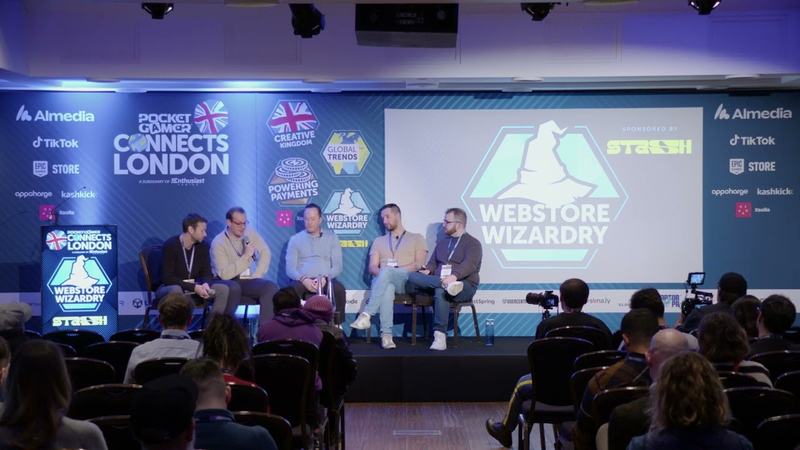
Heat. [Music] Heat. So, I would like to welcome to the stage and and a round of applause, please, for Archie Stonehill from Stash to talk about DTOC.
Hey guys, sorry I'm a bit late. Um, I'll do the expedited version. So, I'm Archie. I'm the chief growth officer at Stash. We're a DTOC uh platform provider. Happy to talk to any studios who are interested in here. So today I'll be talking principally about a retention driver which is loyalty and how it's implemented in DTOC. Um but before that I'll run through just like some regulatory recap because it's helpful framing as well as where we situate retention in the user journey,
how to think about it from a framework's perspective and then I'll do a deep dive on one of our loyalty programs and our loyalty implementation. Um okay so starting with the regulations. Uh right now we basically live in a world with kind of two regulatory frameworks but they're evolving very quickly. Um so the biggest changes have actually happened in the US which is a bit of a surprise from a year ago. We might have said Europe was the kind of leading edge but in the US you can now have external linkouts and then in the rest of the world there's kind of two different frameworks governing the EU uh and the UK really uh which is under a series of regulation called the DMA in Europe and the DMCC in Europe. in the UK and then for the rest of the world it's kind of a patchwork but the three geographies really to watch right now are Brazil, Korea and Japan uh which all have various pieces of legislation at various stages. Um so to summarize kind of where we're coming from where we are now like back in the bad old days you couldn't communicate to your players about direct payments even outside of
the app if you required their email for example within the app. And then there's been a lot of changes since then, starting with the ability to communicate with players about alternative payment channels outside of the app. And that really kicked off the web store boom. And then in the last kind of year, you've seen a threat to what's called anti- steering policies, which allow for developers to link out from within their game to direct consumer features. Um, there's various tactics, but the most open version of this is in the US right now. currently just the US iOS but within the month likely to be US Android as well where you can actually link directly to an alternative payment um channel that's been widely adopted by the largest game developers in the world we did analysis I think of the top 50 about 30 have some version of this live in the US um and then in the uh kind of rest of the world you still have a no anti- steering policy but um there's likely to be some change to those policies in the next like year Europe has a new fee structure coming in it's kind of PBD whether that's interesting.
Um I do want to highlight like the big news coming up probably this month on the 22nd is Android changes. So the Android ruling in America is much more widespread than the US iOS ruling. Um so that middle piece is anti- steering policies that is basically going to be at par with where the iOS has been since May. Uh but on two other fronts which is alternative distribution and native app payments, Google's potentially going to go much further really cracking open Android in his environment in the US for uh direct payments even for Play Store distributed apps which is kind of like the holy grail of TC. Um so that's a brief recap of regulations this helpful framework. All of this to say is that like well you know really loyalty is a mechanic that was most tailored to web shop. Although it definitely still has applications for linkout which I'll show you uh in one of our examples. Um so I'll introduce two frameworks for GTOC I think about it basically in these two ways. So the first one is that like DTOC is never going to be as convenient as uh
third party distribution. And so how do you actually get players to opt into D2C? Well, there's kind of these two levers you can pull. One is you can reduce friction and the other one is you can increase motivation. Um so that's one of the frameworks I use. But the more relevant one for today's discussion is really breaking down the user journey into three steps. Acquisition, conversion, retention. Um, so this is a simplification of what's a messier picture. Uh, but you can think about a lot of whatever tactics you pursue as one of these. And what I'll say is that like most products or most features, even if you think they're primarily one, almost all product has implications across this channel, across all channels. So like loyalty you might think of as a predominantly conversion or retention mechanic but in fact it's a principal acquisition method uh for web stores as you can see here and I'll show you what that looks like. Um so there are metrics against each of these steps which you can take a look at. Not super relevant for today's discussion but figured it could be useful. Uh primary
metrics supporting metrics. Yeah just screenshots or whatever people who want it. Um, and then at each stage I kind of think about the touch points in three channels here, which is like in-game, out of game, and in the DDC channel. And so this is a kind of medium-sized list. I have a much longer list, but the exact emphasis you put on each constituent component of this will really depend on the nature of your game. If it's midcore, if it's casual, if it's casino, uh, because different things work better for different genres. Um, so loyalty kind of sits in a lot of these buckets really. Um, so as you can see like even on in-game conversion having some kind of loyalty previews is actually a very useful way of getting users to think about converting on web. Um, and then even on you know acquisition DDC channel you can link out to loyalty. Um, so there's lots of ways to kind of infuse loyalty throughout this matrix that I'll be talking about. Um, so now I'll just deep dive you know given time into the actual framework we use for loyalty program design. So one thing to note is
that like the loyalty programs we design are very different from game loyalty programs. Game loyalty programs are principally about increasing spend depth or long-term retention of high spenders. Whereas the programs we design are really geared towards driving DTOC adoption. And in many cases that could actually be the most effective use from a return on investment perspective of your loyalty. If you think about the loyalty program as kind of being governed by this metric which I call return on generosity, it's kind of a question of like if you assume 100% cannibalization for what you're giving away in a loyalty program, what return are you getting from that? So that's an unreasonable assumption. But even if you say, okay, for every dollar's worth of value I give away, what am I getting back for that? Actually, one of the best ways to spend that generosity is in driving direct consumer adoption. Because what it means is even if you're giving away up to about 25% of the value, you're shifting from one channel to another, that's still profitable because you're making about 25% more money on every dollar that's spent on
the web store. So you can afford to be pretty generous in web store loyalty programs. And their primary objective is to shift spend. That doesn't mean you also don't have secondary objectives. And we work with our partner on those secondary objectives. So some of them it might be, you know, increasing conversion. and others it might be increasing retention or spend depth for high spenders. So you can gear your loyalty program towards one of those secondary objectives. But really when I talk about loyalty I'm talking about this type of loyalty program that's focused on direct consumer adoption. It's a little bit different from what a lot of other kind of loyalty programs and games companies are about which is like VIP service. They're very complimentary. They sit alongside each other. They work together but they're kind of separate things. So, one thing we've seen in the last couple of years is that loyalty, which was principally a casino game mechanic has expanded to every genre. Um, you know, midcourse strategy, casual, uh, even Angry Birds kind of has a loyalty program, which is an awesome fact. They've had it for a while. Supercell's had a pretty successful one. So, you know, it's really not just for casino games anymore. Um, and even if you don't call
it loyalty, really any kind of spend based uh, progression system is kind of a loyalty program. Um, so this is an example of a casino game loyalty program we made. Um, and what's notable about this is that loyalty really became like the crux of the of the DTOC experience. It became like the core hub here. So this is the kind of core navigation page. This is an anonymized version of it. Um, but really like loyalty became the governing interface of this web shop, this DTOC experience. And that very much suited this game type where like being quite explicit about loyalty and VIP customer service is kind of part of the fantasy. It's part of the gameplay. For other games, it's less overt, but I think it's a good overall structure of showing how you can infuse your whole TOC experience, your whole shop with loyalty elements. Uh, and we do that with any game, even if it's not this explicit. So, this is kind of an easy way to see some of the mechanics advertised very overtly. You have milestone based rewards. I'll talk about
the exact structure in a second. Um, this is just meant to be an overview. All right. Um, so when we think about our loyalty structure, this is kind of the kind of boring way to break it down. So the first aspect of a loyalty program is you got to have tiers. So tiers are basically the things that a player attains. It's pretty similar to any tier based progression system or any progression system. So you have X tiers. Each of the tiers have a threshold and each of the tiers has a rank. So that's really what you're earning. You're earning anywhere from kind of three, four to 10 ranks in a loyalty program. Depends on how nuanced you want to get. And then within each tier, you have these milestones. So these are like checkpoints alongside along the journey so that players are always working towards something that's within reach. Those milestones are kind of small rewards um that you, you know, achieve with a certain amount of spend or progression. Um but then the most important thing is that your ranks have to have some benefit. And I think what's really important is to give your players a sense of like intrinsic value to those
ranks so that it's not purely an economic calculation. So to some extent you want to like diffuse the value to make it less kind of tangible, less calculable, but more give players a general sense that upon achieving a certain loyalty rank I have attained some kind of value. I get some kind of value. Um so uh I'll show you what that means. Uh but there's a few ways we do this. So, one of the main ones is benefit multipliers. I'll go into a bit more depth in this in a second, but basically this means that the amount of generosity you get from the DTOC channel is dependent on the rank. So, that means that once players start participating in the DTOC channel, they start getting a lot more benefit and it kind of snowballs and then they really get bought in. What that means is that your higher spenders get very very bought into your DDC program. It also means that you can pretty perfectly calculate the amount of value you're giving cumulatively to a player based on how much they've spent in the direct to consumer channel. That's pretty useful because you can always make sure that return on generosity metric is positive.
But you also want other benefits to the rank. And these can be economic or they can be non-economic. And I have a long list of non-economic benefits. But it could be exclusive access to communities, exclusive access to content, early access to content, VIP customer service, merchandise, gifts, cosmetics, like it really can be anything. And I think the more kind of stuff you have, the better because it and the more visible stuff you have, the better because it kind of conveys that intrinsically valuable sense that we want to we want to kind of induce. And uh another kind of positive aspect of this is if you can create a visual identity around your rank, that's really useful because we do this with our loyalty programs where we infuse that visual identity throughout the loyalty system. So that basically you can think about it as like color coding your DTOC channel and then as you progress through the ranks your DTOC channel experience progressive as well, even kind of relatively cosmetically or superficially. Um, so yeah, that's kind of the overall structure is basically you just want these ranks. You progress through the ranks and then as you
progress through the ranks, you unlock a series of benefits. That's the main idea. Um, what I would say is like most loyalty programs kind of just stop at this milestone system, which is really the smallest part of it because it's kind of a one-time reward. You normally can't be super generous and once it's done, it's done. You kind of have a finite amount of value. So you want to create a more kind of abstract sense of value using these different mechanics. Um, cool. So you have those entry points as well. I'll kind of skip ahead to show you what this looks like more substantively. So we have a few different frameworks here. You have your earn rate acceleration where like as you progress up you're earning more value. You have a VIP currency you're earning. Um so I'll show you what this looks like in the implied example. But one other note that I'll call attention to here haven't talked about is freetoplay progression. A lot of developers we work with care about this. They want to have some freetoplay progression. So we always try and make sure there are sources of value that are outside of spend. Depending on how generous you want to be, you could tweak those. Uh and actually that can serve as a powerful conversion driver. So rather
than talking about it abstractly, I'll talk about it with a specific example. This is Tacticus. We made a loyalty program with them. Um so the benefits are not just economic. We also try to do non-economic benefits. These can be kind of sporadic and powerful. You always want to have a progression queue especially at conversions. So this becomes a pretty powerful conversion driver. Uh and then we specifically design our loyalty programs for DTOC channel adoption. So this means that we can create loyalty elements that are compliant with app store policies even in the EU and the rest of the world. I.e. they link to some kind of non-purchasebased web mechanic. Um and yeah, let's see what it looks like. So there's basically like three primary spend based incentives. And again, I think when you're designing a DTOC rewards program, you want to make spend based incentives spend based so that you can calculate them based on dollar spend. You have your primary in-game currency, your core currency, you have your loyalty currency, and you have a loyalty XP. So, the bonuses, the amount of core currency you get, you can't really read it here, but it says earn X extra Blackstone for every dollar you
spend. That X will increase with each loyalty rank. So, that's why they're tied to the corporal. And then this is the tier status progression. We've now updated this, so it previews rewards, but you always want to be showing something within reach. So, then if you look at the loyalty program, this is their loyalty rank. They progress through these ranks. um players progress by earning by completing spend etc. And then this is the rest of the interface. So these are the milestone rewards and then these are missions that you can uh progress just through freeto-play engagement. And what's great about that is you can link to those from within the game. So this interface that we designed here is fully compliant with App Store policies. It's two clicks away from the store, so you can't make a purchase. So this you can link to from any app store from within the game and it's compliant. So that's what's going on here. You can link to missions. Um, so if you complete a mission, for example, you can link to that as like a recurring reminder of web store value. And that means every time a player visits the Tactics web store, they're kind of getting a popup with some value, which reinforces that habit. You can also onboard players to your loyalty program if in the game again if
you keep it compliant. And then this is a nice mechanic. It's a web exclusive currency we made and a web exclusive shop, which again, you can link to a lot of this stuff because it's not a real money purchase. Um so yeah that's kind of the overview of the tacticians club um we made for tacticus. One final addition here is this is linkouts. Uh so this is a linkout flow we have um and we integrate all of our loyalty programs within the linkout flow. And what that's led to is kind of a counterintuitive outcome which is when we've rolled out linkout based purchases which you might have expected to cannibalize web store spend we've actually seen them grow complimentarily. So actually more adoption on linkouts has driven more adoption on web shops and the reason for that is because we integrate the loyalty system. So what this is really doing is actually serving as an onboarding flow for users uh to onboard to the DTOC loyalty program which has been a really amazing outcome. I think for every 1% adoption we've gotten through uh Stash Pay through our linkout purchase we've
gotten something like half% to 0.75 to 75% of a percent. um adoption in the web store. So they grow together which is awesome. Okay, so you know coming up on time but a few I'll like end this kind of here. I'm happy to talk more about this uh with anyone individually but like as I said earlier like you kind of will never think of you will never make a DTOC channel more convenient than a third party purchase channel. But what you can do is give players a reason to adopt it by yes decreasing that inconvenience but more importantly increasing that experience giving them a higher motivation. And what's been notable about the app store policy changes is that before those happened really most of what you could do was on the experience side. With the app store policies it's meant that you have a lot more room to reduce friction because you can integrate you know the DTOC spend DDC spend channel into the game. But that's only in the US. And even when you do that, you only have so much you can reduce friction. Like I would think our
stash pay implementation is the lowest friction possibly I could imagine for iOS linkouts. It's very low friction but still a little more intimidating than native app payments. And so you still have to think about experience. You still have to think about that player motivation. Give them a reason to kind of do the counterintuitive thing and buy through a direct channel. So you do that by one focusing on your most engaged users. These programs are typically designed for people who are spenders. Yes, you can use them to onboard new spenders, but predominantly you're going to be using them to reward existing spenders and shift their spend to G to C. Second, tailor it to your game's unique meta. Like some games cosmetics will be meaningful. So yes, give away lots of cosmetics. Other games they won't matter cuz they're single players, in which case you have to find other ways to reward players. And then the third point, which is a really important one, is like leverage the medium you're operating in. So if you're operating in web, don't like try and recreate a game a native game interface in web. Actually use web for what it's good at. So that could be linking to external channels
like YouTube, integrating more broadly with web- based tools. There's a bunch of ways you can basically use web. All right, this is kind of it. Like own the journey. Invest in this now because I will say like if you're not doing this, you're already late. Um very late. Uh and we're always happy to help. So yeah, I'm happy to give people more info on this presentation. If you want to chat, let me know. Cool. [Applause] [Music]
Auto-generated captions from YouTube — names and numbers may be misheard.
Key insights
Distilling the key insights…
Ask AI about this video
Cite this video
Citation
Generating citation…














Comments