1 free read left. Create a free account for unlimited reading + AI research.
Create free account
Unity on the importance of going against the grain
Key insights
6 takeaways- 01Unity transitioned to a free-tier engine model to democratize technology, shifting its primary revenue streams toward the asset store and integrated advertising services.
- 02The mobile gaming market is increasingly stratified, with large-scale titles dominating the landscape and creating significant discovery challenges for independent developers.
- 03The most successful projects are defined by a singular, clear vision and high-quality polish, often incorporating unconventional design elements to differentiate themselves in a crowded global market.
- 04Virtual reality is viewed as a long-term growth frontier, though mass-market adoption and significant revenue generation are expected to lag behind mobile trends for several years.
- 05Regional gaming hubs like Helsinki achieved dominance through early exposure to mobile technology and a culture that prioritizes learning from initial development failures.
- 06Success for small teams in the current market relies on niche-focused strategies and the ability to iterate rapidly with minimal capital investment.
Ask AI about this video
Transcript
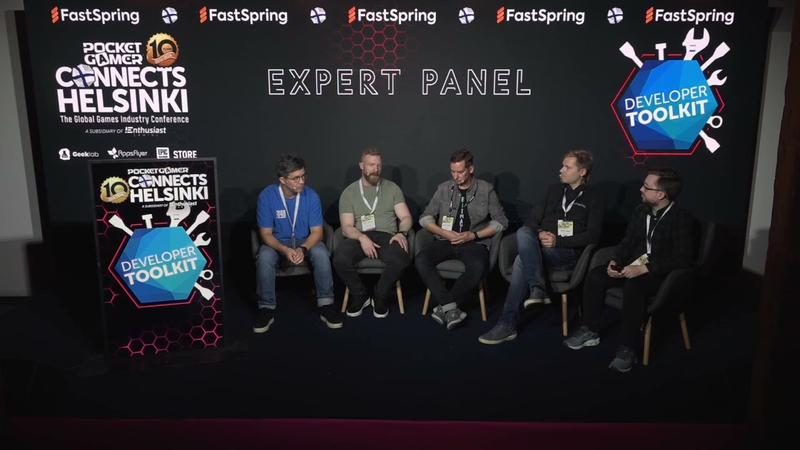
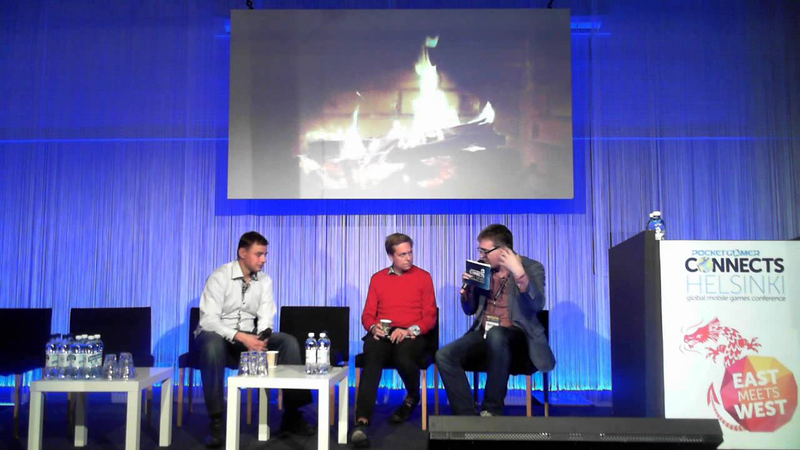
[Music] [Applause] [Music] with David hon and UC alinan um David is a co- founder of unity and UC was a founder of appli fire and now in charge of unity an is that correct very good okay do we have our fire who can that not than um don't get too oh R in ch so okay um cool I'm ask you I'm sure I have no control of this you whatsoever so I'm going to start with a couple of questions and then we're going to go we'll go a bit mad so um so I think first kick off with like you uh you made a decision to kind of Go free at at least have the personal audition this year which is quite a big a big deal tools company makes money selling licenses can you tell me why why he did that and and what that means sure hey
thanks thanks for thanks for letting me be here um it's um you can sort of slice that in different ways um we never thought of ourselves as being in the tools business we thought of ourselves as being in the democratization business and uh you know sort of we decided very early on that we would be you know a mission driven company and we would sort of force ourselves to always find ways of making the industry better um and you know it sounded a bit vacuous back in the basement but but but we actually stuck with it very kind of firmly um and you know some wise person once said that you know kind of a mission statement you know is sort of the value of mission statement is sort of measured in in in the quality of decisions it helps you make so so ever since the beginning we were always searching for ways not just of making the tools better but also more available easier to use and so on um so um you know this lets to kind of the ease of use and the Polish and all that stuff um but also back in 2009 l L us uh
to be the first engine to be kind of to get a free tier um it was kind of a shitty tier it was sort of you know you get the tools but not really kind of tier um which is pretty cool for that for that time um and and then that sort of forc us to keep pushing in that direction like you know okay we're not just here to make money from tools we're actually here to somehow make more people use them um and it was amazing like that that first time we went free by the way even though it was sort of a shitty tier I mean you know it wasn't that bad um but it was it was sort of feature limited um um you know we had 13,000 people that had we had sort of convinced um you know on our knees to use our tools over like four years four and a half years and then the day after we had twice as many people okay um so that was kind of a clear message that you know there's something magical about that um and that kind of path led us to build the asset store and to really think about these things um in a sort of broader perspective so at some point we came to a point where we knew that uh we
had to go even further um we we decided to give kind of the whole tool set away not just this kind of shitty tier um and but but to get to that point we had to work really hard and figure out ways of of kind of surviving because you know exactly if you're a technologist you know you know that you know the reason for all this business is just to make the technology work um and and and and and one very important step to do that was we had to uh find revenue streams outside of the tooling uh we had a few already actually the the asset store we we do enter like we work with sort of really big companies uh where we give them support and so on but but the really important one was that we we needed um an ad Network um both because skipping through my questions here no but I mean like I didn't know that no but I mean like so so so so there's a few things right I mean like you know you know we we we felt that developers were not as well served by ad networks as we felt they should be we felt there was something we could do uh with a scale of
um but then you know it always comes down to people and and the actual product not just the theory of an Network and something something uh and I was so lucky that I met yussi um like I don't know 6 years ago now 2009 yeah yeah uh many years ago and um he was not doing ads back then he was doing games and um and I don't know I I sort of fell in love with him my God this be Bigg story than we expect kind of way and uh and uh no I mean we became friends and I always thought very highly of him I never thought I would work with him I just you know thought he was an awesome guy and he sort of you know approximately as passionate as I was about the industry um and uh in the meantime he went and buil an N Network and it was just it was a beautiful product really well conceived so over a time of like 5 months um I convinced him to um to uh more like seven it was s August to well August to
January when we signed time I think I counted five months but maybe I'm to but then let's let's put it 6 months on average 6 months um over over an average of 6 months I comein usy to uh to join Unity with this you know we were doing too well you know have to up the price it was it was an expensive deal um but but well well worth it so so with that kind of you know as part of unity we knew we could be more aggressive with the tools so yes I mean it's it's sort of an obvious calculation but it also kind of was very logical like even from the very early days of unity and I think overall if you look at look at it for us it was it was an obvious thing to do like all joking aide the price this was a company that I respected that had principles but also really awesome people and if you look at like appli fire was a small company out of fil like who are these guys are they going to go a business and limited resources and all that and I think the business both with ads and replay has really lot on after joining Unity
because this credibility is really important this business it's who you are what you stand for are you trustworthy and there are so many ad networks out there that unfortunately you cannot really call trustworthy um at least a perest today did you see Eric's Petra picture last night I I did not but you have to hear I have to show your video that that why ad networks 101 is it was a slightly tug and cheek guide to being an ad Network I think I think you appreciate it and I think the things that we're now working on WE announc the UN 5.2 is going to be pre integr engine if you want to use there's no SDK and just go go with it those kind of things are really going to be about simplifying uh making sure that the tooling is great and going forward more and more thinking about how to make it easy for game developers to ensure optimal optimal Revenue whether that be in app or app Revenue there's a lot to be done in here and a lot de many developers don't really want to do it themselves because it's complex okay okay okay um
go quick show hands so how how many people here are already developing games of unity anybody here making games of unity there's some customers out there okay fantastic that's good you've got a few everybody making games without Unity rest the journalists story um so talking about obviously we mobile games conference um obviously you know Unity was founded before mobile games was the thing it is now what would you say what sort of you know how big is mobile for for Unity how big was it and how big big is it now in terms of your your developer base it's it's a really good question like like when when un was conceived I think there was only snake uh back then and you know that was not driv in an engine as far as I could tell um but um so so we we never thought of unity as as a as a mobile engine right I mean we started on Mac actually so for a while it was like the Mac engine and then it was like the sort of whatever engine and then it was uh you know actually also the Wii the Nintendo Wii engine um you know no no no
no no jokes on that um and then and then uh and then um the iPhone came along right and and we're like oh that's really interesting that's an open or open-ish platform you know it fit well with our kind of um kind of um experience with operating systems and and hardware and so on actually doing the Nintendo Wii version is like really instrumental because we've pressured Unity into a into a device that eventually was basically matched by the sort of second iPhone like the second iPhone was like similar power to the the bloody we no it's cool I believe that's a new trademark with the it's it's pretty cool anyway so um so uh so so so so so so that was the thing and and it grew very fast and for a while we were sort of known as the the iPhone engine um we never thought of that actually we we always believed we're a multiplatform engine to really kind of you know help developers move to the platforms that were important important it just so happened that iPhone was like the most important platform for a couple of years or many years um and uh and actually I
think we could have let go of the crossplatform has and just gone sort of iPhone only and then maybe Android later and we might have done okay as a business probably really well um but but we always felt that that's not how game developers think I mean they're not yes there are people that are like mobile only developers but we see a lot of people move to from PC two from console um and there's there flexibility that I'm so proud that we've been able to create uh by the way it's like freaking like 30 times harder to support all those platforms than just two uh so that means we have this massive QA division it's like I don't know seems on on certain days it seems to be a third of the company I don't think it quite is but it's close enough doing all the sort of Automation and the testing and all all this stuff to make it work um but it was really important now you know mobile did go and become like 70% of a revenue for a while um and um it's hard to break out because of how we sell you and so on
but it's a lot it's it's really important I'm not going to hide that um and of course you know it's it's wonderful to have you know one thing that you just claim as your own like you know nobody's as good as we are there um so so so that's that's been that's been helpful but um but now I mean again if we had defined ourselves as as a sort of a mobile engine we would not be looking in the same way as we are at VR and AR and sort of the road ahead we come on St in a minute I'm I'm going to I'm going to get you I know you you very very us cares stly more about mobile he's he's very T lik talk that's good because it creates a wonderful Dynamic I I want to ask you when when when I kind of first met you we look to amplify you more kind of a it was it was more about a service for sharing videos sharing gameplay videos um it was more of a Comm service still is okay still is and obviously we're seeing we're seeing things like uh s of twitch get Traction in that sort of space mob crash has launched recently as you point out is raed investment but the maybe the engagement is not massive yet but there's there's a few you know I think
um DNA announced some sort of sharing service so I mean is there you know obviously you guys kind of puted a little bit of the the video ads became a really big part of what you do Revenue so is the community video sharing still something you're in is it something you're going to do more with absolutely so you know we as is getting a lot of ad is getting a lot of attention because substantial Revenue stream for developers is grown very explosively I would say um I think we are the number two player in the global market after colony and we're where guys we're chasing them and it's a good competition to have but I think fundamentally when you look at the mobile gaming Market the number one problem game developers have is Discovery getting found getting an audience connecting with that audience and that is that is a my hair is on fire problem for a lot of developers and then if you look at the concentration of Revenue and the kind of stratification that's happening uh uh it's basically a
logorithm curve with the big taking the B of it and being able to invest into user acquisition more heavily than anybody else and I think overall our take was that um Community P video sharing could be a disruptive force on that in order to drive Discovery now I still very much believe in Social I believe in people and I believe taste makers and CES and just common people will be the driving force um of discovering going forward and if you look at the studies from edar and we've done our studies also there are basically two things that matter to mainstream users for game Discovery one is what's features and what's on the top chart the second is where them mou and they're roughly evenly evenly um rated as the most often used sources so my friend tells me I see what my friends play or I go to the App Store and look at what feature so the that's pretty much the only channel that remains in a sense under tapped under under under developed and I
I really believe that that can be developed further so while you know many of you will inter interact with me the Act form I'm same one time I'm I'm the arm dealer fueling the user acquisition rate on the other hand I'm the freedom fighter trying to think of ways to create new channels of Discovery and engagement and um we definit and we're not going to give that up I mean we care and it is really when you look at our developer base it's it is a fundamentally really important problem to tackle and it's not a problem you go can go directly after it and I really respect the platform companies creating app stores and there are certain restrictions take place around that and those are absolutely the U things you play by but what remains really social like I I'm really interested what you play because maybe it's a drunken game that you play every time you're in a conference like called professional alcoholic it's like a management scene for employees of a steel media I don't know what it is but I'm sure it's interesting and I'd love to see you
watch you're playing so I TR I trust people I trust what what people I like people I play with I trust them and I think there's a really underta opportunity which frankly you look at Facebook that was a place where social gaming exploded and it was a really powerful mechanism all Spam aside but nowadays the only thing Facebook's interest is taking your UA do so I don't I don't think there's a lot of innovation of space I think uh there's there a lot to be done here so so we can expect to see more Innovation from you guys in SM yes good answer um just because my question is obviously relevant to both of you like I think one thing that's kind of clear right now and Ramy sort of set the tone Ry is from uh from Van yesterday is is it's tough for Indie developers especially the mobile games scene right now there's the big guys big money you know making big money spending big money but for Indies obviously Discovery is the main thing but like what advice would you offer kind of Indie developers in the mobile game Space right now right now I think going against the grain is probably one
of the biggest biggest strategies finding a nich and exploting that if you want to be a next class of clans or you want to be the next game of war or whatever it is it's on top of charts doesn't really work now if you look at things like that are actually exploded outside of outside of uh the Western markets and especially in Japan you look at things like um battle and Dragons kind of came out of nowhere and it's not really a typical game that that was existed before you you look at um Monster Strike again a game that didn't really exist on that typical format you look at colos games these are actually very different experiences that we currently have on the top charts so I personally believe there's more just the still what you're saying like every Big Hit seems to be completely different from the previous big hit right yeah and then what happens they get slightly calcified because there's enough money to support those and I think I think the biggest problem may be that you find that Niche that Innovation you make a
copy clone by people with a lot of resources but maybe it happens a little less than having social gaming you know we had Zinga and you know a lot of cloning going on I think that's right now the sensible strategy the look at Steam and another place they're also getting pretty pretty um full of content there there seem an explosion of content which I think part of unity is to thank for it's easier than to make thank you proud of it it is about helping people realize of dream of making their ideal game so obviously democratization means more people are going to use the tools but finding a nation really becoming excellent the na is probably the this way to go you mentioned kind of Ste one of my questions is I see a lot more developers partly out of necessity partly out of kind of trying to do something different we're going across platform using things like steam almost as part of the marketing push a bit of an audience because be easier whether it
is or not before they they launch a mobile game do you see that happening a lot do you see that as a growing Trend and obviously you guys are enabling that we do cross platform no absolutely and we see it all the time I mean people launch their games in multiple platforms and and it's not always the first platform that is a successful one we've seen both ways actually you know pretty good games didn't quite get traction on mobile went to steam got a lot of traction you know good money and you know enough cash to do something new um absolutely I think the UT advice I would give is look at companies that have innovated around raising brand awareness I think seriously has done a fantastic job with best things which is not a typical path uh obviously we talked about social discovery and in that way you have YouTubers and other people they're getting more and more exploited nowadays exploit the wrong word more more attracted to paid uh I think exploited is possibly not the wrong word but still I think there's a lot of every ad company I've seen recently has a YouTube influencer Network now which is it's it's almost tried to say but I mean like you know every product that we see
be successful is has some like amazing you know kind of outsize outsize the great feature you know some some clarity of vision some some clarity of brand some clarity of gamep play um and then you know maybe they're not great at everything because these are often small teams um so I mean when people ask me what's the advice it's just like to be good at one thing okay be good at one thing there's your quote headline there we go um okay um I guess um I'm going talk very second but one thing I so my games industry um there's a few different opinions a few people saying oh it's kind of reached a level where it's obviously massive but it's it's that growth isn't isn't going to continue hockey sticking anymore and then you got people like Neil Young gave a talk earli this year he thinks there's you know he believes there's a heck of a lot of great left he thinks we could be talking about10 billion uh mobile games in the next a year or so what's your kind of take in the mobile market and how how much how much growth there is left in it where it's going to go your analysis there I thought I thought a lot
about well I mean like you know I mean every sort of Technology seems to sort of gets adopted on some kind of S curve right I mean like you know there's this this path and and I've been thinking a lot about where we are in that but what's your what's your take I think we we are still growing very rapidly I think this year next year 2017 will be strong growth years 2018 I'm not that strong clear on I think the certification of mobile games industry is really the primary problem it's the the B get bigger and the small gets smaller so that needs to be tackled uh but overall I think the top line numbers will continue grow very rapidly the I think there is an interesting opportunity specifically advertising to bring in brand advertising I think time time spend in mobile games will lead to at spend in mobile games and I think that will be an interesting monetization Vector um I am if I were to start a game company today what I would do I would I would pick Unity because I would have on to H my options just in case I'm mean I have the right product with the wrong
Market I think mobile mobile Still Remains open Still Remains something you can achieve but you have to go down unconventional path where can you still create a billion dollar business that I cannot that I don't believe in can create a successful business in t of millions yes you got people cross your road I mean presume we didn't have a massive kind of budget and massive investment before they and obviously a success story of unity ad it was two to three guys right yeah it was two to three guys 6 weeks for a remote before from Finish to start I heard 12 but maybe it's was six what very small very small amount of effort put but again again there it was it was style cool gameplay and then the featur took it off but the invent featuring start stop that the game still continue going and again what were they good at it was just this you you going stop talking about this game it was fun it was addictive it was well designed and it really was polished and that that keep you going it's no apple
featuring is going to last a week and then what happens seem is really up to you and there was a level of stupidity in it which I think is actually I would say yeah but stupidity because it was so clearly dumb like it was you know it was you knew it was stupid because you couldn't actually do anything in this game right you could only die which no I think I think I mean there's many features of of of gameplay but I think stupidity is like under under under Valu so so be good something and have stupidity those are to useful St I'm not saying every game has to have stupidity but it's a feature that you can really focus on like I'm searching simulator is like the the sort of high point B um okay so seg moment for a second space program has a very high level of stupidity on top of you know being you know the most like Advanced space game in the world fair enough okay stupid stupidity is a good Factor so um moving on to kind of kind of VR you know vr's the thing everyone's very excited about the next the next big thing some
are saying oh it's going to be the new mobile some are saying it's going to be you know it's going to be a complete flop some you know there's a lot of money flowing into it certainly you can see the shows already what's your your take I mean you know how important is going to VR going to be for for Unity and where do you think it's going to go so I I we don't know right I mean we we debated this at length like you know us to the rest of unity you know leaders and and engineers and everyone actually and all my friends are either doing crazy stuff in VR or thinking about doing CRA stuff in VR which sort of you know it's a certain level of mathness almost again stupid I don't know yeah know maybe uh well I I don't know if it counts there no but I mean one one one one way of seeing it is that you know it's it's it's like the final screen you know it's like you know we have different screen sizes but this if it works it's like the final last you know frame um and um and uh and therefore bigger than anything else if it works which I think is why people kind of go nuts over it um and the the the
experiences that are being created now are very compelling and I I recently you know we recently saw some fresh of the press stals of some VR stuff um that was just mind-blowing and and really showed a path to where you know it becomes like a really kind of you know entrenched part of our Lives not not as a novelty not as a cute thing but a real deep part of our lives uh whether it works and when it works still a bit to TVD in my world in my so we we're definitely not even on the Steep part of this curve market adoption or Revenue specifically Revenue will lack for multiple years because it's going to be it's an early adopter market and we're talking about millions of units not tens of 100 millions of units it's going to be very small still but I think now it's a chance to Define experiences explore the frontier and that's super exciting for game developers so we are big beli of VR it's a it's a you we have great relationship with for example Oo we have direct Direct um support in engine and I think it will
be an area where we continue to invest in I think we need to be where GIS go and this is a clear the space where developers are going and we need to be really good at supporting them and helping them create and realize the killer apps for your VR got one one last question um from my and it's it's skipping back to mobile a little bit I guess to VR and games generally you know we're in Helsinki there's an amazing amount of successful studios here obviously you know you guys Deb unities come out there lots of good Studios there was in Copenhagen recently and uh Sweden as well you know I've done relatively well why why uh why are the NS so successful what is it that makes these countries so successful in in games and mobile games especially do you think I think there are there are a number of factors you could trace the finished game IND pretty much to the demo scene that's one factor I was happily involved with that and really thankful for that opportunity but I think for mobile gaming specifically I think we we made the mistakes early we got Riot e on WAP games back in the day
uh you know you had a lot of companies who dabbled in and and we had we had Ericson in Sweden Nokia here kind of the whole mobile Revolution sort of started here so I think a lot of people have been thinking about this and if you look at supercell it's not a out of the Buu success ilka and the crew started Su back in early 2000s then merged with disel chocolate they are this basically their third rodo if you will so they've done quite well haven't they they've done yeah fairly well I would say you look at King and I think a lot of those guys also have a mobile background before King uh is like the the other the other Robo in the sense that they were building like tons of games that were sort of just semi successful they were a you know they were a skill games company nobody really remembers that I remember the got connect and they were like what is this company called King they have this website and you can bet money on games and like what is this I didn't think they're going yeah yeah I didn't think they're going anywhere so I think I'm a great predic of success game companies over I think like early the
market making mistakes early um strong kind of um and what happened with mobile is it actually actually supported small teams to start with so you didn't need to have that much Capital you could learn you could make mistakes and go at it so those kind of things I think Factor background early early into the market small teams and um experience in in the market okay brilliant I think I think we've we start L we over a little bit we don't have any time for questions no okay been told not let o r r well you can find D they don't mind it being asked questions so you can grab those guys afterwards um can I have a big round of applause please for my my PR I'm [Applause]
Summary
Unity, represented by founder David Helgason and EVP Jussi Laakkonen, emphasizes a mission-driven approach to game development, prioritizing the democratization of technology over traditional licensing models. By transitioning to a free-tier model for its engine, the company successfully expanded its user base, leveraging the asset store and advertising revenue to sustain operations. This strategic shift allowed Unity to focus on simplifying development workflows and providing developers with robust tools for monetization and cross-platform deployment, which remains a core pillar of their service.
The mobile gaming market, while currently experiencing a stratification where large-scale titles dominate, continues to offer significant growth potential. The company identifies discovery as the primary challenge for independent developers and advocates for unconventional, niche-focused strategies to achieve success. By analyzing the success of Nordic game hubs like Helsinki, the speakers attribute regional dominance to early exposure to mobile technology, a culture of learning from initial failures, and the ability for small teams to iterate rapidly with minimal capital.
Looking toward the future, the company views virtual reality as a significant frontier, though it acknowledges that mass-market adoption and substantial revenue generation will likely lag behind current mobile trends for several years. The focus remains on supporting developers as they explore these new mediums. Ultimately, the company maintains that the most successful projects—whether on mobile or emerging platforms—are characterized by a clear, singular vision, high-quality polish, and a willingness to embrace unique, sometimes unconventional, design elements to stand out in an increasingly crowded global market.