1 free read left. Create a free account for unlimited reading + AI research.
Create free account
PechaKucha: Mark Sorrell on LTV BS

Key insights
5 takeaways- 01Lifetime Value (LTV) and Lifetime Revenue (LTR) are predictive assumptions rather than definitive data points, and relying on them as facts can lead to misleading assessments of game health.
- 02Prioritizing speculative LTV models often incentivizes short-term revenue extraction and aggressive sales tactics that inflate premium currency supplies without regard for actual player utility.
- 03The true health of a virtual economy should be measured by the velocity of in-game transactions, specifically the rate at which players spend premium currency rather than how quickly they acquire it.
- 04A design philosophy centered on economic velocity encourages the creation of meaningful experiences that players naturally want to invest in, reducing the reliance on artificial pressure to drive spending.
- 05Developers should shift their focus from total revenue accumulation to real-time measurements of economic activity to ensure monetization strategies align with genuine player engagement.
Ask AI about this video
Transcript
yeah so i keep on Oscar oh I can't achieve but those gifts that's disgusting kind of person we do now my name is Mike soul and used to be consultant and I'm now a senior product manager at rovio stars which means it's my job to make sure that our games make money and are fun and the equation we usually use for defining if a game is fun makes money is lifetime value of a lifetime Remini obviously we started by no money already is numbers that's fine but but we can also turn the world into numbers we do that by talking about retention we make the kind of vaguely
reasonable assumption that if a game is fun people who continue to play it now my problem with lifetime value lifetime revenue has the specific thing we're aiming at is a good point I'm just hopefully myself throughout the entire this talk if you won't think about if you take a photograph at any point you'll have marvelously snarky Twitter post and but basically we use our TV and and it's equation that together fiber and money problem with it is that it is because we treat it as if it were data we think LTV is that it is not the piece of data what it is is an assumption what it is is a prediction we should be thinking particularly as product managers particularly as people who need to know exactly how the world is now how it we should were all we need to know how the world is and when we when we talk about
our TV or are actually talking about is a prediction to get retention who's predicting into the future saying what we think is going to happen nothing it's useful in a you a context you can see how the business people in your company would want to be hahahaha oh ok ok that's fine it just because that's not one of my is me that's weird that's my system but we get back on this cocoa pebbles horse so and the point here is that if you were in management or applauding you hear that slop sense looking to game two the right time earlier which is like why how much money can we afford to spend bringing people in okay that's fine it's great that you came back but what we need to know is product managers it because you designer make games that don't make the money we'd know is what's going on inside the game one of the things that we see a lot I think people are pushed events and push sales while
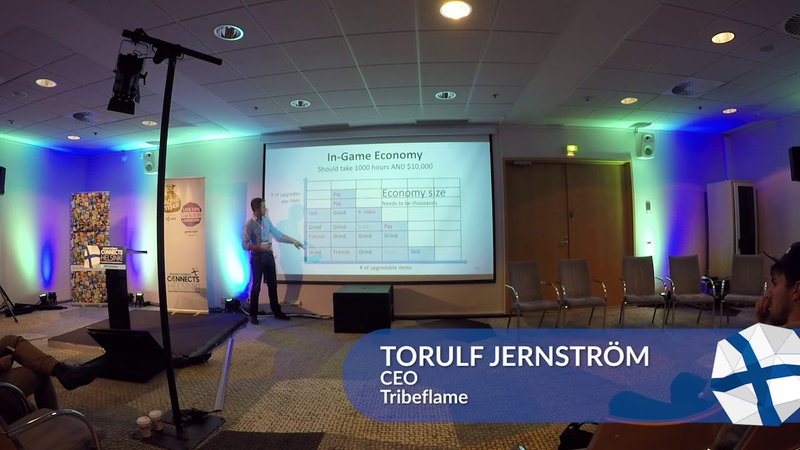
they try to do is pump in more money into the economy well they look up saying is we want you to spend your real money on our premium currency right all of us here either do so while you sell something think about a lot what we end up doing at that point it's just pumping loads of premium currency into others hargitay into our economies what's not simultaneously looking won't going if you're not thinking about the rate of which your premium currency is being spent rather than the rate which is boards then you're not looking at half okay on top of that you're basing your assumptions on a prediction if you're looking at TV or so you think our attention to this what we need to do is find a way comparing and using measurements rather than predictions in a way that tells us about the health of the game economy itself if you talk to any if you thought any the common lists they will tell you that the one of the most important things about the economy is the velocity of the money inside it
so it's not necessarily all about how much money there is inside pier parking is to do with how quickly it's prime sponsor oh we were economics which gets talked about since the world economy crashed a car mrs. much seriously paola amazing oh look what's on the screen you know this is Julie this is and it's not couldn't be more of it we need measurements for the speaker which money moves through our company is the thing that is really important what we should be doing is having measurements that demonstrate our ability to sell people the things inside our games to sell people the idea is that we're presenting to them here is a thing you want more of it if you give as money you can have it we need to be thinking about the fruit of our games not tobacco how much money people are in the deal is ending because
then that just press precious boss to get them to give us money not spent a very enjoying themselves I can't allow a much lighter otherwise 38 seconds last year but right now finally I can't remember how there's at least three have a cup of good solid minute thing about people did begin with the sales as the danger of these better future talks you know you think it's fine oh I'm gonna plan I mean I know it's exactly formulaic I mean you're gonna go to precisely no end to the baby what time each and every swine who's going to go up exactly what was gonna be on it well in advance making I was doing this nice months you know prepared though obviously click not knowing
anyone you know just said you smelled this that other more in here than you originally sir you like artistic next Iran in that this is all four hours of Justin teaching a motion this is the last one blah
Summary
Lifetime Value (LTV) and Lifetime Revenue (LTR) are frequently misused in the mobile gaming industry as definitive data points rather than the predictive assumptions they actually represent. While these metrics serve a functional purpose for management in calculating user acquisition costs and forecasting future revenue, they often obscure the underlying health of a game’s economy. Relying exclusively on these projections can lead product managers to prioritize short-term revenue extraction over long-term engagement, resulting in aggressive sales tactics that inflate premium currency supplies without regard for how that currency is actually utilized by the player base.
The core issue lies in the industry’s tendency to treat future retention predictions as current facts. Instead of focusing on speculative LTV models, developers should prioritize measuring the internal velocity of their game economies. Drawing parallels to macroeconomic principles, the true health of a virtual economy is determined by how quickly money moves through the system—specifically, the rate at which players spend premium currency rather than merely the rate at which they acquire it.
By shifting the focus from total revenue accumulation to the velocity of in-game transactions, developers can better assess whether players are genuinely finding value in the game’s offerings. This approach encourages a design philosophy centered on providing meaningful experiences that players want to invest in, rather than relying on artificial pressure to drive spending. Ultimately, the industry must move toward real-time measurements of economic activity to ensure that monetization strategies align with player enjoyment and sustainable game health, rather than chasing potentially misleading long-term revenue forecasts.