1 free read left. Create a free account for unlimited reading + AI research.
Create free accountWhitepaper DiGRA
1 free read left. Create a free account for unlimited reading + AI research.
Create free accountWhitepaperDiGRA
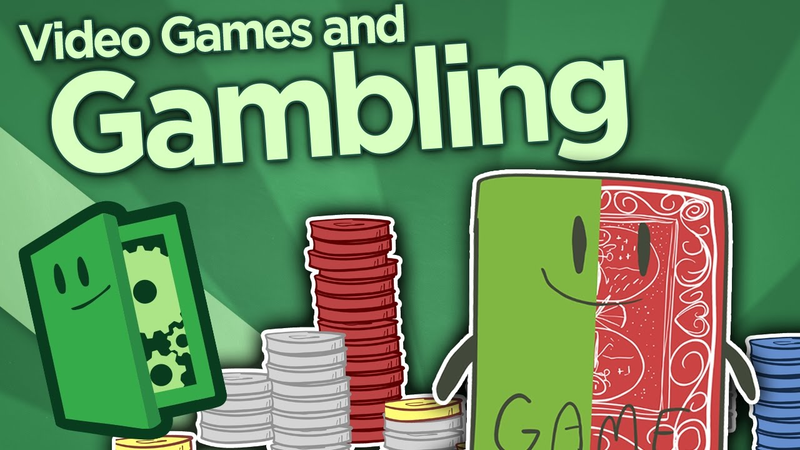
Social casino games and free-to-play mechanics have produced a double currency system in novel slot machines. Soft and hard in-game currencies blur the line between real money and game-specific value.
This theoretical paper by Jani Kinnunen examines how money functions within novel slot machine games that incorporate in-game currencies capable of being converted into real-money bets. The author argues that the convergence of gambling and digital gaming, especially through social casino games and free-to-play (F2P) mechanics, has produced a double currency system in which soft and hard in-game currencies blur the boundary between "real" money and game-specific value. Drawing on Georg Simmel's and Viviana Zelizer's theories of money together with Roger Caillois' distinction between paidia and ludus, the paper proposes that money exists along a continuum from paidic potential to ludic, context-specific currency.
The central thesis holds that money is never fully neutral in practice, since social and economic frames assign it particular meanings, yet it retains its potentiality to change. Within this framework, hard in-game currencies sit closer to the paidic end because they can be exchanged for game items or back into real money, while soft currencies are more clearly tied to the game's internal value. The paper examines examples such as Playtech's Kingdoms Rise series and NetEnt's Reel Rush 2, which exemplify these convergence processes.
A key observation is that in Reel Rush 2 the in-game currency accumulated through play is strictly tied to the game and can only be converted into a real-money bet by building a pot large enough to be wagered within the same game. At the moment of betting, players risk the ludic pot in exchange for the chance to win money in its purest paidic form. The paper's scope is conceptual and draws on a body of literature on social casino games, virtual economies, and gambling studies rather than on empirical data, surveys, or sample-based methodology. It presents itself as a theoretical contribution to understanding the monetary logic of hybrid gambling-gaming products.
Each row is a game or company this document names, each column a document, oldest first. A mark means that document names it. Select a row to see those documents.



DiGRA · 2023

DiGRA · 2023



DiGRA · 2023

DiGRA · 2023



DiGRA · 2023



DiGRA · 2023



DiGRA · 2023



DiGRA · 2023



DiGRA · 2023



DiGRA · 2023



DiGRA · 2023

DiGRA · 2023