Monetization reports and market data
Documents

Position Paper: Public Consultation for the Fitness Check of EU Consumer Law on Digital Fairness
The analysis contends that the existing EU consumer-protection framework is already adequate for ensuring digital fairness in the video-game sector and should be fully deployed before any new legislation is considered.
- The existing EU consumer-protection framework is sufficient for ensuring digital fairness in the video-game sector, and no new legislation should be introduced until current powers are fully utilized.
- The industry’s self-regulatory PEGI system is a core component of the current framework, currently maintaining approximately 75% consumer awareness regarding age-appropriate ratings.
- Existing EU regulations already effectively prohibit manipulative commercial practices such as bait-and-switch tactics and false testimonials within the gaming market.

5 x Secrets Behind Mr. Autofire's $40M Success
Lightheart Entertainment has established a highly efficient model for mobile game development, exemplified by the success of Mr. Autofire.
- Lightheart Entertainment achieved over $40 million in lifetime revenue and 10 million installs for Mr. Autofire within its first three years using a lean team of approximately 33 employees.
- The studio maintains a balanced monetization model consisting of 70% in-app purchases and 30% rewarded video advertisements.
- Prototypes are evaluated through a rigorous five-question framework and a strict three-month development cycle to ensure rapid pivots based on data rather than subjective attachment.

Christian Facey: The Future of In-Game Audio Ads - Naavik Gaming Podcast
In-game audio advertising represents a transformative shift in mobile monetization, offering a non-intrusive alternative to traditional video formats that frequently disrupt player immersion.
- In-game audio advertising serves as a non-intrusive monetization alternative that preserves player immersion by embedding ads into natural game environments like virtual car radios.
- The model utilizes proprietary verification systems to monitor device audio states, ensuring ads are only delivered when volume levels are sufficient for listener engagement.
- Audio advertising is resilient to privacy regulations like Apple’s App Tracking Transparency because it relies on contextual targeting rather than personal data collection.
Panel: Ads As Playing Experiences - Selecting the Right Ad Solutions for Your Game
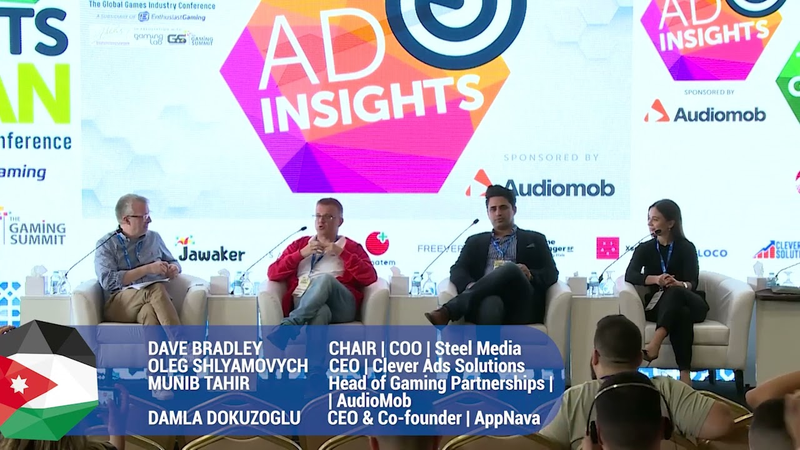
The modern mobile gaming landscape necessitates a sophisticated, hybrid monetization strategy that balances revenue generation with long-term player retention.
- Developers should adopt a hybrid monetization strategy that balances revenue from non-paying users with long-term player retention to mitigate the impact of privacy shifts like Apple’s App Tracking Transparency.
- To maximize effective cost per mille (eCPM), studios must utilize mediation platforms and maintain a rigorous, continuous A/B testing schedule for all ad implementations.
- Ad frequency should be strictly capped, with experts recommending a limit of five to ten rewarded video interactions per player per day to prevent user churn.
IAP Pricing Strategy in an Inflationary World - Ted Verani from Wappier
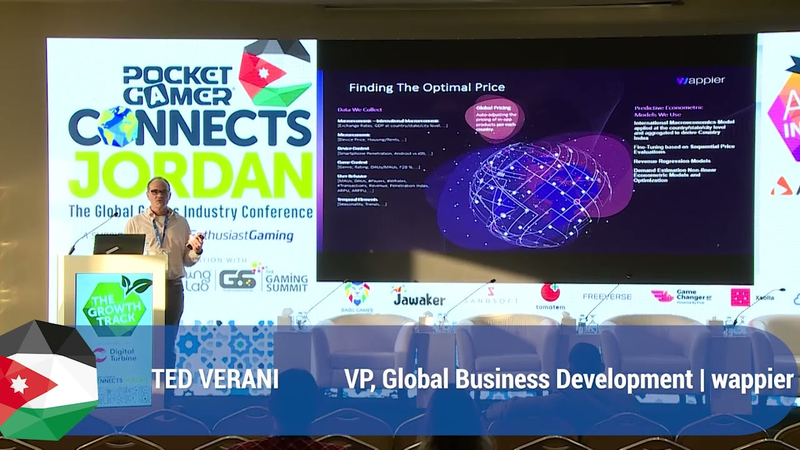
In-app purchase (IAP) pricing strategy is a critical, often overlooked component of mobile game revenue optimization, particularly during periods of global economic instability.
- Localized pricing strategies can drive revenue uplifts ranging from 11% to 60% by moving away from one-size-fits-all models based solely on U.S. benchmarks.
- In high-inflation markets exceeding 7.5%, lowering IAP prices by approximately 5% can increase total revenue by capturing more price-sensitive players.
- In economically stable regions such as Japan, Switzerland, and Australia, developers can improve financial performance by raising price points rather than lowering them.
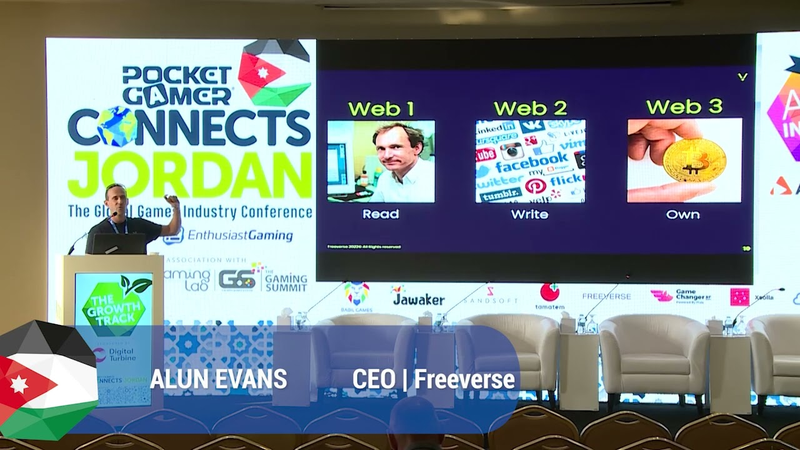
How a Punk Bassist’s Legacy Moves the NFT Conversation to One of Earned Value - Alun Evans
The gaming industry faces a persistent challenge in balancing high development costs with the need for long-term revenue.
- The gaming industry must shift from speculative NFT models toward 'earned value,' where digital asset worth is derived from player engagement and effort rather than artificial scarcity.
- Dynamic NFTs, or 'living assets,' incentivize long-term retention by evolving based on specific in-game actions like training characters or maintaining virtual pets.
- Integrating tokenized user-generated content and social rewards fosters deeper player investment, providing a sustainable alternative to aggressive user acquisition spending.
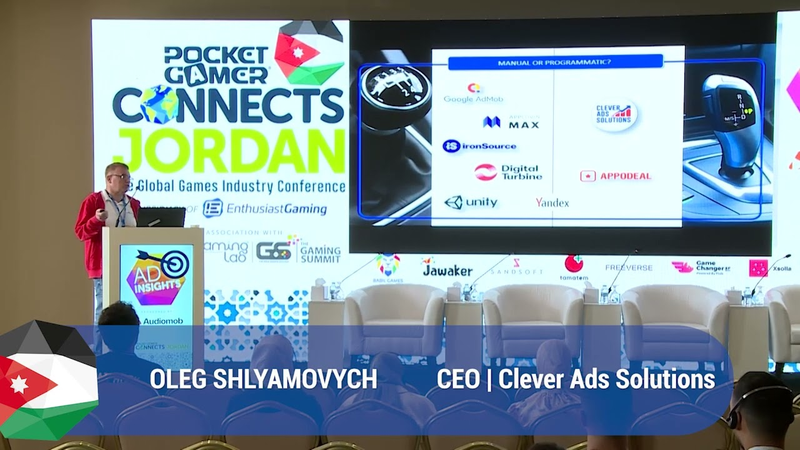
Mobile Ads Monetisation: The Tips & Tricks That Make A Difference - Oleg Shlyamovych
Mobile game monetization requires a strategic shift from focusing solely on game design to managing the business metrics of lifetime value (LTV) and cost per install (CPI).
- Scalability requires maintaining a positive margin where lifetime value (LTV) consistently exceeds the cost per install (CPI).
- Ad monetization is mandatory for capturing revenue from the approximately 95% of players who do not make in-app purchases.
- Programmatic mediation is the most efficient industry standard for developers earning between $100 and $1 million monthly, as it automates manual waterfall management.
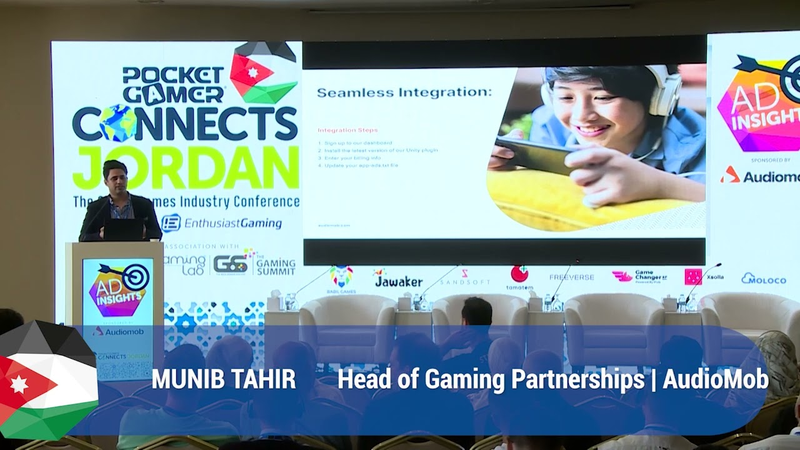
Reinvigorating In-game Monetisation With Audio Ads - Munib Tahir of AudioMob
In-game audio advertising serves as a non-intrusive, user-centric alternative to traditional video interstitial ads, which often negatively impact player retention.
- In-game audio ads provide an incremental revenue stream that avoids the negative impact on player retention often caused by traditional video interstitial ads.
- The AudioMob Unity plugin ensures non-intrusive delivery by only playing ads when device volume is at or above a 30 percent threshold.
- Integration of the audio ad technology into Unity-based games is efficient, requiring a development time of only four to ten hours.

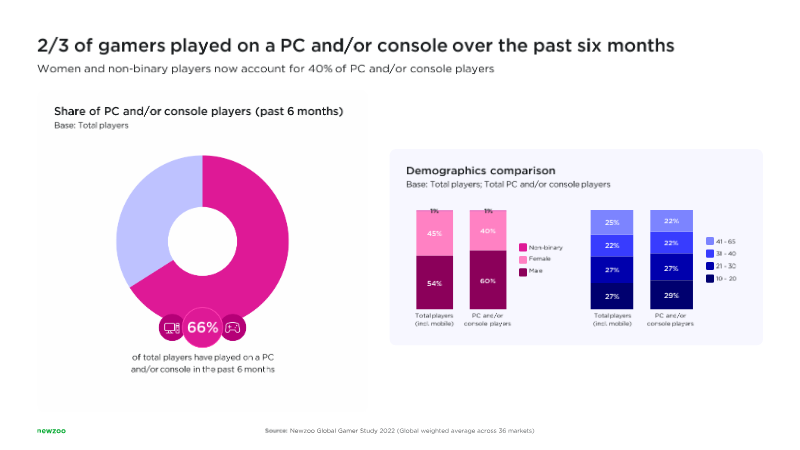

PC & Console Gaming: 2023
The global PC and console gaming market in 2023 is navigating a period of post-pandemic stabilization, marked by a contraction in total playtime as the industry adjusts from the unprecedented surges observed between 2020 and 2022.
- Following a pandemic-era surge, the PC and console market experienced a corrective year in 2022, with console gaming maintaining a 7.8% CAGR from 2015–2022 compared to 3.6% for PC gaming.
- Shooter and Battle Royale titles dominate player engagement, accounting for 37% of all playtime, while Adventure games hold the highest player share at 83%.
- Long-standing franchises dominate monetization, with titles like Fortnite, NBA 2K22, and Apex Legends leading in-game revenue, while Call of Duty: Modern Warfare II/Warzone 2.0 topped premium revenue charts in 2022.


The State of Puzzle Games: 2023
The puzzle game sector is undergoing a significant structural evolution, characterized by a shift in product models and monetization strategies.
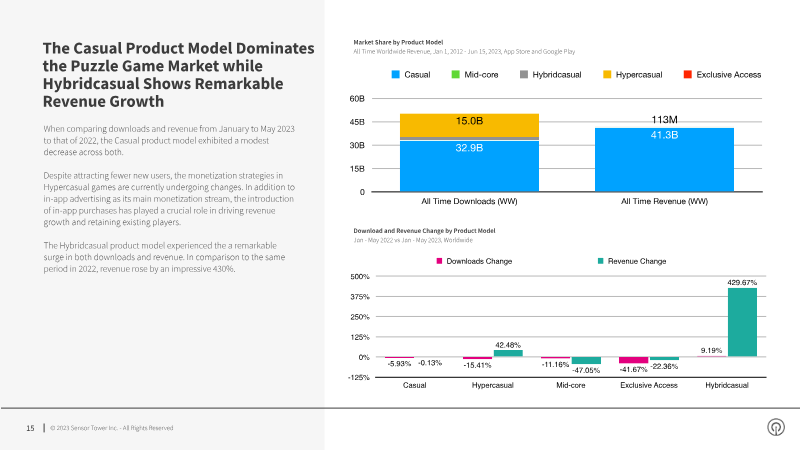
- The hybridcasual model has become the primary industry growth driver, with revenue surging approximately 430% between early 2022 and early 2023.
- The Pair sub-genre experienced a significant shift toward hybridcasual monetization, which grew from 14.8% to 58.7% of its total revenue in just one year.
- Established sub-genres including Real-Time, Chain, and Bubble Shooter faced double-digit declines in both download volume and revenue throughout the 2022–2023 period.


SensorTower The State of Mobile Gaming 2023
The 2023 SensorTower analysis demonstrates a pronounced shift in mobile gaming dynamics, with hyper-casual titles experiencing a 24% year-over-year decline in Q4 2022, while hybrid-casual games grow 13% and exclusive-access titles surge 54%.
- The mobile gaming market is shifting away from hyper-casual titles, which saw a 24% year-over-year decline in Q4 2022, toward hybrid-casual games that grew 13% and exclusive-access titles that surged 54%.
- Hybrid-casual games are successfully utilizing meta-features to drive engagement, with 30% of top titles embedding these features and character collection specifically boosting average playtime by 122%.
- Regional revenue performance is diverging, with Asia’s quarterly gross falling 15% to $9.5 billion and Europe’s top five markets experiencing a collective 6% revenue decline to $700 million in Q4 2022.

2023 Casual Gaming Apps Report
The casual gaming landscape in 2023 is defined by a strategic pivot from rapid user acquisition toward long-term profitability and sophisticated engagement models.
- Casual gaming now accounts for 74% of all mobile game installs and drives nearly 75% of mid-core game installations.
- Developers are shifting from volume-based user acquisition to hybrid models that blend ad-based revenue with in-app purchases to extend player lifecycles.
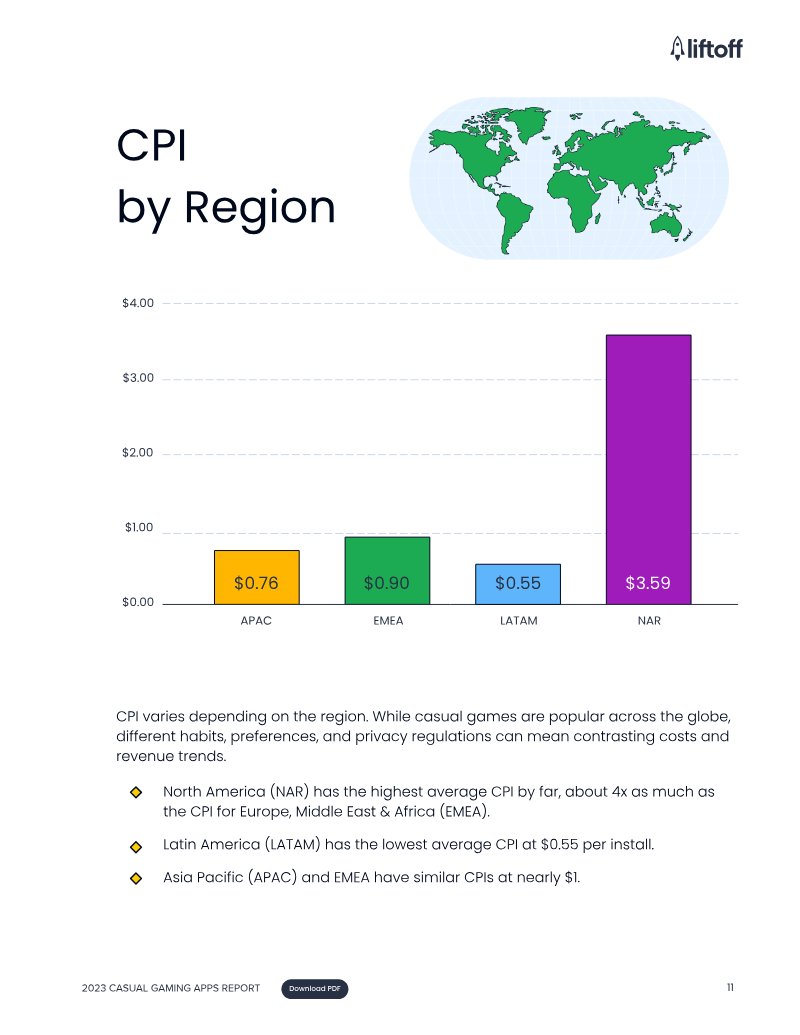
- North America remains the most expensive market with a $3.59 cost per install, yet it maintains a high 8.1% return on ad spend.