Monetization reports and market data
Documents

Gaming Spotlight 2023 Review
The global gaming market in 2023 was defined by a complex interplay between mobile contraction and steady growth in the PC and console sectors.
- The global mobile gaming market contracted by 2% to $108 billion in 2023, driven by macroeconomic instability and privacy-related shifts like Apple’s App Tracking Transparency.
- PC and home console markets grew by 4% and 3% respectively, largely supported by the increasing adoption of subscription-based models.
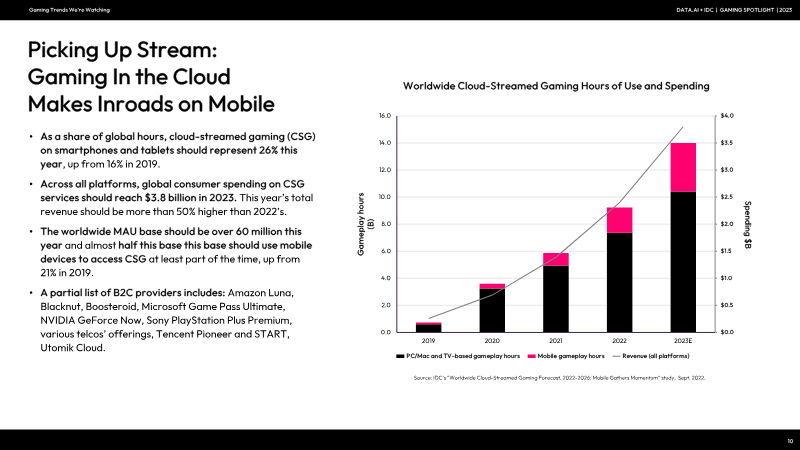
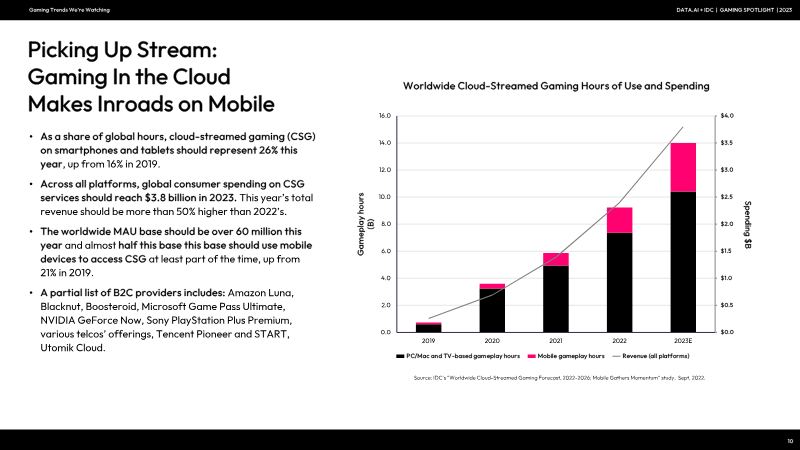
- Cloud-streamed gaming is a growing revenue stream projected to reach $3.8 billion, with mobile devices accounting for over 25% of total streaming hours.
2023 Liftoff Company Midcore Gaming Apps Report
The midcore mobile gaming market in 2023 is defined by a strategic pivot toward deeper gameplay mechanics and diversified monetization streams, now commanding 35% of total iOS gaming revenue in the United States.
- Midcore mobile games now account for 35% of total iOS gaming revenue in the United States, demonstrating significantly higher market longevity than casual titles.
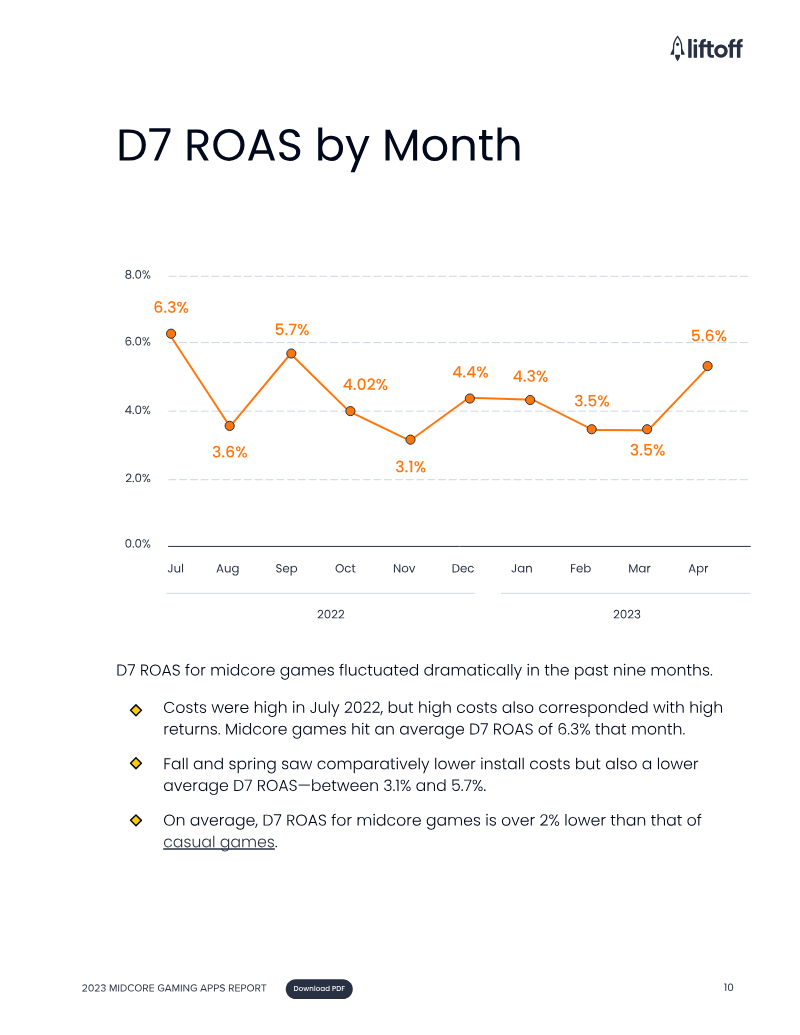
- Shooter games represent the most high-stakes category, commanding a $7.47 cost per install while delivering a leading 6% Day-7 return on ad spend.
- Top-performing midcore titles maintain engagement through aggressive LiveOps, typically running fifteen simultaneous unique events and fifteen limited-time gachas at any given time.
In-Game Spending: Parents' Supervision of In-Game Spending 2023
The research investigates how parents supervise and manage their children’s in-game purchases, tracking trends across five European markets—United Kingdom, France, Germany, Spain and Italy—over four survey waves (2018, 2019, 2020 and 2023).
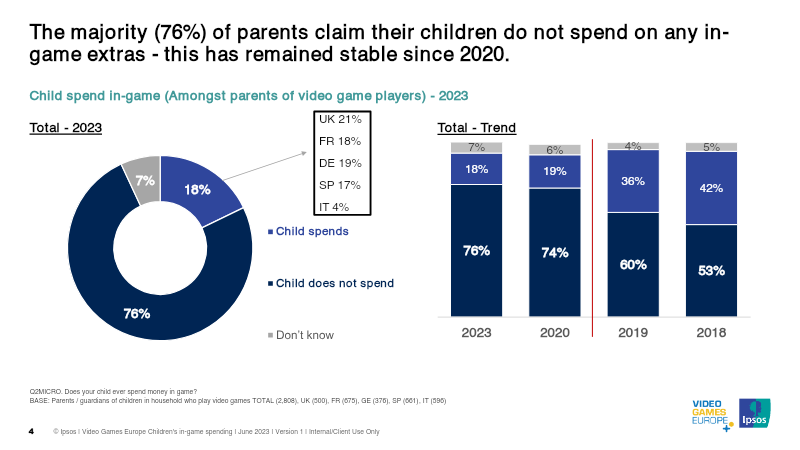
- Three-quarters of children do not engage in in-game spending, a figure that has remained stable since 2020.
- Average monthly in-game spending among children who do spend increased from €33 in 2020 to €39 in 2023, a rise consistent with inflation.
- The majority of in-game spending (64%) is concentrated in the €1–20 monthly range, with gameplay-impacting content (34%) and cosmetic items (33%) being the most popular purchases.

Misleading (Non-Core) Gameplay Ads Research 2023
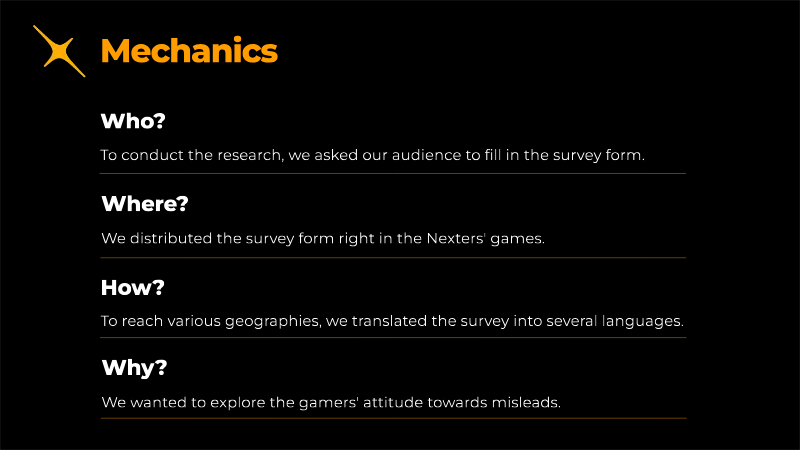
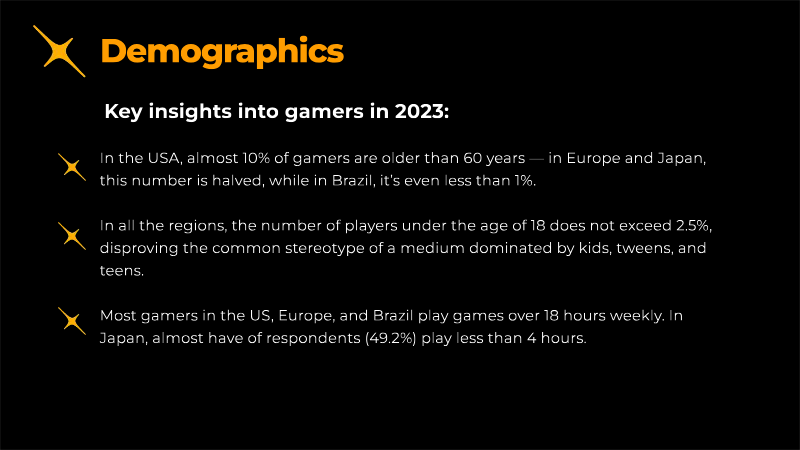
The prevalence of non-core gameplay advertising—often labeled as misleading—has become a standard industry practice, shifting from deceptive marketing to a strategy of incorporating secondary mini-games within larger titles.
- Approximately 75% of Western players and 70% of Japanese and Brazilian players find the mechanics shown in misleading ads more engaging than the actual core gameplay of the advertised titles.
- Between 35% and 46% of gamers continue playing a title despite recognizing that the advertisement does not accurately represent the core gameplay experience.
- Ad recognition is widespread, with 91% of U.S. respondents and 71% to 77% of respondents in other surveyed regions reporting exposure to non-core gameplay advertisements.

5 Mobile App Forecasts: 2023
Global mobile market projections for 2023 indicate a complex landscape defined by shifting consumer priorities and economic pressures.
- Mobile gaming consumer spending is projected to decline to $107 billion in 2023 due to macroeconomic pressures and stricter privacy regulations like IDFA.
- Global mobile advertising spend is expected to reach $362 billion in 2023, with short-form video apps serving as the primary growth driver to offset reduced performance marketing budgets.
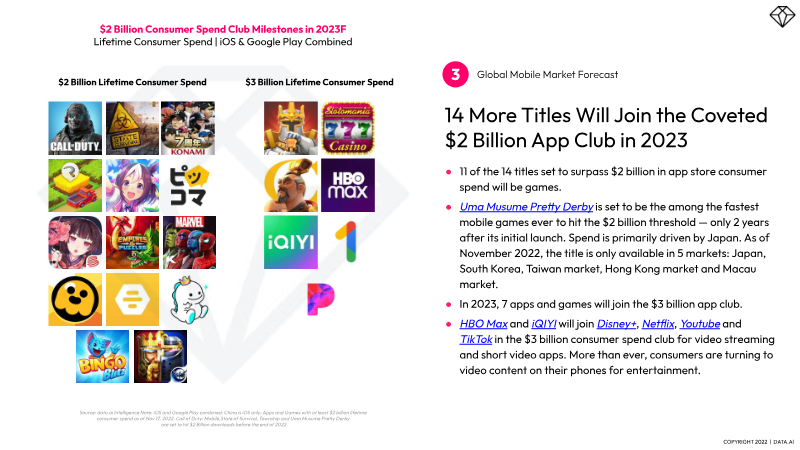
- Eleven of the fourteen new apps projected to surpass $2 billion in lifetime consumer spend during 2023 are games, demonstrating that top-tier titles remain resilient despite the broader market downturn.
Mobile Growth & Monetization Report 2023
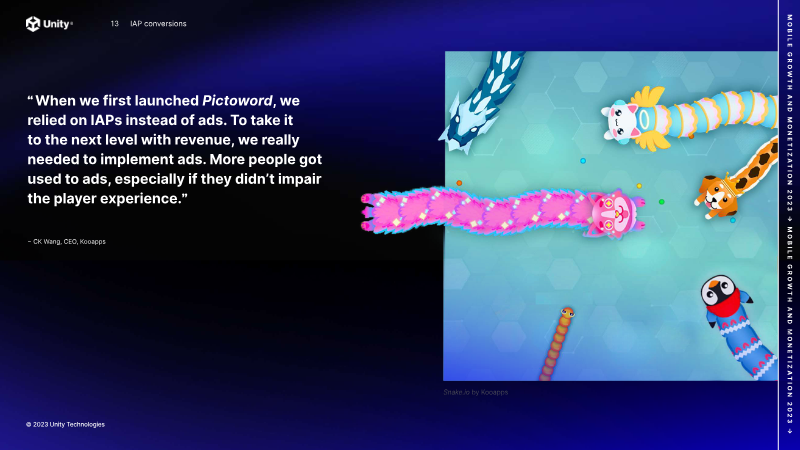
The mobile gaming landscape in 2023 reflects a strategic pivot toward operational efficiency as developers navigate softening in-app purchase (IAP) and advertising revenues.
- 77% of all player conversions occur within the first 14 days, making this initial window the most critical period for monetization.
- Low-friction price points between $1.01 and $5.00 are the primary drivers of in-app purchase revenue, with virtual currencies and limited-time bundles accounting for over 56% of total IAP income.
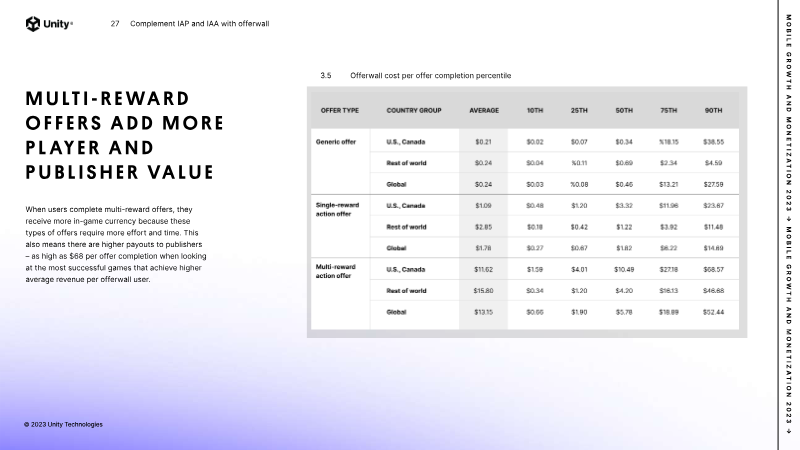
- Offerwalls are a major retention driver, as players who engage with them exhibit a 14% retention rate at Day 90 compared to only 3% for non-converters.
The State of Mobile Gaming in India: A Look at India's Casual, Hyper-Casual, and Real Money Gaming App Industry Trends
This analysis examines the rapid expansion and evolving user behavior within the Indian mobile gaming market, focusing on the casual, hyper-casual, and real-money gaming (RMG) segments.
- The Indian gaming industry is projected to grow from $2.6 billion in 2022 to $8.6 billion by 2027, supported by a user base exceeding 300 million gamers.
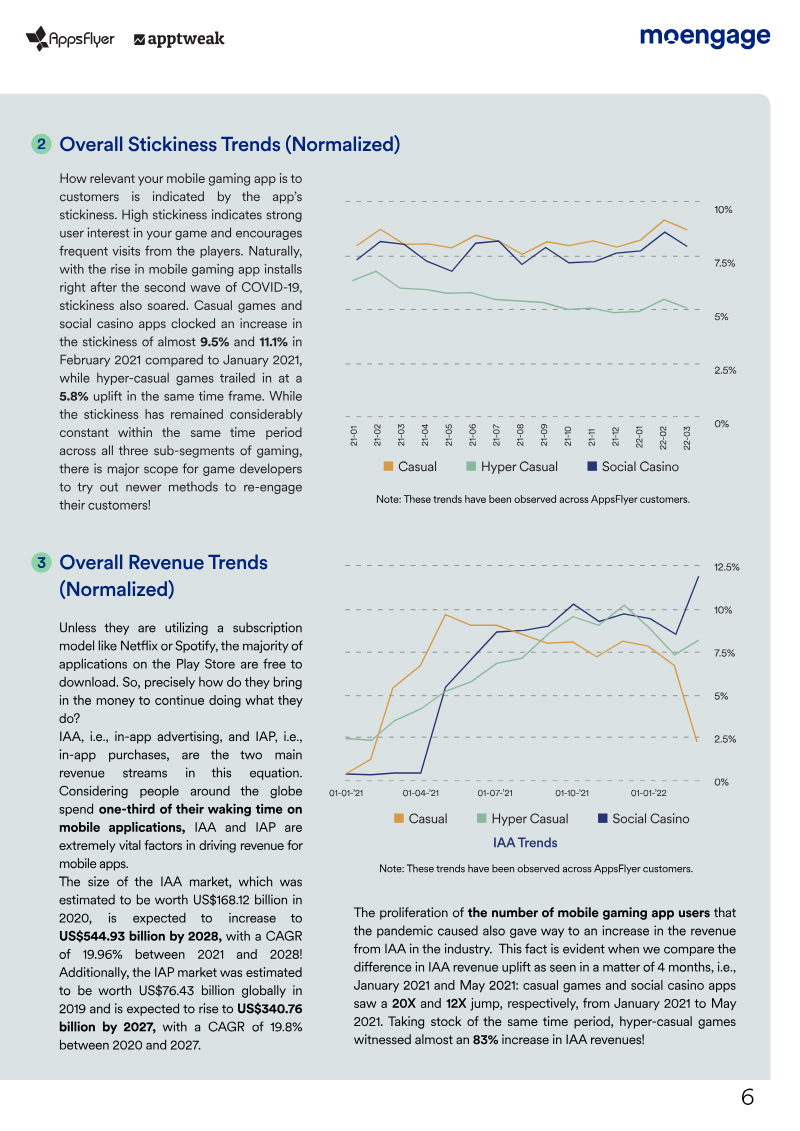
- The industry is facing a significant retention crisis, with 68% of users engaging with a gaming app fewer than ten times.
- Following a pandemic-era surge where casual game installs rose 90% and RMG revenue grew 35% in April 2021, organic growth stabilized and declined throughout 2022.
From Hyper to Hybrid: Hypercasual Gaming Trends 2023
The mobile gaming industry is undergoing a structural shift as developers transition from hyper-casual models toward hybrid-casual frameworks.
- The mobile gaming industry is shifting from hyper-casual to hybrid-casual models, driven by declining ad revenue profitability and the impact of iOS App Tracking Transparency.
- Developers are increasingly adopting in-app purchases and meta-gameplay components to replace the traditional reliance on pure advertising revenue.
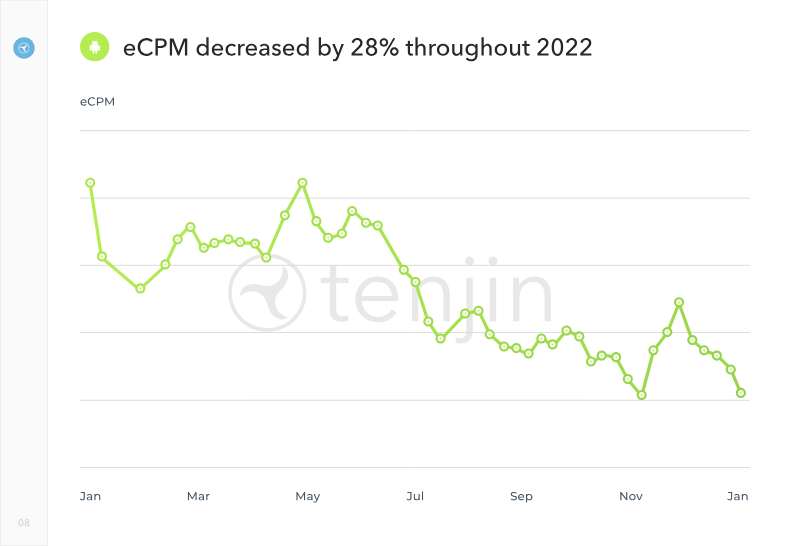
- Data from 2022 shows a consistent downward trend in ad impressions and eCPMs across both Android and iOS platforms, while in-app purchase volume grew.

Mobile Gaming Loyalty Report 2023
The Mobile Gaming Loyalty Report examines the drivers of player engagement, retention, and spending across the mobile landscape.
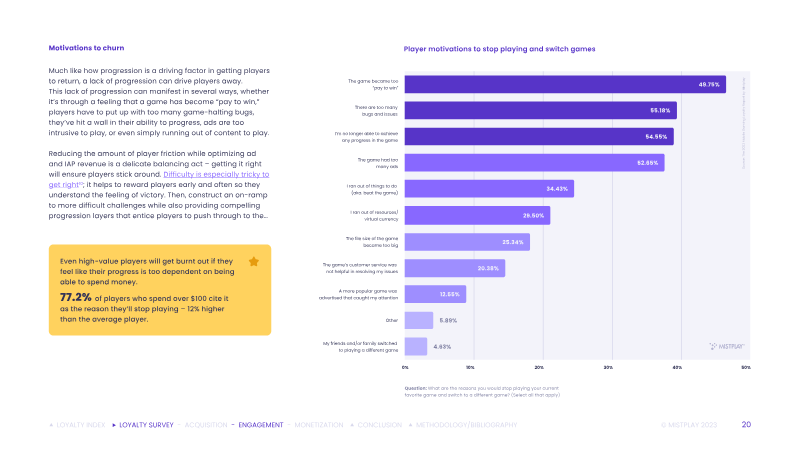
- Progression is the primary driver for both retention and in-app spending, while 'pay-to-win' mechanics and poorly received updates are the leading causes of player churn.
- 53% of mobile spenders concentrate their financial investment on a single title, even though 77% of spenders rotate between two to seven games weekly.
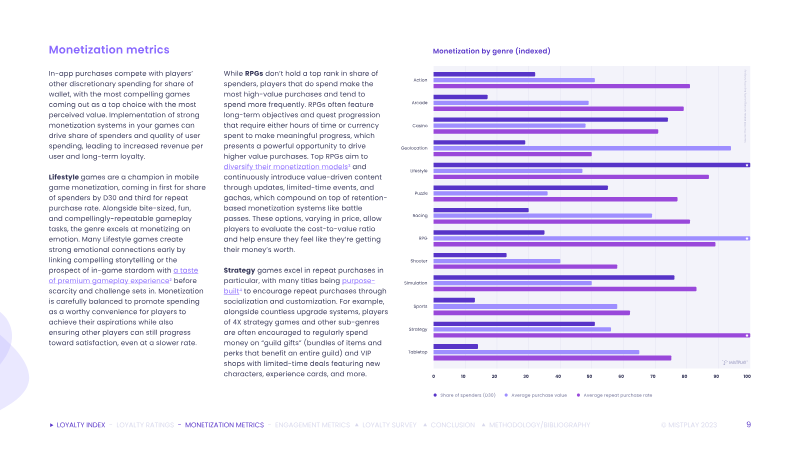
- RPGs are the most loyal genre with a 75/100 Loyalty Index score, driven by deep gameplay loops and compounding monetization systems.

The State of Mobile Gaming 2023: Mobile Gaming Market Trends and Top Titles in the U.S., Europe, and Asia
The global mobile gaming landscape underwent a significant structural transition in 2022, characterized by a 14% decline in total player spending from its 2021 peak alongside a stabilization of download volumes at approximately 13.8 billion per quarter.
- Global mobile gaming revenue declined 14% in 2022 from its 2021 peak, though total market size remains above pre-pandemic levels.
- The hypercasual genre saw an 18% decline in downloads, while the hybridcasual model grew by 13% to reach $1.4 billion in revenue.
- Live Ops are now critical to commercial success, accounting for 97% of revenue among top-grossing titles through features like character collection and social clans.
Gaming Report 2023
The global gaming industry in 2023 is defined by a strategic shift toward development efficiency and long-term player retention.
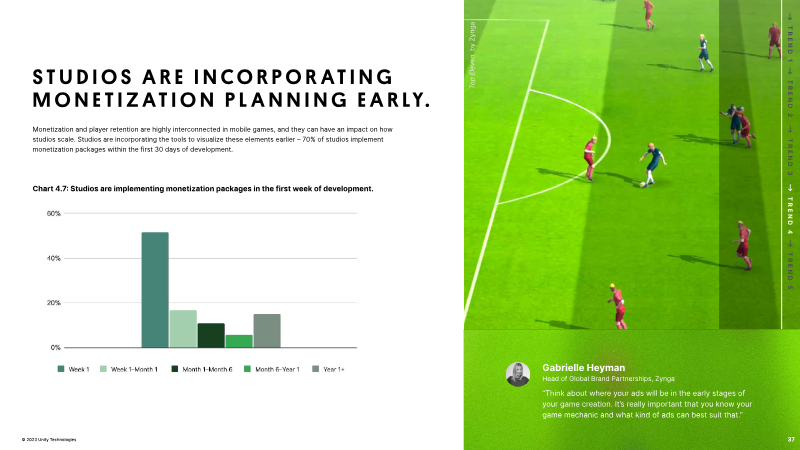
- To ensure financial viability, 70% of studios now integrate monetization and LiveOps within the first 30 days of development, contributing to a 33% increase in average game lifespans.
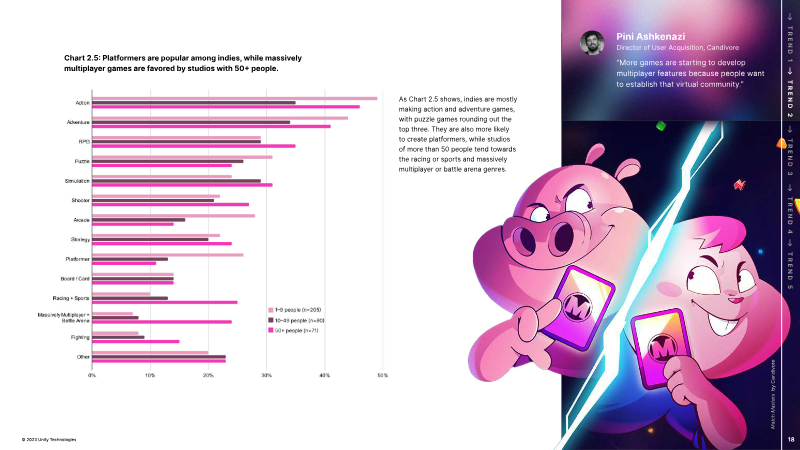
- Development efficiency has accelerated, with 62% of indie developers now shipping titles in under a year by utilizing premade assets and reducing average developer hours.
- Monetization models are shifting toward a balance between ad-supported structures and in-app purchases, supported by a 27% rise in battle pass adoption.

Gaming Spotlight 2023: The Year in Review
The 2023 Gaming Spotlight provides a comprehensive analysis of the global gaming landscape, focusing on market shifts across mobile, PC, and console platforms during the first half of 2023.
- Mobile gaming consumer spend is projected to decline 2% year-over-year to $108 billion in 2023, driven by macroeconomic instability, Apple’s App Tracking Transparency, and Chinese regulatory constraints.
- Home console and PC/Mac gaming spending are bucking the mobile trend with projected growth of 3% and 4% respectively, fueled by improved hardware availability and subscription-based revenue models.
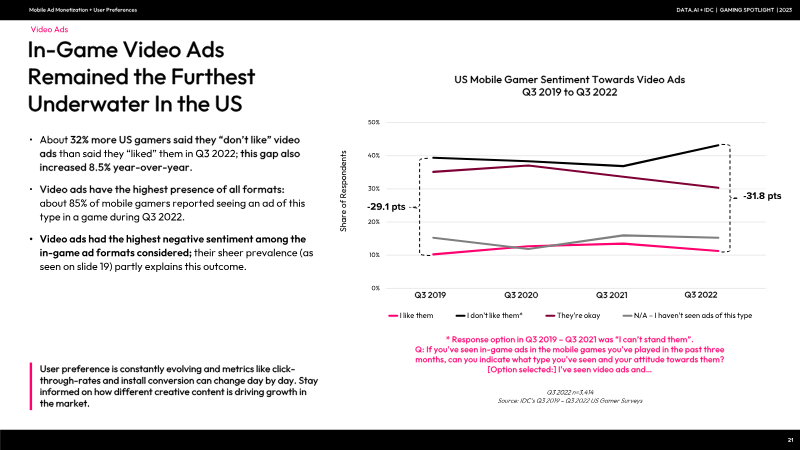
- User acquisition is becoming more difficult and costly, forcing publishers to shift toward playable ads for action genres and diversify revenue through battle passes and subscriptions.