1 free read left. Create a free account for unlimited reading + AI research.
Create free account
IAP Pricing Strategy in an Inflationary World - Ted Verani from Wappier
Key insights
6 takeaways- 01Localized pricing strategies can drive revenue uplifts ranging from 11% to 60% by moving away from one-size-fits-all models based solely on U.S. benchmarks.
- 02Effective pricing optimization requires a data-driven approach that integrates macroeconomic indicators like GDP and exchange rates with game-specific metrics like ARPU.
- 03Pricing adjustments should be managed through sequential, monthly evaluations rather than reactive, short-term changes to allow player behavior to stabilize.
- 04In high-inflation markets exceeding 7.5%, lowering IAP prices by approximately 5% can increase total revenue by capturing more price-sensitive players.
- 05In economically stable regions such as Japan, Switzerland, and Australia, developers can improve financial performance by raising price points rather than lowering them.
- 06Developers should treat pricing as a dynamic lever for maximizing lifetime value and retention, rather than relying on simple currency conversion.
Ask AI about this video
Transcript
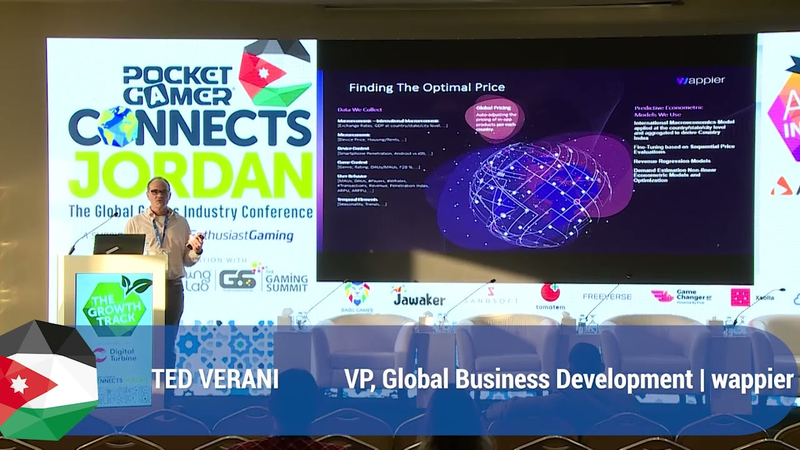
[Music] thank you I would like to welcome to the stage another Pocket Gamer connects regular to talk about in-app purchase pricing strategy it's Ted Ferrari from wapia [Applause] okay start again uh Ted Ronnie head of Business Development for WAP year uh welcome to this presentation Global pricing in an inflationary world um I should just read the below the news we know we are living in an inflationary World um pricing this topic we're going to talk about is also a little bit about the company what we do um fundamentally we're an AI company we uh get data from games we get deep insights into player Behavior we understand relationship with the wallet the spending patterns and we built some
Revenue optimization Solutions around that most notably what we're known for is pricing optimization so work with a lot of large game developers mostly in the United States and in Europe so good to be here um but what we do is um and why we care why why is pricing important right you know it's a frankly most Developers one size fits all you know approach when it comes to pricing and yet different people respond their prices differently and that gets magnified whenever you think about right now in inflationary world so as we talk about you know people respond differently in different countries already that's what we do but now is inflation also it's hip impacting different countries differently and so this actually takes some consideration there too and what you're doing but first let's sort of set the stage in terms of why Global pricing is important to begin with I guess I'll start with a question do you localize your game I must say when we think about localization and we tend to think about language you know customization I know
tamatan's done a great job in terms of localizing games from the Western countries to bring into Middle East you have Bible games from here who's you know done a great job in taking Games built here and then you know making more Global and so localization's always been kind of core to any Global business out there so the question I asked if you are localizing your game why aren't you localizing your pricing because I kind of looted this earlier there is no one size fits all when it comes to pricing and while it's better you know and currency conversion you know this is where you can uplift and it's not sufficient right you know just open the you know because by the way you know unless you're going to manually adjusting whenever you've uploaded your game into the App Store to Google Play you know that's what this exchange rate is so I was just in London passing through I mean dollar is on parity with the pound like that's hasn't been like forever I went shopping Dave so that never happened so this is you know ongoing now we're seeing that so it's not sufficient too we've been going
past that you know if we're gonna you know price to the demand curve you know that takes deep insights and understanding of local markets so that's where you want to go understand price elasticities I'm going to talk about that too but then also pre-prepared to create hundreds or even depending on your game thousands of price queues so that's a challenging environment we've developed a platform to enable this but you know for yourself yes yes you can go into Google Play and do CSC uploads because it's not just about lowering your price or raising your price depending on what you're looking at once but it's about managing the program ongoing basis but pulling all together you know catch specific pricing you know it's the fastest kind of most effective way I think to improve the bottom line because when you think about it making a game is hard right you know then managing ongoing right you know we've just talked about you know live Ops creating new content new features whatever you can do to keep people engaged coming back in your game like that's that's actually really hard no one say pricing is easy that's what we do but when it's just one small change to a number you know it's all it takes to convert someone into a pair or to
keep them paying over the long term so Global pricing it's localized pricing you know this is again what we do too and encourage you to do yourself is to think about moving beyond just currency rates you know for your game and it says optimize your IAP pricing according to willingness to purchase across all live skus that's important Point all life skews so it's not just about oh I'm gonna like you know oh I got a special offer in Brazil I'm going to do something you know there because if you've done a good job already Annunciation you've fixed your game economy you know however your benchmark is safe for the us when you're thinking about global pricing outside of the US or whatever your you know Target initial you know country is it's across law board you don't want to hurt the game economy so price adjustments horizontal price adjustment same percentage more or less you know up or down truth is if you've priced for the US parts around the world you're going to probably lower the price but there's some we've you know I guess you appropriate here from the area we are we've we have raised price and some of
the more oil Rich you know you know your Amina region countries so Switzerland some small rich countries we actually do raise price oddly Ireland you know there's one that makes the mix but what we're seeing is actually 20 to 40 increase of arpu just by localizing your IEPs and as I say your mileage will vary and that too so some cases it is lower 20 usually in that case it's like Harry Potter from gym City we were like 17 through but that game has over two million dollars addressable Revenue too so that's still quite a bit in terms of dollars into the bottom line it's all incremental Revenue right that's that's a beautiful thing about pricing all incremental so that what you've already done in terms of monetization in the game and then but also from smaller games we've seen 50 60 you know increase their revenue across your target group of countries what are we doing we um it's not about what's going on in your game it's about what's going on outside of your game right you know so we do this is what we do but this information is all publicly available so we you know we you can grab these indices out there so we create
what we call a WAP your index that you know we're looking at GDP we're oh two we're looking at exchange rates we're watching how exchange rates fluctuate you know over time we just did a recalibration for all our games from Turkey because what happened in Turkey you know across the board for the game so you know but it's also microeconomic data you know to try to understand household purchasing power but then it's overlaying that with game statistics right so we look at you know the smartphone penetration what's the ratio of iOS versus Android right if it's you know iOS doesn't matter where you are where in the world you have money whereas Android you know it's a greater diversity device it's low in high-end phones you know more price sensitive potentially um but also as games you know statistics and how people are playing there too because it's not about sort of GDP in a per country level it's more about GDP of the gamer population yeah and that's what we do but it's a starting point too but then what you want to do then is to sequential price evaluations right so and it's not about just yeah you got to resist the temptation you're in the gaming like we like we're creating the future and we want to like you know look the next day and see how it's working
right you know we didn't arched out right it's the most important thing you know we care about our poo on a monthly basis because we're measuring impact on the small group of payers and transactions on an individual country need some time and let those payers and transactions kind of flow through the system so when we make changes it's once a month so make a change wait a month so it does require a little bit of patience and sticking with the program but typically over you know we get like three four months to where we think we're kind of optimal priced in the demand curve all right that's Global pricing sort of set the stage kind of why so we started getting this question from a lot of our partners customers out there right so how do you adjust replacement so well funny it's like a lot of people sort of knee-jerk reaction is what price is going up I should raise my prices right you know so that's kind of interesting way to think about it in some ways because depending your perspective you could say like well if someone's hurting you know across the board you know it's a game it's entertainment you know should you raise products but but really you know what we did is we we put some economists on the job right and we put some data scientists we started looking at data yeah we live in inflationary world so
but you know that's the day to the show so that's there but first sort of you know as you may have heard earlier today you know Chris James said you know it's kind of cool to hear that the video game Market is more than all other entertainment options combined which is just mind-blowing for us human history but then Mobile gaming right we think really started taking off around 2010 with the growth of the iPhone Pat is now actually the biggest share of video games over 50 that 200 billion dollars and still growing right so well I know it's like stressful right now and everything games too but you know overall top Publishers people we're working with are still investing and still expanding their remote game for you know companies here participating who are doing in a good gym we heard from sansoff earlier too is just starting a new studio you in Red so it's still a bright future for us but there's still some headwinds right and I really would the headwinds have come from a couple areas to be sure the global pandemic while one hand you know we all benefit from that during the time right so with shelter in place you can go out all your entertainment so and we saw just massive
growth in business well now we're comparing ourselves to that and so yeah people went back to work they went back to school their other payment options opened so we're kind of you know facing some headwinds when we compare ourselves that way too that's also then the pandemic then opening up then sort of you know other businesses sort of shut down so then suddenly we came back to life we wanted to go out and buy stuff well there's supply chain issues right so whether happened there demand far outstripped is available Supply that caused its own sort of pricing issues happen and that got further exacerbated whenever Russia invaded Ukraine and started the war now suddenly oil is more expensive everywhere so oil underlies everything that we buy so that's further extended to sort of inflation so we're living in the world inflation we're actually in the highest inflation that we've seen in generation some of the data you know that's upper chart there that's actually um the U.S you can see since 2020 you know just moving around just two percent rate you know up and down around there too right around the middle of you know 2020 started just moving up and accelerating into you know this year
similar snapshot view of March that's European individual European countries see them but midpoint you know it's March about seven half percent in Europe some lower France about five percent you know countries like Germany the Baltic region is also much higher Netherlands also too so across the board European and worldwide we're seeing an impact so what's happening with that is that general consumers are tightening their belts you know they're reducing their you know entertainment budgets right again kind of thinking about the idea we were asked that question we just raise price but in some way you think about it hey you know average consumer they've got a finite wallet you know there's some things that just are not discretion I got to buy food I gotta get to work or school I got medicine there's something you just must have right so entertainment discretionary too but mobile games it's actually it's a pretty perfect alternative it's a really good substitute versus some other things so it's much more accessible right so even if even if I'm like unemployed now I'm kind of sad at my house waiting for like
you know results from my interview you know playing a game for free and just really just even it's just a couple bucks in a week it's not going to change things for my life you know that much and you compare the other things like I know it's like here but like back home you know from the US it's supporting events are incredibly expensive now and we're just even I like going to live music and you know concerts are seemingly a lot more expensive than before and I kind of understand why than before covid but versus a game very inexpensive as long as the game is bringing me joy entertainment yeah I'm willing to Spanish so I think we actually pretty good in that regards that said and this really is about inflationary times or before games with the right pricing model you know they're going to be you know more competitive versus others right pick up there's a lot of games they're like you know I mean I think card games are very popular you're in the region too right but there's lots of dominoes games there's lots of different types of games too like if you really thought carefully about how you're pricing that for your players in your game you're gonna have a competitive advantage that's what we do you know for partners I encourage you to do that as well
still we wanted to um you know although you know we want to look at the data so you know we talked you know inflation is different so we had some a constant job we do use Pearson's correlation coefficient model we examine the correlation we would have I tried to understand really what is the impact of inflation um on spending in games first the date outside you know it's no look it's correlated you know so I guess it would say that a rise inflation May decrease you know our Pope you know in the game and with and it Bears it out you know the upper chart there that's uh you know a an emea country um that was declining in our poo you can see that you know just as it Maps up below that chart below that it's a rise of inflation so inflation Rising steeply whereas you know the gains dipping down similar North American country they're drop in revenue on that matches really nicely with the big increase inflation so correlated related however when you peel it away like I was saying earlier about covid it wasn't conclusive right you know so
we um it wasn't conclusive because we couldn't separate the impact of inflation versus impact of against covid right so now as people working out you know going back and everything's changing either alternative you know entertainment options it was hard to kind of separate it so we did some analysis some games that we did um so we we did we we still we took all the information put in our wapper index and we are you know we did adjustment space and so an important thing is to say that it may have had an impact too but we wanted to um do a test right and we did do this experiment so we did we selected a bunch of different games where we applied and we took a group of countries took European countries we took you know Asia you know Latin America you know also you know some Africa new region a broad selection of countries we took some games in those countries where we actually raised price five percent just a modest little increase of five percent same games in same countries then you
know sorry rather different same countries different games but comparable games substitutes we actually then um raised the price so we we were raised or we lowered the price of five percent would we find out the outcome was actually interesting so we High inflation EU countries most notably Germany France Italy Netherlands actually responded to an increase in Revenue when prices were dropped so that goes back the idea of like hey you know if I'm already feeling some pressures you know in terms of my wallet you know by actually lowering price maybe being more competitive you know if you're they were more price sensitive so actually lowering price actually helped to increase revenue for those countries whereas countries with minimal inflation most notably Australia Switzerland Hong Kong Japan with that low inflation they still have the worldwide being inflation but lower inflation was more minimal that they performed better with higher prices so we actually raised prices you know and so even they had inflation and maybe
they weren't really feeling that hard right they still had not because also keep in mind during this inflationary time one thing's also true I mean I've definitely you know for a fact in the US and in a lot of countries a lot of places wages have gone up you know too so you know in many cases wages particularly at the lower income levels have gone up more than inflation so yes things are more expensive but I also have more money you know in my wallet and so what we did we we ran this program over the summer months we we found this out um our programs represented a revenue increase of between 11 and 33 you know compared to the high inflation EU countries so I mean we use this control in over three months so it worked we actually moved bottom line by so they can set the advice and one thing I would like I guess caveat here is this you know it's a little note here our our data scientists when we include this and we did write a blog on this we put that out there too but the truth is it's based on a small number of games and Country sampled one of the challenges was because but we do price a lot of large European countries the truth is they're not in
our control group so our control is representative but we didn't have a lot of big for obvious reasons we want to price those countries for our customers so I wouldn't say this would be credible for like an academic Journal you know subject to peer review however these are observations that we did find out and we do think the kind of you know hold up or is that's my point of view but when they give that to comment so while true it's hard to parse out the impact caused by inflation exactly you know because we're because of the code most notably too and other you know reasons too it is still reasonable to say that you know lowering price and high you know inflation countries make sense by high inflation I'd say over seven and a half percent you know sort of the average amazing but test it right do everything like you already everything you think about a good idea of your game anyway what do you do you test it right so but like I say earlier just a reminder is you don't test something like tomorrow because we need you know measure impact on a per country basis let enough payers and transactions throw your system we never we always do once a month let that happen look at your rpu see how it works for you be
patient but a couple months ago you can always change price you know back to it so how it works within your game too or come to us if you make a large enough game maybe we can help you um and I would think you know this is not from our team this is kind of uh Ted varani who study economics as an undergrad opinion not a not an economist so I like to say I studied economics non-economist I stand Rush relations not a diplomat um but what I think is that you know if you could find high inflation with high unemployment like I was saying earlier like in the U.S we there's very low unemployment right now right you know so we're having a hard time hiring people every every company sort of raising rages which is great you know for for lower income people um they're not really hurting as bad other than other than when some things are just incredibly expensive automobiles homes and the like but anyway I think those people but if you identify a country that has high inflation combined with also high unemployment that probably is very price sensitive too so we you know you know that though that which we wouldn't test that there but in general whether it is
um inflation times are not a global pricing optimization program is important you know for you you know please you know think Beyond just as is monetization think about pricing as the other half the monetization coin it's the thing that actually makes people stay in your game so it's much more important I would say um pricing your game right is going to be all the difference between you know driving lifetime value for your game again that's what we do for a lot of people it works couple case studies uh for you I'm not going to spend a lot of time I will point out one fact though because we get this question a lot it's not just about increasing Revenue State lower income countries like say Brazil or Malaysia Thailand you know check out you know this is the WWE champions check out Germany Belgium France right big increase in you know revenues there right other high income countries similar to the US Harry Potter here too again you know big game two million dollars you know your Revenue same story across the board globally we see this impact on high income low-income Big Country small and Country just don't charge everyone like an American around the world that's it
[Applause] foreign [Music]
Summary
In-app purchase (IAP) pricing strategy is a critical, often overlooked component of mobile game revenue optimization, particularly during periods of global economic instability. Developers frequently rely on a one-size-fits-all pricing model based on U.S. benchmarks, which fails to account for regional variations in purchasing power, inflation, and consumer behavior. Effective global pricing requires moving beyond simple currency conversion to a localized approach that treats pricing as a dynamic lever for maximizing lifetime value and player retention.
Data analysis indicates that inflation impacts consumer spending in mobile games, though its effects are often intertwined with post-pandemic market corrections. In high-inflation environments—defined as exceeding 7.5%—consumers often tighten discretionary spending. Experimental testing reveals that lowering prices by approximately 5% in high-inflation European markets (such as Germany, France, and Italy) can lead to revenue increases by catering to price-sensitive players. Conversely, in regions with lower inflation or higher economic stability, such as Australia, Switzerland, and Japan, raising prices can yield better financial performance. Overall, localized pricing strategies have demonstrated revenue uplifts ranging from 11% to 60% across various game titles.
Methodologically, successful pricing optimization relies on a combination of macroeconomic indicators—including GDP, smartphone penetration, and exchange rate fluctuations—and game-specific metrics like average revenue per user (ARPU). Because pricing changes require time for player behavior to stabilize, developers should implement sequential, monthly evaluations rather than reactive, short-term adjustments. This process involves testing price points across different segments to identify the optimal position on the demand curve. Ultimately, the thesis is that pricing is the "other half" of the monetization coin; by tailoring IAP costs to local economic conditions and player willingness to pay, developers can secure incremental revenue and maintain a competitive advantage in a challenging global economy.























Comments