Monetization reports and market data
Documents

The Future of Hybridcasual
The hybridcasual genre has emerged as a critical strategic evolution for developers navigating the decline of the hypercasual market, which experienced a 15 percent drop in downloads by 2022.
- Hybridcasual has become a critical strategic pivot as the hypercasual market share dropped from 50 percent in 2021 to 30 percent by early 2023.
- The hybridcasual segment reached 5 billion downloads in 2022 by bridging hypercasual accessibility with the deeper progression systems of midcore gaming.
- Long-term retention is being addressed by integrating robust power progression, live operations, and hybrid monetization models that combine advertising with in-app purchases.

Driving ROI with Data Analysis – Part 2
Effective data analysis in game development functions as a strategic engine for growth when anchored by well-formulated hypotheses rather than reactive data requests.
- Data analysis must be driven by well-formulated hypotheses and clear, measurable objectives rather than reactive, ad-hoc data requests.
- Integrate data measurement into the development lifecycle from the earliest stages to ensure every milestone is tied to actionable goals.
- Effective analysis requires segmenting data to uncover behavioral patterns, such as the specific correlation between game modes and long-term retention.

Xsolla’s Chris Hewish On Creative Commerce Solutions To Take Control Of Your Game
The modern gaming landscape is undergoing a fundamental shift as developers increasingly prioritize direct-to-player commerce models to reclaim control over their business operations.
- Developers are increasingly adopting direct-to-player commerce models to bypass third-party app store fees and reclaim ownership of player data.
- Commerce platforms acting as the merchant of record handle global tax compliance, regulatory requirements, and payment processing, allowing studios to focus on game development.
- Legislative shifts like the Digital Markets Act are accelerating the adoption of alternative distribution channels, including sideloading and web-based storefronts.

Chris James and Dave Bradley On Lucrative Gaming Markets And Branding Power At PGC Helsinki
The recent Pocket Gamer Connects (PGC) event in Helsinki served as a hub for industry professionals to evaluate current market trends, with a specific focus on navigating the challenges of the mobile gaming sector.
- The MENA region is the world's fastest-growing gaming market, with a projected 12% growth rate and an estimated 577 million players.
- Venture capital investment in mobile gaming has slowed due to rising user acquisition costs and ongoing data privacy challenges.
- Studios are increasingly adopting cross-platform development and subscription models to offset mobile market volatility and ensure long-term profitability.
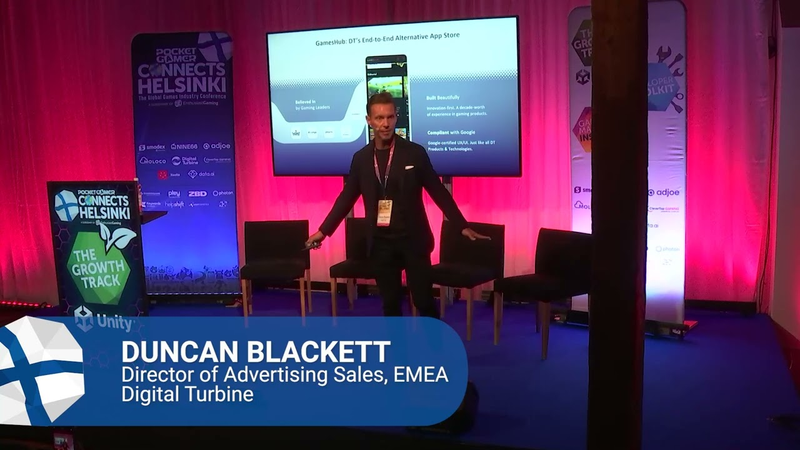
Looking for Alternatives - Duncan Blackett, Digital Turbine.
The mobile app economy is currently facing significant headwinds, characterized by a 30% year-on-year decline in advertising spend and a notable decrease in user monetization.
- The mobile app economy is experiencing a 30% year-on-year decline in advertising spend, forcing developers to seek alternatives to saturated and restricted traditional user acquisition channels.
- Alternative Android app stores represent a significant market opportunity, having generated $36 billion in revenue in 2021 while Apple and Google account for only 49% of global app installs.
- Direct-to-device marketing, facilitated by partnerships with carriers and original equipment manufacturers, allows developers to bypass the app store duopoly and secure more favorable revenue-share agreements.

Curated Panel: Billion Dollar Secrets: Games That Never Die.
Achieving billion-dollar status in the modern gaming industry requires a sophisticated synthesis of brand identity, data-driven user acquisition, and disciplined live operations.
- Long-term viability for billion-dollar games relies on leveraging established intellectual property and sequels rather than high-risk standalone products to ensure a reliable foundation for growth.
- User acquisition strategies must shift from traditional metrics to complex methodologies like media mix modeling and incremental analysis to navigate privacy-centric digital environments.
- Operational success requires the integration of automation and clear team accountability to ensure that paid acquisition channels expand the audience rather than cannibalizing organic growth.
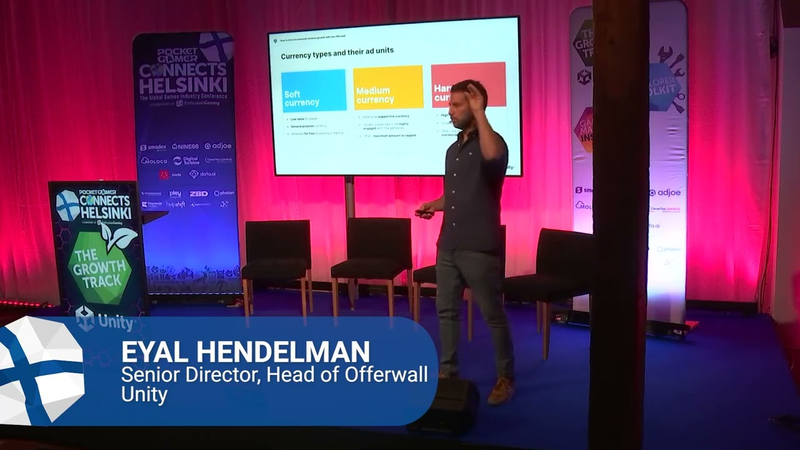
How to Drive Incremental Revenue Growth With the Offerwall - Eyal Hendelman, Unity.
The offerwall serves as a non-intrusive, opt-in monetization tool that allows users to earn virtual currency by engaging with third-party advertisements or completing specific actions.
- Integrating an offerwall can drive a 13% increase in total ARPDAU by capturing value from the 95% of players who do not typically make in-app purchases.
- A case study of a U.S.-based developer showed that adding an offerwall resulted in a 40% increase in ad-based ARPDAU without cannibalizing existing revenue.
- Data indicates that offerwall implementation can positively impact IAP performance, as evidenced by a 10% increase in IAP ARPDAU observed in the study.

Curated Panel: The Keys to Monetisation in 2024
The mobile gaming industry is undergoing a fundamental transition toward hybrid monetization models, necessitated by the maturation of player behavior and the restrictive post-IDFA privacy landscape.
- Mobile game developers are shifting from hyper-casual frameworks to hybrid-casual models that combine in-app purchases with rewarded advertising to improve long-term retention and lifetime value.
- The post-IDFA privacy landscape has forced studios to integrate monetization into the initial development cycle rather than treating it as an afterthought.
- Direct-to-consumer web stores and subscription services are being adopted to secure predictable recurring revenue and bypass standard platform fees, though these are currently most viable for established studios.

Subscriptions, Season Passes & Other Goodies From the Monetization Toolbox - Uffe Flarup
Effective mobile game monetization requires a strategic, multi-faceted approach that integrates various revenue streams to accommodate different player spending habits and financial access.
- Monetization strategy must be integrated early in the development cycle to ensure alignment with target audience demographics and long-term retention goals.
- Developers should treat monetization as a flexible ecosystem, combining subscriptions, season passes, rewarded ads, and in-app purchases to capture different player spending habits.
- Subscription models provide predictable, recurring revenue for project budgeting and scaling, provided they are paired with the removal of intrusive, non-initiated advertisements.

Digital Fashion in Roblox, Fortnite & Zepeto - Colin Brown, Dubit.
Digital fashion has emerged as a significant economic force within the metaverse, with platforms like Roblox and Fortnite now rivaling major luxury fashion houses in terms of sales volume.
- Digital fashion has become a major economic force, with platforms like Roblox—which reports 66.1 million daily active users—rivaling the sales volume of traditional luxury fashion houses.
- Brands should adopt a 'fast-fashion' retail model similar to Shein, utilizing real-time data analytics and small-batch production to manage the vast inventory of over 80 million digital assets.
- Static, permanent brand experiences often fail to resonate; instead, brands should deploy time-limited, pop-up experiences to drive engagement through interactive, non-intrusive advertising.

Panel: The Gold Pot: The Best Ways to Grow Your Revenue in New Markets.
Mobile gaming growth is increasingly shifting away from saturated markets in the United States and Europe toward emerging regions, specifically the Middle East and North Africa, Latin America, and Southeast Asia.
- Growth in mobile gaming is shifting from saturated US and European markets toward emerging regions in the Middle East, North Africa, Latin America, and Southeast Asia.
- Successful market entry requires deep culturalization beyond simple linguistic translation, including the integration of local events and social features to build user trust.
- Monetization strategies must be flexible and region-specific, pivoting between in-app purchases and ad-based models based on local purchasing power and consumer habits.
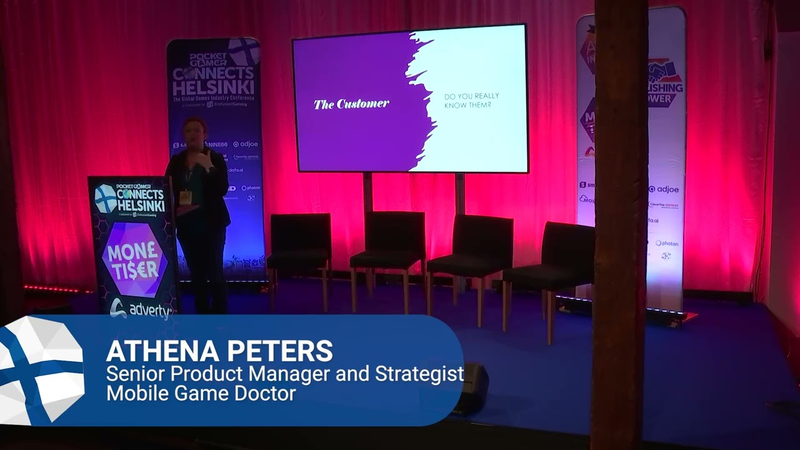
2 Mistakes you are Making With IAP & how to fix Them - Athena Peters, Mobile Game Doctor.
The primary objective of this analysis is to identify and rectify two critical errors commonly made by developers transitioning to or managing in-app purchase (IAP) models within the mobile gaming industry.
- Success in top-grossing mobile games relies on rapid, data-informed iteration cycles that continuously test and refine UI/UX elements.
- Developers must isolate variables by testing only one change at a time during A/B testing to ensure the validity of data regarding retention and conversion rates.
- Monetization should be optimized by segmenting the player base into detailed personas rather than relying on generic demographic data.