1 free read left. Create a free account for unlimited reading + AI research.
Create free account
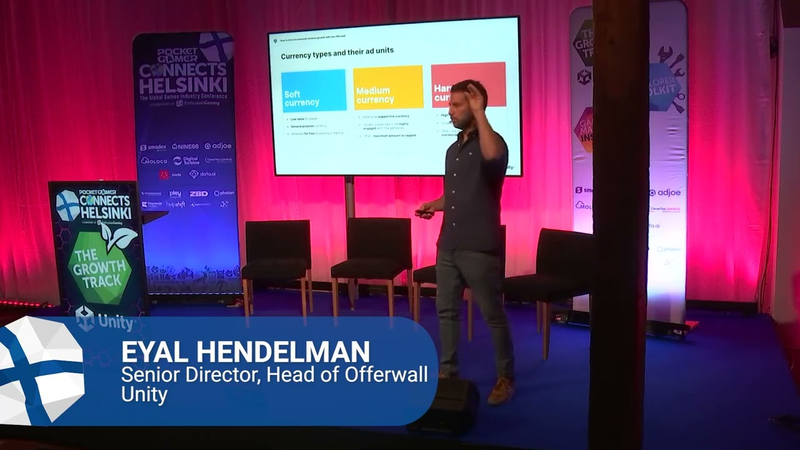
How to Drive Incremental Revenue Growth With the Offerwall - Eyal Hendelman, Unity.
Key insights
6 takeaways- 01The offerwall serves as a complementary revenue stream that improves overall user engagement and retention by incentivizing players to interact with the game's marketplace.
- 02The offerwall functions as a non-intrusive, opt-in monetization tool that is most effective in games utilizing medium or hard currency systems.
- 03Integrating an offerwall can drive a 13% increase in total ARPDAU by capturing value from the 95% of players who do not typically make in-app purchases.
- 04A case study of a U.S.-based developer showed that adding an offerwall resulted in a 40% increase in ad-based ARPDAU without cannibalizing existing revenue.
- 05Data indicates that offerwall implementation can positively impact IAP performance, as evidenced by a 10% increase in IAP ARPDAU observed in the study.
- 06Developers should view monetization as a spectrum rather than a binary choice, using gradual rollouts and A/B testing to integrate the offerwall alongside existing IAP models.
Ask AI about this video
Transcript
Right. So, we're we're going to move on to the next talk. Next up, we've got Unity and they're going to do a talk on how to drive incremental revenue growth with the offer wall. So, please give a round of applause to I'll handle them. One, two. Hey, can you hear me? Um just to make sure that it works. It's on the green button?
Okay. Hey, everyone. Um good morning. Thank you for coming. I know that it was probably late night yesterday with everything that's going on with parties and stuff like that. So, thank you for coming here. Um what are we going to do today is we're going to talk a little bit about offer wall and what it's all about. Um but like we start any presentation today. So, usually we start it with Chat GPT. So, when when I came here before I came to Helsinki, this is my first time here. So, basically I asked Chat GPT, what can I do in the one day and a half that I'm going to be here. So, we told me a lot of interesting stuff about Helsinki, Finland, how hard the language is, although I know already how to say thank you, which is kiitos, if you don't know. Um and basically I wanted to understand what I can do, but then I jumped into what I want to to with you guys, which is a little bit about what's the connection between offer wall
and IAP based games. And I know it's a question a lot of developers ask themselves, is IAP is offer wall going to cannibalize my IAP depositors? What's going to happen with it? Can I put offer wall and it's going to be complementary? Is my revenue going to go up or down? And what's going to happen with that? And as you can see, ChatGPT answered quite as he knows in in a lot of words and sentences. So, I asked him to summarize it. And basically said that it's complicated. It's not as easy as we think. It's basically can be either way. You can cannibalize your IAP maybe, but in most cases, if you do it right, it's going to increase the revenue for your game and in in the monetization stack that you have. So, today we're in a track of growth. And when we talk about growth, we in Unity and ironSource, we like to look at it as a cycle. The cycle is from UA to monetization, user retention, and basically we see everything in within. And I do want to talk with you about
offer wall today and how it's a part of the monetization stack. So, first of all, to introduce myself, my name is Eyal. I'm leading the offer wall business with Unity. As you probably know, we had different kind of mergers and acquisition a long time. Traditionally, like originally I was from ironSource. Um right now we're merging to Unity and before that, we acquired the company named Tapjoy, which is basically today our main offer wall. So, this year, what we're doing is merging the two products that we had to one amazing product, which is based on the Tapjoy solution. Three takeaways I want you to go out with today. Usually we end with it, but because we have only 20 minutes, I want to start with it right now. First of all, the offer wall is unique. It's something that it can can complementary both to ads and IAP. And I'm going to show it to you in a couple of seconds. Second, today we must challenge our conceptions all the time. So, we talk
about IAP, we talk about offerwall and how we want to make the synergies between them. And I want you to know that challenging your conception, have critical thinking is a key especially today with the macroeconomics that the every economy suffers and also our app economy basically gets some kind of a fluctuation with what we see as the revenue with the different games that we have. And the third one is every time that we want to plan our growth strategy plan, we need to play it smart. It means that we need to plan it very specifically how we want to roll it out, if we want to do it gradually or not, and this is something that we also going to talk in a second. So, what we're going to do, we're going to do a quick what is a quick intro to what is offerwall and why you need offerwall as a Then we're going to talk about a real myth-busting story, meaning you're going to see how offerwall is complimentary to IAP. I'm going to convince you I hope through
the presentation and the data that that I'm going to show you. And it's only one story among others that we have in our network. And the third one is how we're going to how we can leverage the offerwall in our monetization stack. How many of you knows what is offerwall? Raise your hands, please. Okay, not much. Are you monetizing with offerwall? You know it as a provider? Okay. So, I do want to have a quick introduction to offerwall because most of you do not know what it is. Basically, offerwall is an in-app marketplace of offers that it's opt-in by the user. He needs to choose to go into the offerwall. It's not an interstitial or a full-screen splash ad that comes into your face without wanting it. Basically, the user gets into the app, gets into the offer wall, and then he chooses the specific offers that he want to do in order to gain rewards. Many of you probably remember the buzz
around web 3 blockchain play to earn. So, offer wall was there for a long time and basically it's the traditional the traditional play and earn. So, basically you can play game and you can earn rewards in the same kind of ecosystem that you live in. Important to mention that the offer wall is a is is being is is not an intrusive ad unit, but it's basically an off an offer market marketplace that the user can get into. A little bit about the value exchange that we have between the advertiser, publisher, and the users because it's a triangle of constituents getting into um the app economy. So, the advertiser on one hand, they want to acquire high quality users. How they do it? They do it because we provide them an option to buy users on a CPE model or a CPA model. Meaning that the user Meaning that the advertiser is going to pay only for the engagement of the user in within the app or the game.
If he's going to reach level 20 in a game, then uh the publisher is going to get his payout and the user is going to get the reward. And for that the advertisers are paying. Also, it relates to shopping uh website that you can get rewards for buying a specific uh product or doing a specific action like a lead form or something like that. So, that's for the advertiser. High quality users for everyone in a let's call it a riskless kind of mis- business model. For the publisher, which are going which you're going to focus on this uh presentation, it's highly efficient uh monetization uh tool that basically is incremental to everything that they do, whether it's going to be ads or IAP that you're going to see in a second. And for the consumers, they're going to gain get rewards for something that they're doing. They're going to invest their time, they're going to invest some resources, and eventually they're going to get paid for it in a virtual currency within a game. Sounds good, isn't it?
But who is it good for? When we look at the at the app economy, we can divide it into different kind of of ways. The easiest way is to do it by category, and when we look at categories, we have four big categories in the games ecosystem. Hyper casual, casual, midcore, and hardcore. For the hyper casual one, we know that usually they would get they would have banners, they would have interstitial rewarded video because they want to squeeze the lemon as much as possible with the users that they have in the short period of time they have the users in. Then from casual, midcore, and hardcore, sometimes it's a bit tricky because there is a balance between the engagement and retention to the revenue side of things. And I want to to to get a deeper dive into that because when we look at those three categories, we can also identify them by the kind of currency they have in the game. It can be a soft currency. Soft currency is usually something that you you probably would see in hyper casual. It's runners, stuff like that.
You're going to collect a a lot of coins, but eventually you wouldn't be able to unlock specific premium content in within the game because the game mechanics is not as robust as it should be. Usually in soft currency, what we will see is rewarded videos. And then we move along the funnel to medium currency and hard currency. Where in medium currency, usually it's currency that the user can unlock soft currencies in order to do different kind of things in the game. Where hard currency is the main place that the offer wall is complementary to. And why is that? Because when we think about hard currency, usually it's obtained by acquiring it. By investing money in order to get the IAPs. And when we think about it, do you know how many users deposit cash in within a game? Percentage-wise? You have a guess? Among the users in within the game, how many people do actually have buy an IAP?
How much? 2%. Anyone else? Five? Anyone else? So, you're around the the the area. I think it's around 4 to 7%. It depends on the game, the mechanics, the engagement, and everything, but it's very little, right? Let's let's say 5%, so it would be easier for me to deduct. So, it means we have 95% that usually, unless you have some kind of an ad-based format, you do not monetize. Those are the users that Offerwall is super appealing to, because they do want to progress in the game. They do want to engage with the game. They want to stay. They want to have to enjoy whatever the game has to offer, but they don't want to pay money. And I think the one that has hard currency are the top kind of developers that if they would utilize and monetize with Offerwall, they would gain the most and would be able to increase the revenue stack as much as possible.
And that's what the Offerwall is is for. It would give you more revenue in incremental channel, and it would retain your users, which sounds weird, right? But if you think about what I said before, and I'm going to show you the graphs about it, you would understand why. And remember, the the consensus for everyone, it's not it's not intrusive uh monetization mechanic. Why? Because in comparison to interstitial that jumps along and rewarded that also is there, and you feel obliged in some ways to to see the video. Here, you really need to want to go to the offers. Retention, we're going to talk now. If you remember, 95% do not pay anything. In many games, which are hardcore games, in order to progress with the game, you must invest something. Either grinding the game and and work a lot a very very hard in order to move forward with it
or you need to pay money. Offer wall presents a new way for you to retain in a game without losing your mind or without playing too long in within the game. And this is what we see here that for each and every cohort along the way, we see that offer wall converters, meaning users that got into the offer wall, tried it out, gained some rewards from it, are going to continue within the game and basically the developer would have more time to engage with them and to try and monetize more out of them and to have the relationship with them. This slide talks about the diversity of the offer wall. When we look at places that the offer wall is implemented in, we can see that it's basically across the board. What is important is if you have a hard currency or a medium currency to rely on in order to for the offer wall to be good. Otherwise, it wouldn't work because Sorry. Because in in games that there is soft
currency, offer wall is not that interesting. No one would get into the offer wall in order to get like 2,000 coins that you cannot unlock premium content with. So, basically only for medium and and the hard currency, you would see offer wall a very impactful in the ad revenue mix and you can see the percentages here. But there's more. And I want you here, we talked about challenging the conceptions. I want all of you to to think about it differently. Usually when we see games, we divide it to two groups. Am I monetizing with ads? Or am I monetizing with IAP? And I want to tell you that I think it's a spectrum. It's basically when I'm building my monetization stack and my monetization strategy, I need to look at it as a spectrum which each and every asset in within has its own unique differentiation, has its own unique characteristics. So we can look at it from banner, native, interstitial, rewarded video,
offerwall, IAP, and subscription. Probably there are more, but this is the biggest kind of groups that that we chose to show. And when we think about it, everything on the left side, which is basically the ad-based world, it's quite easy to understand. It's quite straightforward. No one would think that putting an offerwall would cannibalize its ad-based revenue, right? But now let's talk about the elephant in the room, which is what I want to talk about. What about IAP? What's going to happen with IAP when we're going to put the offerwall in within? And I want to tell you that when we think about it, and we started the discussion already, is that when we put an offerwall, we're enhancing the user engagement story. We're enhancing the retention story. And by that, we would be able to gain more revenue down the down the road. But probably I I didn't convince you yet. So we're going to I'm going to show you a myth-busting story that we have. It's not a myth, it's a true story. It's a true story about a developer from the
United States that has couple of thousand of casual hits, which they played globally. And we did chose to show you a specific game that their monetization strategy is built from 90% IAP. Meaning only percent 10% ads, which is it's not neglectable, but it's something that it's less of their main strategy. And I I want to ask you because we talked about it a little bit, why do you think they were good fit for the offerwall? And you have some hints here. Someone? By raising hands? You're still tired from yesterday. So basically, we're talking about hard currency that the game has, meaning the user needs to get currency in order to progress with the game. It's going to be easier for him to do that. We have a rich gameplay, meaning that the user want to engage with the game more and and to have more time playing
the game, and he has more um uh levels that he needs to achieve, stuff that he wants to do. And the third one is high engagement and long-term retention. And I want to remind all of us that also they came to this kind of discussion very much concerned what it what's going to happen to their monetization strategy. So what we did, we started rolling out only with opening offerwall to non-payers. That sounds easy. And as you can see, basically the revenue had a jump of a more than 40% for the publishers ads revenue. If you remember, it was 10% and right now it's a bit more among the the monetization mix. And when they looked at it, they waited for a while in order to see the sustainable growth and nothing happened by then, and basically they can see that the revenue still still is up. And then they asked, "Okay, what about payers?" We came to them and we told them, "Do you want to open it to payers?" And they they were
a bit concerned about that, and we said, "Let's test it out." And I want to show you the slide after we opened it to payers as well. So as you can see on the right side, on the left side for you, so basically we opened it to non-payers, 50% a slow rollout, and then, it doubled the revenue once we opened it to everyone. After a while that we saw the sustainable growth from the the previous slide, we opened it to payers as well. What happened? The revenue of the offer wall doubled itself. And that's something that we said, "Okay, probably there is something here, right?" But you probably ask yourself again, "What happened to the depositors? Did we get less people paying money? Did the IAP ARPDAU fell because of that? Do we had less depositors?" So then we did a quick analysis of everything that we saw. And those are the numbers. This is something I want you to remember.
Of course, the ad ARPDAU went up by 40%. The IAP ARPDAU went up by 10%. And the total ARPDAU went up by 13%. And why is that? It is like that because the offer wall is mentioned before, it's complementary to IAP as well. It's complementary to those non-depositors that want to progress in the game. Makes sense. But it also helps those users get into the game, play more, get more engaged, get into the rabbit hole of the game, and and really engage with it and love it. And by that point, they reach to level 200, they want to progress. So they might pay as well. And here what we see is basically the understanding that offer wall, when you play smart, it's complementary to IAP and not the other way around. This is only one example. We have many examples that I hope you you're going to see in the next couple of weeks along the um social networks. But we really want to for you to
understand that offer wall today, as we see it, it's not only complementary to the ad-based side of the games, but also to IAP. Going back to the three takeaways I want you to get out with. And I'm right on time almost. One, the offer wall is unique. Offer wall is complementary both to ads and IAP. Two, challenge your conception. You must all the time, especially today, think about other ways to monetize. How can I grow my business without harming the current state of it? And three, you need to play smart. If you need to do a gradual rollout, do it. If you need to do an AB test, do it. In any way, you must consult with someone. We wouldn't be able to do that kind of rollout by ourself and also the developer wouldn't be wouldn't wouldn't succeed on that. The combination between our teams and the developer understanding that he wants to grow his business, this is what happened. This is what caused this this
great success. We have a lot of people from from Unity, ironSource, and and the different kind of groups in within Unity. I urge you to come in to talk with them, to ask questions. Uh probably you're going to have follow-ups, but I'm a bit behind time. So, uh thank you very much for listening. Um and have a great day.
Summary
The offerwall serves as a non-intrusive, opt-in monetization tool that allows users to earn virtual currency by engaging with third-party advertisements or completing specific actions. Positioned as a complementary revenue stream rather than a replacement for existing models, the offerwall is particularly effective in games that utilize medium or hard currency, as these systems provide the necessary incentive for users to engage with the marketplace. By offering an alternative to direct purchasing, the offerwall captures value from the approximately 95% of players who do not typically make in-app purchases (IAP).
Data from a case study involving a U.S.-based developer demonstrates that integrating an offerwall can drive significant incremental growth without cannibalizing existing revenue. In a game where IAP accounted for 90% of total revenue, a phased rollout of the offerwall—initially to non-payers and subsequently to all users—resulted in a 40% increase in ad-based average revenue per daily active user (ARPDAU). Notably, the analysis revealed that IAP ARPDAU also increased by 10%, leading to a 13% rise in total ARPDAU. This suggests that the offerwall enhances overall user engagement and retention, effectively moving players deeper into the game’s ecosystem and increasing their long-term propensity to spend.
To successfully implement this strategy, developers are encouraged to challenge traditional assumptions regarding the conflict between ad-based and IAP-based monetization. A smart, data-driven approach—such as gradual rollouts and A/B testing—is essential to ensure the offerwall aligns with the game’s specific mechanics. By viewing monetization as a spectrum rather than a binary choice, developers can leverage the offerwall to optimize their revenue stack, improve player retention, and create a more robust, sustainable growth model within the current macroeconomic climate.

























Comments