Mobile reports and market data
Documents
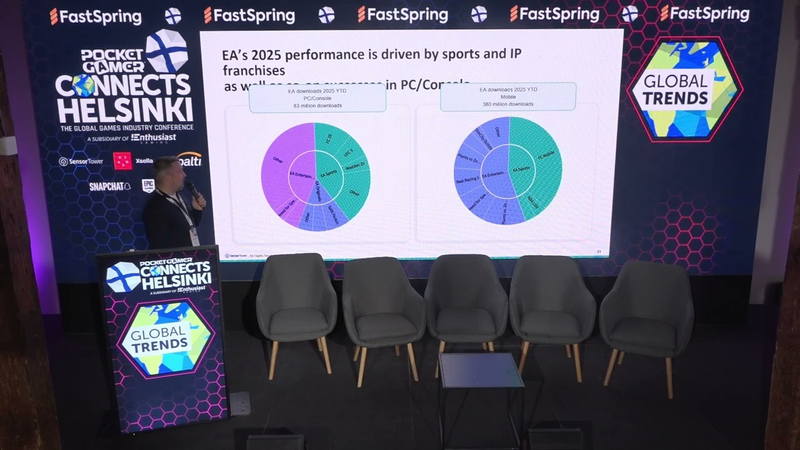
Session: Level Up - Gaming In 2025 & Beyond - Josh Skinner, Sensor Tower
The gaming industry in 2025 exhibits a resilient and evolving landscape, characterized by a shift in player behavior and a robust performance in consumer spending across both mobile and PC/console platforms.
- Mobile gaming in 2025 shows a 10% year-to-date increase in in-app purchase revenue despite a 6% decline in total downloads.
- Live operations are no longer a guaranteed growth driver, as many top-tier games are experiencing revenue declines despite active event schedules.
- Data-driven optimization of event cadence is critical for success, exemplified by titles like Gossip Harbor shifting from 24-hour to 7-day task events to improve performance.

TWIG #354 Google's New Payment-Link Era and Rovio's End of an Era
The gaming industry is currently undergoing a structural shift characterized by a move toward direct-to-consumer payment models and a consolidation of development resources.
- Regulatory shifts forcing Google to allow third-party payment links are not increasing developer profit margins, as savings are being redirected into rising user acquisition costs.
- Cross-platform commerce is emerging as a critical strategic battleground for firms like Unity and Epic Games, who are leveraging payment solutions to aggregate user data for ad-tech applications.
- The industry is shifting toward a 'fewer, bigger, better' production philosophy, exemplified by Rovio's recent restructuring following the underperformance of key titles.

Week in Mobile Games E69 - The big AWS crash and Google delays Android regulation
The mobile gaming industry is currently navigating a period of significant structural and regulatory transformation, characterized by a push toward open ecosystems and a diversification of game genres.
- The mobile gaming industry generates approximately $120 billion in annual in-app purchase revenue, driving intense competition for user engagement.
- Google has been granted a one-week extension regarding a legal injunction that would require the company to permit rival payment options on its platform.
- Studios are increasingly adopting direct-to-consumer strategies and unified commerce dashboards to manage cross-platform operations independently of traditional platform gatekeepers.

🎮 Huntopia: The $100K/Day Idle RPG that monetizes everything. Literally everything!
Huntopia represents a significant case study in aggressive mobile game monetization, demonstrating how an idle RPG can generate substantial daily revenue—ranging between $50,000 and $100,000—by prioritizing constant financial conversion over traditional gameplay depth.
- Huntopia generates between $50,000 and $100,000 in daily revenue by prioritizing aggressive, constant monetization over traditional gameplay depth.
- The game integrates monetization directly into core user interactions, using contextual prompts during routine tasks like claiming rewards or advancing battle pass tiers.
- The design utilizes a menu-heavy, automated progression loop that requires minimal active input, effectively funneling users through a high-converting monetization path.
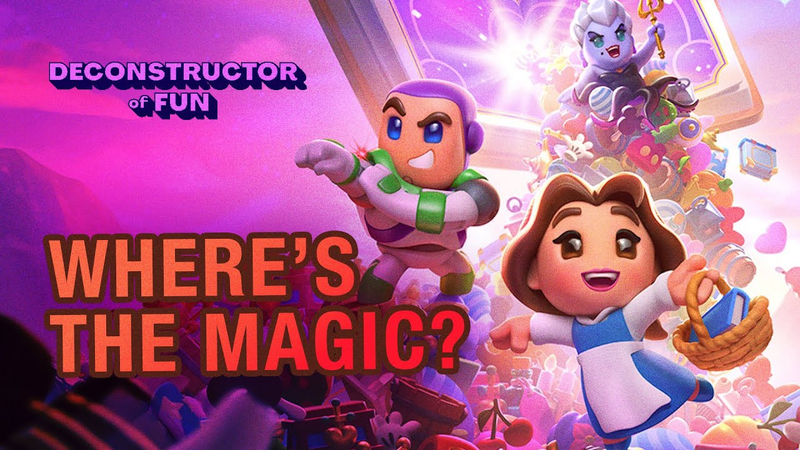
Disney Enters Match 3D — But the Magic’s Missing
Disney’s Magic Match, developed by Jam City, represents a recent entry into the competitive Match 3D mobile gaming subgenre.
- Disney’s Magic Match, developed by Jam City, is struggling to gain traction in the Match 3D subgenre due to its late entry against established leaders like Match Factory, which has dominated the market since late 2023.
- The game fails to implement effective monetization because it lacks early-game difficulty, with playtests showing zero fail states within the first 50 levels.
- Unlike traditional match-three games that use adaptive drop algorithms to drive revenue, Match 3D titles rely on time-based pressure and dexterity, which Magic Match fails to leverage for economic tuning.
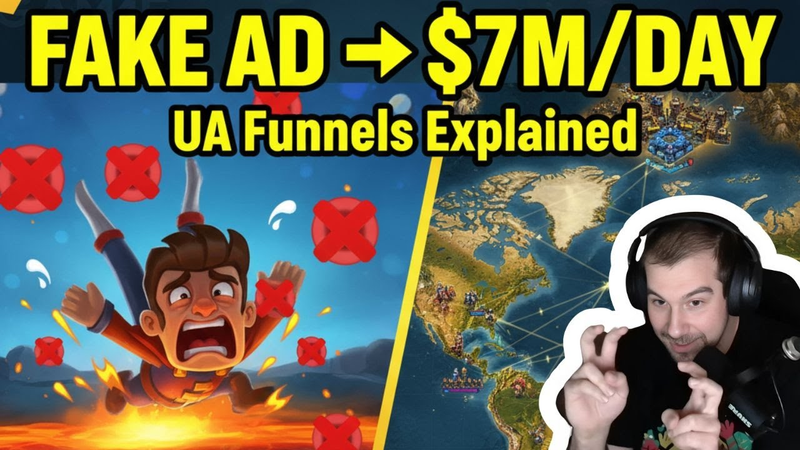
🎮 The 2 product trends that rule Mobile Games in 2025 by Jakub Remiar
The mobile gaming landscape in 2025 is defined by two dominant product strategies: the sophisticated user acquisition (UA) product funnel and the widespread adoption of game templatization.
- The mobile gaming market is currently dominated by a three-part UA funnel consisting of hyper-casual 'fake' ads, a corresponding 'fake' onboarding experience, and a 'real' core game like 4X or idle strategy.
- Studios such as River Games and Century Games use this multi-stage funnel to lower customer acquisition costs by attracting a broad audience before transitioning them into high-revenue, complex gameplay.
- Game templatization has become a primary strategy for scaling, where studios like Habby and Microfun recycle proven meta-game structures and UI layouts to increase the speed and volume of their product releases.

Netflix Games 2.0: The Living Room Invasion Begins
Netflix is pivoting its gaming strategy toward a living room-centric model, moving away from a mobile-first approach to focus on interactive party games played on smart TVs.
- Netflix is pivoting from a mobile-first gaming strategy to a living room-centric model that utilizes smart TVs as the primary hub and smartphones as controllers.
- The company’s previous strategy of licensing and porting mobile titles resulted in high capital expenditure but failed to generate significant user engagement.
- Netflix’s primary obstacle is a lack of product-market fit and a missing 'killer app' rather than the user awareness issues cited by the company.
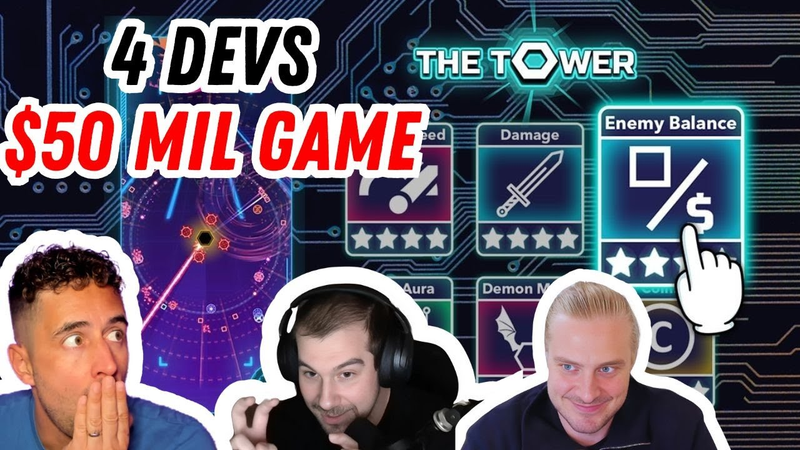
🏰👠 The Tower GD Masterclass Review: The ultimate Cinderella story
The Tower serves as a compelling case study in the mobile free-to-play market, demonstrating that deep mechanical complexity and community-driven engagement can generate substantial revenue, even in the absence of high-fidelity art or traditional production values.
- The Tower has generated over $50 million in total revenue with daily earnings peaking at $80,000, proving that minimalist, data-heavy interfaces can drive significant financial success.
- The game achieves long-term retention by prioritizing a core loop of macro-management and grinding, eschewing traditional energy-based monetization in favor of deep progression systems.
- A lean team of four full-time employees manages the project, utilizing a hybrid growth strategy where 50% of installs are organic, driven by an active Discord community and a creator code program.

TWIG #353 Netflix Goes Couch Co-op, PlayStation 6’s AI Ambitions, Supercell’s Open Letter
The gaming industry is currently navigating a period of significant structural and strategic transition, characterized by a push for AI-driven hardware innovation and a reevaluation of long-term business models.
- Sony is positioning the PlayStation 6 to focus on a major generational hardware leap, specifically utilizing AI-accelerated rendering and advanced lighting to sustain the console market's relevance.
- The live-service gaming sector is experiencing high volatility, with titles like Battlefield struggling to achieve the scale and monetization efficiency of market leaders like Call of Duty.
- Netflix is attempting to enter the social gaming space by launching TV-based party games, though the company faces significant skepticism regarding its ability to achieve product-market fit.
Nintendo has generated nearly $2.2 billion from mobile games so far
The global gaming industry is currently navigating a period of significant volatility, marked by high-profile commercial setbacks and organizational instability.
- Nintendo has generated nearly $2.2 billion in total revenue from its mobile gaming portfolio.
- Japan is Nintendo's most critical mobile market, accounting for approximately 46% of total mobile earnings due to higher per-user spending.
- Fire Emblem Heroes is the primary driver of Nintendo's mobile success, contributing roughly 50% of the company's total mobile revenue.

🎮 Habby finally SPEAKS: The template evolves! First-ever Habby Western interview
Habby has evolved from a publisher of simple puzzle games into a powerhouse of midcore, IAP-driven mobile experiences, exemplified by the global success of titles like Survivor.io and Archero.
- Habby has transitioned from simple puzzle games to a midcore, IAP-driven model, leveraging a repeatable development template that balances accessible onboarding with long-tail engagement.
- To combat rising user acquisition costs, Habby is shifting away from the hybrid-casual market and investing in long-term partnerships, such as a $2 million commitment to Mavis Games.
- Successful scaling requires integrating monetization directly into the core game loop, a strategy where Chinese developers currently outperform Western studios that often treat revenue as an afterthought.

Istanbul Is Building Gaming Giants
Cipher Games, a mobile developer based in Istanbul, recently secured $30 million in Series A funding led by the Rain Group and Play Ventures.
- Istanbul-based mobile developer Cipher Games secured $30 million in Series A funding led by Rain Group and Play Ventures, bringing its total capital raised to $43 million since 2022.
- Cipher Games is currently test-launching its debut title, Match Squad, in the Philippines, Indonesia, and the UK to refine its hybrid mechanics.
- Match Squad differentiates itself by combining traditional match-3 gameplay with a die-roll system inspired by titles like Monopoly Go and Coin Master.