Mobile reports and market data
Documents

Session: The Future Is Agentic: Unlocking Creative Research With AI - Robert Huynh, Reforged Labs.
The future of mobile game user acquisition (UA) is increasingly agentic, characterized by the integration of artificial intelligence to automate and enhance the labor-intensive process of creative research.
- Reforged Labs utilizes AI-driven creative tagging and semantic search to automate the manual process of analyzing competitor video ads across different networks and geographies.
- AI analysis can identify granular performance drivers, such as specific facial expressions in 'king in peril' ad tropes, which differentiate top 10% performing creatives from the bottom 10%.
- The platform correlates creative elements with internal performance metrics like retention and monetization (e.g., Day 7 metrics) to determine which ad concepts effectively drive user acquisition.
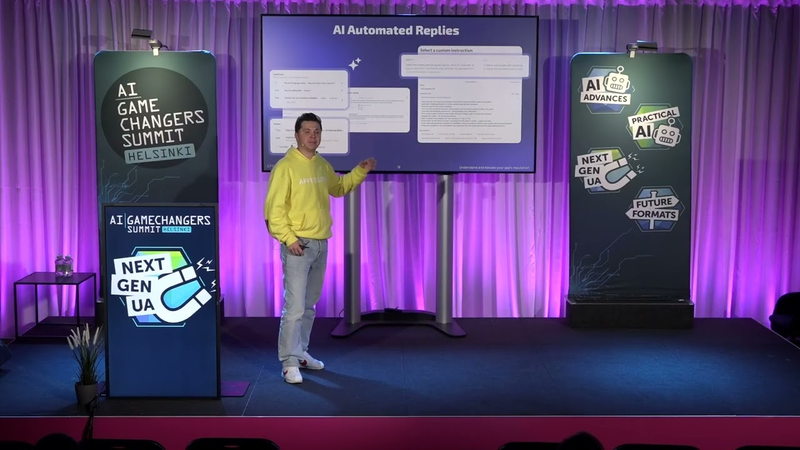
Session: AI & Automation Hacks For Ratings & Reviews - Anatoly Sharifulin, AppFollow.
The integration of artificial intelligence and automation into the management of mobile game ratings and reviews is essential for maintaining product quality, optimizing user acquisition, and improving store visibility.
- AI-driven analysis allows teams to process massive volumes of player feedback—such as the 240,000 reviews received by Call of Duty: Warzone or 300,000 by WhatsApp monthly—without requiring 40 hours of manual reading time.
- Maintaining a high reply rate is critical for game performance; while the average US market reply rate is 20%, top-performing titles often achieve 100% through a hybrid approach of AI-assisted automation and human oversight.
- Google Play and the App Store exhibit different user behaviors, with Google Play reviews tending to be higher in volume but shorter, while App Store reviews are often longer and provide more detailed qualitative insights.

Panel: State Of The Union: The Future Of D2C In Mobile Gaming.
The mobile gaming industry is undergoing a fundamental transformation as developers pivot toward direct-to-consumer (D2C) strategies to bypass the traditional gatekeeping of major app stores.
- Recent legal rulings in the United States, such as the court decision against Google, are forcing app stores to allow third-party payment systems and direct-to-consumer (D2C) redirects, fundamentally shifting the mobile distribution landscape.
- Industry experts project that within five years, 50% to 60% of mobile gaming payments will be processed through D2C channels as developers seek to bypass traditional store fees and gain more control over their revenue.
- D2C webshops provide essential access to alternative payment methods in emerging markets like Brazil and India, where traditional app store payment options often fail to accommodate unbanked users.
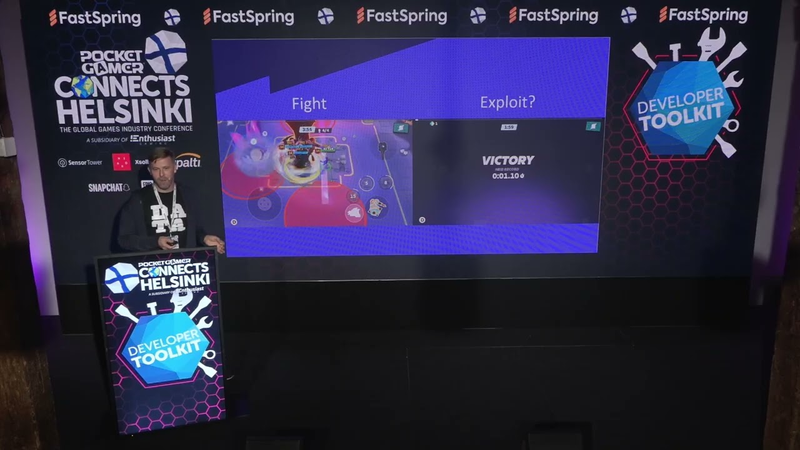
Session: Balancing Player Experience Without Players At Supercell: Case mo.co - Markus Ojala.
Supercell employs reinforcement learning (RL) to balance game mechanics for its multiplayer title, mo.co, specifically addressing the challenge of tuning game balance before a live player base exists.
- Supercell utilized reinforcement learning (RL) to balance the game mo.co during development, allowing designers to test items and gear combinations before the game had a live player base.
- The development team used a headless client integrated with C++ and Python to run approximately 1,000 parallel game simulations on a single GPU, enabling rapid iteration on balance changes every one to two weeks.
- Reinforcement learning agents were trained using Proximal Policy Optimization (PPO), where bots received incremental rewards for actions like staying alive, hitting monsters, and completing dungeons to learn optimal gameplay strategies.

Panel: How To Ship A Top-Tier Game Without A Top-Tier Budget: Practical Tips For Cost-Effective.....
Achieving high-quality game production with limited capital requires a disciplined, lean operational strategy that prioritizes agility and long-term efficiency over traditional large-scale development models.
- Prioritize 'buy' over 'build' for core infrastructure, as small teams lack the resources to maintain custom tech stacks, which are only cost-effective for massive companies like Supercell that require specific competitive advantages like millisecond-level load time optimizations.
- Avoid over-funding in early stages; raising the minimum necessary capital forces a disciplined, lean mindset and prevents the common pitfall of hiring too many people before achieving product-market fit.
- When selecting third-party services, prioritize providers that offer access to source code or clear exit strategies to avoid vendor lock-in, as seen when the sudden shutdown of analytics platforms like Omniata forced studios to rebuild their entire tech stack.

Panel: Future Of Retargeting - Hopes & Expectations.
Retargeting in the mobile gaming industry has evolved into a complex, non-evergreen strategy necessitated by increasing audience fragmentation and stringent privacy regulations.
- Retargeting strategy has shifted from broad outreach to granular, data-driven engagement that leverages in-game monetization metrics to identify and target high-value users.
- Industry focus is moving away from simple Return on Ad Spend (ROAS) toward measuring true incrementality to validate retargeting as a cost-effective alternative to rising user acquisition costs.
- Artificial intelligence is now essential for scaling re-engagement, specifically for automating audience segmentation and predicting individual player preferences in privacy-restricted environments.
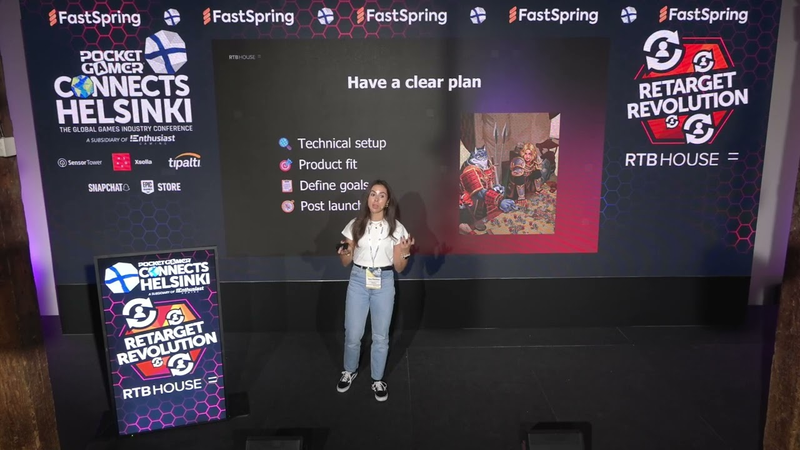
Session: Successful Retargeting - The Essentials -Vera Manhoso, RTB House.
Retargeting serves as a critical, yet underutilized, strategy for mobile gaming studios to combat high user churn.
- User retention is a critical challenge for mobile gaming, as 77% of users are lost within three days of installation and 90% churn before reaching day 30.
- Retargeting campaigns should be segmented into two distinct strategies: retaining recent installs from user acquisition efforts and re-engaging lapsed users who have not played for an extended period.
- Technical readiness for retargeting requires an MMP (Mobile Measuring Partner) integration, consistent tracking of postback events, and a clear data-sharing agreement with partners to ensure user data remains secure and siloed.
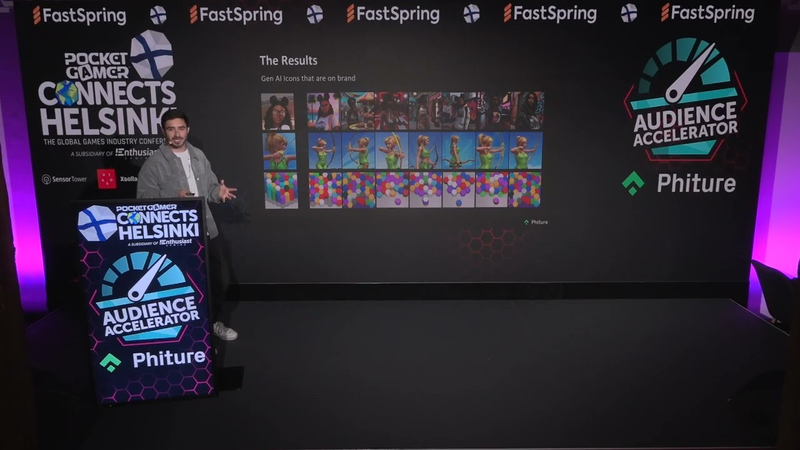
Session: Accelerating ASO Experimentation With Gen AI Using PressPlay - Mikey Feingold, Phiture
App Store Optimization (ASO) has become increasingly complex, requiring a balance between visibility and conversion that often exceeds the time, budget, and human resources available to many mobile growth teams.
- Phiture’s PressPlay platform automates ASO experimentation, enabling teams to run hundreds of tests on icons, feature graphics, and screenshots without manual intervention.
- A case study demonstrated the tool's capacity to deploy 322 experiments over eight weeks, resulting in a projected 12 million installs.
- The platform utilizes a cyclical framework that integrates competitor intelligence, user review analysis, and brand-specific guidelines to ensure AI-generated assets remain strategically aligned.
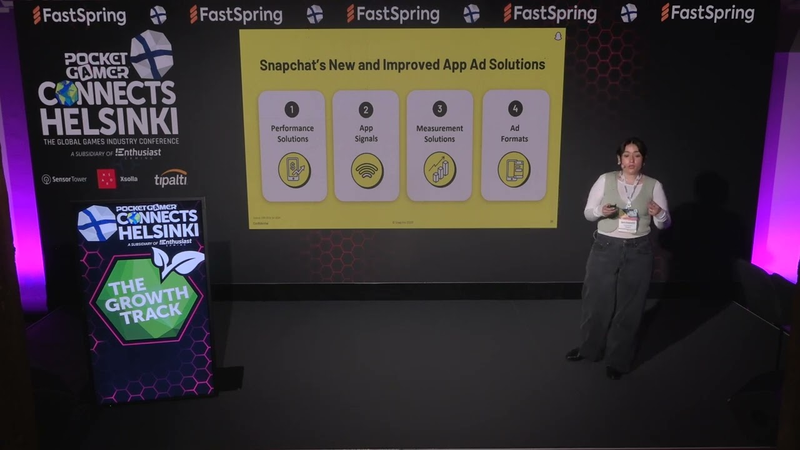
Session: From Installs To Impact: Driving Sustainable App Growth On Snapchat - Sara Antonelli, Snap.
Snapchat’s strategy for driving sustainable mobile gaming growth centers on four pillars: audience scale, performance-driven solutions, privacy-centric measurement, and innovative ad formats.
- Snapchat's 'App Power Pack' leverages internal monetization learnings from Snapchat Plus—which generated $700 million in ARR and 15 million subscriptions—to provide mobile gaming advertisers with optimized user acquisition solutions.
- Snapchat's audience is highly active, with 59% of users playing games multiple times daily and 50% of users making in-app purchases, a rate double that of physical product conversions on the platform.
- The platform's 'Rewarded Play' ad solution has demonstrated significant performance, including cases with 35 times more iOS installs at an 80% lower cost per install and 60 times more purchases at a 90% lower cost per purchase.

Session: What Processing $500M In Transactions Taught Us About DTC Web Stores - Miikka Luotio.
Direct-to-consumer (DTC) web stores have become a critical component of mobile game monetization, as evidenced by data derived from $500 million in processed transactions.
- Segmentation is the most critical driver of web store performance, with personalized offers yielding a 20% improvement in conversion compared to generic storefronts.
- Web stores demonstrate high repeat-purchase potential, as 50% of first-time buyers make a second purchase within seven days, and 70% of players who reach four transactions continue to a fifth.
- First-time web store visitors show strong retention, with 80% returning to the store within a median of 2.6 days after their initial transaction.
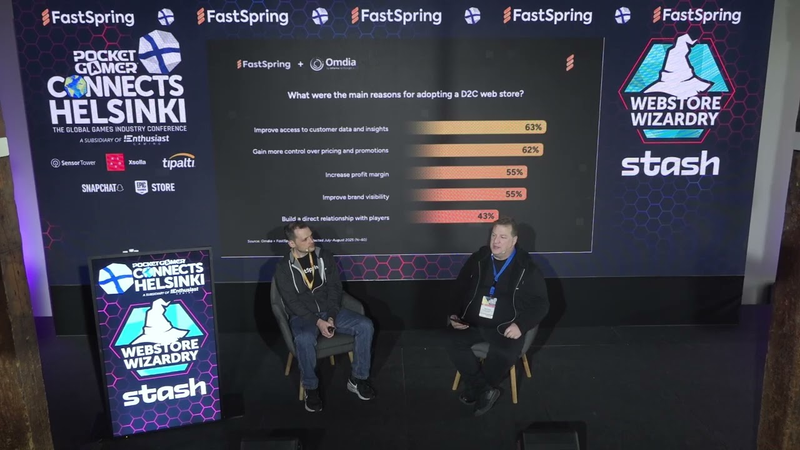
Fireside Chat: Surprising Drivers For D2C Adoption & Success - Chip Thurston & Peter Gerson.
Direct-to-consumer (D2C) web stores have become a central strategic focus for the gaming industry, driven by a desire for deeper player insights rather than solely for profit margins.
- Nearly all game publishers surveyed are either currently operating a direct-to-consumer (D2C) web store or plan to launch one within the next 12 months.
- While increased profit margins were the primary driver for D2C adoption in the past, current motivations have shifted toward gaining deeper access to customer data and insights and achieving greater control over pricing and promotions.
- A successful D2C strategy functions as a flywheel where revenue shifted from traditional app stores is reinvested into more sophisticated, data-driven user acquisition, which in turn grows the player base and further increases web store revenue.
Session: Unlocking D2C Growth: Embedded Payments + Reward-Driven Incentives - Archie Stonehill.
Direct-to-consumer (D2C) growth in the gaming industry is increasingly driven by the strategic integration of embedded payments and reward-based loyalty programs.
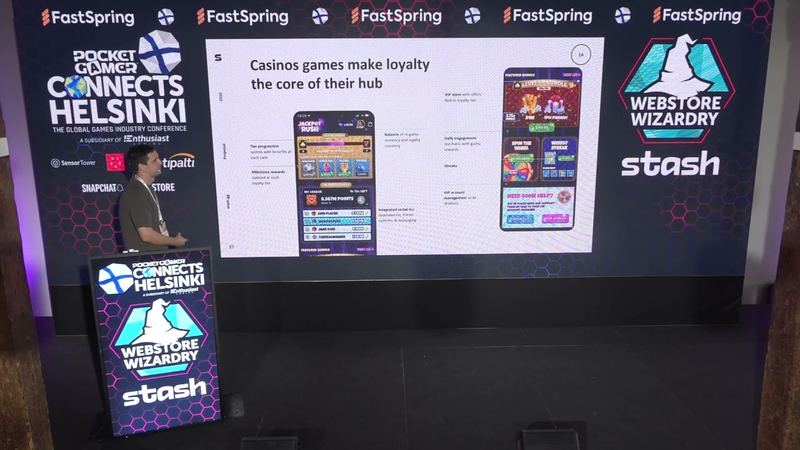
- Direct-to-consumer (D2C) loyalty programs are highly effective for channel shifting, allowing studios to remain profitable even when giving away up to 25% of value because of the increased margins captured by bypassing platform fees.
- Android's upcoming regulatory changes in the US are expected to significantly expand alternative distribution and native app payment options, potentially surpassing the current scope of iOS linkout policies.
- Loyalty programs should be designed as a core hub for the D2C experience, utilizing rank-based benefit multipliers that increase rewards as players spend more, thereby incentivizing long-term adoption of the web store.