Mobile reports and market data
Documents
Bandai Namco Group Fact Book
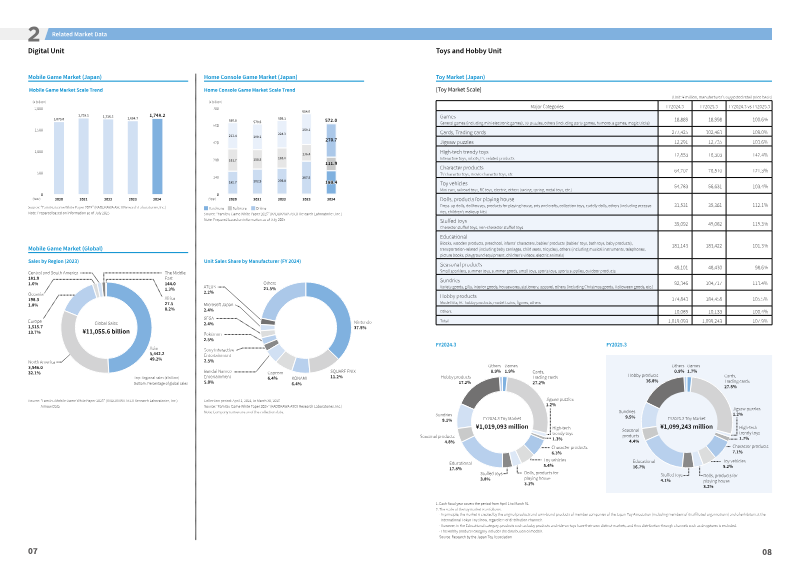
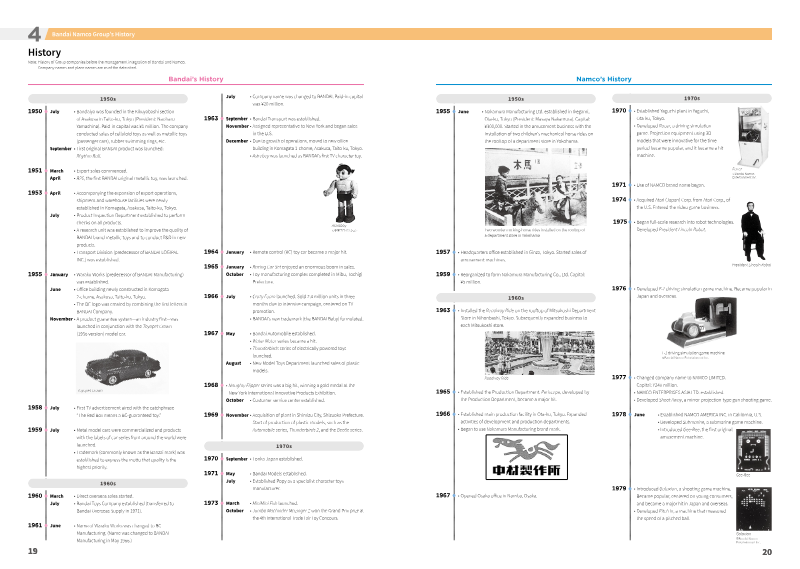
Bandai Namco Group maintains a dominant position in the global entertainment industry by leveraging a robust portfolio of intellectual property to drive consistent financial growth.
- Bandai Namco Group reported consolidated net sales of ¥1,241,513 million for the fiscal year ending March 2025.
- The Toys and Hobby unit is the company's primary revenue driver, accounting for 45.2% of total sales, followed by the Digital unit at 34.5%.
- The group maintains its market position through an IP-led strategy centered on iconic franchises including Gundam, PAC-MAN, Tamagotchi, and ELDEN RING.
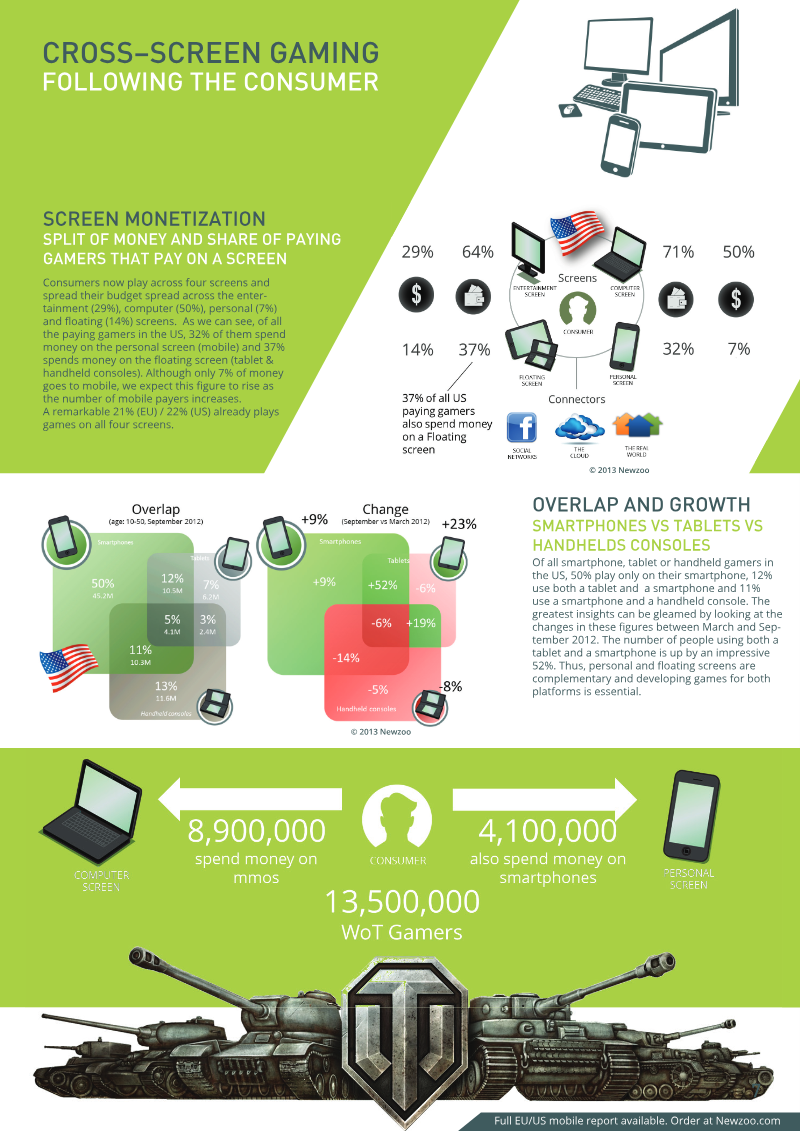
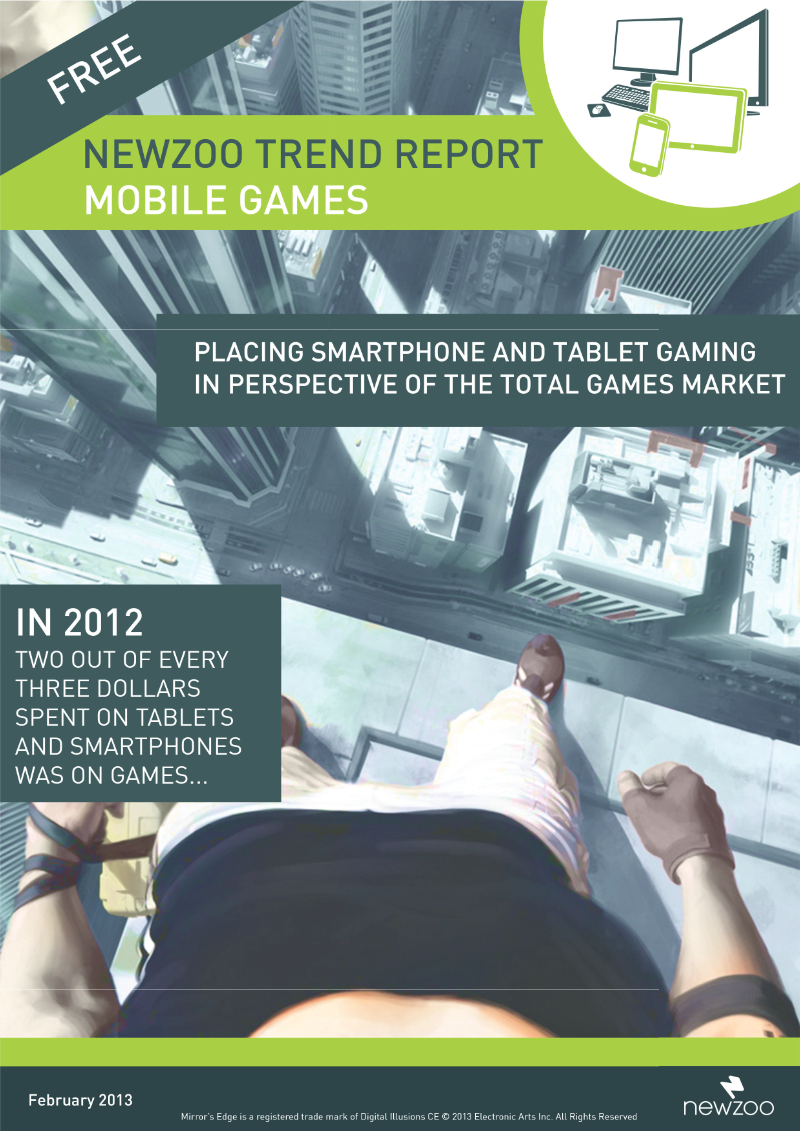
Mobile Games: Placing Smartphone and Tablet Gaming in Perspective of the Total Games Market 2012
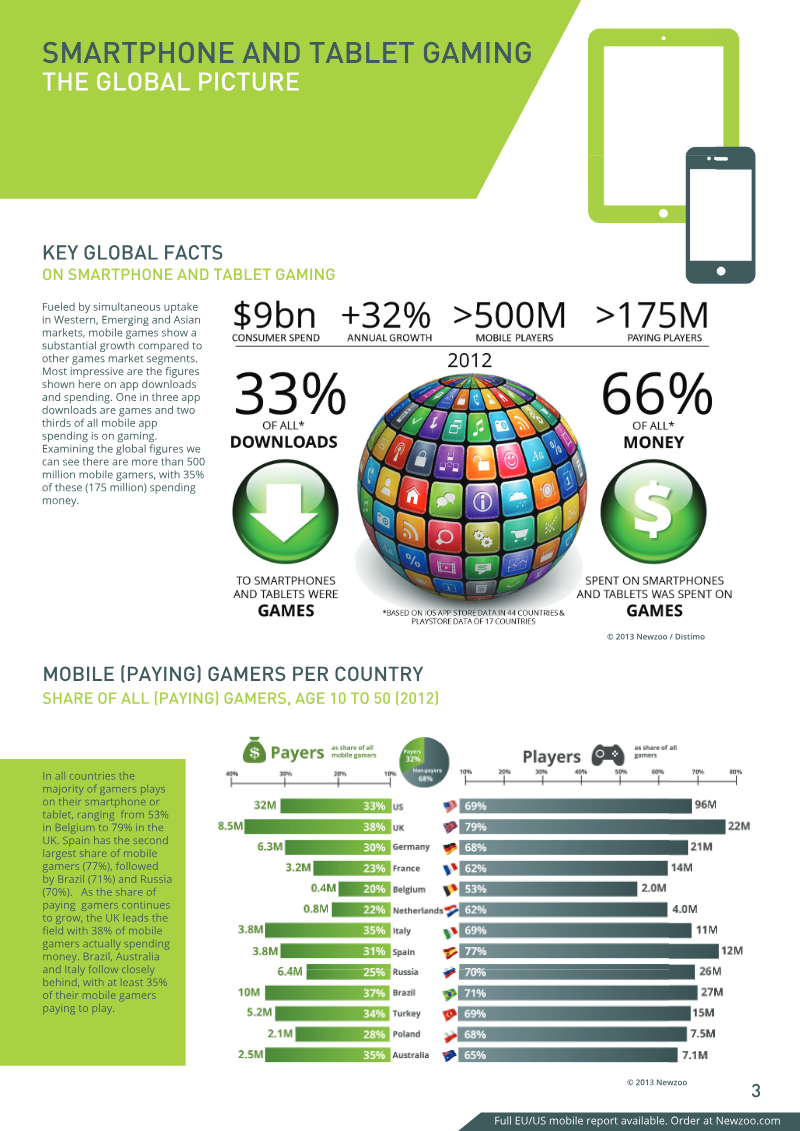
The 2012 mobile gaming landscape was defined by a rapid shift in consumer behavior, characterized by the adoption of multiple screens and the dominance of free-to-play (F2P) monetization models.
- Mobile gaming became a primary revenue driver in 2012, with two out of every three dollars spent on smartphones and tablets allocated to games.
- Free-to-play (F2P) models dominated the market, accounting for 70% of all iOS revenue in the US and Europe by the end of 2012.
- The global mobile gaming audience reached over 500 million users by the end of 2012, with 175 million identified as paying players.


Impact of Free-to-Play: Online, Mobile & Cross-Platform
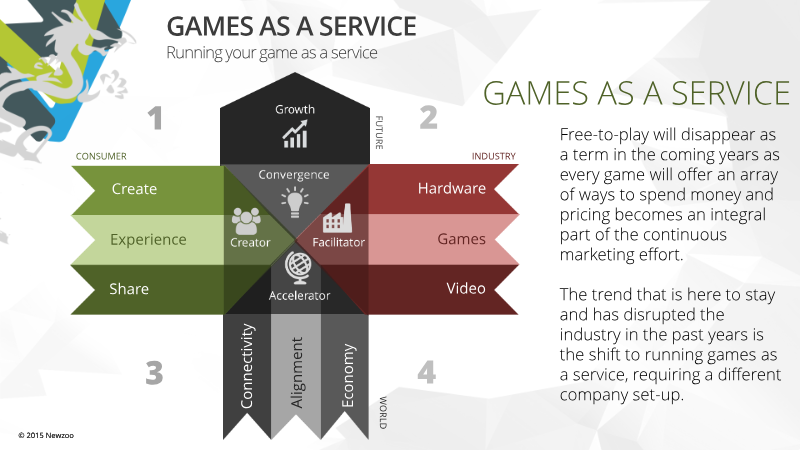
The global games industry is undergoing a fundamental transformation as the traditional boxed product model stagnates in favor of free-to-play mechanics and cross-platform accessibility.
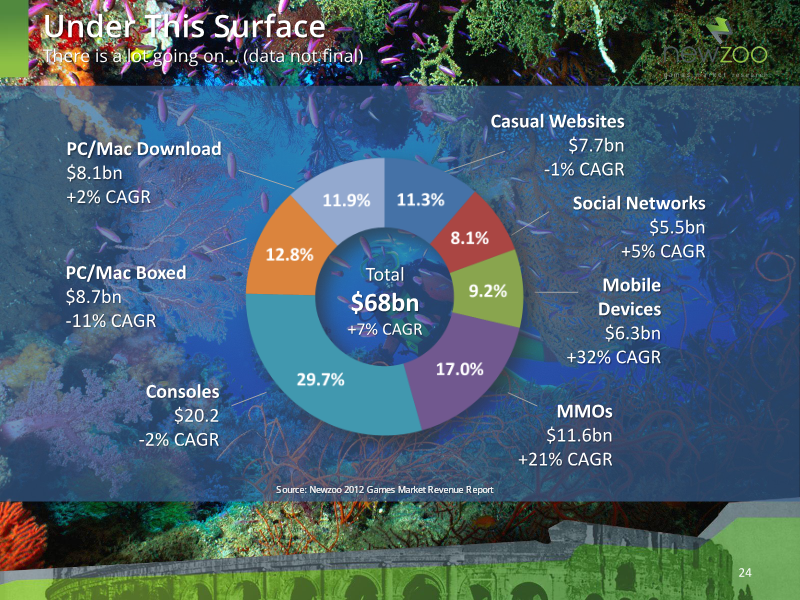
- The global games market is shifting from boxed products to a service-oriented model, with mobile revenue projected to grow at a 32% compound annual growth rate.
- Success in the current market requires treating free-to-play as a holistic business strategy rather than a pricing tactic, as evidenced by the performance of titles like League of Legends and Kingdoms of Camelot.
- Publishers must shift focus from legacy revenue metrics to tracking granular data points, specifically player engagement time and the conversion rates of paying users.

The Global Games Market: Trends, Market Data and Opportunities
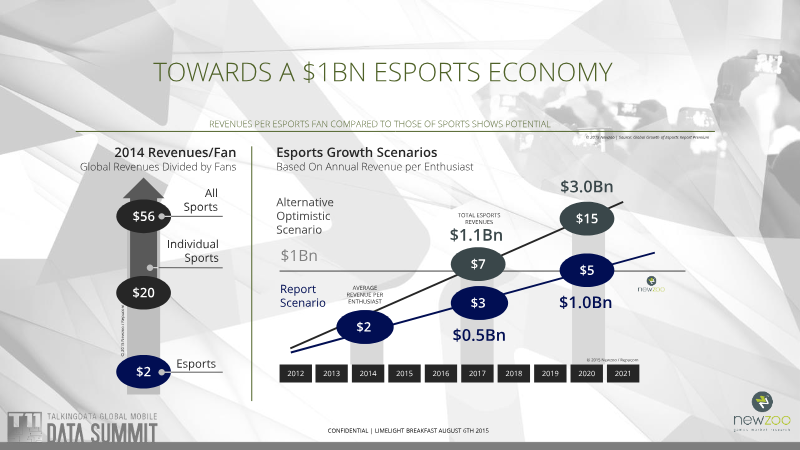
The global games industry is currently undergoing a fundamental transformation characterized by the rapid ascent of mobile gaming and the professionalization of competitive esports.
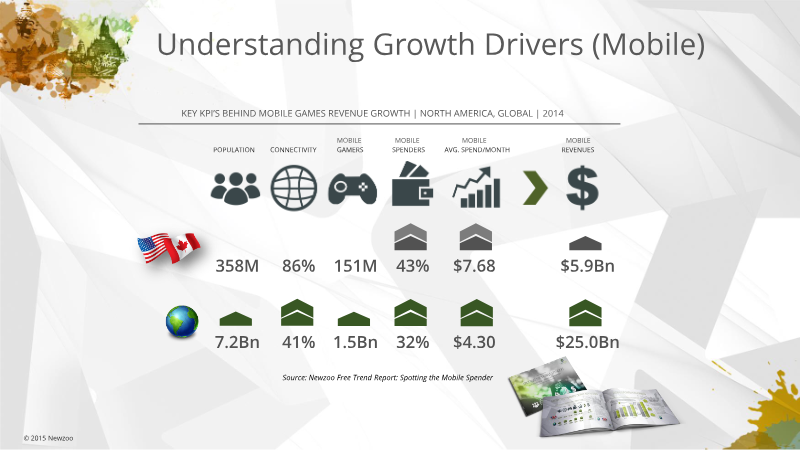
- Mobile gaming is the dominant global revenue driver, with the United States, China, and Japan serving as the primary engines of growth.
- The esports sector is projected to reach a $1 billion valuation by 2019, driven by the convergence of traditional sports and digital competitive play.
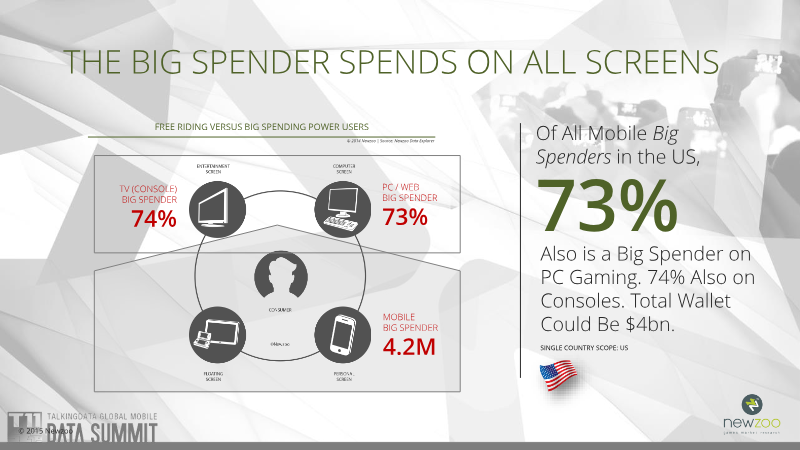
- In the United States, the most valuable consumer segment is comprised of employed, family-oriented males aged 21 to 35 who engage across multiple platforms.


Rolling into the Southeast Asian Games Market: Sizing Opportunities in the World's Fastest Growing Region
The Southeast Asian games market is currently experiencing a period of rapid expansion, positioning the region as one of the fastest-growing sectors in the global gaming industry.
- The Southeast Asian games market is projected to double in total revenue from $1.1 billion in 2014 to $2.2 billion by 2017.
- Mobile gaming is the primary growth engine for the region, with mobile revenues expected to triple and the total number of mobile gamers growing by 184% from 440 million to 1.25 billion between 2014 and 2017.
- Indonesia and the Philippines are the fastest-growing markets in the region, with projected CAGRs of 37.3% and 36.5% respectively between 2013 and 2017.

China's & Southeast Asia's Mobile Games Market: Every Piece of the Puzzle
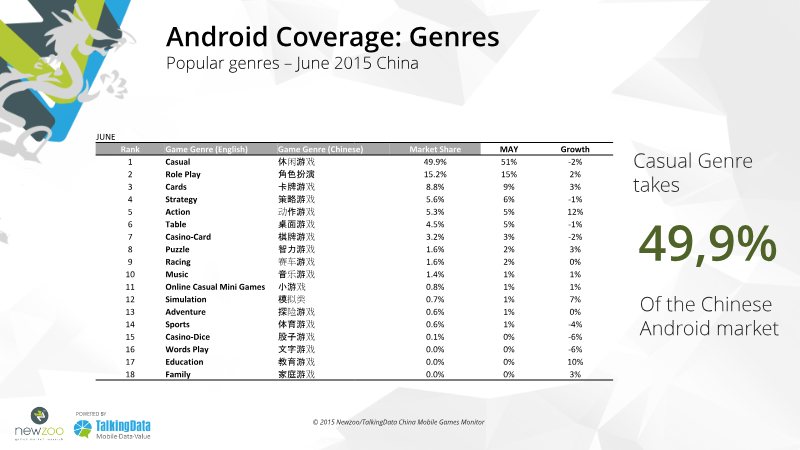
This analysis examines the mobile gaming landscape in China and Southeast Asia as of mid-2015, highlighting the region’s pivotal role in the global games market.
- Mobile gaming is the fastest-growing segment of the global market, projected to reach $44.2 billion by 2018 with a compound annual growth rate of 15.9%.
- China is the world's largest mobile games market, with 2015 revenues of $6.5 billion expected to grow to $11 billion by 2018.
- Southeast Asia is the fastest-growing region for gaming, with a projected revenue growth rate of 30.2% between 2014 and 2018, doubling total market value from $1.6 billion to $3.4 billion.


The eSports Industry to Date: The Drivers Behind Current and Future Growth
The global esports industry is undergoing a rapid transformation from a niche gaming subculture into a significant, multi-billion dollar economic force.
- The esports industry is on a trajectory to grow from $252 million in 2015 revenue to a $1 billion economy by 2019.
- Industry growth is driven by high engagement on streaming platforms like Twitch and a transition toward mainstream professionalization.
- Significant capital is entering the market, evidenced by a $26 million venture capital investment in Super Evil Megacorp.

Introduction to the Chinese Games Market: Opportunities in This Expanding Market
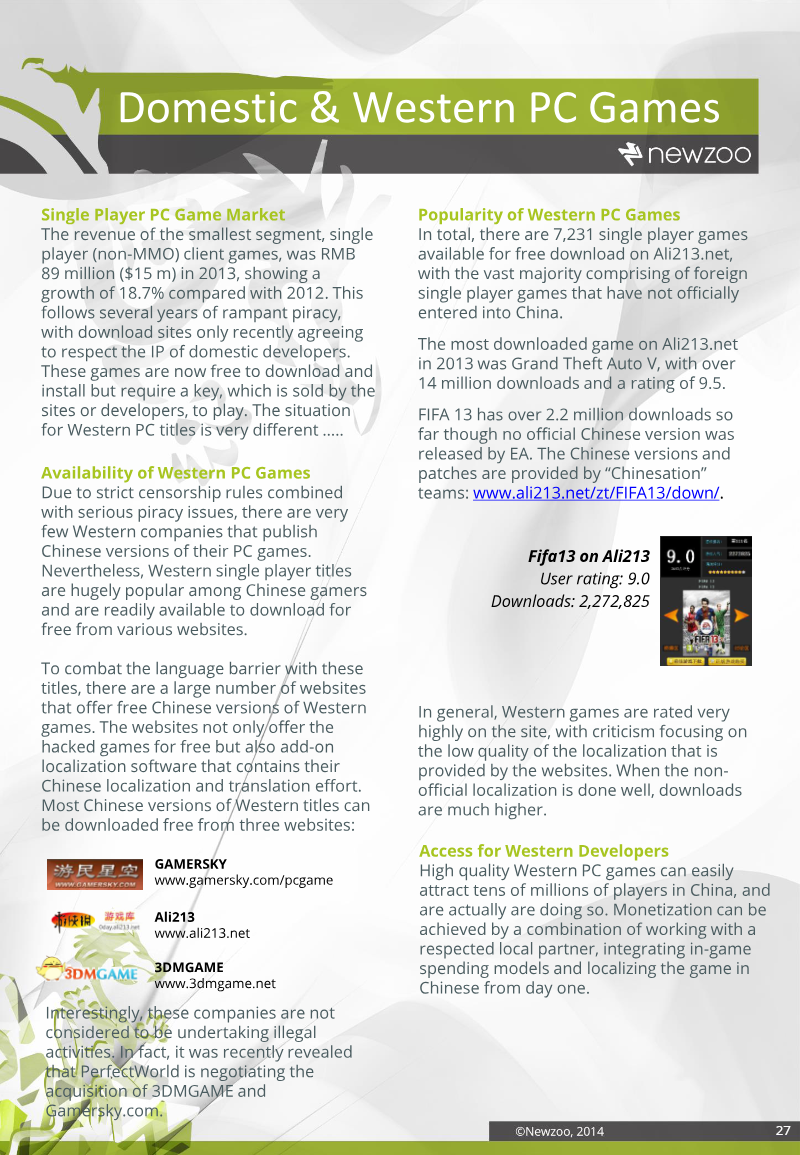
The Chinese gaming market stands as the world’s largest and most dynamic digital ecosystem, characterized by a massive user base of 490 million gamers and a rapidly evolving technological landscape.
- The Chinese gaming market reached RMB 83.2 billion in revenue in 2013, representing a 38% year-on-year increase driven by a massive base of 490 million gamers.
- Mobile gaming is the primary growth engine, experiencing a 248.5% increase in users and a 246.9% surge in revenue during the observed period.
- Success requires navigating a fragmented distribution landscape dominated by domestic giants Tencent and NetEase, necessitating strategic partnerships for foreign entities.

Understanding the iPhone: Current Usage and Trends
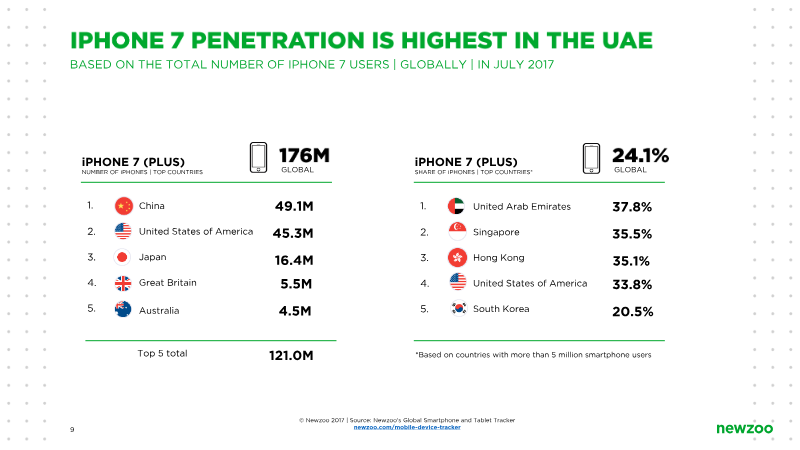
As of July 2017, the global landscape of iPhone usage reflects a decade of significant market penetration, with 730 million active devices worldwide.
- As of July 2017, there are 730 million active iPhones worldwide, representing approximately 10% of the global population.
- 61% of all iPhones ever sold since the 2007 launch remain in active use, with 82% of those active devices released in 2014 or later.
- China is the largest market for iPhone adoption with 243 million active users.
The Role of Mobile in Esports: The State and Future of Mobile Esports in Asia and the West
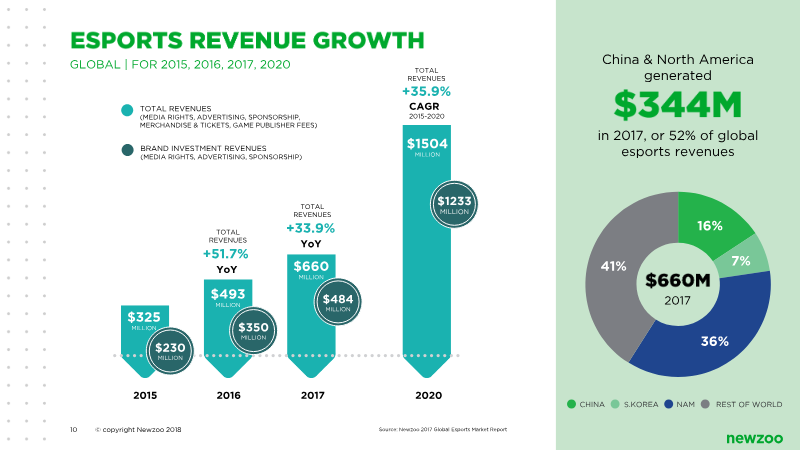
Mobile esports is undergoing a period of rapid global expansion, establishing itself as a distinct and influential pillar within the broader gaming ecosystem.
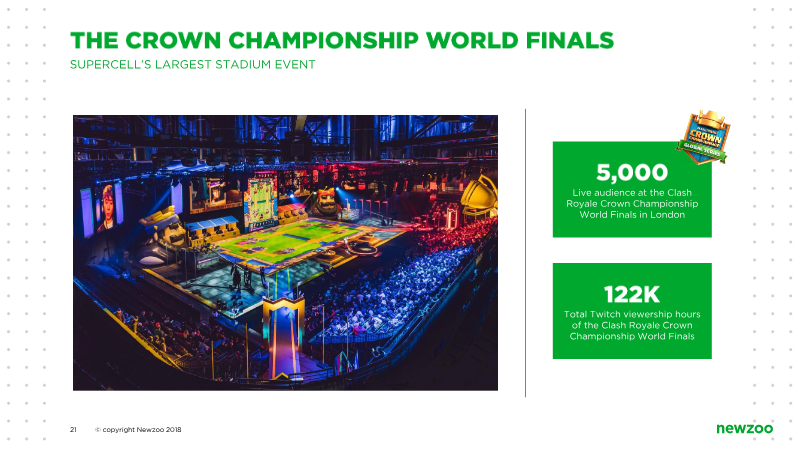
- Asia has successfully mirrored professional PC esports through large-scale stadium events and structured leagues, while the Western market continues to treat mobile competition primarily as a grassroots and amateur-focused endeavor.
- India is projected to become the world’s fourth-largest mobile gaming market by 2020, representing a significant geographic shift in the competitive mobile landscape.
- China currently serves as the primary engine for global mobile esports growth, though the industry is increasingly expanding into emerging markets.

Betting on Billions: Unlocking the Power of Mobile Gamers
Mobile gaming represents a significant, underutilized opportunity for brands to engage a vast and influential consumer base.
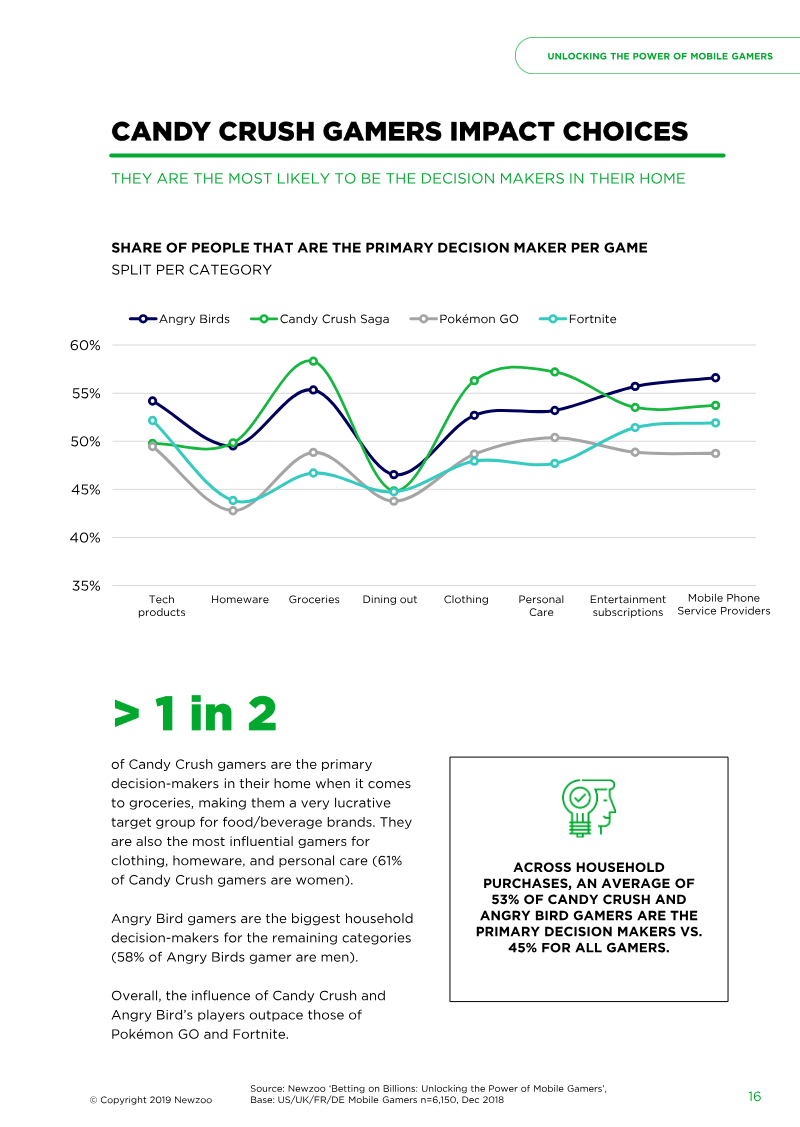
- Mobile gamers are 23% more likely than non-gamers to influence the purchasing decisions of their peers, family, and colleagues.
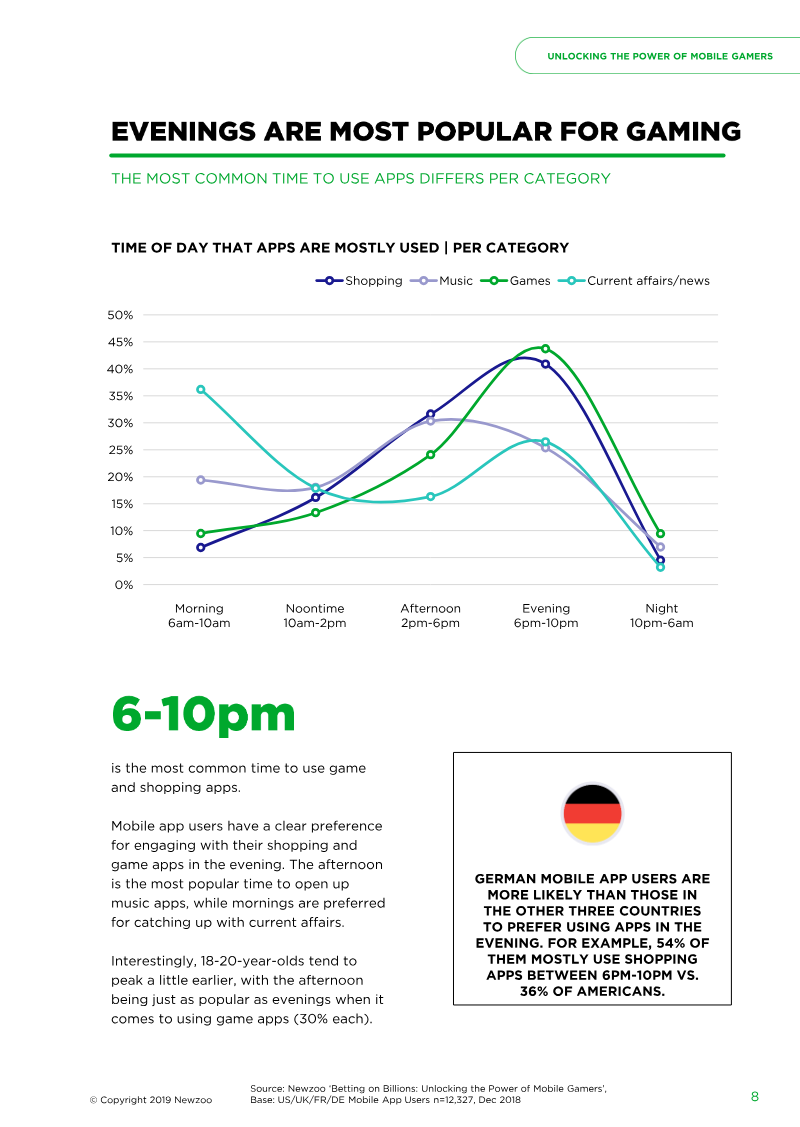
- Gaming is the third-most-popular app category globally, with 50% of surveyed users engaging with games on a weekly basis.
- Over half (53%) of mobile gamers report that they are receptive to advertising, viewing it as a helpful way to stay informed about products and services.

Casino Gaming Report & Data: US Social Casino Market
The social casino market in the United States exhibits high levels of engagement and monetization, characterized by a diverse player base that frequently interacts with multiple franchises.
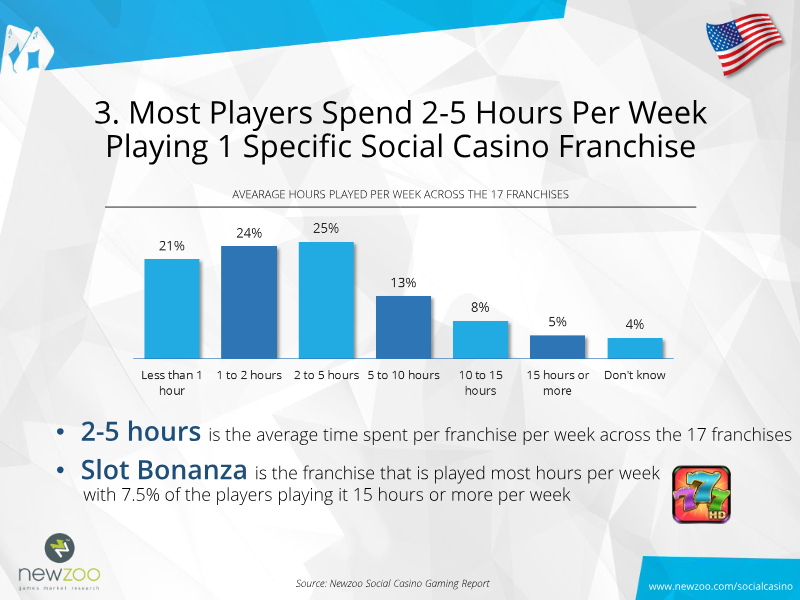
- The US social casino market is highly fragmented, with the average user actively engaging with 5.6 different gaming titles.
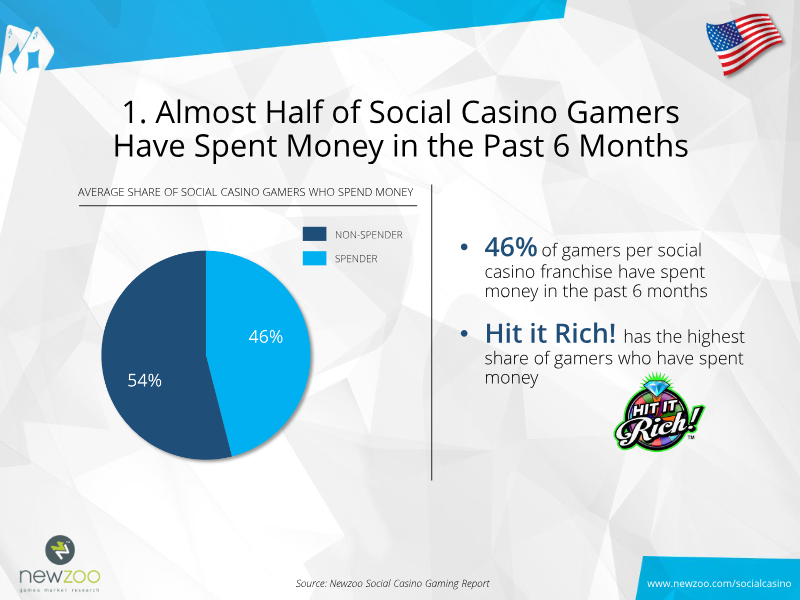
- Monetization is robust, as 46% of social casino gamers have made in-game expenditures within the last six months.
- Men aged 21 to 35 represent the largest segment of paying users, accounting for one-third of total industry spend.