Mergers & Acquisitions reports and market data
Documents
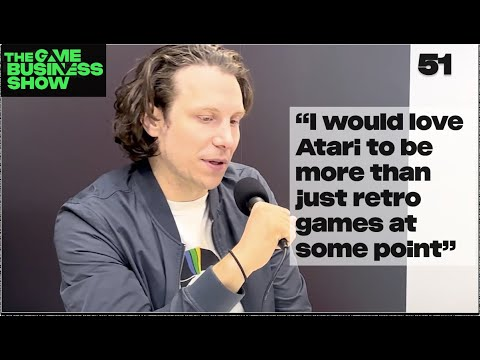
Can Atari make its retro games strategy profitable?
Atari is currently navigating a strategic pivot toward becoming a leader in the retro gaming sector, focusing on high-quality remasters, remakes, and sequels to classic intellectual properties.
- Atari is executing a strategic pivot to focus on high-quality remasters and remakes of classic intellectual properties, supported by the acquisitions of specialized studios Digital Eclipse and Night Dive Studios.
- To compete with unauthorized emulation, Atari’s business model centers on providing a 'better than free' user experience that justifies premium pricing through technical excellence and authenticity.
- The company maintains a release cadence of approximately four titles per year, balancing high-profile commercial projects with niche, passion-driven releases to mitigate financial risk.


Global Gaming Report Q3 2025
The third quarter of 2025 underscores the continued premium placed on hardware and platform players within the global gaming ecosystem, as investors assign a wide spectrum of valuation multiples that reflect divergent growth narratives and market positioning.
- Investors are heavily favoring platform-centric companies over traditional hardware manufacturers, with high-growth firms like AppLovin and Nvidia commanding EV/EBITDA multiples exceeding 25x, compared to roughly 1x for legacy hardware firms like Dell and HP.
- Roblox led equity performance with a 136.9% year-to-date appreciation, driven by successful user engagement and monetization strategies.
- Unity recorded a 77% year-to-date gain, underscoring the market's high valuation of cross-platform development tools and real-time 3D content adoption.

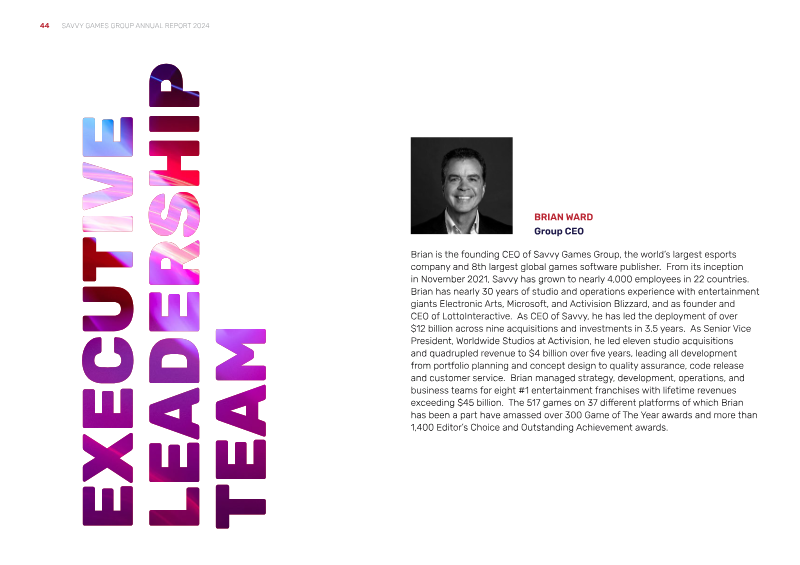
Annual Report 2024: Savvy Games Group
Savvy Games Group has established itself as a premier global force in interactive entertainment, currently ranking eighth worldwide by net revenue.
- Savvy Games Group ranks as the eighth-largest global gaming company by net revenue and serves as the primary vehicle for Saudi Arabia’s goal to contribute $13.3 billion to GDP and create 39,000 jobs by 2030.
- The organization has deployed over $12 billion in capital across nine major acquisitions since 2021 to scale its operations to nearly 4,000 employees across 22 countries.
- The ESL FACEIT Group holds a 40% share of the global esports market and engages more than 225 million users through platforms like the Esports World Cup.

TWIG #344 AppLovin’s Record Quarter, Moon Active’s New Games and Battlefield’s Big Comeback,
Global gaming revenue remains heavily concentrated in North America and Europe, which together generate nearly half of all industry earnings despite housing only one-fifth of the total player base.
- AppLovin has achieved significant financial outperformance, reporting 77% revenue growth and 156% net income growth driven by advanced ad-tech and e-commerce diversification.
- North America remains the industry's most critical commercial market, with players spending an average of $325 annually—2.5 times the rate of European players.
- Moon Active is actively diversifying its portfolio to reduce dependency on Coin Master, which currently accounts for 70% of the company's $1.5 billion annual revenue.
Sony Reigns in Bungie, Battlefield’s Beta Booms, Nintendo Stays Nintendo | Games For Breakfast
The gaming industry is currently navigating a period of significant strategic realignment, marked by aggressive corporate consolidation and shifting consumer sentiment.
- Sony has officially ended Bungie's independent status, signaling that the developer will no longer receive the special elevated treatment it was granted following its acquisition three years ago.
- Sony's live-service title Concord reportedly cost between $200 million and $400 million to produce but generated only $1 million in revenue, leading the company to downplay its live-service portfolio during recent shareholder meetings.
- Nintendo is surveying customer sentiment regarding its new 'game key cards,' which function as physical license keys rather than containing actual game data, requiring users to download the full software.

Are guitar games coming back? The story of RedOctane's return
The gaming industry is currently undergoing a period of significant structural transformation, characterized by both corporate consolidation and a strategic pivot toward sustainable, community-driven development models.
- Embracer Group is reviving the RedOctane brand by merging original staff with open-source rhythm game developers to move away from the annual release model that previously caused market oversaturation.
- The new rhythm game strategy shifts toward a 'forever game' model, prioritizing long-term content updates and direct-to-consumer engagement over traditional retail cycles.
- Publishers are increasingly utilizing game bundles as a strategic tool to extend the lifecycle and reach of titles after initial launch momentum declines.
Slow-Motion Slump in Scopely’s Portfolio
The mobile gaming portfolio of Scopely is currently experiencing a significant, broad-based decline across key performance indicators.
- Scopely’s portfolio is experiencing a broad decline, marked by a 28% drop in topline revenue, a 24% decrease in monthly active users, and a 34% reduction in downloads between 2024 and 2025.
- Monopoly Go, which accounts for 60% to 65% of total portfolio earnings, has suffered a 36% year-over-year revenue decline.
- Revenue concentration has intensified, with Monopoly Go and the recently acquired Pokémon Go now generating over 90% of the company's total revenue.
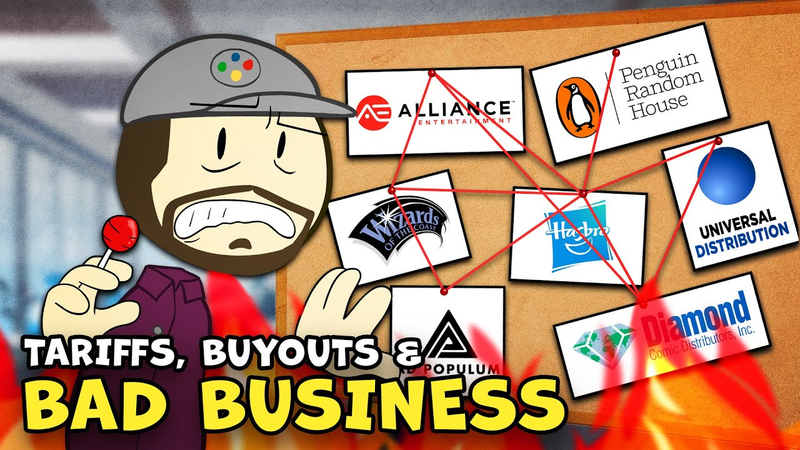
Board Games are in Trouble, and it's NOT Why You Think | Extra Credits
The board game and tabletop RPG industry is currently facing a systemic crisis driven by corporate consolidation, fragile global supply chains, and volatile trade policies.
- The board game industry is facing a systemic crisis driven by supply chain fragility, corporate consolidation, and volatile tariff policies that threaten the viability of publishers.
- The bankruptcy of Diamond Comic Distributors and the subsequent collapse of its subsidiary, Alliance Game Distributors, has created massive instability in the U.S. tabletop game distribution network.
- Modern board game production relies on 'just-in-time' supply chains that distribute manufacturing across multiple countries, making the process highly susceptible to border-crossing costs and tariff fluctuations.

TWIG #342 Scopely Meltdown, Crazy Anime Story and One SHOCKING Game Recipe
The gaming industry is currently navigating a period of significant adjustment, characterized by stagnant growth, a contraction in venture capital, and the persistent challenges of mobile user acquisition following IDFA changes.
- Scopely faces significant portfolio risk, with Monopoly Go and Pokémon Go now accounting for over 90% of the company's total revenue as its legacy titles and recent acquisitions decline.
- Sony is leveraging strategic partnerships, such as its stake in Bandai Namco, to integrate major Japanese anime franchises into its ecosystem, though localizing these properties for Western mass-market audiences remains a significant challenge.
- The gaming industry is experiencing a period of stagnant growth and reduced venture capital, forcing companies to move beyond incremental testing toward methodologies that prioritize significant product variations to generate actionable data.

Week in mobile games E62 - Apple's regulatory wins and 2025's top genres
The mobile gaming landscape is undergoing a significant structural shift as regulatory environments stabilize and genre dominance evolves.
- Strategy games have become the most lucrative mobile genre, generating $10.6 billion in the first half of 2025 and surpassing RPGs, which saw an 11% year-over-year revenue decline.
- The European Commission is expected to approve Apple’s revised App Store fee structure, effectively ending a major regulatory dispute, while UK interventions are not anticipated until 2026.
- The puzzle game market is highly concentrated, with Royal Match, Candy Crush, and Gardenscapes accounting for nearly one-third of total global revenue in that segment.

Subnautica 2 Drama Explained in Simple Terms!
The conflict surrounding the development of Subnautica 2 centers on a dispute between publisher Krafton and the leadership of developer Unknown Worlds.
- Unknown Worlds co-founders Charlie Cleveland and Max McGuire, along with CEO Ted Gil, were ousted following a breakdown in their relationship with Krafton, which acquired the studio for $500 million in 2021.
- The ousted leadership claims their dismissal was a strategic move by Krafton to avoid paying a $250 million performance-based earnout, while Krafton maintains the delay of Subnautica 2 to 2026 is a necessary quality-control measure.
- Krafton internal documents indicate the game lacked the content and polish required for a successful launch, citing ineffective management by the previous leadership.
Video Game Industry Inspection Mission: Canary Islands
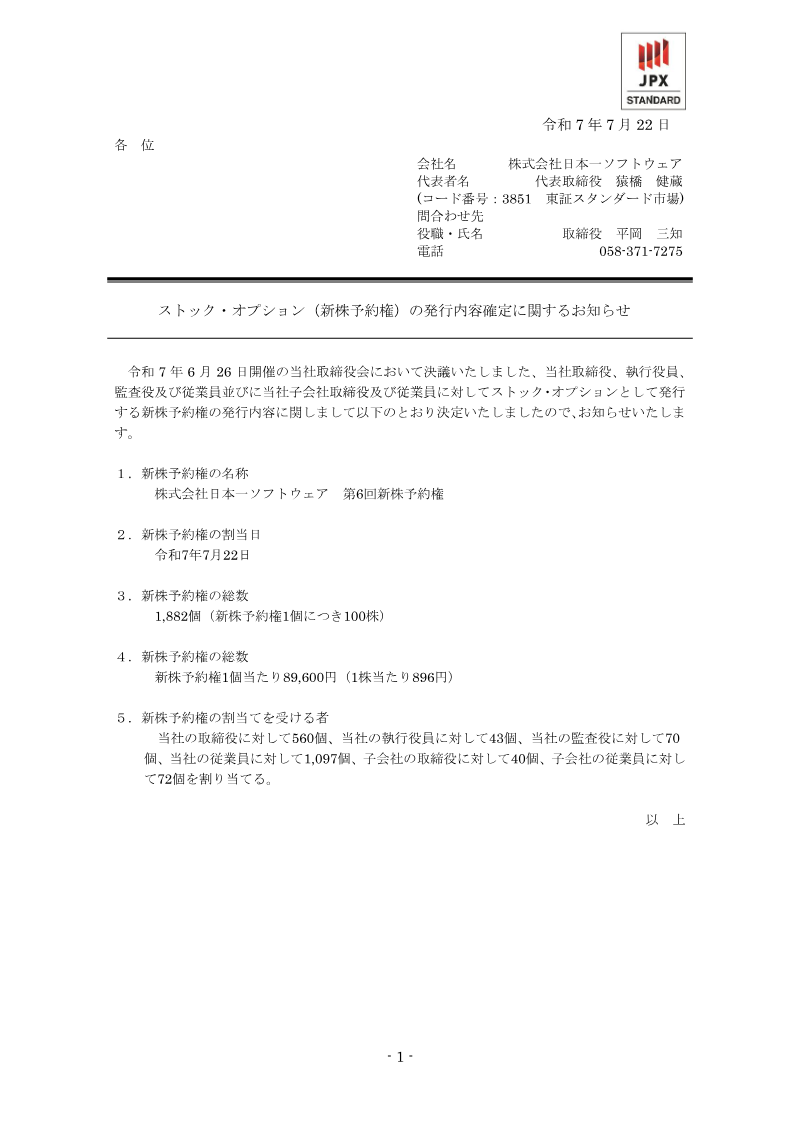
The announcement serves to formalize the issuance of a new series of stock options by Nippon Ichi Software Co., Ltd., a listed entity on the Tokyo Stock Exchange Standard Market.
- Nippon Ichi Software will issue 1,882 stock options on 22 July 2025, with each option representing 100 shares.
- The exercise price for the new stock options is set at ¥89,600 per option, or ¥896 per share.
- The allocation targets a broad range of internal stakeholders, including 560 options for company directors and 1,097 for employees.