MENA reports and market data
Documents

Week in Mobile Games E63 - The Esports World Cup unpacked and lightning strikes twice for Supercell
The global mobile gaming landscape is currently defined by a strategic shift toward long-term player retention and the professionalization of esports.
- AppLovin maintains a dominant market position in mobile monetization, reporting a 77% year-over-year revenue increase as it competes with Unity’s new Vector AI ad platform.
- The Saudi Arabian gaming market is projected to reach $6.8 billion in consumption by 2030, driven by government-backed initiatives and the professionalization of mobile esports.
- Supercell’s Clash Royale achieved its most lucrative month in nearly eight years, highlighting the continued revenue potential of revitalizing established intellectual property.
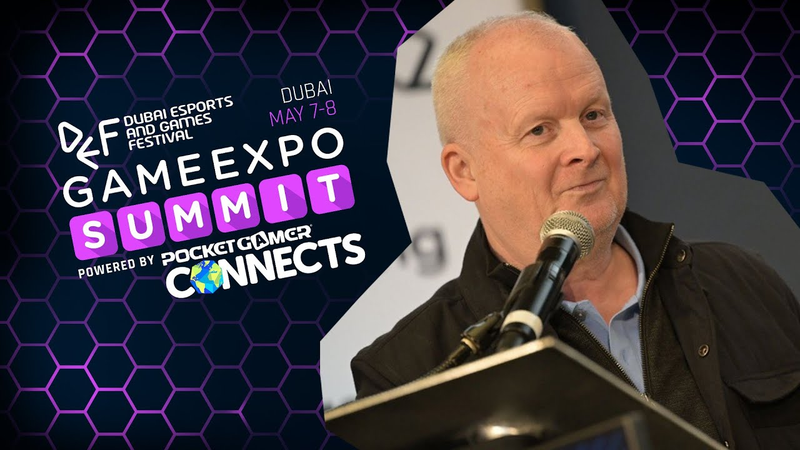
Understanding what the market wants - Stuart Dinsey from Curve Games
Curve Games, a mid-sized British indie publisher, is strategically expanding its global distribution and market presence by prioritizing direct-to-consumer pathways and emerging regional markets.
- Curve Games is bypassing traditional platform limitations by using Xsolla-powered micro-sites to implement localized payment methods and capture direct consumer data.
- The publisher is targeting the MENA region for growth, which currently represents 1.5% of its business but is identified as a high-potential market due to rising indie developer activity.
- Curve Games’ strategy for emerging markets involves moving away from Western-centric exports to focus on identifying and cultivating regional intellectual property with global appeal.
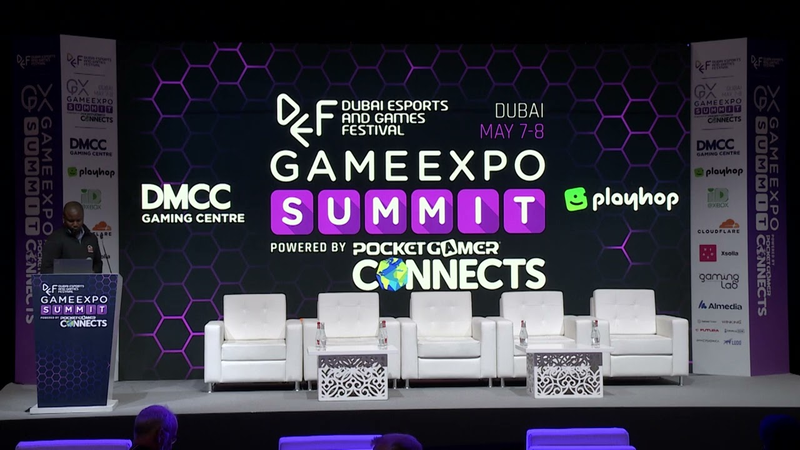
Session: Xbox Discovery Day - Temi Afolabi
The ID@Xbox program functions as a critical engine for Microsoft’s global expansion, specifically targeting independent developers in emerging markets such as Africa and the Middle East.
- The ID@Xbox program has facilitated over 2,400 game releases and distributed billions of dollars in royalties to independent developers globally.
- The Developer Accelerator Program provides non-recoupable funding for prototyping and porting to underrepresented creators without requiring equity or title exclusivity.
- Microsoft is strategically targeting emerging markets in Africa and the Middle East to diversify its content library and integrate unique cultural perspectives.
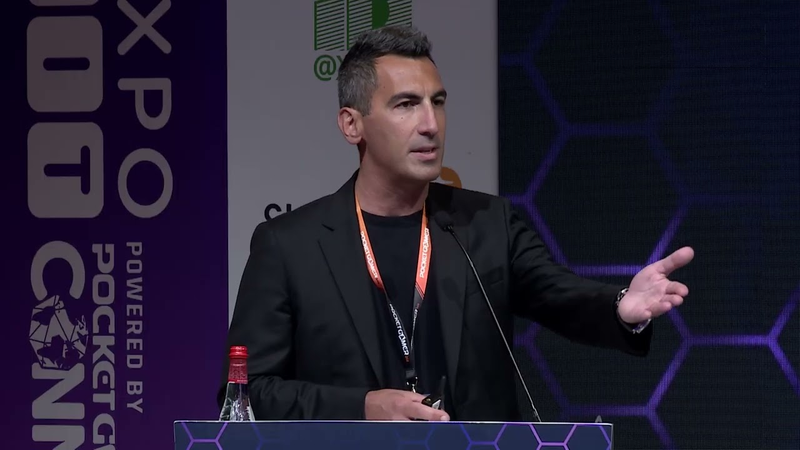
Session: A Year Of Growth Dubai’s Rise In Gaming & Web3 - Belal Jassoma, DMCC.
Dubai has established itself as a premier global hub for the gaming and Web3 industries, driven by strategic government initiatives, a favorable business environment, and robust infrastructure.
- Dubai’s gaming and Web3 ecosystem, managed by the DMCC, currently supports over 25,000 companies, including 130 gaming firms and 650 Web3 entities.
- The MENA gaming market is valued at $7.7 billion, reflecting a 9% year-over-year growth rate driven by a young, tech-savvy population.
- The UAE has established a significant financial foundation for emerging tech, including a $30 billion government fund for AI development and over $3.7 billion in dedicated Web3 funds.
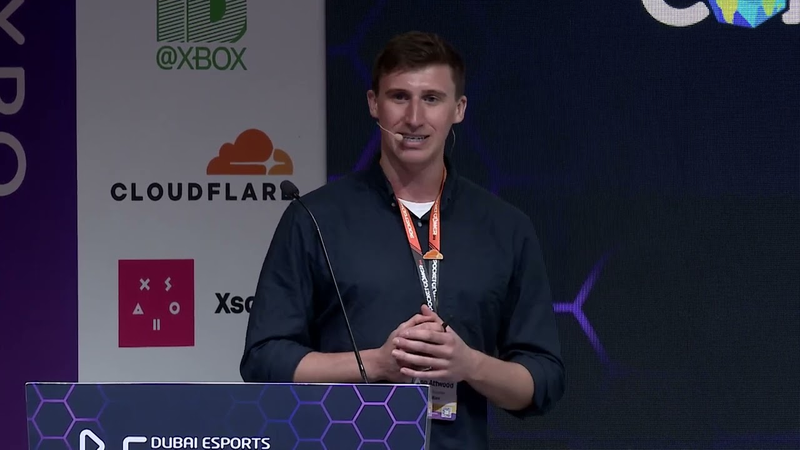
Session: Pushing To The Edge: Unlocking Gameplay Potential With The Cloud - Jason Attwood.
The gaming industry increasingly relies on cloud infrastructure to manage the complex requirements of modern titles, ranging from real-time multiplayer games to asynchronous experiences like turn-based strategy and leaderboard-driven titles.
- Cloudflare utilizes a global network of 335 points of presence across 125 countries, employing an anycast system to route traffic to the nearest data center for low-latency performance.
- Serverless 'Workers' allow developers to execute custom logic at the network edge, billing only for active computation time rather than total request duration to optimize costs.
- The platform provides integrated security layers designed to mitigate volumetric DDoS attacks and credential stuffing, acting as a proxy between users and core infrastructure.
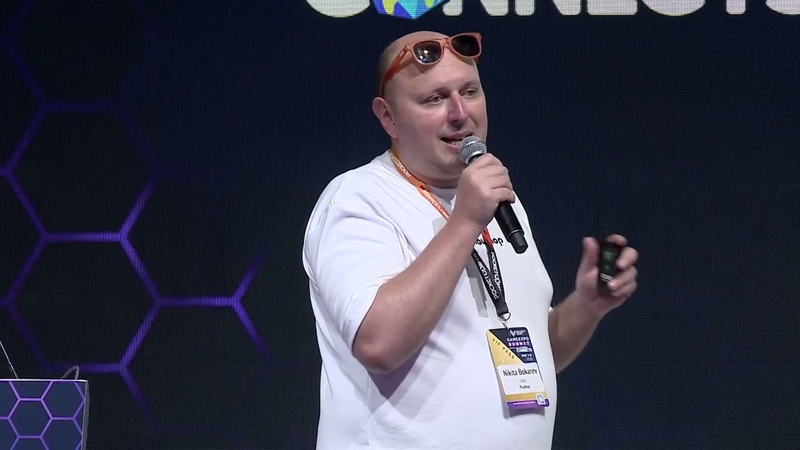
Session: Playhop: Current State & Opportunities For Developers - Nikita Bokarev, Playhop.
Web-based gaming has emerged as a critical strategic pivot for mobile developers facing rising user acquisition costs and stagnant lifetime values.
- Web gaming serves as a high-margin alternative to mobile, where revenue contributes directly to profit rather than being absorbed by rising user acquisition costs.
- Playhop currently hosts over 20,000 games and reaches 10 million monthly active users who spend an average of more than 50 minutes per session.
- Successful midcore titles on the platform now derive up to 85% of their total revenue from in-game purchases rather than traditional ad-based monetization.

Session: State Of Gaming - Josh Skinner, Sensor Tower
The mobile gaming industry experienced a notable shift in 2024, characterized by a return to revenue growth despite a contraction in global download volume.
- Mobile gaming revenue grew by 3.8% in 2024 despite a global decline in download volume, driven largely by a 17% drop in casual game installs.
- Live service models are the primary revenue engine for the industry, currently accounting for 84% of all mobile in-app purchase spending.
- Hybrid casual games are a major growth segment, recording a 37% revenue increase as publishers increasingly pivot toward this monetization model.

GOAT: Jani Torppa aka Fashion FRIDAY
The mobile gaming industry is currently navigating a critical transition, moving away from a period of stagnation toward a more dynamic and experimental future.
- The mobile gaming industry is shifting toward a decentralized model, with a positive growth outlook projected for 2025 driven by the integration of data-informed creativity.
- The Turkish market is emerging as a high-potential ecosystem for mobile gaming due to favorable government incentives, lower operational costs, and a high volume of agile startups.
- Finland’s gaming sector is currently undergoing a structural renewal, moving away from rigid legacy operational models to regain its competitive edge in innovation.

Week in Mobile Games E52: Tim Sweeney's epic App Store win & Tripledot's $800m AppLovin deal
The mobile gaming landscape is undergoing a structural transformation driven by legal challenges to platform monopolies and significant consolidation among major publishers.
- A US court ruling now mandates that Apple must allow developers to link directly to external payment systems on the App Store, a move expected to significantly impact mobile ecosystem revenue tracking and user acquisition strategies.
- Tripledot has acquired AppLovin’s games business, adding 10 studios—including Lion Studios, Machine Zone, and PeopleFun—to its portfolio, creating a combined entity with 2,500 employees and an anticipated $2 billion in annual gross revenue.
- The Tripledot acquisition doubles the company's daily active users to 25 million and expands its footprint to 23 cities, with the firm maintaining a 20% stake in the new venture alongside AppLovin.
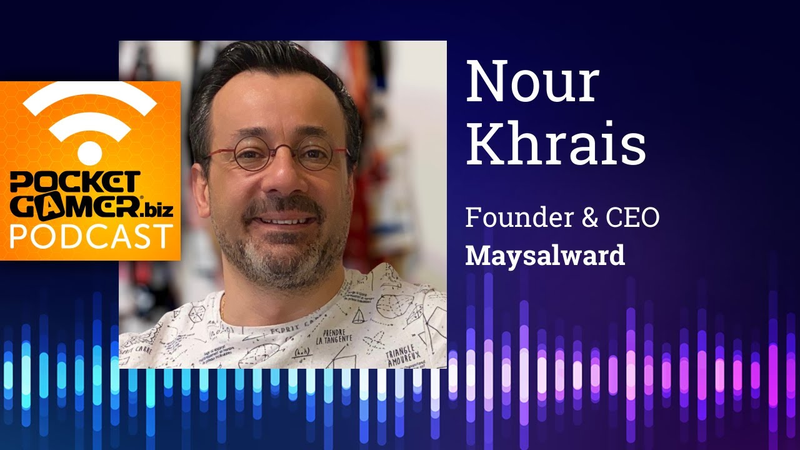
This Region Is A Hidden Goldmine for Game Developers
The Middle East and North Africa (MENA) region is emerging as a strategic growth market for mobile game developers, offering a combination of lower cost-per-install (CPI) rates and a rapidly expanding, mobile-first user base.
- The MENA region offers a strategic growth opportunity for mobile developers due to lower cost-per-install (CPI) rates and a mobile-first user base that can reach 60% of the performance metrics of tier-one markets.
- Mobile casual gaming, specifically board, puzzle, and card genres, dominates the regional market and accounts for over 70% of total gaming activity.
- Regional investment strategies have shifted from localized publishing of foreign titles toward the development and acquisition of original intellectual property and proprietary technology, led by Saudi Arabia, the UAE, and Qatar.

Gaming in the Middle East: Inside Abu Dhabi’s Big Bet on Games
Abu Dhabi is aggressively positioning itself as a premier global hub for the gaming industry, driven by a government-led mandate to transition the region toward a knowledge-based economy.
- Abu Dhabi is building a gaming hub through a government-led strategy that prioritizes long-term infrastructure and fiscal incentives like salary subsidies and lease support over equity-based models.
- The initiative leverages a high local gaming engagement rate of 87 percent to transition the region toward a knowledge-based economy.
- To address talent needs, the region is tapping into a pipeline of 5,000 annual technology graduates and launching programs to upskill 1,700 individuals for specialized gaming roles.

Why This CEO Moved His Gaming Studio from London to Abu Dhabi
The relocation of Hype Masters from London to Abu Dhabi represents a strategic shift toward fostering a collaborative, office-centric culture while optimizing operational efficiency.
- Hype Masters relocated from London to Abu Dhabi to prioritize an office-centric culture, viewing physical presence as essential for securing government partnerships and navigating the local business landscape.
- Abu Dhabi provides significant financial incentives for gaming studios, including zero-percent personal income tax, streamlined visa processes, and government subsidies covering office space and payroll costs.
- The move is designed to reduce bureaucratic overhead and lower company burn rates while simultaneously increasing the net take-home pay for employees.