Marketing reports and market data
Documents
10 Steps To Making a Successful Game
Achieving success in the independent game industry requires a disciplined, multi-faceted approach that balances creative vision with rigorous business management.
- The final 10% of the development process, specifically polishing and bug fixing, is the primary determinant of whether a game launch succeeds or fails.
- Developers should treat projects as businesses from the start by prioritizing low-cost operations and maintaining stable employment until the project achieves profitability.
- Success relies on an iterative development cycle that involves creating prototypes, testing them, analyzing feedback, and refining mechanics to ensure a polished final product.
GDC Summer Live Podcast - Day 2
Predictable success in the independent game industry relies on a rigorous, data-driven approach to publishing and community management.
- Launch performance is best forecasted by prioritizing data-driven metrics, specifically Steam wishlists and platform-specific algorithm behavior.
- The Nintendo eShop ranking system favors unit volume over revenue, incentivizing developers to use aggressive discounting to achieve top-seller visibility.
- Discord communities are more effective than traditional mailing lists for driving the early reviews and wishlist counts required for successful game launches.
How This 20 Yr-Old Went Full Time Game Dev!
The transition to a full-time career in independent game development is increasingly achievable for young creators by diversifying revenue streams rather than relying solely on game sales.
- Achieving full-time independence in game development requires diversifying revenue streams beyond game sales, utilizing a mix of YouTube ad revenue, Patreon support, and educational content.
- Aspiring developers should treat game development as an entrepreneurial venture, layering multiple smaller income sources to ensure financial stability during the time-intensive production cycle.
- Building an audience by documenting the development process through video logs creates a sustainable brand and income stream that can support a developer before their games achieve commercial success.

Maximizing Your Game's Reach - A Quick Primer on Culturalisation PG Connects Digital # 2
Culturalization serves as a critical strategy for game developers aiming to maximize global reach beyond traditional North American and Western European markets.
- Culturalization is a proactive strategy that aligns game content, themes, and assets with the specific worldviews, legal regulations, and cultural values of international markets to ensure global resonance.
- Unlike localization, which is limited to language translation, culturalization involves surgical design adjustments—such as modifying character armor or replacing incompatible assets—to avoid market bans and public backlash.
- Developers should integrate culturalization early in the development cycle to avoid the high costs associated with post-release modifications.

Anime IP in Games | Crunchyroll's Plans for Gaming
The anime-based gaming market presents a significant opportunity for expansion in Western territories, though it faces distinct challenges regarding audience expectations and localization strategies.
- Western expansion for anime-based games requires moving beyond brand recognition to provide deep game mechanics, robust end-game content, and a high cadence of live operations.
- Japanese publishers frequently struggle in Western markets by treating these regions as an afterthought rather than tailoring localization and strategic focus to local expectations.
- Role-playing games (RPGs) are the most effective genre for the Western anime audience, as they better leverage narrative depth and character-driven experiences compared to casual genres.
Using Accuracy & Realism to Attract New Gaming Audiences PG Connects Digital #2
Integrating scientific accuracy and historical realism into game design serves as a potent strategy for expanding reach beyond traditional gaming demographics.
- Integrating scientific accuracy and historical realism into game design serves as a strategic alternative to expensive licensed intellectual property, helping to differentiate titles from generic fantasy tropes.
- Authentic data sources, such as NASA-based planetary mapping or verified historical contexts, provide a foundation for game mechanics that increases player immersion and gravitas.
- Realism should be prioritized as a gameplay mechanic rather than a simulation, ensuring that authentic data enhances narrative depth and challenge rather than becoming tedious edutainment.
Panel: What Influences the Influencers? PG Connects Digital #2
The mobile gaming content landscape has undergone a significant transformation, evolving from a niche pursuit into a high-fidelity, mainstream industry.
- Successful influencer marketing now relies on long-term, authentic partnerships where creators are given the autonomy to integrate products into their own storytelling styles rather than following rigid, script-heavy advertisements.
- To maintain long-term sustainability in a saturated mobile gaming market, creators must prioritize high production values, innovative creative ideation, and the development of a personal brand that exists independently of specific game titles.
- Brands achieve higher engagement by providing influencers with flexible talking points that allow them to leverage their unique expertise and audience knowledge, rather than imposing strict promotional scripts.
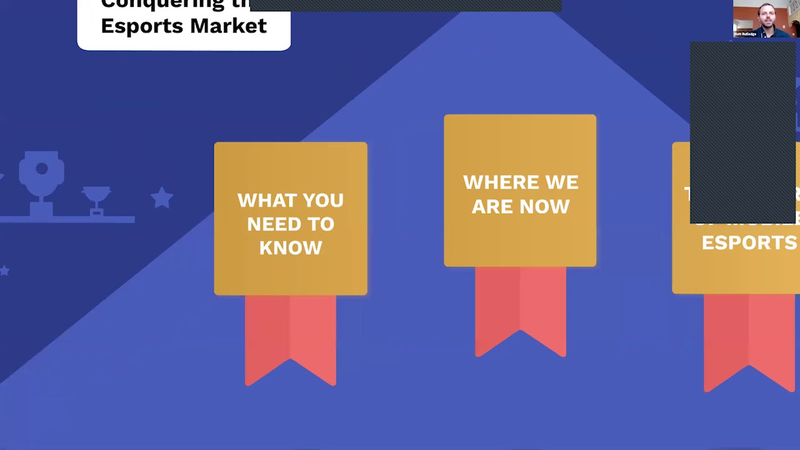
Mobile Gaming: Conquering the Esports Market PG Connects Digital #2
Mobile esports represents a significant, under-leveraged sector within the broader gaming industry, characterized by high accessibility and deep social integration.
- Mobile esports is a major growth sector that has already achieved massive scale in Brazil, India, and Southeast Asia, while remaining an under-leveraged 'sleeping giant' in Western markets.
- Mobile devices currently account for over 70% of total gaming watch time on YouTube, demonstrating a powerful synergy between mobile gameplay and content consumption.
- Competitive mobile titles like PUBG Mobile, Call of Duty: Mobile, and Free Fire have reached hundreds of millions of downloads and millions of daily active users, proving that mobile is no longer limited to casual gaming.

Professional Standards- Getting the Best out of Your Influencer Relationships PG Connects Digital #2
Successful influencer marketing hinges on the recognition that a creator’s primary asset is their audience, which they prioritize above any individual brand partnership.
- Prioritize partnerships with mid-sized creators who command 500 to 1,000 concurrent viewers, as they typically offer higher audience engagement rates and better return on investment than top-tier influencers.
- Develop games with inherent streamability by optimizing user interface layouts to accommodate creator overlays, which significantly increases the likelihood of organic promotion.
- Shift from transactional, one-off exchanges to long-term collaborations that respect the creator’s autonomy and align with their established niche and community-building goals.
Esports & Entertainment. A Success Story for Brands PG Connects Digital #2
Esports represents the professional, competitive pinnacle of the global gaming industry, currently commanding an audience of nearly 500 million viewers.
- Esports commands a global audience of nearly 500 million viewers, serving as a primary engagement channel for the 18-to-25-year-old male demographic.
- While the broader gaming market is valued at $150 billion, esports functions as a high-influence sector where the distinction between player and spectator is blurred, driving deeper user integration than traditional sports.
- Brands are utilizing tiered strategies to reach specific goals, with youth-oriented companies seeking immediate preference and luxury brands focusing on long-term positioning.
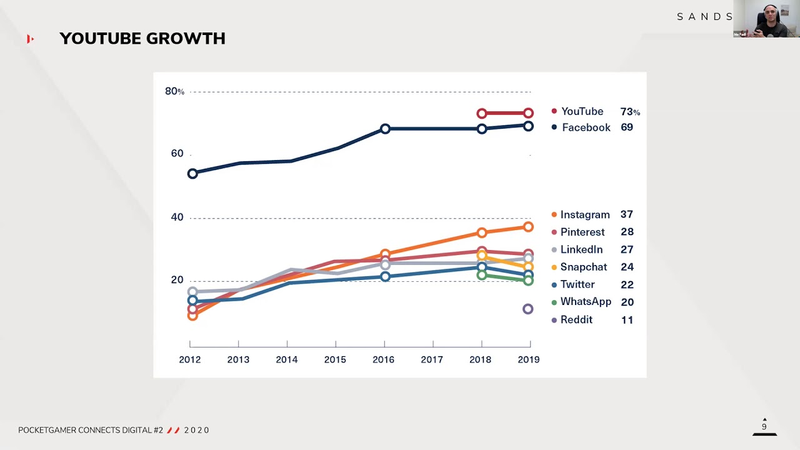
Esports, Influencers and New Media Changing the World PG Connects Digital #2
The presentation explores the evolving landscape of esports, influencer marketing, and new media, emphasizing how these elements function as critical drivers for the modern gaming ecosystem.
- Developers must shift from top-down advertising to integrating influencers as core partners, as traditional marketing strategies are becoming increasingly obsolete.
- Mid-tier (B and C-level) influencers frequently generate higher audience loyalty and more effective engagement compared to high-profile superstars.
- The gaming industry is transitioning toward 'active entertainment,' where viewers prioritize interactive experiences, such as community-driven events and real-time participation, over passive consumption.
Social Media Influencers and Non-Traditional Marketing: Legal Pitfalls and Loopholes
The Federal Trade Commission mandates that any material connection between marketers and influencers must be transparently disclosed to consumers to prevent deceptive advertising.
- The Federal Trade Commission requires transparent disclosure of all material connections between marketers and influencers, including cash, cryptocurrency, free games, and in-game assets.
- Companies bear ultimate legal responsibility for the conduct of their influencers, even when marketing campaigns are managed by third-party agencies.
- Disclosures must be immediately visible and cannot be buried within excessive hashtags; live streams require both audible and text-based notifications at the start and throughout the session.