1 free read left. Create a free account for unlimited reading + AI research.
Create free account
Esports & Entertainment. A Success Story for Brands PG Connects Digital #2
Key insights
6 takeaways- 01While the broader gaming market is valued at $150 billion, esports functions as a high-influence sector where the distinction between player and spectator is blurred, driving deeper user integration than traditional sports.
- 02Esports commands a global audience of nearly 500 million viewers, serving as a primary engagement channel for the 18-to-25-year-old male demographic.
- 03Brands are utilizing tiered strategies to reach specific goals, with youth-oriented companies seeking immediate preference and luxury brands focusing on long-term positioning.
- 04Prioritizing authentic community engagement over mere visibility is the primary method for converting high-intensity esports viewership into measurable business outcomes like direct sales and brand loyalty.
- 05Effective brand integration requires moving away from intrusive advertising in favor of providing tangible community value, such as loyalty rewards and exclusive consumer benefits.
- 06The COVID-19 pandemic accelerated a shift in marketing budgets from traditional sports to esports, as organizations sought the stability and high engagement levels inherent in digital competitive environments.
Ask AI about this video
Transcript
hi hi hi hi how are you how are you doing i'm fine fine thanks and you yeah i'm not bad thanks where are you based at the moment poland poland so a little bit different time zone but still very close how's things uh over there like is the weather good i mean i know we're all stuck indoors but hopefully things aren't too bad you know i would say we have english weather today i feel sorry for you we have english weather too but uh you know i am in england but it is disappointing weather so let's let's you know uh let's let's have some hopes for the summer yeah definitely yeah definitely hopefully we all get to spend a bit more time outdoors and uh enjoying the good weather and enjoying a bit of fresh air for the first time in a
long time but uh thank you for joining us uh today to talk about esports and entertainment i think it's you know really interesting talk we've had some really great sessions this morning so i'm you know i'm looking forward to uh learning more about what you've got to talk about yeah so uh thanks again for the invitation uh thank you back parts in this panel uh i gladly cover some some areas where the walls of esports and and marketing uh connect so i i will be happy to show you some some of my findings and some some of the statistics that uh you may be inspired by uh i don't know if we're waiting exactly for 11 30 because no no no feel free to i mean obviously by the time we get your screen shared and everything else like that it will probably be 10 30 anyway so don't worry too much but yeah if you want to want to get everything ready and then um i'm sure we'll be ready to go but uh yeah if take it away whenever you're
ready but before you start i just want to remind everyone that obviously we've got the chat function so so please feel free to join in in the chat the discord link's there so make sure you're doing that and of course we've got the q a session so please do throw your questions in because i'll be back at the end and we'll go through some of the questions so don't be shy yeah exactly if uh if you have some questions please please write them down we'll be happy to discuss them afterwards yeah so anyway there you go it is actually 10 30 as well so i will lead you to it and i'm looking forward to seeing your talk okay thanks so let's start so subject for my presentation is personal entertainment the success story for brands uh my name is phil bomboll and i represent the games at agency and what we do is that we kind of connect brands with uh with gamers and esports funds so my my professional background is
advertising and marketing so when i started the company my idea was to help the big brands the consumer brands tap into the gaming world and uh to do it uh effectively because uh obviously gaming is a rising market it's uh there's so many things happening and probably uh you may know more than me because uh you also from from the market itself so uh all of these things are starting to be interesting uh from the perspective of marketing and brands always look for new ways to communicate uh the products the services to to consumers so uh i just want to start with esports market introduction and uh i hope i i will not be repeating uh everything you've you've heard about today on panel or maybe you've seen some things elsewhere but i want to show you how going from the
like let's say helicopter view of the market how it applies to to the marketing and why the brands are in fact interested in it so what's his parts for for some uh of for the ones uh of you that don't know what's esports at all um i would say that esports is a competitive gaming so uh this is the part of the video game market where people uh rival in video games and don't do it professionally they are so-called athletes even and they have their own teams they attend tournaments and as you can see these tournaments can fill the stadiums so this is esports as the market i hope most of you are well aware what's esports because i i will go with some of the basic but some of the
some let's say advanced uh statistics or or or data so what's the place of esports in the whole gaming world i think this uh this image is a nice metaphor for it so when we take in consideration the whole target group of of gamers so the the the bottom part the widest part of the pyramid are the people who are playing video games obviously so this the most of the people are are there for for playing uh actively uh there are some people out of them who uh consume video content about gaming on youtube on twitch and so on uh less people are into streaming and commentary competition so people who want to compete with others but not on personal level and the personal gaming so let's say esports market is just just the top of this
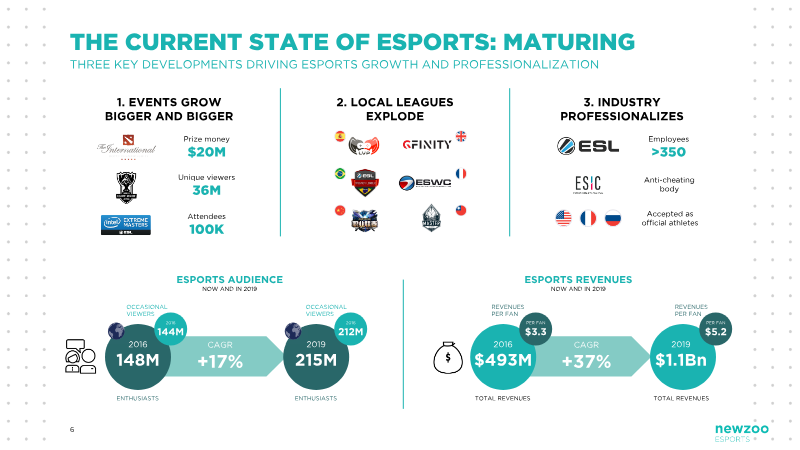
pyramid so it may not be the the biggest part of the gaming and as you probably know how how much worth is the gaming it's estimates for this year um 150 billion dollars when esports is a little bit less uh if you check the revenues on the on the right hand side uh this is just shy of 1 billion but the the power of esports is in let's say attracting viewers so esports is becoming a sport for for modern consumers and testimonies for this year is almost 500 million people watching esports at least once a month uh and in the whole world so obviously it differs uh region by region but in general uh it's it's quite a big number of people who are into this
and the audience is growing uh all the time and uh if we look at the let's say perspective uh uh of the past how how it happened that uh that we have esports is that it's very closely connected to the evolution of video games uh when we started uh with with the major um let's say major uh games they were single-player games because obviously there was no internet connection that was able to support playing over online but then over time multiplayer games appeared or mods to games and we can say that league of legends is a in fact start of a of a real esports market and it happened in 2009 of course we had much more games that were
uh esports oriented even before we we we had a real esports market like csgo the the the the previous editions of cs go but in fact and in 2010 second decade of of this millennium we really have seen the growth of esports but i think that it even evolved even further because uh since let's say uh start of fortnite which is also a a symbol here uh the games uh are not only meant to be played competitively uh in esports way but also to be viewed and and to be played amateurly by communities and celebrities alike so uh as i mentioned um esports is starting to overtake sparse in in media consumption and in popularity and there are some research already for for western markets where we can see
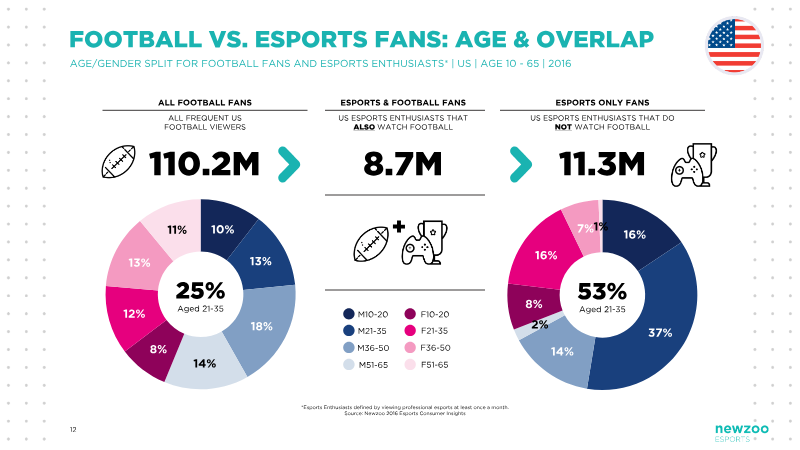
that this in this case for males 18 to 25 uh they consume more online video gaming content and esports than sports so this is this is happening for the first time in terms of this let's say eight segments and i think this is this is a a sign of a big change because for for the people who are right now growing up with with video games uh they can perceive the professional gamers as the athletes and and and stars they would like to follow and they are not that into sports uh that is a traditional sports and uh another study from from u.s market about the interest in eastport versus uh other disciplines of potential traditional sports it seems that esports is really
taking its part uh in this uh let's say young adult demographic uh of course um in terms of the of the youngest population uh 10 to 20 uh esports may not be the biggest let's say interest of them but it doesn't take in consideration consuming other types of video content for example videos on youtube and funny thing is that uh the behavior of esports fund is a little bit different than the ones from from sports because um the the the the people who play video games they also want to watch the video games but as you can see on this graph there's so many people who are only playing only viewing or doing both uh in terms of let's say traditional sports uh the
estimates for example for premier league uh fully premier league in the um uh united kingdom is that around on only around eight percent of the people who watch premier league actively play football so in terms of esports there's much more people playing the game they're watching but uh what's more maybe most more interesting is that there are people who are just uh viewing the the the video games played on these personal moments and uh what you need to know is that the esports market is changing very rapidly all the time this is a graph for from twitch which covers obviously not only esports but of course also let's say [Music] streamers playing video games casually or or something like this but uh in 2018
the the cs go viewership really dropped down because of the rise of the fortnight and actually was a problem for esports part of the of the cs go market because the interest in all of this let's say initiatives also dropped so what i wanted to cover uh especially today is uh the let's say interest from brands in esports because this is uh what's really changing very rapidly and and more and more brands are into esports because they they they they know that this is a way to reach their consumers but also there's let's say a competition between brands uh who will be the first of the category if they will be better than competitors and so on but um just to structuralize the approach uh that we use is that uh all the time
we need to look at the let's see business goals of the brand so some some of the brands just want to be in esports because this is what's uh what what they feel they should do but i think that the best let's say engagements of of of brands in esports uh are coming from say very far strategy that starts with brands business goals whereas business goals can be image uh that that brands want to have awareness brand awareness and obviously uh brand sales and then each brand has its own positioning the target group and for you will see that for some of the brands esports is a way to reach the current consumer base uh the majority of the consumer base but for some of them this is an investment um but then we've taken consideration what
are the brands needs and and and who they communicate to usually we can find a way they should be positioned in gaming so then we have different segments contacts that you can use and then campaign we do we can do for gamers or esports funds um i mean we use we usually use the word gaming as a as a more general uh uh word for for the whole market not only for esports and uh obviously there can be different levels of engagement so for some brands uh they just want to do the sponsorship and the sponsorship is driving rent awareness and this is this is the same that brands have been doing for for decades uh international sports is that they want to be visible to the specific target group of course sometimes sponsorship adds to the brand image
but this is just the let's say the first level of engagement then they they can do specific campaigns most of the time these campaigns are based on sponsorship because they they would rather use the credibility they can get from working with a specific team or or or a tournament then a much more difficult to implement level is is the offer so some of the brands um realize that uh if if they can't position appropriately their let's say basic services or or products they may want to go with a dedicated offer so uh obviously in terms of the services it's it's much easier because uh if you create digital service for for dedicated for gamers it's much easier to implement than for example creating a dedicated uh drink for gamers or esports funds and then we have a
platform so uh let's say some some of the brands would would want to have one idea that would connect everything they do uh in gaming or esports and uh some of these brands uh are doing that very very immediately so i will show you one one example and i think this is this is sums up how how the brand can be engaged in esports on different levels so uh what i wanted to show you today are examples of brands that uh engaged with esports audiences or or esports context this is and i divided this into two group three groups so definitely there are brands that are targeted at young people uh teenagers or young adults and these are the examples here are snacks drinks no alcoholic drinks
obviously clothing us are so cute quick service restaurants and teleco operators then we have brands dedicated for adults and this is mostly finance categories of banks and also insurance or our electronics [Music] for for different uses and then we have luxury brands luxury brands that are represented by for example cars or fashion so i wanted to show you the the case studies of of of this couple of brands and um starting with redbull i think uh if you follow uh esports you will definitely come across red bull because elbows is very active in in esports area and and they have been for years and in fact uh the pro approach red bull has is to create
a definitely a specific pillar of the whole marketing strategy and that's it's gaming so it's it's very strategic engagement and right now uh red bull is is is is doing uh some uh tournaments for amateurs like uh red bull solo queue and third but flick uh in league of legends and cs go and also they work with ninja the most popular streamer that is connected to fortnite and they've been doing also some some tournaments with him so uh if you if you uh want to check more what's what's what's going on whoever you will come across a lot of uh cool tournaments they've been doing or even a cool uh dedicated khan designs with league of legends and definitely it seems that red bull is betting heavily on on esports
as a major part of their marketing strategy you may have heard about gillette's in engagement in esports in [Music] 2017 they started a campaign where simultaneously start start neymar the the football star but also expected uh league of legends star and uh it's it's funny how they created a campaign that uh that put this these two let's say at least on par with each other so gillette showed um the consumers that they believe that uh esports can be the same as sports and they can show the same let's say dedication and and focus on on on precision that is very important for the brand uh
in uh in both of these cases so expect i was uh previously before starting in in this advert ad obviously he was a big uh star in esports and very well known and uh he may not be as popular as neymar but when taking consideration the segment they were targeting it was uh definitely very very similar case so there was the jet engagement and uh this was also obviously targeted at very young people who were starting their uh let's say um adventure with shaving where uh the gillette wants to position themselves as the first choice uh in this category and uh going to the the second group um the the brands that invest not uh in the in the current customer base but in the let's say short term investment
so mastercard became a sponsor of lec this is the league of legends tournament series and they've been doing a lot of things they started with the sponsorship this year they launched on different european markets they they launched dedicated cards in different banks uh that enabled fans to collect riot points so it was specifically for league of legends funds but also what's very interesting is that um royal games behind league of legends announced a a very breakthrough uh let's say activity is that they they announced that they would put uh branding on the maps of the game uh for the specific tournaments where for example mastercard is a sponsor but this is this is really happening for the first time on the scale because the in-game advertising has been tested
[Music] numerous times but this is the first time when it's integrated this way with with a publisher and the sponsor of our tournament if you've heard about beckham banco is a quite a big company producing home electronics for example fridges and you may recall that they started cooperation with fc barcelona and they started the campaign uh to eat it like a pro where they uh let's say con want to convince the target group that if they want to be as uh players or possible fc barcelona they need to take care of themselves uh in terms of the the food and so on and they did almost the same thing with uh league of legends so they became a sponsor of of uh abc again the
european championship in league of legends and they started to uh position themselves with the same message it's like it's like a proto player pro and they even did a very cool animated uh tvc for that but going to the third group the the luxury brands um bmw just announced this year that they are betting heavily on on esports because they started a cooperation simultaneous cooperation with five top esports team so this is probably one of the biggest uh marketing projects in esports uh since since the beginning of esports because these are definitely the top teams in the world and uh bmw uh wanted to connect them under the platform united new york rivalry so this is this is a air approach where where bmw
is creating a platform that connects all of these activities and um it's uh it's it's it's it's we're going to see the results of that because this has just been announced but definitely the reception was was was very good and bmw is just betting on the uh let's say development of the esports so uh of course um right now the defense of esports may first not uh be valid to drive cars or they may not have that uh much money to drive bmw or to buy bmw but um in in case of the most luxury brands of the cars they would rather right now invest in this area and position themselves as dream cars because some percentage of all these uh fans uh over time they will be able to to buy a luxury car or or just or any car
and when they do they they would better choose bmw because of this engagement long-term engagement that bmw is planning but i think uh the most shocking case that i i want to show you uh uh uh for for the for the end of this of this talk is louis vuitton engagement in in cooperation with league of legends so louis vuitton uh announced that they would create a specific crate for uh for for the cup of the of league of legends uh finals but also what they did is that uh they created together with the publisher they created in-game uh skins for the characters that uh you know were supposedly uh on the level of of of what would normally uh louis vuitton produce in the real world and also it was mirrored by a
specific dedicated collection by louis vuitton for for league of legends that you can see on the right and it was definitely attracted a lot of interest but also was sold out because uh it was very uh it was very limited in stock and and people really wanted to have something like this because yeah this is this is going to be very unique and probably uh will be a collector's um pieces uh already so uh if we think about brands and esports uh first the brands that are for young people they want to drive brand preference right now here and now for brands that are for for adults they want to create brand awareness and trials because they know that the consumer that they are targeting will soon be their core consumer base
but in terms of the luxury brands they bet on a very long term um roi of this of this so they want to drive long-term brand preference uh even though right now not every aspers fund is able to buy bmw car or louis vuitton clothes so this is everything i'm prepared for you thanks thanks for listening and we'll go to the questions hey yeah thank you really fascinating talk and we have got a few questions in here so we've got a little bit of time but in the interest of time i'll delve straight in if that's okay yeah of course um so the first question we had come in is with the lockdown is the revenue in esports growing yeah so tricky thing with esports um revenues uh is that they are driven mostly by first parties staff through sponsors and and advertising
so i would say it's uh the let's say the the final result may be mixed because first we have uh let's say cutting of the marketing budgets on a general level because most of the brands have seen some let's say losses in sales so they are cutting marketing budgets but then on the other hand esports is growing very rapidly and people i i haven't shown the data but for example on twitch uh the viewership uh april this year to april last year grew 100 percent and april this year to march this year 50 percent so definitely esports or gaming as general is is is defending very well in this uh very tough times and more and more brands are are even more keen to invest into esports so
maybe we we haven't seen the rise in the esports avenue right now but i would assume that these sports will generate more revenues this year than it was expected before yeah um on the sort of similar topic is someone else has asked will esports be the alternative for brands now that traditional sports are suffering due to covet or was it already something that was happening naturally and covert is accelerating it yeah definitely uh i would say that the current situation of pandemic is is is progressing things that have been happening for me for years naturally but right now it's it's just speeding up because uh for many many brands uh being a sponsor of traditional sports meant to be around rivalry and sports emotions and most of this in most of the cases the let's say the car base of of of
of traditional sports where adult males and definitely these brands realize that they can look for very similar um cases in esports so there's also rivalry there's also mostly males and maybe a little bit younger which is even better because this is an investment so for example we have uh we have seen a lot of uh investments in espor early investments in esports from uh beer brands so beer are mostly associated with watching and and cheering at the stadiums at home watching traditional sports and right now they really these brands realize that uh the traditional sports uh is a little bit in chaos right now especially specifically this year and uh the esports seems to be very solid um uh competitor to it because uh it supports is going as it was refused
previously so nothing really changed in terms of esports but of course let's say traditional sports traditional sports sponsors will look for esports as a way to build upon what they've been doing already but for some for some parent esports is a is becoming a much better option than traditional sports yeah okay and um i think we've got time for one other question so i think we'll just try and squeeze that in is um what do you think is the best way to seamlessly connect brands and esports without being too off topic yeah so uh i assume that the brands need to look for added value so people really react positively to most of the brands that are engaging with tv sports but uh of course you need to be very careful with the language and and not being too pushy in in the marketing
but still if you are able to provide added value for people so for example uh the mastercard that uh cooperated with different banks in europe where they created a specific card that when using it you you generate riot points is is is an example where you as a consumer get something extra for being an esports fan and and for a brand that perceives that and wants to help you in in your passion yeah okay well i mean that's time so uh unfortunately we haven't got time to ask any more questions but obviously people can continue the chat in the discord and everything else like that so thank you so much really yeah interesting talk and thank you for sharing your uh expertise with us today thank you very much so have a good uh conference yeah thank you thanks bye you
Summary
Esports represents the professional, competitive pinnacle of the global gaming industry, currently commanding an audience of nearly 500 million viewers. While the sector’s direct revenue remains modest compared to the broader $150 billion gaming market, its influence is disproportionately high among males aged 18 to 25. This demographic increasingly prioritizes gaming content over traditional sports, creating a unique environment where the line between player and spectator is blurred. Unlike traditional athletics, where participation and viewership are often distinct, the esports ecosystem thrives on a highly integrated user base that actively engages with both the games and the professional competitive scene.
Brands are successfully navigating this space by adopting tiered engagement strategies tailored to specific corporate objectives. Youth-oriented companies leverage the medium to foster immediate brand preference, while adult-focused and luxury brands utilize esports for long-term positioning and awareness. This strategic flexibility has allowed the sector to remain resilient even during periods of broader economic contraction. The COVID-19 pandemic further accelerated this transition, as organizations shifted marketing budgets away from traditional sports to capture the stability and high engagement levels found within the digital competitive landscape.
To achieve long-term success, brands must move beyond traditional, intrusive advertising models. Effective integration requires providing tangible value to the community, such as loyalty rewards or exclusive consumer benefits that enhance the user experience. By prioritizing authentic community engagement over mere visibility, brands can effectively convert the high-intensity attention of the esports audience into measurable business outcomes, including brand loyalty and direct sales. As digital consumption habits continue to evolve, esports stands as a primary vehicle for reaching younger, tech-savvy demographics in a meaningful and sustainable manner.

















Comments