Marketing reports and market data
Documents
Fireside Chat: Beyond IDFA - The Publisher Viewpoint
The mobile gaming industry is currently navigating a significant shift in user acquisition and monetization strategies following the deprecation of the Identifier for Advertisers (IDFA) and the implementation of Apple’s App Tracking Transparency (ATT) framework.
- The deprecation of IDFA and the implementation of Apple’s App Tracking Transparency (ATT) framework have shifted the mobile gaming industry from granular, user-level tracking to a landscape defined by aggregate data and probabilistic modeling.
- Long-term commercial success is increasingly dependent on core product quality and retention, as marketing can no longer compensate for poor engagement through precise, individual-level targeting.
- Developers are pivoting toward creative, brand-focused marketing strategies, including influencer partnerships and traditional media, to reduce reliance on automated, data-heavy bidding systems.
Superstar Session: Liftoff's Preparation for ATT
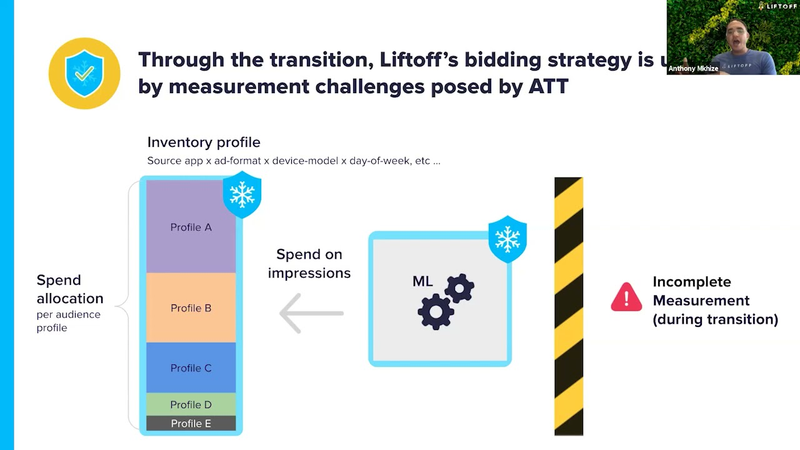
Apple’s App Tracking Transparency (ATT) framework necessitates a fundamental shift in mobile advertising, requiring developers to move away from traditional user-level tracking toward the SKAdNetwork (SKAN) ecosystem.
- Maintain a dual-campaign structure by separating pre-ATT traffic measured by mobile measurement partners from post-ATT traffic measured via SKAdNetwork (SKAN).
- Keep parallel infrastructure running for three to five months to allow for background training of SKAN-based models and bidding optimization before fully shifting spend.
- Freeze existing machine learning bidding models during the initial post-launch period to protect campaigns from volatility caused by measurement breakages and non-measurable inventory.
Superstar Session: Seize the Moment-Seasonal Changes in the Asian Market -The Best Times to Monetise
The Asian mobile gaming market operates on a distinct seasonal rhythm, where revenue and user acquisition are heavily influenced by cultural festivals, regional shopping events, and academic calendars.
- Align live-ops and advertising spend with peak regional windows, specifically Chinese New Year, Japan’s Golden Week, Korea’s monthly pay cycles, Ramadan, and Songkran.
- Avoid launching new titles during intensive academic periods, as these times consistently correlate with reduced player engagement.
- During high-traffic e-commerce periods when advertising inventory costs spike, shift focus from user acquisition bidding wars to retention and in-game content to capture spillover traffic.

Fireside Chat: Exploring the Potential of InGamePlay Brand Ads
In-game native advertising represents a strategic shift toward non-intrusive monetization, prioritizing player immersion over the disruptive nature of traditional interstitial ads.
- Approximately 68% of players prefer seamless, non-clickable in-game ads over traditional interstitial formats because they maintain immersion.
- Native in-game advertising is a resilient alternative to tracking-based models, as it relies on contextual relevance rather than invasive user data like the deprecated Apple IDFA.
- Integrating branded content into 3D environments, such as digital billboards, enhances atmospheric realism and supports higher player retention rates.

How to Optimise Game Success & Monetisation With the Right Brand Partners
The gaming industry is undergoing a fundamental transition toward G-commerce, a model that integrates brand partnerships, e-commerce, and digital assets directly into the gaming experience.
- The G-commerce model integrates e-commerce and brand partnerships directly into game lobbies to monetize the entire player base, including non-paying users, without relying on disruptive advertisements.
- By rewarding players with in-game currency or exclusive items for completing external retail purchases, developers can increase player lifetime value and retention.
- Plug-and-play software development kits now enable developers to integrate complex e-commerce and marketplace features into their games in as little as one hour.

Panel: Best Practices in User Acquisition & Retention
Modern user acquisition strategies are shifting away from traditional reliance on dominant social platforms like Facebook toward more diversified channels, including Google’s Universal App Campaigns, Unity, and AppLovin.
- User acquisition strategies are shifting from a reliance on Facebook toward a diversified mix of channels including Google’s Universal App Campaigns, Unity, and AppLovin.
- Marketing should be managed as a dynamic financial investment where capital is reinvested as long as marginal revenue exceeds the marginal cost of acquisition, rather than operating under rigid monthly budgets.
- Playable ads are a high-performance format that can increase install rates by two to three times compared to standard video advertisements.
Growing Your Audience in Alternative App Stores
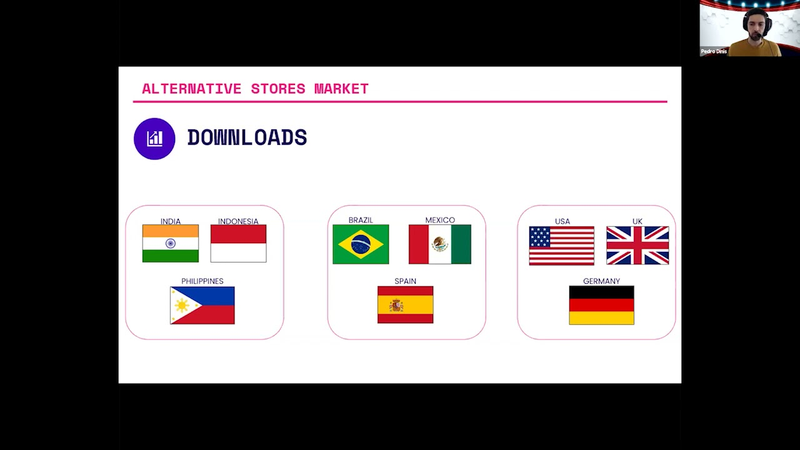
Alternative app stores have emerged as a critical growth frontier for mobile game developers, currently accounting for over 20 billion annual downloads.
- Alternative app stores, including Aptoide and OEM platforms like Huawei’s AppGallery, now account for over 20 billion annual downloads and represent 10 to 20 percent of the total Android market.
- Expanding into alternative channels requires a shift from automated, programmatic advertising to a hands-on operational model focused on direct business development and localized content.
- Alternative stores offer lower competition and more stable organic download rates compared to the saturated Google Play Store, making them effective for generating incremental revenue without cannibalizing existing traffic.
The Big Catch – Unlock New Audiences with Motivational-led Creative
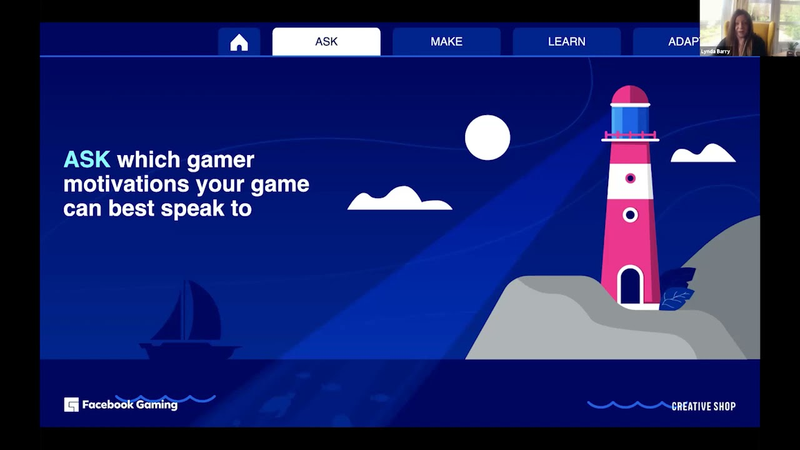
The gaming industry often suffers from short-termism, where developers target narrow, saturated audiences with repetitive gameplay-focused advertisements.
- Developers should shift from gameplay-focused ads to a motivation-led strategy, targeting eight core psychological drivers: self-expression, social connection, progression, expertise, discovery, power, escapism, and relaxation.
- The gaming audience is broader than traditional stereotypes, with 86% of internet users playing mobile games and 50% of the mobile gaming demographic being women.
- Women demonstrate higher engagement levels than men, with mobile gaming sessions that are 25% longer on average.
Superstar Session: Art Definition: The Queen's Gambit of CRO
Conversion rate optimization serves as a critical, scientific methodology for transforming mobile game store traffic into confirmed installs.
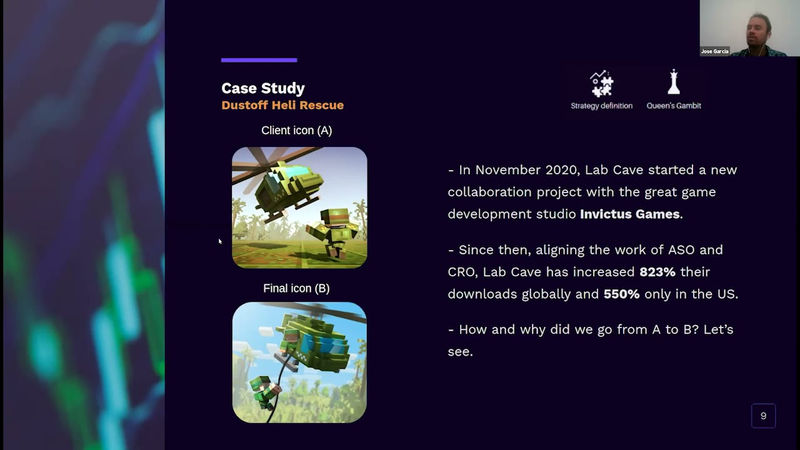
- Systematic A/B testing of creative assets can drive massive growth, with documented cases achieving a 2,000 percent increase in daily active users and an 800 percent increase in global downloads.
- Rigorous conversion rate optimization (CRO) can specifically boost U.S. market performance, with targeted asset testing yielding a 500 percent rise in installs for certain titles.
- Testing cycles should span three to four weeks to ensure results reach statistical significance rather than relying on industry assumptions or universal design tropes.

Making indie games is TOO MUCH WORK
Managing the competing demands of indie game development, personal branding, and family life requires a shift from reactive multitasking to structured systems.
- Minimize cognitive load by prioritizing core creative strengths and offloading secondary operational tasks to freelancers or automated systems as soon as resources permit.
- Replace daily marketing integration with a batch-processing strategy, dedicating one week every few months to produce a comprehensive library of assets including screenshots, GIFs, and video clips.
- Maintain a five-minute daily posting routine by pre-organizing marketing assets with prepared descriptions, hashtags, and clear calls to action like Steam wishlist links.
Making Marketing Mistakes
Marketing in the game industry is an inherently experimental process where failure is not only inevitable but serves as a vital catalyst for professional growth.
- Marketing failure should be reframed as a vital resource for professional growth rather than a source of personal shame.
- Failures are categorized into three distinct types: preventable errors, system-related process issues, and intelligent failures resulting from new ventures.
- Effective post-mortem analysis requires focusing on the 'what' of a failure rather than the 'who' to identify root causes and specific skill gaps.
Ad Strategy in the Age of Consolidation #ELEVATEYOURGAME - PG.Biz Fireside Chat
Modern mobile gaming success relies on a sophisticated, data-driven approach to ad monetization that treats internal studios as collaborative partners rather than mere subordinates.
- Maximize ARPDAU by aligning ad supply and demand through a structured funnel focusing on eligibility, surfacing, and engagement.
- Utilize a diversified portfolio of titles to leverage cross-promotion and first-party data, treating internal studios as collaborative partners rather than subordinates.
- Implement a phased ad integration strategy starting with low-friction rewarded video before introducing interstitial formats to non-converting users.