1 free read left. Create a free account for unlimited reading + AI research.
Create free account
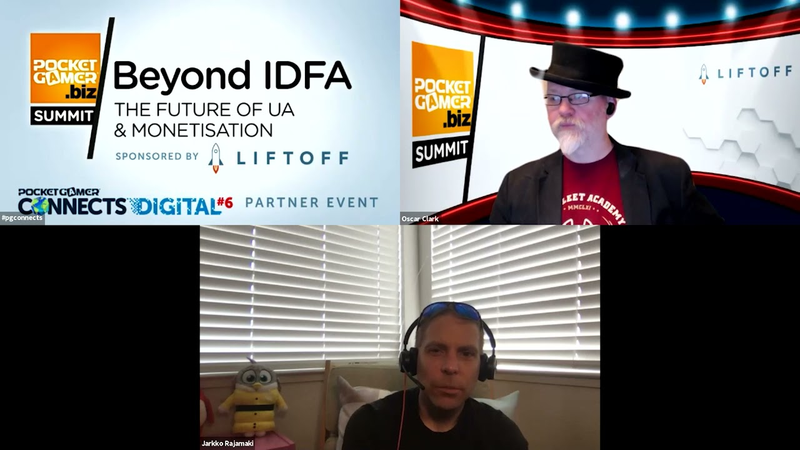
Fireside Chat: Beyond IDFA - The Publisher Viewpoint
Key insights
6 takeaways- 01Long-term commercial success is increasingly dependent on core product quality and retention, as marketing can no longer compensate for poor engagement through precise, individual-level targeting.
- 02The deprecation of IDFA and the implementation of Apple’s App Tracking Transparency (ATT) framework have shifted the mobile gaming industry from granular, user-level tracking to a landscape defined by aggregate data and probabilistic modeling.
- 03Developers are pivoting toward creative, brand-focused marketing strategies, including influencer partnerships and traditional media, to reduce reliance on automated, data-heavy bidding systems.
- 04The impact of privacy changes is uneven, with games targeting broad audiences facing fewer acquisition hurdles compared to niche titles that must now innovate to find users without granular data.
- 05Monetization strategies are shifting toward hybrid-casual models that balance ad-based revenue with in-app purchases to create more robust financial frameworks.
- 06The industry is prioritizing consumer trust and data privacy as a necessary evolution, moving away from the 'black box' reliance on automated bidding that previously favored large-scale incumbents.
Ask AI about this video
Transcript
next up we have um from robio a former colleague of mine back in my unity ad days uh yoko i think is around uh are you there sir hey how you doing man here i am ah perfect perfect good thank you good to see you thanks thanks for having me oscar always a pleasure oh it's a pleasure so now nowadays uh well okay i i won't i'll let you explain could you tell everybody um you know what you know who you are what you do and and all that kind of stuff oh sure sure so i'm i'm vp of advertising at ravio and i work hard with our super talented team game teams ua team monetization team tech team bi team to make sure that
advertising in in our games and off our games is is as good as possible and is really functioning as well yes i said ever good and and it's really a kind of cross-functional exercise for us so it's it's it's a shared shared goal and shared responsibility ah we get it and i think that's a really key thing isn't it yeah knowing the the value of the ads for you know getting users but also monetizing users getting that balance right and knowing the process of making that work i think it's really key so in terms of you know you know obviously you've had history as well because you know like me you were back in yeah the day at unity ads um um but now you're in ravio what does success look like particularly when you're looking at kpis in terms of youth acquisition or monetization you know what what does this happen like particularly in a kind of new game or an established game is there a difference well not necessarily a huge difference in in that sense that our
philosophy is that the three most important success factors are are firstly the game itself secondly the game and early the game so it's it's ultimately all about the product and and the purpose of of marketing and uas is really to kind of pour fuel to the fire and it's it's even for our our super super team and vert class team it's it would be very very hard if not impossible to to scale scale and and make very mediocre game game a big one so so in a way that that's that's what we are always always looking for and that's that's the starting point so number number one kpi for for us is really that the game is fun and enjoyable for for long periods of time so it's really the long long retention that that we are looking for and in a way that that that the game can offer enjoyment for the players for a long time and if if you get that right the money money will will follow and exactly if not build it you know
come but it is you know if you keep it interesting and i think it's still actually really important that we remember that when we're talking about ua we're talking about you know monetization we're still like you said it's fuel to the fire it's about how it supports and builds the game isn't it yeah it sounds a little bit trivial but you still hear it around around the interest sometimes when you when you talk with people that that there's still some kind of mental gap very often between the game teams and and ua teams and they see a little bit themselves separate function and operating and separate silos but but for for us we don't see it that way at least anymore that that ua is part of the game team and ua managers are actually embedded into the game team and they share the same goals and and and they they understand that hey we are in in this together and and and what as a result what we see less than a lot of my other colleagues what i'm hearing that that they said the game team is saying
that hey if we just bought the high value users the game metrics would look good and and and and that that way but in a way we are kind of past that because we kind of are aligned aligned to teams very very neatly no exactly i think understanding of what the different audiences bring and not just about the money is really but actually for me it's also about live ops and how you know live up to me is a fantastic source of what we're gonna tell people and where we're gonna acquire new users because you know keeping that narrative about the evolution of the game is important to keep players well why is it not being tapped into with user acquisition as well uh next up so um now obviously you know we know this you know atp idea of a you know stuff is happening but up to this point what has been the key tools for you to drive both marketing and particularly user acquisition and how has that changed over the last few years i i think that the starting point the point really really is to kind of
see see the progression that that the competition has become more and more more fierce in the market that app store on the mobile game it's easy to enter anyone can submit their app apps to the store uh but at the same time of course there's uh tons of tons of games coming there every every day so so the competition is is insane and and what had that has lead also that the the production values of of mobile games have been going going up so you know what i see even at aaa quality games in the in the mobile space which of course is awesome awesome to the players and at the same time the competition has led really really the mobile mobile game marketing to be moving more and more deeper into into kind of data-driven mode becoming more and more granular in terms of targeting and pricing and even bidding and and really the performance measurement is is really sophisticated today in a way that you might be looking for different metrics for
different type of segments and and it's not anymore like it used to be still five years ago that hey this is this is my cpi on buying on tcbi you right today might be buying me 10 or 20 or 100 different cpi's based on on the segments and other other kind of targeting criteria that you're using so i i kind of feel that the ui manager role today is is merging almost with the bi analyst role that it's really really really analytic analytics yeah yeah i mean i think that's absolutely key i mean i think the level of i mean in some ways is i mean the reason why i think this is interesting particularly is because this is the point where we're about to drop off a cliff where that level of sophistication where we've really nurtured the ability to understand the data to understand the cohorts from some life cycle not inside the difference and the deviation between behaviors early on with behaviors later on the ability to be able to understand how we acquire what messages we give all that lovely sophistication it's a
beautiful symphony of instruments that we've pulled together and now atp and the loss of idfa what will change well i some folks have been painting very very kind of doomsday scenarios where basically you can't do ua anymore and and and basically everything will break and and you should just forget the whole whole thing yeah exactly but but i i think it's very important to remember that that the population of of earth will will not change and and the play players are are still there so if you have a game that your players enjoy today they will also enjoy to do equally after the att changes will will go go out out there and in a similar way if if if any given marketing channel has been working for for you now or or any any kind of publishing in my inventory has been good i think the overall value will remain the same the
the valuable users and good users for your your games are out there what really is changing really is is that that it will be harder to find and and also harder to follow the players that where they're coming from what they're doing in your game and and what the whole player life cycle will will be at at the user level so you need to work more more and more with the aggregates aggregates and averages and and really really think through and build different kind of more more probabilistic models uh to evaluate your kind of marketing performance so i mean i wonder i'm almost wondering whether what this is doing is it's gonna force us to be more creative in terms of the not the creative um you know the the ability to kind of get and if we can see the overall impact of our marketing but we're going to have to be more imaginative about how we communicate that uh it's gonna be harder to differentiate in terms of segments potentially but we will still see player behavior
change and like you say whether it's you know predictive or whether it's interpretive it doesn't really matter but is there a point where you know it gets but there is that there is that thing where it could even become potentially more positive because i know i personally feel stopped by some ads that are i i see on facebook for example i might have gone to amazon i've gone buy something the next thing i see for the next week i'm inundated with ads about the thing i've just bought that i no longer want because i've got one yeah i'm not making sense i mean is it that we we just need to get more creative absolutely and i i totally totally agree on on that and it it this change will in a way also also level the playing field as as such that that pretty much it's pretty putting putting and a little bit smoothening out the the kind of huge data advantage some some players in the space have have had and and also it's in in my view
view it it also because it involves a little bit more more risk in in terms of because you can't can't have that granular visibility in in the into into the performance in a way so it opens up also also possibilities to really think outside the black box and and look for new channels and and new new new ways and and more or less kind of couple steps back towards the traditional way of doing marketing marketing as well that a lot of people have my brand marketing mindset yeah and then also looking for hey what the what the influencer space looks like and even even even for bigger developers even tv might might become become more more relevant again and and so on so and i i i know know some developers that already have got very good results for example just running radio ads because that's that's not very competitive space in in mobile gaming
so really looking out outside the box wheel will become very very lucrative opportunity again yeah i think that's a little you know that's any way of looking at it what i'm interested though is whether you think it's going to you know most affect the bigger companies the smaller ones publishing developers who do you think could be most effective you know who do you think are going to be the winners and losers as a result well i i think that that it's it's very very important to understand that what data do you have and what data you don't have and and what you can do with it but but in a kind of border terms i i think it's unfortunately not going to have a similar impact on everyone and i think there will be kind of two two kind of fundamental impacts and and of course the first one is is what everyone is is talking about that yes it's becoming more difficult to do the pinpoint level targeting and which then leads to the conclusion that hey games with broader
target audience and broader upli appeal will have a kind of potentially smaller impact because they they they can they can kind of shoot shoot with the wider net in the first place and for example super casual games are already targeting pretty much everyone everyone and they're not that picky about the channels they run right now so it's it's not that kind of fundamental change to them because they they haven't been been doing doing kind of very important targeting in the first place but but while at the at the other end then games with very niche audience and and very strict targeting criteria might have very very much harder time time kind of finding finding players and and and they need to really come up with the with the with the new strategies well i just think you know does this put more power into people like you know facebook you've got a wider understanding of what people do uh rather than maybe a you know game specific you know yeah or whatever you know and
obviously we've lost the abilities that someone like facebook can do some kind of algorithms to see what behaviors are likely to be you know yeah yeah so if that means we're going to basically just you know see a crunch in the in the ad space i think yeah in terms of the the diversity that we've seen so far uh or are we gonna see more innovation coming instead i i hope that there will be more in innovation because if that kind of for that the situation kind of forces people with with kind of different types of games of of coming with new new strategies for that and and then the the kind of the there's a kind of second impact as well that i i really totally hope that i'm i'm wrong with my my my kind of conclusion question there that can potentially happen as well is is really that that that will give you an overly simplified example of what i mean is really that if you have two developers with slightly different audience
and slightly different read from kpis and of course in a perfect targeting they both can find their valuable audience but if you need to kind of buy buy your audience by averages and you don't know which users to target it's very easy to see the path where the the the one with the slightly better kpis can can actually all output you basically everywhere and take a lion's share of of the market so this is a little bit what we what we saw in in like 2012 to 2015 where there was one of the big big companies and big games and very strong games they're actually spending an oversized share of the market on the on the on the user acquisition site just because they could outbid for everyone so i really hope we don't hopefully don't get there but but there are some signs that that that might might be a worry but even in that case there were there were still opportunities for
smaller teams with smaller ambitions to get started now they couldn't get the market share potential but they could at least get to the stage where they had a chance to get in front of users but perhaps in that era because featuring had more value they got more organic is it making sense yeah absolutely and and also also the competition wasn't wasn't that fierce as well well crazy you know i mean even then i think it's the other side of it as well it says the monetization side of it so you know i mean obviously we've got these platforms like you know the ad congress the chart boosts the mobius lifts off cigarettes these there's no idea how no problem group who are absolutely clearly working together to be smart to bring up provide services for people who don't know how to best to deal with it and nothing like that that's really you know important but i think it's also the aspect of you know what impact will it have on on
revenue and and it seems to me that there's two things that come to my mind which is one the more differentiates the game the easier it will be for them to both you know generate revenue but also generate audience but secondly it feels to me like there's going to be a push away from pure ad funded to more iap based revenue is that sound too yeah yes and in a way i i think that the sweet spot probably will will be will be more on the what everyone is buzzing about the kind of hybrid hybrid casual space for for example where where you have a little bit more depth into the game and and then you can also introduce more more of the iap features and value propositions than than you have in the hebrew casual but still still you you build the game in a way that has a broad appeal that helps you on the uk side that it's really not targeted that left-handed violin player in in in in northern montana but in a way
that you have a wider wider audience for the game that helps you you to get the get the scale for for the ua as well yeah and i think if you add on to that i mean one thing i always go to is that data years a couple years ago with um looking at pubg mobile and how the largest um uh second largest audience for pubg mobile was saudi arabia and that they would they were generating something like four to five times of revenue per user of the population of the us which is like crazy and i think you know that to me that says you may not be able to get the specific targeted cohorts you once had but you may be able to get these aggregate pieces of information about general behavior and if you use that smartly you can still be affected to a large degree maybe not the you know operatic policy that we currently have but i still think there's a lot of
you know smart potential that comes out of the data there uh absolutely especially of course its starting point is is really that the that the a game is game game is good and has a potential there yeah no yeah we get back to the game aren't we we're back to have we've got a great game so i mean next thing in my head is i do you think this is going to be a short term blip are we going to find new tech new options which just mean that this level of sophisticated will just come back again you know is this short term or is this long term well i i think that the all the all the impact that it will have will have a larger impact on the short term because everyone is still learning that which alternative strategies work work and and what we can do in a different way and and get get potentially equally good results and what will not work and so on and of course there are potentially and most likely also things that we don't know that we don't know know yet yet so it might be hard to say
but but but one one lasting change that i i anticipate from from this really like i mentioned is really really in in relative team term terms it's it's it's really beneficial once again if if you can have a game that has a broader appeal yeah and and you know like i mentioned also that the the new channels might be coming up really really great opportunities and because it kind of forces you to go also also after the new channel potentially especially for for for for games that that can't can't compete necessarily on average terms with the kind of blockbuster he hits hits on on scale so but there's a lot of opportunities for for those games as well to kind of find define the audience right in the right places when they understand that hey this is my target audience and i'm going through the hoops that hey what the where can i actually find effective with my my my specific target audience you're actually making me
go back to my old school days of my marketing training i think i think we're anyway one of those guys who was talking about how industries when they when they kind of mature you end up with commodities and you end up with niches and i think you're describing in this broad appeal i don't mean commodity in a bad way but you know a broad appeal to me if it's that kind of general principle this appeals to everybody but i think there's still this balancing out between niches i think i think what's going to be fascinating for me is to see how people address how those niches create content you know which has intrinsic and now i think it does maybe that doesn't take you back to your traditional branding as well absolutely and really like i mentioned mentioned the understanding your kind of target audience that that that i think it you're fooling yourself if you say that hey i'm i'm doing i'm doing this hardcore hardcore kind of kind of rpg game for 50 year old females
and in a way that knowing and then when in terms of marketing thinking through that hey vera can actually reach this target audience effectively and then you don't have to compete on on facebook with the on same terms with the with the more broader appeal games yeah i mean if only there was some sort of emotional avian kind of entity that you could bring away um i'll move on before anyone gets that joke um so last question asked before i asked the earliest question is what do you think is the one step that any developer particularly a smaller developer should take in order to be able to adapt quickly well i think that the best protection as always is really to make sure that your your game is as as good as it it can ever be that that when you have a great great product that's that's that that puts you in a in a kind of a very very good position in in the first place and and then of of course it's very very
important to make make the best of of all the data that you you can have and and the capabilities that you can you can have in in terms of of you a in the new situation just kind of make sure that you're fully utilizing and experimenting with the new conversion value shima to find really the conversion model that that is optimal for you your game because that there's no one one single right answer that how you should be setting that up and then what what are the time time time time kind of horizon for for kind of the conversion data that you're looking for are you kind of sticking with the first 24 hours or are you trying to get signals for for a longer retention and so on it really depends on on your game and really then also you use the best out of the 6 bit bit limits on on the on the on the apple side how you can set up your ui campaigns and think through that what contextual signals are important for for you in terms of targeting that you can do and of course of course if you can get any
any virality now now it's it's very more vertical than ever exactly more virality they're better for us right now um i've got a couple of questions here um uh will sourcebid work post idfa with different networks uh i think it will but there is that glitch that that it put the potential you need to in order for you to understand stand and get the data on on the source level source level performance is that the source is big enough that there's certain certain amount of conversions coming coming through that source so otherwise it will be it will be blended with the other so then then of course you can bid on that but then then you not necessarily get the directory all the performance data back but for those sources that are above that apple threshold whatever it it it will be there's some some some guesses in the in the in the industry that what that that that might be but as
long as it's above that that level the amount of conversions that you're getting from that one source then you're going to get the data on on that source level i don't know it's going to be a lot of guesswork in this in the initial few weeks at least i'm sure um another question for us um apple is going to send site id with uh sky network how can developers get it and are there limited information or will only ad networks have access to it do you think uh i i think it depends on on how you how you work with the with your your your kind of mmp that's yeah this is stuff i have no idea about because i haven't gotten that detail on this one yet but it is i just think it's fascinating i think what's also fascinating to me is just how you know at the end of the day we we are going to see an impact we are going to see an effect in the short term and the long term i think
um there are so many people who are claiming it's doom and gloom there are other people who are trying to find ways to walk work round but i think if there's anything positive out of it for me it's about we need to take privacy more seriously and i think that we're kind of paying the price in some ways for not paying enough attention arguably to privacy and what i worry about most is if we don't deal with it responsibly if we don't adapt appropriately we could end up creating more problems for ourselves later down the line when you know google do their version when you know somebody decides to do something to facebook whatever that might be um it feels to me like there's you know this this is a warning a shot across the bow in my opinion about how we use data responsibly as an industry i i couldn't actually more and and that's also also the starting point that we are taking as well that we take the privacy stuff
very extremely extremely seriously and carefully and and really really we put the player first and all the all the kind of player player safety first and then also also make sure that that whatever data we're collecting that we're using that responsibly and i think it's only a good direction where basically the whole industry making the consumers more aware of of the data collection and also we we kind of responsibly explain explain to the consumers and players that hey this is actually how we are using the data and create that understanding in in the players and and give them the the kind of free choice and and also that they also understand the value proposition that hey if i'm sharing the data with this developer it uh it actually might for example make the ads relevant for for me then i can make that choice that hey is is that good good for me and and am i fine with it and and also also then when we kind of build that awareness it's an understanding in the in the consumers and in our player bases at any way they also understand
that that that is also not necessarily a huge huge threat to them in a way that if if they share share some data with with with kind of responsible kind of parties in in the industry that it's it's not a no not the kind of a issue for them them that they they they can't sleep sleep at night that some someone is kind of misusing their personal information next thing you're gonna say we have to create a sense where people can trust us i mean that's really what we're trying to say here isn't it yeah we haven't been either an industry maybe trustworthy enough or at least communicated that we're trustworthy enough uh and now i think we we have a real need to do that and yeah no no i think it's it's about time yeah absolutely last thing um do you think small studios will have a lot less chance of success now um you know or is there still hope for smaller startups
not necessarily because it once again it's it's all about about the game if even if you're a small small studio and you have a great game you have you have a great future and and in a way way it's it's not necessarily a kind of size issue as as such of course of course the bigger studios have more more resources and and can can do a lot of stuff more more stuff in-house but even as a small small studio there are a lot lots of partners in in the industry a lot of a lot of kind of uh third-party party vendors of of different kind of services that you can you can tap into tap into and use their experience as well and and as we all know they're more than happy happy to always help you absolutely absolutely yoko absolute pleasure to see you again um it's been far far too long i can't wait to see you over here likewise likewise always always a pleasure all right lovely saying it and take care and on that note thank you very much
everyone
Summary
The mobile gaming industry is currently navigating a significant shift in user acquisition and monetization strategies following the deprecation of the Identifier for Advertisers (IDFA) and the implementation of Apple’s App Tracking Transparency (ATT) framework. This transition marks a move away from hyper-granular, user-level tracking toward a landscape defined by aggregate data, probabilistic modeling, and a renewed focus on product quality. While some industry observers have predicted a decline in the efficacy of mobile marketing, the consensus among industry leaders is that the core challenge lies in adapting to reduced visibility rather than an inability to reach players.
The primary thesis is that long-term success remains tethered to the quality of the game itself. Marketing and user acquisition are viewed as tools to amplify a strong product, but they cannot compensate for poor retention or lack of engagement. As the industry moves past the era of precise, individual-level targeting, developers are encouraged to adopt a more creative, brand-focused approach to marketing. This includes diversifying into new channels, such as influencer partnerships and traditional media, and moving away from the "black box" reliance on automated, data-heavy bidding systems that previously favored large-scale incumbents.
Key findings suggest that the impact of these changes will be uneven. Games with broad appeal are expected to face fewer hurdles, as they are less reliant on niche targeting. Conversely, developers of specialized, niche titles must innovate their acquisition strategies to find audiences without the benefit of granular data. Furthermore, the industry is seeing a shift toward hybrid-casual models that balance ad-based revenue with in-app purchases, reflecting a need for more robust monetization frameworks. Ultimately, the industry is being forced to prioritize data privacy and consumer trust, viewing these regulatory changes as a necessary evolution toward more responsible data practices that prioritize the player experience.















Comments