1 free read left. Create a free account for unlimited reading + AI research.
Create free account
Making indie games is TOO MUCH WORK
Key insights
6 takeaways- 01Minimize cognitive load by prioritizing core creative strengths and offloading secondary operational tasks to freelancers or automated systems as soon as resources permit.
- 02Focus on the 20% of effort that drives the most significant results while utilizing repeatable, low-friction workflows to manage remaining operational requirements.
- 03Transition to full-time development by delegating established, system-driven marketing and operational workflows to specialized contractors as the studio grows.
- 04Replace daily marketing integration with a batch-processing strategy, dedicating one week every few months to produce a comprehensive library of assets including screenshots, GIFs, and video clips.
- 05Maintain a five-minute daily posting routine by pre-organizing marketing assets with prepared descriptions, hashtags, and clear calls to action like Steam wishlist links.
- 06Establish rigid, predictable working hours to separate development sessions from marketing tasks, preventing the mental exhaustion caused by an 'always-on' social media approach.
Ask AI about this video
Transcript
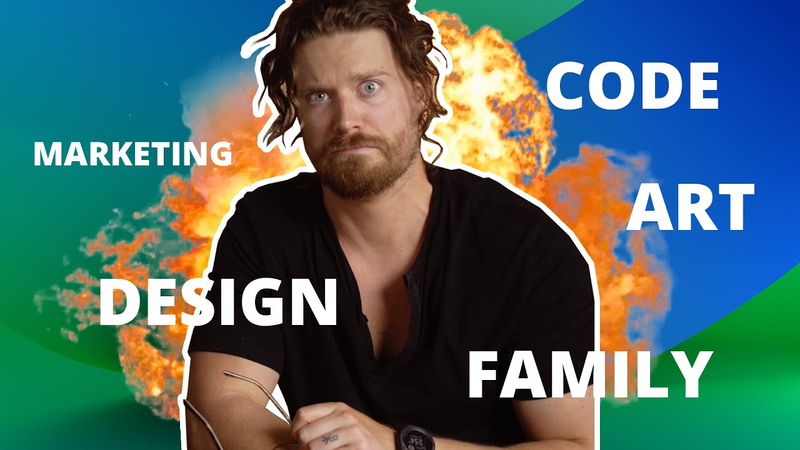
So, here's the question. How do you divide your time between game dev, family, and building your personal brand? Hey guys, how's it going? My name is Thomas Brush and I make indie games for a living. Let's jump into my subreddit and answer one of the top questions that was asked. Basically, this question is all about how you balance out your time between making games, but also building a brand for yourself on social media, and having a family, having a social life. That's a lot to juggle, guys. That's basically personal life, marketing, and then art. How do you do all of this especially while working part-time and not going completely crazy? So, here's the question. This was posted by Michael Neil Dev. Hi Thomas and the community, hope you're well. I love your YouTube videos and the amazing thoughtful advice you give. Thank you. In a recent Q&A about making money while developing, you mentioned building a personal brand. I was wondering how you managed to dedicate the time to all of your social media platforms on top of game development and spending time with your family. I have a child, too, and I've started learning Unity and game dev only recently, and I've set up new social accounts, including this Reddit account.
Follow your advice and build my own personal brand. You're a huge inspiration to me and I thank you if you manage to read this. Well, thank you, Michael. This is a great question. Basically, you're mentioning the Triforce of pain points that most indie game developers have. They have, well, I need to make a game, that's top triangle. The bottom right triangle is, I want a social life, I don't want to be miserable. And then there's also, I need to be marketing myself and building a personal brand on all social media accounts. But, that's a lot to manage, that's really tough. So, let me say right now, this is not difficult for me right now. Why is that? Because I have money to spend and I I make games full-time. I'm running a studio and I have money in the bank to be able to help me handle this. So, here's how I do this currently. I used to tell my personal assistant what clips to use, what images to use, what animated gifs to use. I would create all of this for him and I would send it to my personal assistant and I would say, "Okay, I need you to post this content on social media." And he would schedule it out and do it like every other day. I would tell him the hashtags to use. I would guide him in writing descriptions.
Now, I've come to trust him. His name is Hector and he's a brilliant, brilliant personal assistant. He's super helpful with this channel and he's also helpful with my social accounts. Now, I trust him to just create social media content for me. I don't do a thing except approve the content. I just look at it and I go, "Go ahead and send it." And he will post on Instagram, Twitter. He sometimes posts on YouTube. He'll sometimes create emails for me. So, Hector manages my social media account and we have plans and we have calls to action. We have a goal for our social media. So, I've created a system for Hector and he's just taken that system and it's squeaky clean and he uses it and he runs with it. And I pay him a monthly fee. So, it's it's really just a great system because I don't have to do pretty much any of it. And here's the thing, guys, this is something to keep in mind. As you're building your studio, as you're becoming an entrepreneur, as you're becoming an artist, as you're becoming a marketer, as you're spinning all of these plates, just remember, you should be doing ultimately, you should be doing what you're best at. What are you most talented at? What's your greatest skill set? And then offload everything else.
This doesn't mean you're offloading garbage onto somebody who doesn't want to handle it. No, that's not what we're doing here. What we're doing is we're finding people who are talented at what you're not talented at. So, Hector is very talented with being a community manager and a social media manager. So, I've offloaded this to Hector and he proudly handles all of this content and he posts it on a regular basis. This is super helpful to me because I can actually focus on making games and making YouTube content cuz that's what I'm best at. Ultimately, it comes down to the 80/20 principle. Guys, 20% of your effort is actually what really matters, okay? So, you need to find out what that 20% is. For me, it's artwork, it's music, building atmosphere, telling stories. And also, I'm generally pretty good on camera. So, those are the five things that I spend the majority of my time on. Everything else, I offload onto contract workers and part-time freelancers. Now, there's might be some of you who are thinking, "This is really expensive, Thomas. I can't handle this." Well, believe it or not, you can find people to help you manage your social media accounts for maybe $500 to $1,000
a month. Now, I get it, most of you in the audience don't have that budget. I completely get it. So, let me tell you what I did before I was a full-time game developer, before I had money to spend on a personal assistant cuz I've been in the exact position that you guys are in. Totally been there and I understand it, especially working part-time. And by the way, guys, I also wanted to let you know, one thing I also don't do is I don't create everything from scratch. Honestly, in my opinion, you shouldn't either. So, I wanted to give you my free 2D game kit. It's completely free and it's my treat to you. I used this exact kit to make a game for PewDiePie in 14 days. This is a limited-time offer, so just click the link in the description, type in your email, and boom, it's yours. Completely free for personal or commercial use. Guys, this isn't a gimmick. I really do want you to succeed, so just click below if that's something that interests you. By the way, guys, I want to let you know I'm trying to grow this channel, maybe reach a bigger audience. If you really appreciate this video, leaving a like
right now, that would really mean a lot to me, honestly. So, thanks if you have time to click the like button. Also, be sure to subscribe, that would mean a lot. All right, let's go. Here's what I would recommend and I didn't do this, but after creating a system for my social media now, looking back in retrospect, I wish I would have just created a schedule. So, basically, what I would recommend you guys do is, first, you don't have all the time in the world. Honestly, you need to be spending most of your time creating your first game. Get your first game done. Handling all of this marketing stuff, it shouldn't be something that you're constantly switching gears to do. I would recommend switching into that gear, into the marketing gear for 1 week out of maybe 3 months. So, let's say you work in the evenings part-time on your studio. Take a week off of your game and just create content, social media content. That's screenshots, animated gifs, clips of you talking to a camera explaining what you're working on, maybe screen recording talking about how you're making your game. Get it all ready to go and maybe get, let's say you're staggering your social media posts on all platforms. Let's say Mondays, Wednesdays, Fridays, and
Saturdays, you're posting to all social platforms. That's Twitter, Instagram, YouTube, Facebook, and maybe TikTok. Schedule out all of these and have the content ready. So, you have your folder ready to go of all of your content. What I would recommend doing is creating calendar events that repeat on your phone or maybe it's on your computer where you have your calendar and just remind you every day that you have to post on those platforms. I would have the descriptions ready to go in maybe a Google document. Day one, here's the description. Day two, here's the description. And then also, a call Guys, this is really important. Make sure you have a call to action. Call to action should be wish list your game on Steam or what I really recommend just building an email list cuz you can use that no matter what game you're working on. It's ultimately people are wish listing all of your games with one email list, but that's maybe a different video. So, have all those descriptions ready to go, the tags you're going to use ready to go. I recommend going to besthashtags.com, looking up indie game development and see what those tags are and then paste them in your content. So, you have all of these descriptions and tags ready to go. You have the call to action ready to go for every single post. You have the
image ready to go or the video or the animated gif ready to go in a folder. And then you have calendar invites set up ready to go. So, all that's left really is, after you're done working on your game for the day, post your social content or schedule it out maybe for the next morning. And then you get all of that worry of like, "What do I post today? What do I post today?" and switching gears. That's the thing we're trying to avoid here, switching gears. That's the biggest problem I think a lot of indie game developers have. They're like in game development mode and then they stress like, "Oh, well, I got to market, too." So, they they take like 20 minutes to switch hats. You know, they take off the game developer hat, comb their hair. This metaphor's not working. And then they put on the other hat for marketing and then they they spend time doing that. And I would just say, do your best to avoid switching gears. And that means you get a reminder on your phone, "Oh, I need to post content. It's screenshot Saturday. Okay, upload image, paste in description and the tags and the call to action and post." And that's what I would recommend doing, especially when you're part-time, especially when you have kids. Ultimately, guys, when you're a part-time game developer, and I was there, guys. I was I was there since I was honestly 16 years old up until I was
like 23 or something. I can't even remember. So, I understand what it's like to be a part-time game developer working a full-time job or being a student. It really, really sucks and it's exhausting. But, just remember, just because it's exhausting doesn't mean there aren't solutions to make it easier on you. I've been thinking about this a lot lately. A lot of times, the stress that you feel as a game developer isn't really related to the actual task. It's more related to you feeling stressed because you're stressed. It's like your head is constantly, "Oh, I got to post today. I got to post today. I got to be a marketer. I got to be a marketer." And it's always there. When in reality, why not just offload that stress of constantly trying to remember onto a calendar event and then have the content ready to go. And honestly, what is what is it going to take? 5 minutes? Wait, that's not 5. 5 minutes to post on social media once you have the content ready to go in a folder? So, it's really actually not a lot of work at all. There's always a way to make things easier, guys. There's always a way to make things easier. And when it comes to part-time work, your system for being a game developer, your schedule, when you post content, your maybe milestones for
your project, your budget. A lot of people think those are much more free when you're part-time. I think they should be locked in and your schedule should be tight. You make games every evening for 2 hours. Your wife knows this, your kids know this, your husband knows this, your mom and dad or or whoever, your roommates. Are you an insider? They know that you make games for 2 hours from 6:00 p.m. to 8:00 p.m. every night. You have a schedule down and then you know that at 8:00 p.m. after you finished up work, you spend 5 minutes posting content that you already created and it's stored in a folder in a Google document. See how those systems make everything faster and cleaner and ultimately, they remove a lot of stress, but you're still doing the same amount of work. But, ultimately, guys, when you go full-time like I am and you have a budget, I recommend getting somebody who's really good at that stuff if you're not good at it and give it to them. Or maybe just give them a system, write out a Google document. These are what the times we post. This is the kind of content I like. These are the kind of descriptions I like. These are the tags I like. This is my call to action that I typically use. Please follow this blueprint, schedule it out, let's go. All right, guys, if you like this video, if you
feel like I answered this question decently, I would love a thumbs up. Be sure to subscribe if you're not subscribed. Leave a comment, and I'll try and answer as best as I can. Thanks, guys. I'll talk to you later. Bye.
Summary
Managing the competing demands of indie game development, personal branding, and family life requires a shift from reactive multitasking to structured systems. The primary challenge for independent developers is the cognitive load associated with constantly switching between creative production and marketing tasks. To mitigate this, developers should prioritize their core strengths—such as art, music, or storytelling—and offload secondary tasks to freelancers or automated systems as soon as resources allow.
For developers working part-time or with limited budgets, the most effective strategy is to batch marketing efforts rather than integrating them into daily development cycles. By dedicating a single week every few months to content creation, developers can produce a library of assets, including screenshots, animated GIFs, and video clips. These assets should be organized into folders alongside pre-written descriptions, hashtags, and clear calls to action, such as Steam wishlist links or email sign-ups. This preparation allows for a simple, five-minute daily posting routine that eliminates the need for mid-session context switching.
Establishing a rigid schedule is essential for maintaining productivity and personal balance. By setting fixed, predictable hours for development and integrating brief, system-driven marketing tasks immediately afterward, developers can reduce the mental exhaustion associated with the "always-on" nature of social media. As a studio grows, the transition to full-time development should involve delegating these established systems to specialized contractors. Ultimately, success in the indie sector relies on identifying the 20% of effort that drives the most significant results and utilizing repeatable, low-friction workflows to manage the remaining operational requirements.










Comments