1 free read left. Create a free account for unlimited reading + AI research.
Create free account
Superstar Session: In-play Ad Monetisation - Past, Present & Future
Key insights
6 takeaways- 01In-play ads are designed to be non-intrusive, complementing existing monetization models like rewarded video and interstitials while enhancing overall game realism.
- 02The sector is transitioning from experimental adoption to widespread industry integration, supported by the emergence of standardized SDK technology and sophisticated mediation solutions.
- 03Industry growth is expected to continue as standardized metrics are adopted and immersive technologies like augmented and virtual reality expand the canvas for brand engagement.
- 04In-play advertising serves as a high-performance alternative to traditional web-based formats, as it is less susceptible to the ad-blocking technologies that compromise web advertising.
- 05In-play advertising provides developers with an incremental revenue increase of 5% to 15% by embedding brand placements directly into game environments.
- 06Programmatic eCPMs for in-play ads are currently stabilizing around $1, while direct brand campaigns command significant premiums above that baseline.
Ask AI about this video
Transcript
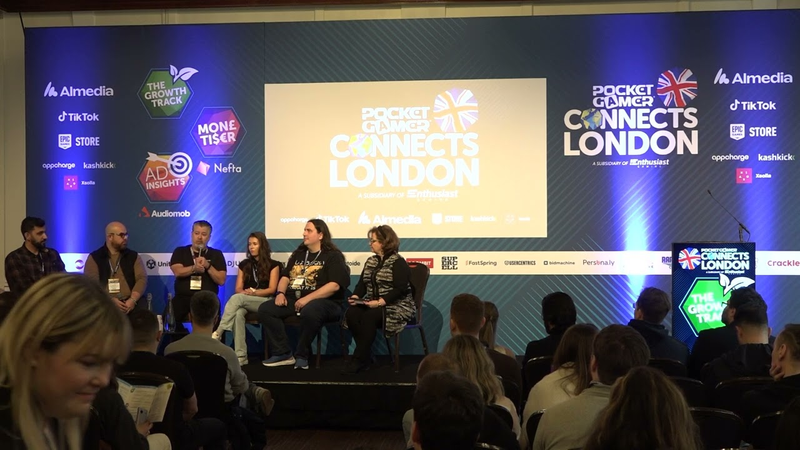
[Music] [Music] okay everybody don't touch that dial we've got plenty coming up this morning uh take your seats get yourselves nice and comfortable because we're celebrating our first superstar session this morning we're going to be talking about in play ad monetization past present and future if you've got any questions don't hesitate to put them into the zoom if you're watching online hello you can hashtag pgconnects you can also follow us at pgconnects um if you don't know who i am i'm kelly vera i'm going to be your hostess for the most s for all of this morning right
the way up until we finish and coming up right now we've got the most interesting thing that really came out of marvel not the avengers but the real thought here becomes give it up the thought please he's incredible he's from our sponsors advertising a warm welcome super fun to be here to be back in the dungeon i always forget how hard it is to find your way around here but it's great to be back and it's good to be back at this venue and i'm here to talk about in-play ads what is happening with them trying to look a lot of the history and extrapolate from there to try and figure out where things are going uh i represent a company called adverti we're swedish based although we are very uh distributed with the teams in here in uk russia i'm actually based out of finland we provide in play ads
we have kind of gone a little bit as backwards we started out with vr many years ago couldn't find a market pivoted to ar a couple of years still ago couldn't find a market and then we ended up with good old-fashioned mobile games where of course there's an enormous market we have a multi-patented technology it's an sdk-based solution and our patents are mainly in the area of viewability which for many game developers kind of is a new term so i'm going to spend some extra time talk about that later and yeah we focus for the moment 95 uh on mobile games uh we are super super keen and excited about ar and vr because it's such a cool format for what we're doing so we're just waiting for that to kind of emerge super briefly about myself i've spent i i've been doing one way or another mobile gaming and mobile advertising since 2006 started out in the ringtone game way
back in the day and even back then there were games uh trying to put ads inside of them uh for you know these like nokia sm ericsson racing games and people try to figure that out uh i spent roughly half of my time working with game studios and the other half working in the ad tech space i've been kind of bouncing left and right between the two so my wife is an academic so i try to learn from her and be focused and less bullshitty so let's first define what is in play advertising because it can be many things and i'm not saying that this is the definition everyone needs to use but for the purpose of this discussion what do we what am i defining as in play so these are completely native ads that really exist inside the game they're not in the menu they're not an interstitial they're not breaking things up you're playing grand theft auto you're driving down the street you see a billboard and it's an actual ad
or you're playing football and someone has a logo on their thing and it's an actual paid ad and where the payment is built around the view like has the ad actually been displayed um i think these ads are really fun to work with i'm going to be talking a fair amount about rewarded videos soon because i'm looking at rewarded video as kind of as a sub industry and we look at like how the rewarded video developed and then we're going to do the same thing for in play but they're very very fun because you have to work with the game designers right rewarded video is slap an icon of a shiny diamond somewhere in the interface click it you get your reward this becomes much more organic much more native and it kind of becomes a part of the game design process which becomes really really fun and yeah the more intrusive and seamless you can make the ads the better they will perform the more your players will like them the more advertisers will like them and just overall things will
improve on that level so a very brief history of crappy screenshots uh i'm calling it right ad monetization in games has been around for a long time uh it's been developing and maturing uh yeah well over a decade close we're getting close to 20 years now actually uh there's been several different formats banners interstitials offer walls rewarded video and now we're seeing in play emerge there's other things as well like in audio ads as well also really interesting uh and a new format that that again is like well okay i'd argue that audio ads for me would be quite intrusive and i don't want to talk them like but for me like i either have it muted or i listen to podcasts when i play my games but that's a different thing but i mean it's intrusive in this non-intrusive in the sense that it doesn't interrupt your gameplay
experience it doesn't make you do anything else you can keep doing what you're doing and at the same time be served up an ad most of these ad formats have followed fairly similar patterns again if you look at it if you look at each of these ad formats as a subsection of the advertising industry or what have you you can see fairly similar things with hesitant adoption mass adoption maturity mediation and etc like they do tend to follow a playbook which just makes a lot makes a lot of sense um it's of course impossible to define this exactly right but i would say banners banners and interstitials and offer walls really were the the earliest ones um i think that they created back in so what would this be let's say two thousand eight nine ten ish like before kind of in a purchase explosion uh which i would define as 2011 2012
and i do think that they got a very poor reputation and therefore in-game advertising in general got a really poor reputation particularly among developers and coders because they're the ones who have to do all the work and have to make stuff actually work within the games and there were a lot of problems with these back in the day i joined the attic space when rewarded video was really breaking through um and that's really what what i want to again go through a little bit like how did rewarded video develop mature as an industry then look at where is in play ads today and where do we think that that's going um so briefly right and full transparency of course i was with that colony for many years so i'm slightly biased towards alchemy although they did fire me so i'm not that biased and uh but i'm i'm i'm
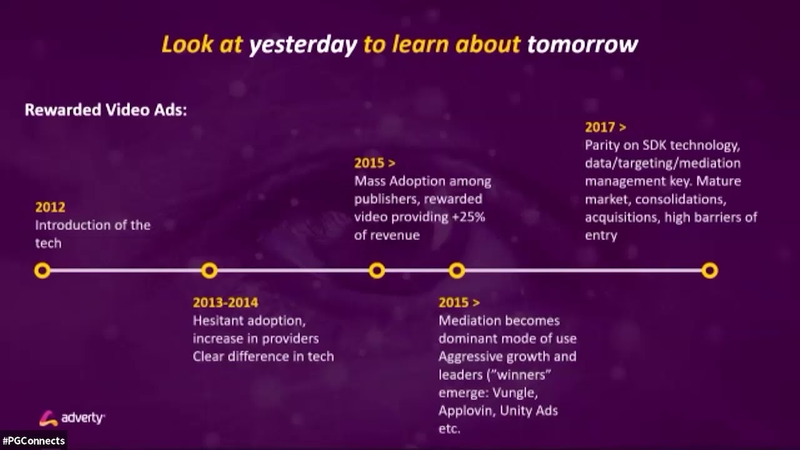
viewing things through ad colony tinted glasses so to say so i would argue that ad colony invented the tech back when the company was called gerbeau jonathan swag and the team in the us kind of built like they were doing games for the app store and like hey we can't make any money let's figure out a way to show video ads and they just kind of did it it's kind of cool uh there was a very hesitant adoption up until roughly 2014 and that's also when i joined uh and were part of then sort of the the very last parts of hesitant adoption which i call because these were scenarios where you had to spend several hours talking to game publishers and you had to hold their hand and you had to really explain to them that these videos are not going to destroy your game people are not going to leave your game you're going to make a lot of money and it's going to be a really valuable source of income the reason for hesitancy in adoption and again not just rewarded video but across a lot of fields is that there's not necessarily maturity in tech
most sdks are relatively new most apis are relatively new and things are being set up so there hasn't been a wide standardization yet and that makes it particularly for smaller developers much more of a challenge right you don't have an r d department and your cto is besides building the games doing everything else like it's kind of hard to start experimenting too much but towards around 2014 there really was a shift i attribute a large part of that to supercell they started showing rewarded ads in heyday and then i think sort of the collective game industry said well if supercell's doing it kinda gotta be good and you know it kind of was um then starting from somewhere around 2015 we entered the stage of what i call mass adoption and that's when things started growing extremely quickly rewarded video for a lot of developers very quickly even more than i think that
both developers and us providers expected how large of a share of total revenue rewarded video became uh it was highly competitive so 2015 we have ad colony we have bungle we have applovin i'm not sure if unity adds yeah i know unity ads were doing things then as well loop me etc like there were it was a battlefield it was tons of providers fighting for market share the vast majority of them very heavily vc backed so really big minimum guarantees integration bonuses lavish parties all the fun stuff uh and it has it's sort of between 2015 and 2016 that i would estimate somewhere between in the beginning it was maybe five to five to ten percent of eligible games that were using it and two years later that number was well north of 75 so it was a massive adoption there and if you're a business nerd like insane
value was created in companies like bungle companies like applovin who kind of started out in this field and are now behemoths of our industry the other thing that happened towards the tail end of this so if you want to you can merge the one in the bottom and the one on the top is so late ish 2015 they're about q3 q4 mediation really stepped in and completely changed the game for the providers and to some extent also from the game publishers for many publishers it became easier you could source the highest revenue from many different sources and your overall benefit grew from that and at the same time around maybe slightly later there's what i call a parity in technology like at that point my all sdks were basically the same no difference anymore again with my ad colony heart like we were kicking ass up until 2016 because we were just the best at delivering
video no one could beat us we had no no delays no chops good bit rates like our videos just looked a lot better but then all of a sudden everyone else caught up and you can't make a video look even better than great like 60 frames per second what have you like you can't do anything more beyond it so at that point right sdk technology kind of became obsolete to quote karl marx on stage uh the tools of production have been democratized everyone could kind of do it right you wanted to build your own video delivery sdk yeah it's not really that hard information is out there etc and from 2017 onwards there was also then uh massive consolidation within the business and things kind of settled down right most game developers they had their mediation partner they had their partners for ads for being provided and things kind of just rolled on from there now uh let's uh let's change things around a
little bit i would say that currently with uh in play ads we are right here between hesitant adoption and we're on our way to mass adoption i am hoping that this year is going to be the year of mass adoption everything points towards that and the reason for this is kind of here right it's been a pipe dream for over 20 years like i said since 2006 i have either either i have had people tell me brand advertised women dollars are coming to games or i have been the one saying brand advertisement dollars are coming to games uh and yeah it's been 15 years and like yeah they are coming but not really but famous last words they're coming this year so forget all the other 15 times i've said it over the past decade or so they're coming this year and there's a couple of good reasons for this right tech is really solid uh
our sdk has been in the wild for over three years most of our competitors have had their sdks out for about two two and a half years uh so there is there's it's solid like it's not spectacular yet but it's solid there's definitely been a need from developers to look at different sources of monetizations new revenue streams to have added partially thanks to apple might perform if you're an ad ad driven game if a large chunk of your in-game revenue is coming from ads particularly on ios then like the changes in depreciation of idfa etc really um hurt your revenues so you need new ones and the way we do since in play ads they're not clickable there's no attribution there's nothing like that happening it's again it's like seeing an ad for coca-cola on a bus stop it's just about building awareness we aren't
affected by that in the same level on the downside of that is of course cpms are much worse performance people they can afford to pay us you know they have their cpi targets and as long as they're within x percent of that it's just unlimited spend coming with brand advertisement it is different but it is still completely incremental revenue and it's there to offset some of the losses from other sources i also really believe that having new revenue sources and the previous presentation about subscriptions is also a very good indicator of that like our industry would be a much healthier ecosystem if there was more advertising revenue coming externally i am not nearly smart enough or have access to the data to figure that out but i really wonder what percentage of mobile game ad spend that is made by mobile game companies right it feels like well north of 75
probably 90. and that's fairly incestuous right it's kind of the same money spinning around and spinning around you you make a hyper casual game and then you promote it and then you get ad money to sort that back and hopefully you have a margin at the end of the day and it just keeps cycling so adding and injecting new revenue from outside will be very good for the gaming ecosystem overall and there's really much more interest than ever before from advertisers uh lockdown for two years kind of helped a little bit with that the overall sort of shift of attention towards the smaller screen is also starting to penetrate the larger advertisers they're starting to understand the value of being seen when people are also actively engaged and like that's another thing like you guys are not advertisers so i don't have to sell it but whenever you talk to advertisers remind them like gaming is an active medium tv is a passive medium radio is a
passive medium it comes to you but gaming you're actually engaged with and then find someone who's good at cognitive psychology and they will tell you everything about like how cool that is and how that makes your brand stand out and those kinds of things but i mean advertisers again they are starting to be really interested in this and they're starting to look into um to the thing and we see that on our end in terms of of course revenues increasing we see ecpms increasing and we see more and more advertisers come along and with all the hype around metaverse and these types of things and the reality at least as far as i can tell is that well yeah sure the metaverse is there but it's not really there there if you're coca-cola and you want to spend a ton of money on that kind of thing maybe you go to roblox or but then like roblox isn't more metaverse than a mobile shooter so like all of the interest from that it really helps us in the game industry as well
so what value does this bring to developers well first and foremost of course revenue this is the game business with an emphasis on business in play ads from us or from any of our competitors or anyone in the market to set expectations right five percent increase in the ad sorry a five percent percent increase in revenue that's good that's really solid we're not going to break your bank it's it's not ferrari and champagne for money champagne for breakfast kind of money but it is a very healthy addition and if you're a company that is very driven by user acquisition with a strict focus on cpis maybe you have figured this out i hope you have like the best way to improve your cpi is actually to improve your monetization because it's much easier to improve monetization the more money you make the more money you can spend lower cpi is really hard
because it's also been so automated creative optimization blackbox buyings etc this is really the second one is really important and it's it's it's maybe super simple and straightforward but i really want to hammer it in right this is 100 incremental revenue an incremental meaning new it doesn't take from anything else it doesn't affect your interstitials it doesn't affect your rewarded video it doesn't create any new elements nothing new is being done you're just working better and more with what you already have and that's key uh i should remove them mostly because it is a very easy and fast integration from a technical point of view uh if your game is unity-based it's like an afternoon for a developer then you might need to slot some time from your game designers or from your level designers or maybe from ux people like have a think about how to display it within the game in a good way because
that really helps of course the bigger you can make the adds the better mcdonald's want their hamburgers to look big and juicy not small and compressed so like they just want to have really big things and in many games right this will actually improve the feeling of the game most sports games for decades they've been putting fake ads within their games because if you watch sports and don't see any ads i don't know what kind of sports you're watching real life city games as well like your typical grand theft auto e type thing my favorite example is from um [Music] critical force uh shooter uh where they have they approach it differently on different levels like in some levels you're in sort of a desserty type town and then there's like a few bus stops there's an ad here and there then there's a uh it's basically a counter striker it's a five versus five shooter uh and and then there's one level where you're you're in an airport and as we've all been
reminded now that we can travel again airports are full of ads so then they just increase the frequency like they make more placements and it actually feels natural it makes the levels stand out a little bit more and those types of things so this is what i believe the reasons why 2022 this is going to be the year of mass adoption on the developer side uh by our estimates roughly five percent of audiences are exposed to in play ads give or take depends on how you define them and etc but like that's roughly where we're at my prediction is that we're going to be definitely north of 50 i would guess 60 by the end of this year um some of the very very biggest names and the biggest developers are moving forward now very quickly with this they are integrating it into more and more of their titles they're setting up processes for it they're including it in the design process of the game sort of thinking about this for the future
and as with many other things like once once the really big developers start doing it there's a whole ecosystem of smaller developers who just like well okay let's look at let's look at the ones who make the most money and let's copy what they're doing right nothing wrong with that it's very smart way to operate you can be lean and mean uh and this is what's going to be happening this year and first yeah i try to do some sort of tony montana thing but i couldn't really make it work but i mean there's always a chicken and an egg right where inventory versus demand and in this scenario it is actually quite easy like the inventory has to come first it always does in if you look at all of the previous ad formats inventory was always there well before the demand but as the inventory comes this year and as it increases by several orders of magnitude this will for sure make it uh far more exciting and appealing to advertisers
then there's as well mediation on the horizon right [Music] i am certain that in play ads will very similarly mimic rewarded video ads but at a highly accelerated pace uh it won't take us six years to go from or it won't take us two years to go from mass adoption to kind of mediation and it will take it will move much faster for the market to uh stabilize and what's really interesting again if you're a business nerd currently all of the players who are doing in play ads are new companies none of the big guys started doing this which is kind of funny and strange to me because unity i mean these guys could have done it relatively easily but all of the companies who are doing what we're doing right now we're relatively small we're independent but i'm certain there's going to be consolidation on that side as well but yeah with mass adoption among publishers standardization will be
highly beneficial for the industry as a whole and it's going to happen to some extent there already is a fair amount of standardization pretty much all in-game or in-play ad providers we use the same kind of formats it's a box it's a landscape it's a wide screen but that just kind of has to be codified and officially agreed upon so as a developer you can place an ad unit and you say well okay i can show ads from admix advertising like it doesn't really matter like we all use the same ad format you just put that one in and see how it goes from there but as has been seen right mediation will for sure be required also to benefit from the programmatic traffic uh which is out there and which will be increasing so someone is going to start doing mediation i don't know who i saw unity is the unity guy here talking after me yeah cool let's have a chat you guys should do it set up a team in finland i come by and help you um yeah real-time bidding header bidding i
mean oh again all of these things are they're boring and unsexy to me so i don't want to talk about them but like all of this is coming and again look at the history look at today look at tomorrow it seems relatively clear and i wouldn't be surprised if two years from now probably all of these guys provide some sort of in-play ad monetization mediation solution where they will partner up with the providers again i wouldn't be surprised if these companies end up buying one two or three of us who are doing this right now because that also makes a ton of sense especially since well at least the two blue ones in the middle are doing their own games as well like it's kind of feels like a no-brainer to me okay let's talk a little bit more just specifically about the games contextual fit is really really important if you're making a game of thrones games i don't want to talk to you about ads talk to you about other things but like no one wants to see a call of duty war zone banner in game of
thrones doesn't work dungeons and dragons doesn't work that kind of thing so you have to think about the contextual or the narrative fit within your game does this make sense would there be an ad here hyper casual works really really well in some instances as are many things with hypercasio not to offend anyone but in many instances right it's not the best or most beautiful placements or things moves fast so they do things fast but they also do it really well so hyper casual tends to work really nicely even if there might be a bit a little bit of a clash in the look of the graphics some of the hyper casual games have more like pixelated 8-bit type graphics still works quite quite nice and there's an extra benefit for advertisers that we can sell towards something that there's a because there's usually a level of immediacy right uh the lifetime of a person playing a hyper
casual game is not weeks months it's days or hours so you know you're getting fresh eyeballs and you know that this is something that is hot and cool and it's happening right now and you can kind of surf that way sports racing driving these are the like no-brainers in a sense and i think the first example i know of a game within in play advertising it was a mobile game we sold in 2007 but i think there the brand went straight to the developer and gave them a thousand bucks and like put some logos in there that kind of thing but it's such a natural fit um all kinds of sports games all kinds of racing games all kinds of driving games works exceptionally well for this actions shooters first-person shooters they also work really well again keep contextual fit in mind if there's a mining colony on mars maybe i mean yeah you can find a few you go inside somewhere maybe there's a
computer screen or a tv screen use those types of things um the the left one yeah it's sort of your i love the finished sense of humor i don't know if anyone can see but you know the company who does this in real life they see the call but here they're called jc dubious we didn't do that they did it but it's awesome but again you can also do like this one showcases two different kinds of integrations where on the left they have created an ad unit they have placed it every time you walk past that one you will see a new ad because the ad refreshes the one on the right it's a little bit more of a quick and dirty but arguably like the ad stands out a little bit more because of the background so as the the persons who are playing it like it really pops and it comes along nicely yeah puzzle word simulation games that's generally a no i have yet to come across one where it makes sense there is overall a fairly poor fit
very very very little dead space in these games right these are the people who are the best at using the full real estate of the screen there's usually not much movement happening besides the game pieces that being said if anyone has a puzzle word or simulation games i want to give it a go like let's have a chat for sure but just in general to give an idea of the type of games where it works best now briefly about viewability so so this is something that most game developers are going to be familiar with in the next few years viewability is really the key measurement of taking track of has this ad been seen banners interstitials are quite easy if it was on the screen it was seen if you have an ad like this one here at the bus stop uh you need to calculate you need to know has this ad been seen and when you have a 3d game with multi multiple people just rendering the ad is not enough because maybe you have rendered five other objects in front of it how do
you make sure that there's a field of vision that the player has that makes sure that the ad meets the iab standards of being covering x percent of the screen for y seconds in total to make sure that it's counted as a view we're super proud that we have three patents in this space and we have focused a lot of our tech and resources once we figured out all the sdk business we have focused a lot on this to be able to measure this and also to be able to report it back to advertisers because this is something that is outside of our little bubble of advertising with this which is basically dominant dominated by performance we have at least for some time enjoyed the luxury of tracking and being able to measure every cent down to like the third decimal point but most advertisers can't do that right if you're nivea and you're gonna launch a new shampoo you spend five million quid on putting it on buses and then you hope people buy your shampoo but you don't really know same thing with
advertising but here we will be able to efficiently measure and display this it also means that ad blockers do not work right you can't put an ad blocker inside of a game the amount of people using ad blockers on desktop is enormous and like every time mine goes away and i go to youtube i thought like what the hell has happened like what is this so many ads so i mean even a lot of rendered ads on web and other formats are not actually being seen but we have a solution for that the industry as well will come up with a solution there will be standardization from iab or from some sort of governing body like to properly define it and i think that's going to be the main requirement for sort of mass adoption among advertisers briefly uh because it's just a couple of minutes left i'm going to talk a little about a little bit about ar and vr they are really
great environments for ads they're super immersive uh and it's not just for gaming right these are for the social your rec roomy type experience as well they're quite immersive and there's a lot of things happening at the same time there's an enormous demand and interest from advertisers because they don't know yet how few people are unfortunately doing this however my favorite factoid that i picked up a few months ago is that at least up until november last year oculus quest 2 had outsold the playstation 5. that's of course because playstation can't deliver enough playstation 5s but at least they did like outsell them for some time so that that's a useful one and i'm not making fun of meta or anything like that like it's an awesome product and they have shipped 10 million units which is fairly impressive uh 10 million people is definitely enough to sort of build a market around then it's going to be accelerating as well
finally i want to show this because again just to get an idea of how things can work in ar i actually think this video is four years old because like i said in the beginning we've kind of gone backwards we started doing super sexy cool things but no one wanted to buy them so we had to kind of go backwards a bit but so this is how an ad in a ar environment would work and this is a demo that we made with our friends at rovio but so you can see the ar thing you click the billboard it loads up a video that is being shown we've cut it down because it's not so fun to see you get a full screen landing page and you can be taken straight to the app store download the thing and then you go back to your ar environment uh really really cool really really simple um well i mean simple from the user point of view it's kind of it's a bit more challenging tech wise and there's going to be some room for questions but um there's also going to
be a panel relatively soon where i'm going to be talking to some of our friends who are already doing this that one is going to be a little bit more focused on like well how do i actually do it how do i get started less macro level fluff from me and more usable hands-down things so please stick around for that panel as well and now i'm happy to take any questions yep have you got any questions for the incredibles all that's your new name the incredible thought um anybody hello take the mic um how do you see measurement evolving over the next few years within playoffs yeah there's there's going to have to be some sort of standardization right and it's it's it's probably going to be an i mean it's kind of like nissan ratings for tv like the biggest scam in the history of everything where like i mean there's literally like
a 5 000 people who decide what everyone in the uk watches like it's such as some data scientists should just go in there and kick some ass um but it it there's going to be some standardization uh it's it's going to be based around viewability so then uh you know it's it shifts a little bit back back and forth i mean currently there there's there's different offers from different platforms currently someone saying like you know you need the ad needs to be on at least five percent of the screen for at least two seconds of time so like there's gonna be maybe not that but something like that or there's gonna be a technology or a patent hopefully ours that's like well okay let's just agree to use this one this is how it works integrate it or commit it and run with it any more questions yep hey taurian um great show going back to 2015 the rise of um rewarded video
i think was a catalyst there to look at the differentiating between banners and interstitials and then of course the the revenue generated from the rewarded consumer-based yes i'd like to spend 22 seconds of my life to increase future play within the game yeah exactly um and then you mentioned that it would be between a five to fifteen percent increase in incremental revenue which is which is the needle mover right i mean every game developer wants more revenue i mean below five percent right it depends i mean to some extent it depends on how much money you make some game developers make more money than god and they're not going to get out of bed for less than 100k just accept that right right so but from what we're seeing from our current current ones and also just in modeling and talking to our friends and other providers like that that's a good benchmark 15 is on the high end five is still quite okay so there is room to grow
yeah on the adoption yeah oh there's absolutely room to i mean on all sites on publisher on and on advertiser and as they both grow as well there i mean over time there will be organic increases in ecpms field rates these things as well as a higher percentage of brand advertising is being shifted towards it great can you give us an idea of the benchmark of that ecpm where it is now where it could get to it it depends very much on you know what kind of traffic it is for programmatic traffic which is the vast majority uh a dollar cpm in the us it's okay quite okay so again very different from rewarded and from other things that require tracking and integration but then when there are direct campaigns when they're larger bookings cpms can go over five dollars they can go over i mean i know of other providers who have sold very specific campaigns they can pay 15 to 20 cpms not on an ongoing basis every day but
say hey this week we have this advertiser for this game perfect fit they want to buy a lot more so it varies i think the last point is in terms of the the consumer adoption the intrusiveness this is effective you've got real estate in your game show an advert it becomes immersive within the game if you get the right context yo yeah great fair enough any more questions [Music] [Music] you
Summary
In-play advertising is currently undergoing a critical transition from experimental adoption to widespread industry integration. By embedding brand placements directly into game environments—such as digital billboards in racing titles or signage in shooters—developers can generate incremental revenue streams that remain non-intrusive to the player experience. This approach effectively complements existing monetization models like rewarded video and interstitials, enhancing game realism while simultaneously supporting broader user acquisition goals.
The market is rapidly maturing, driven by the emergence of standardized, high-quality SDK technology and the development of sophisticated mediation solutions. As these tools become more accessible, in-play advertising is positioned to become a standard practice across the gaming sector. This evolution is further supported by the industry's shift toward rigorous viewability measurement, which provides a reliable, high-performance alternative to traditional web-based formats that are increasingly compromised by ad blockers.
Financial performance in this space is robust, with programmatic eCPMs typically stabilizing around $1, while direct brand campaigns command significant premiums. Developers can expect an incremental revenue increase of 5% to 15% through these integrations. Looking ahead, the sector is poised for continued growth as industry-wide standardization of metrics takes hold and immersive technologies like augmented and virtual reality expand the canvas for brand engagement. This trajectory suggests a future where in-play advertising is a foundational component of the global gaming economy, characterized by increased consolidation and the integration of these capabilities into major industry platforms.
















Comments