1 free read left. Create a free account for unlimited reading + AI research.
Create free account
Keynote: Why Influencer Marketing is a Bad Idea as a User Acquisition Channel
Key insights
6 takeaways- 01Shift from mega-influencer partnerships to a high-volume strategy involving mid-size and micro-creators to transform influencer marketing into a predictable, scalable performance channel.
- 02Mid-size creators outperform mega-influencers by more than two-to-one in total monthly views, offering superior reach and more stable performance.
- 03Apply the law of large numbers by managing a high volume of smaller creators to mitigate the high variance and unpredictability inherent in individual influencer deals.
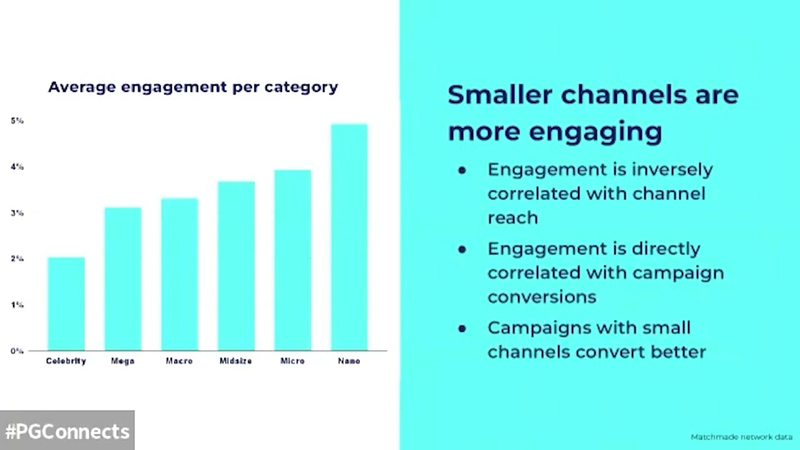
- 04Smaller creator channels consistently deliver higher audience engagement, which directly correlates to improved conversion rates for user acquisition.
- 05Replace manual, celebrity-style negotiations with a project management approach that uses automated outreach and fixed, data-backed pricing parameters.
- 06Optimize campaigns based on aggregate cohort-level data rather than individual content performance, as the latter remains inherently unpredictable.
Ask AI about this video
Transcript
[Music] [Music] next up as everyone's setting up we're going to have the wonderful jury from matchmate who's going to talk about influencer marketing and how that's not a great idea when you're talking about using it in acquisition jury would you like to come and join us um i hope everybody's well rested i'm not um at all i did have my first cup of coffee i'm just gonna [ __ ] a bit while you settle in so feel free to talk a little bit but not too much um i uh i took the train here yesterday from berlin which is nuts it's it's 12
hours sitting um it's actually like way nicer than 12 hours on a plane so they're not comparable but uh still like it's pretty intense and you know you spend a lot of time just on twitter reading about how terrible the world is how ukraine's going to going to be in wars war zone and whatever it's it's all bad and i i don't know if you guys remember two years ago when we were sitting here and i think it kind of felt like we reached peak [ __ ] you know they finally ratified the brexit treaty and trump's on his way out and then it turns out that actually we were just getting started so i'm extremely glad extremely surprised to be here in person talking to you guys and i hope you all appreciate that we have this moment and despite my slides i hope you're gonna get something useful out of this um there's gonna be a bit of repetition so i guess if that was the sweet version i got maybe the the savory uh side of things when it comes to doing online content sponsorships um and i mean you might be wondering like why is this influencer marketing guy on stage saying that influencer marketing
is dumb uh well partly because you know i'm an internet edge lord so i'm trying to get a reaction out of you but uh but partly also partly because the world's changed right so we uh we started doing this stuff five years ago and at the time like it was influencers like there was no culture there was no no terminology like that's all we knew um but in in the in the past two years especially at matchmade we've been almost exclusively focused on working with creators and i think a lot of people think it's the same thing as how you know ar vr suddenly became the metaverse and now it's cool again you know and and crypto became whatever like web 3 and now it's cool again influencers became creators and now it's cool again um that is [ __ ] i think there's a there's a fundamental difference that uh so what i'm trying to do with this presentation is to kind of give you that philosophy of why is it different run through some numbers some kind of market data on like what does it mean why is it significant and then unfortunately there might be a bit of
repetition when i go over our process and how we make working with creators perform and work for us and how you can hopefully do the same and then if we have the time we'll look at a couple of customer cases but uh looking at the clock that's we might just kind of very quickly skim through those slides so get into the point um blah blah big money big thing um what i think is is significant is that so when you look at the market everybody has their own estimates i don't know if it's 14 billion but it's still like some meaningful chunk of money that's being spent annually what i think is really important though is that if you just look at the growth rates um creator stuff influencer stuff is growing about 20 20 times as fast as the rest of digital marketing in terms of budgets and obviously that's uh that's a process that was that was kind of like really accelerated by kovit um but it's something that was already happening before maybe not at the same pace but still quite quite significantly faster than the rest of the market and when you think of all the changes around you know privacy and whatnot you can kind of safely expect that this this
this isn't stopping you know it's probably accelerating further and if this pace continues we'll be looking at this accounting for a third of marketing budgets by the end of the decade which just means that like it's even if you think it's all kind of silly it's not probably going to go away and you'll probably have your boss asking what your strategy is so now it's a good time to pay attention i guess um and i mean this is you know oftentimes when we think about influencer marketing you think of whatever pewdiepie mr beast laser beam you think of the [ __ ] kardashians or whatever and i mean that's how it used to be done right you would just like ask your kids like hey who's really cool who's like a cool gaming dude who do you watch and then he would go to their youtube account you would find an email you would email there's a perky manager type person who will you know respond tell them that you just they'll tell you that you just need to pay 100k and then you'll get these amazing things and and the thing is that often you would like because like these guys have such insane reach that when it works out it works so well so then we all hear
these stories about how you know somebody's entire strategy was to give some tens of thousands to one guy and then they got the most installs they've ever gotten and everything's great and blah blah blah the challenge with that is that it's not a strategy like it's a cool thing you did and if it hadn't worked out you just probably wouldn't tell people because now you wasted 100k um so as marketing professionals as ua professionals like you you want to be looking at something that you can actually repeat you can predict and you can actually scale because really like you can't hit those like big influencer kind of home runs every single time which is one of the reasons why you want to be looking at creators so on the more kind of philosophical side which i do think is significant like i i i've always hated uh the term influencer i think it's it's almost like degrading right it's telling someone that hey like the value you have is in your ability to influence people to buy crap that's not super cool i don't want to be an influencer i don't want to work in influencer marketing but but i think
it's quite descriptive of kind of like the mindset so it's really coming from this like quite commercial kind of celebrity culture this kind of offline iraq magazine i mean celebrity rag thing um you know of big names where the audience kind of knows that the relationship we have between me as your fan and you as the influencer is that you know it's very commercial like you build your reach and then you monetize it and then because i enjoy the stuff you do enough i'm kind of okay with that but it's not super engaging right whereas anybody look at online creators uh content creators it's really born out of the kind of like computers as kind of tools for creating something cool and now smartphones forms as tools for creating something cool and people wanting to share that which then in the end kind of results in the significantly more authentic relationship between the audience and the creator and which results in way more engagement and and so i guess the last four two words on this slide are the most important ones like what i think creators excel at is that they drive engagement and there's so many of them versus the influencers who they bring reach uh the few that exist
but that's kind of it so then to the uh the boring stuff so uh graphs so the maybe the biggest reason why i'm i'm really trying people to get people to understand that influencer marketing is not a strategy is that there are zero influencers out there so this is um our estimation of the market and kind of trying to break down the different size creators into into cohorts uh there's a description of how we kind of measure this in small text down there but what i'm trying to say here is that if you look at the the bars for the macro mega celebrity creators on in the first graph like they're actually zero pixels because compared to compared to you know the nano micro you know mid size creators um they're they're a rounding error like so if you want to build a scalable repeatable model for marketing with online content you will just run out of people you can work with very fast whereas on the on the kind of smaller
creator side there's millions so we we track about 10 million channels and we think about 2.4 million of those are kind of like high value like very good partners for for gaming companies so and whereas on the on the kind of bigger influencer side we're talking you know thousands um more relevant than that is the second graph which is where we're kind of estimating the actual reach of these people so i don't know if you can see this very well but the lower one is the total monthly views reached by these different sized creators on all the platforms so that tells us kind of like how many actual consumers can you reach if you were able to work with every creator in this size group and what is what is significant here is that the mid-size creators are quite interesting because they drive by far the most views they have by far the most reach uh whereas in terms of like the number of number of creators out there it's a large but manageable number of people but overall like when you just look at this the reality is that the uh
the kind of mid-size and smaller creators reach more than twice as many people every given month than all the kind of big creators combined so reason number one if you want to scale do you want to be looking at these smaller creators second one and this is i i wish we did a better job visualizing this but uh kind of going back to my uh pewdiepie markiplier whatever scenario um the reason we all want to work with creators so one of the big reasons is that you know we kind of assume that my thing is probably going to be this cool viral hit because my product is a bit cooler than all the others and i really like the influencer we have a good flow so you know it's going to work out but the reality is that like you have no idea like any given piece of content on social media is it its performance is completely unpredictable um you're just throwing the dice and kind of hoping it works out and what that means for you is that you want to maximize the number of bits you can take so kind of like the law of large numbers essentially um and so what the graph is showing us so on the left the green bars
those are campaigns uh so campaign is whatever it's some tens of thousands of spending so each one of those represents one campaign where we only work with small to mid-size creators and then the red ones um or the pink ones are also campaigns roughly similar budget sizes so every bar is kind of representing about the same amount of money um but the ones on the right um only we only involve large large influencers and what you can and what what the number shows us is the deviation from expected campaign performance so if if it's at a zero that means that we got exactly the results we thought we would get if it's a huge spike it means we got that viral hit if it's uh if it's uh going down then it means that we have an angry customer at our hands um and i mean what you can see here is that yes like with the big creators you can get these outside successes but again like in terms of like having a repeatable strategy um it is in your interest to maximize the number of
creators you can work with because that makes the results actually predictable um like the only difference is that in the in the red ones we have a small number of creators in the in the green ones we have a large number i mean again one more way to think about this is like just how you guys spend money on on facebook like let's say you have 100k to spend on facebook ads do you really put it all on one ad probably not so it's just like this is all marketing works the same but somehow people think of influencers as this like crazy magical space where rules don't apply they do um one more argument engagement so this is one of the most consistent things we see across all platforms all kind of content platforms all creator types all niches whatever uh the smaller a channel is the more engaged the audience is so engagement meaning you know comments like shares whatever they do something with the content and another thing we also see consistently across all campaigns is that the more engagement you have the
more conversions you have and in my opinion it is actually simple as that uh you probably want some conversions out of your campaign and if you do then you want to work with smaller creators because in more engagement more conversions simple then of course the question now is that do these guys actually want to do it okay so there's whatever some millions of creators that could be out there but do they actually wanna well sell themselves out right well the good news is they do um so we we uh so we have a pretty large network of creators that we surveyed and all of them would be interested in doing more uh sponsorships than they're doing today so so there is a pool of millions of channels that you could be working with uh the challenges are that for them it's really hard to know if something is genuine for example so trust is a huge issue um relevancy is another one so they get a lot of kind of very spammy offers where they don't know if it's legit they don't know if it's relevant for their audience they don't know if they can you know just trust them um so you know for you guys like having a
brand name helps but i mean i'm not gonna lie this is one of the advantages we have having done this for five years like when we reach out to the creators they know it's legit which helps get them across the across the line so anyway um then flipping that why don't you guys work with thousands of creators instead of a handful of influencers well i mean it's hard you know exactly how much work goes into all of this um i'm gonna go through the steps quickly to understand but like it's you know i'm not saying that you need to work with a platform to do this we've seen insanely elaborate google sheets workflows that enable companies to work with thousands of creators and actually it can work but um the influencer marketing mindset where you think you're some kind of creative person you're like a casting director and you're you're an 80 and whatever just like doesn't work at all like this is it's all about data and numbers and repeatable processes automation and tooling so it's really like it's two different worlds kind of trying to understand each other i i come from the
you know i'm a programmer so that's my point of view i'm not a creative person but that's what scales um credentials wise so we work with 12 000 creators we add about a thousand of these guys every every month at the moment we're reaching some fairly interesting numbers of people at this point it's all global we do work with a lot of gaming companies i've been in working in games for 20 years so hopefully i have some idea what i'm talking about um blah blah blah blah blah let's get to the good stuff so so okay like so this might be kind of we're maybe we're baking a cake or making pizza or whatever um i just wanted to walk through kind of like how we think about this process so for us this is highly automated it's it's like we work with fairly high volumes of creators i mean maybe something you want to take a photo of if this is relevant to you i'll have another summary slide at the end of this um and i mean there's many ways to bake a cake or make pizza you can you can break it down however you want but this is kind of how we typically structure the process so i'm going to quickly go through the steps um first one is the parameters um
by far again it all just boils down to like putting your ego aside so the worst thing you can do as somebody who's responsible for working with creators is think that your creative input is somehow relevant it's not um i mean you're a marketer like you know which audience you want to reach you know what kind of conversions and what kind of performance you expect you know how much you're able to pay for them for a user to make make back the money you spend on marketing so just double down on that so any successful creator campaign starts with setting up the objective parameters so how do we price these creators you need to be able to look at the numbers that are available to you and come up with a price that you think will work so you probably want to look at what are the kind of cpms that work for you in other channels you want to look at expected conversions and just boring stuff you know audience breakdown and then come up with a pricing algorithm that tells you how much each creator is worth to you and same with targeting like you just wanna you don't wanna people always like pretend they have objective targeting and then they get a
list of creators and then they start going like yeah i don't like this guy's hair i don't like this guy's voice um that [ __ ] doesn't scale like your opinion doesn't scale your opinion will change from day to day and also it's really hard to go through for example 10 000 creators and you know assessing if you like their hair or not i hope you like my hair um i need to get a haircut actually anyway um second part is outreach so now you have your list like you you've uh or now you've kind of you figure out your parameters you've used that to come up with a list of people now you need to get a hold of them um i think the thing that goes wrong here often is that people's experience with influencers is that they've reached out to the manager of one of the really big guys and turns out it's the manager's job to reply to your email so they do um now we're talking people who might do this as a hobby or as a side job who gets a thousand spammy emails every day most likely they won't see your email if they do see your email they don't know who you are if they know who you are they're not sure if it's actually legit so there's so many reasons why they will
not reply to you which means that like when you think about when you do the math of how many people you need to work with to reach the numbers you want to reach for the outreach part you want to be looking at conversion rates that are similar to other mass emails that you're sending so quite low unfortunately unless you build up a relationship with these guys uh negotiations uh our industry loves to negotiate that's the last thing you want to be doing uh it's the worst idea and again it comes from this kind of manager mindset where you know when the industry was born you had a lot of kind of confused people who suddenly realized that they can make a bunch of money um and then you have a bunch of other people who realize they can make a bunch of money by telling these other people that they have some expertise to give so you had the kind of manager class inject themselves into the whole discussion and saying like hey you know what like are you scared of business are you scared of numbers don't worry i'll take care of that for you i'm gonna negotiate the best deals for you maybe i take 60 of your revenue but you you know
best deals so we we have this assumption in the industry that you always want to negotiate but the problem with that is that again like the scale i'm talking of i'm talking about thousands of deals there's no way you can negotiate so again you take your objectives that you said in the beginning you calculate the numbers you say that for you because of your audience we're going to be able to pay exactly this much no more no less take it or leave it if they don't want to take it then tell them thank you well we might have a new deal for in the future and the way you want to think about it is that you don't want to look at individual cases ever you want to look at how are the kind of masses reacting so if you send out a thousand offers and 900 get rejected that means your pricing is wrong but you don't go negotiate with every single influencer like then you go back to the drawing board you change your pricing strategy and you try again which is like it's boring it's not fun but like that's that's how you get results that's how you get scale okay almost done uh this is the part that is the actual cool fun stuff that
we don't get to do at all um so camping operations for us means just the act of actually getting the content produced getting it out there um you know hopefully getting results um again the point here is that you work with these creators because they are creative because they know how to create engaging content for their users you are not the person who knows how to do that so you're the project manager right so your job is to send them reminders give them really high quality assets give them a good brief that they can do something interesting with do not tell them what to do don't try to do their job for them no no scripts um lots of reminders um and then finally at the end the important bit so actually kind of like learning something iterating improving um i would say there's a few things that you have to get right first one is lift measurements so all marketing requires good lift measurement ability but especially the creator stuff because of this you get so many kind of like unattributed conversions the companies we see really succeeding are the ones who've invested in building that ability and you need so you need to have the ability to accurately assess
the lift of your campaign and you need to pair it with the ability to do large enough uh volume in a short short enough uh time span to get to get the spike and depends on you what the numbers look like uh always experiment of course but by far the most important thing is that you don't ever want to look at any numbers from a single sponsorship they can't be trusted so any conclusions you draw have to be drawn from from the kind of campaign level data so either it means this means that you run multiple concurrent campaigns with different parameters and you compare the results to draw conclusions from or you run a really big campaign and then you identify kind of cohorts clusters of creators that performed well or performed poorly and you figure out what their characteristics are and then you decide how you want to change the parameters for the next one do not look at the one viral hit and think you can reproduce that because that doesn't work um case studies we're skipping um we're skipping i have 10 seconds left so
i'm just going to put this uh on the screen now that's kind of our uh maybe nine commandments come at myself to do this stuff um feel free to take a photo uh we are we have a not a freebie but we do have a 30 off thing running with pocketgamer right now so there's the voucher code if you want to try it out thank you only five seconds over time [Applause] [Music] [Music] you
Summary
Influencer marketing, when treated as a traditional celebrity-driven channel, is an inefficient and unpredictable user acquisition strategy. The core thesis is that gaming companies should shift away from high-cost, high-risk partnerships with mega-influencers and instead adopt a data-driven, scalable approach focused on mid-size and micro-creators. By treating creator marketing as a systematic, repeatable process rather than a quest for viral hits, marketers can achieve predictable, profitable growth.
The industry is currently experiencing a rapid shift, with creator-focused budgets growing significantly faster than other digital marketing channels. Data indicates that mid-size creators provide the most significant reach, collectively outperforming mega-influencers by more than two-to-one in monthly views. Furthermore, smaller channels consistently demonstrate higher audience engagement, which correlates directly with higher conversion rates. Relying on a few large influencers introduces high variance and unpredictability, whereas working with a large volume of smaller creators allows for the application of the law of large numbers, stabilizing performance and making results measurable.
Successful execution requires abandoning the "creative director" mindset in favor of a project management approach. Key operational steps include setting objective, data-backed pricing parameters, automating outreach to manage high volumes, and avoiding the temptation to negotiate individual deals. Instead, marketers should establish fixed, fair pricing based on audience metrics and iterate based on aggregate campaign data rather than individual performance.
The methodology relies on large-scale data analysis, tracking millions of channels to identify high-value partners. The strategy emphasizes that because individual content performance is inherently unpredictable, success is found in the ability to run multiple concurrent campaigns, measure lift accurately, and optimize based on cohort-level insights. Ultimately, the transition from "influencer marketing" to "creator marketing" is a shift from celebrity-based speculation to a rigorous, scalable, and repeatable performance marketing discipline.













Comments