Marketing reports and market data
Documents
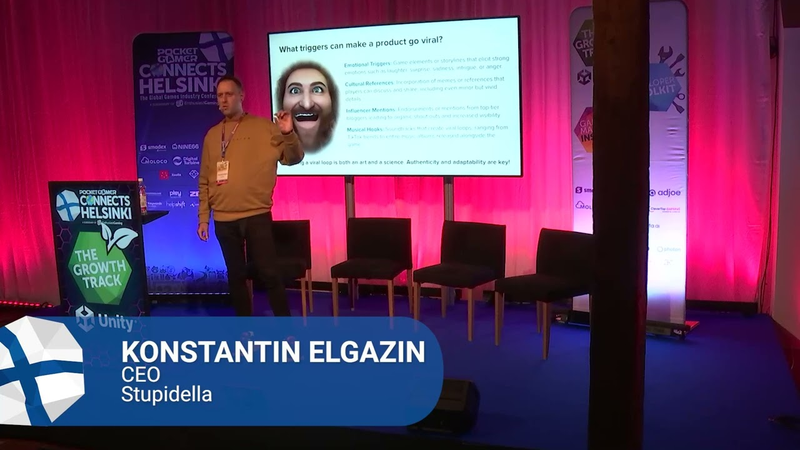
Viral Loops in Games Marketing - Konstantin Elgazin, Stupidella
Viral marketing serves as a primary, cost-effective growth strategy for mobile game developers, enabling organic user acquisition without reliance on traditional paid advertising or meta-campaigns.
- Viral loops function as a cost-effective alternative to paid user acquisition by embedding shareable, emotionally resonant content directly into a game's core design.
- Successful viral content relies on humor, surprise, or indignation to trigger organic sharing, rather than relying on artificial incentives or traditional paid advertising.
- Developers can drive organic growth by incorporating cultural references, memes, and Easter eggs tailored to specific regional audiences.

Panel: The Rise of Real Attribution in PC & Console Gaming.
The PC and console gaming sectors are undergoing a fundamental transformation, moving away from traditional brand-centric marketing toward data-driven performance strategies long utilized in the mobile industry.
- PC and console developers are shifting from brand-centric marketing to mobile-style performance strategies to combat market saturation and declining organic discoverability on platforms like Steam.
- Developers are adopting granular attribution tactics, including IP-based analysis and cross-platform tracking, to accurately forecast lifetime value and optimize return on ad spend.
- The industry is pivoting toward privacy-compliant advertising models, replacing traditional cookie-based tracking with aggregated, anonymized data and contextual targeting.

Superstar Session: Performance Marketing on PC & Console - Adam Smart, AppsFlyer
Performance marketing on PC and console is currently undergoing a significant evolution, mirroring the data-driven maturity mobile gaming achieved years ago.
- PC and console gaming are shifting from traditional brand-focused marketing toward data-driven performance models, mirroring the maturity previously established in the mobile sector.
- The industry is currently managing three distinct monetization models—legacy one-time purchases, free-to-play live services, and hybrid models—each requiring specific measurement strategies ranging from simple install tracking to complex ROAS analysis.
- Technological infrastructure is evolving to support PC and console attribution through server-to-server integrations and specialized SDKs, enabling more granular measurement of user acquisition.
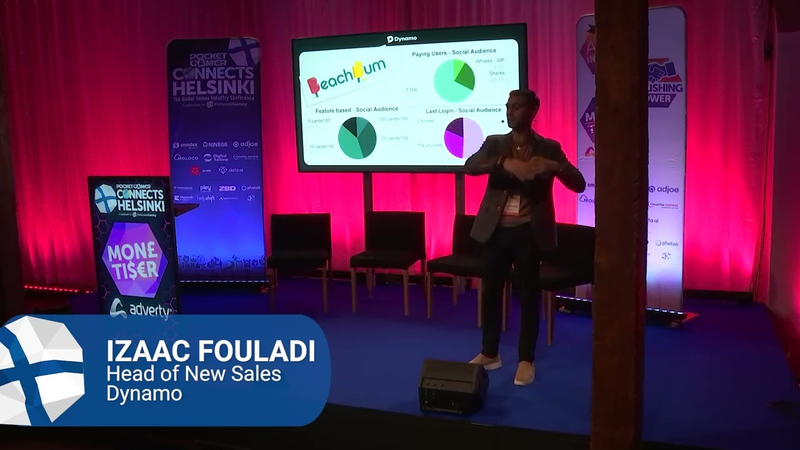
The Hidden Gold Mine How Gaming Communities Can Drive Monetization - Izaac Fouladi, Dynamo.
Gaming companies often treat social media communities as revenue black boxes, failing to leverage them for monetization despite the high cost of customer acquisition and declining daily active users.
- Gaming companies can bypass declining daily active user counts and high acquisition costs by transforming social media communities from broadcast channels into personalized, one-to-one engagement tools.
- Linking a player’s business ID to their social identity allows developers to deliver hyper-personalized content directly to social feeds, enabling re-engagement even if the user has deleted the game app.
- AI-powered operating systems enable scalable community management by automating labor-intensive tasks like comment moderation, giveaways, and direct messaging while maintaining brand tonality.
Bet on Psychology How to Leverage Player Behavior in Ads - Ekaterina Rudnichenko, AdChampagne.
Effective mobile game advertising requires shifting focus from traditional demographic targeting—such as age, gender, or geography—toward the psychological motivations and emotional drivers of the player base.
- Shift mobile advertising focus from traditional demographics to psychological motivations based on Richard Bartle’s player types: Killers, Achievers, Socializers, and Explorers.
- Tailor creative assets to specific psychotypes: use competitive showdowns for Killers, progression visuals for Achievers, community-focused content for Socializers, and narrative discovery for Explorers.
- Implement a disciplined testing methodology by launching approximately ten creative hypotheses simultaneously, as typically only three or four will yield successful performance results.
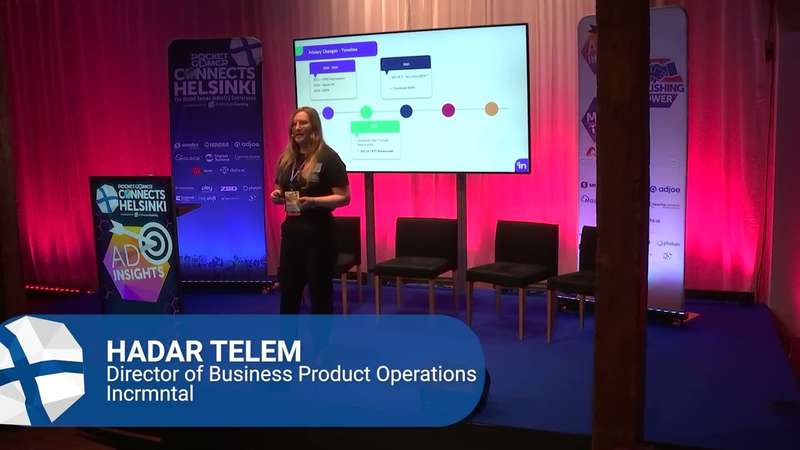
Measurement in a Post Privacy Era - Hadar Telem, INCRMNTAL
The mobile advertising industry is currently navigating a significant transition from user-level tracking to privacy-centric measurement.
- The mobile advertising industry has shifted from granular, device-level tracking to a privacy-centric model following the deprecation of the IDFA and the introduction of Apple’s iOS 14 ATT.
- Marketers must adopt a hybrid measurement framework that integrates last-touch attribution, incrementality testing, and media mix modeling (MMM) to compensate for the loss of user-level data.
- Last-touch attribution should be reserved for real-time tactical optimizations, such as refining creative assets and audience targeting.
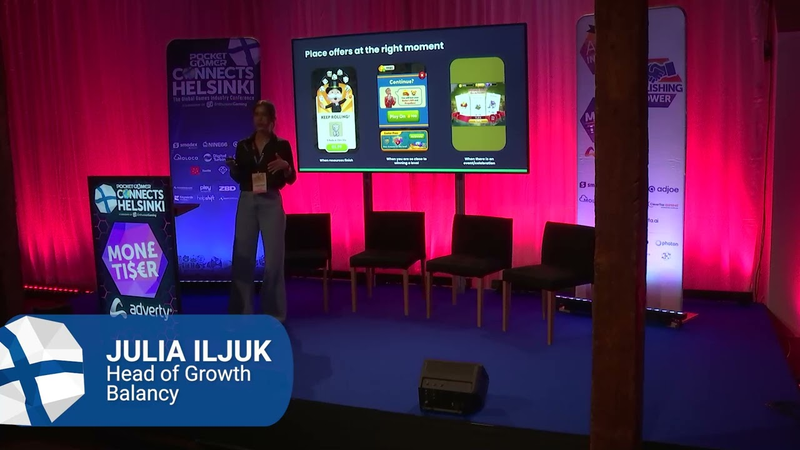
Special Offers & Personalization Strategies to Grow LTV in Games - Julia Iljuk, Balancy.
Special offers and personalized live operations serve as critical drivers for increasing lifetime value (LTV) in mobile games, particularly as user acquisition costs rise and market competition intensifies.
- Special offers are a primary revenue driver for top-grossing mobile games, accounting for 20% to 50% of total revenue.
- Data-driven, personalized promotional journeys can increase conversion rates by 37% and grow average revenue per paying user (ARPPU) by 50% over a two-month period.
- Effective monetization relies on placing offers at moments of player friction, such as resource depletion or level failure, to provide immediate solutions.
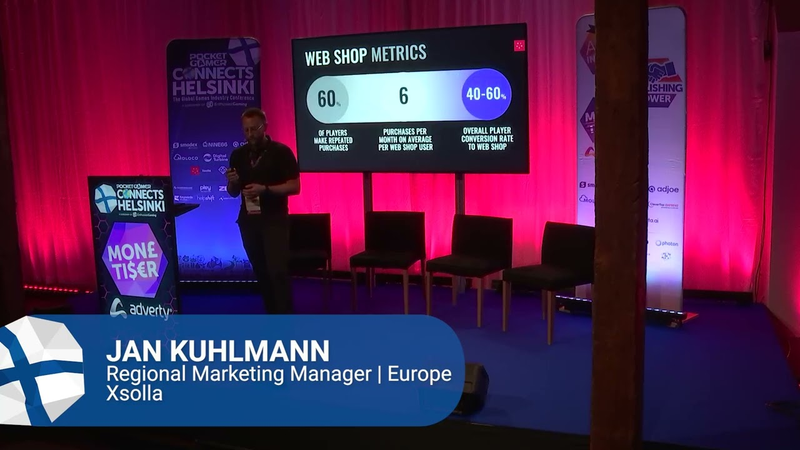
Go Direct to Your Consumers & Earn More - Jan Kuhlmann, Xsolla.
The gaming industry is undergoing a significant shift in distribution and monetization strategies, moving away from total reliance on third-party platform resellers toward direct-to-consumer models.
- Top-performing web shops can generate up to 45 percent of a game's total revenue by bypassing third-party platform resellers.
- Direct-to-consumer web shops drive high player retention, with 60 percent of visitors becoming repeat purchasers who average six transactions per month.
- Launching a dedicated web shop allows developers to integrate over 700 global payment methods, facilitating easier expansion into new geographic markets.

Questions you Should be Asking Your DSP - Ben Jeger, Moloco.
The primary objective of this analysis is to shift the perspective of mobile game and app developers regarding their interactions with Demand-Side Platforms (DSPs).
- Shift the focus of DSP partnerships from manual, granular control—such as managing specific publisher lists—to long-term ROAS and scalable investment strategies.
- Stop attempting to 'outsmart' machine learning algorithms by restricting placements, as modern DSPs optimize for high-value user behavior across all available exchanges.
- Prioritize business-critical KPIs like day-30 ROAS over superficial benchmarks or simple attribution metrics to better measure true growth.
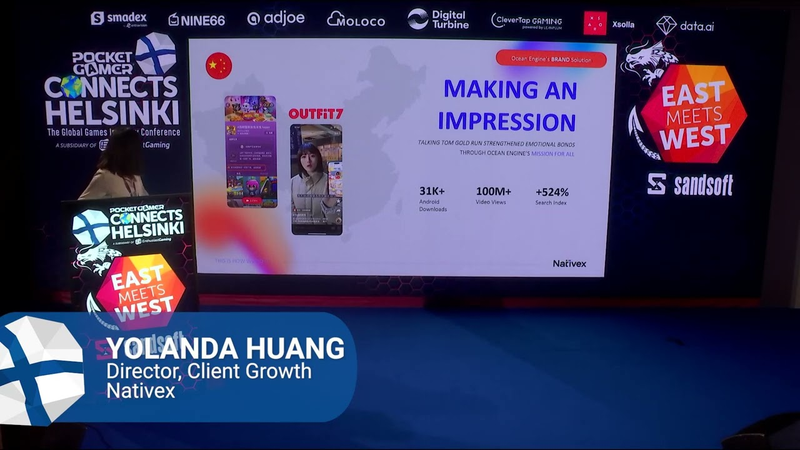
Exploring APAC: How to Market in a Flourishing Region - Yolanda Huang, Nativex
The Asia-Pacific (APAC) region represents 46 percent of global gaming revenue, yet it remains a complex landscape requiring highly localized marketing strategies.
- The APAC region accounts for 46 percent of global gaming revenue, necessitating highly localized strategies rather than standardized global approaches.
- Market entry in Japan is most effective when leveraging the country's anime and manga culture through offline-to-online marketing, such as physical events featuring influencers and cosplayers.
- Success in China requires utilizing the Ocean Engine ecosystem and implementing high-frequency creative testing, where thousands of assets are iterated to optimize performance.

MAJOR CHANGE
The recent announcement regarding the game Twisted Tower serves as a case study for navigating the business of game development, specifically the strategic use of publishers to bring commercial projects to market.
- Securing a publishing deal with 3D Realms for Twisted Tower provided essential professional marketing, trailer production, and industry visibility that the development team could not achieve independently.
- The development team funded the project's research and development phase through a diversified income model, utilizing revenue from online educational courses, content creation, and sponsorships.
- The initial prototype for Twisted Tower required a financial investment exceeding six figures to support a dedicated team, including a full-time artist and a lead developer.
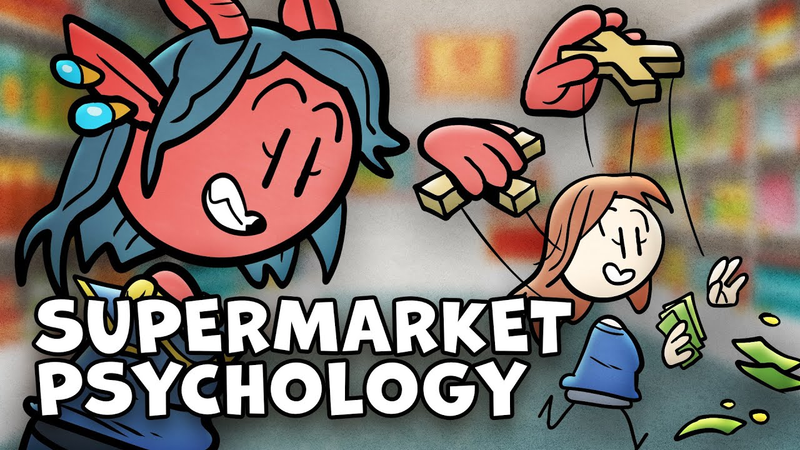
How Video Games Use Supermarket Psychology - Extra Credits
Supermarket design principles, refined over a century of retail history in the United States, provide a blueprint for modern digital monetization strategies, particularly within free-to-play video games.
- Retailers and game developers exploit decision fatigue, where rational decision-making shifts to emotional impulses after approximately 23 minutes of engagement and largely ceases after 40 minutes.
- Supermarkets utilize non-linear floor plans to force customers to traverse the entire store, maximizing exposure to non-essential, high-margin items placed at eye level or on end-cap displays.
- Free-to-play games mirror physical retail by using confusing store navigation that forces users to scroll past paid goods, increasing the likelihood of impulse purchases.