1 free read left. Create a free account for unlimited reading + AI research.
Create free account
Viral Loops in Games Marketing - Konstantin Elgazin, Stupidella
Key insights
7 takeaways- 01Viral loops function as a cost-effective alternative to paid user acquisition by embedding shareable, emotionally resonant content directly into a game's core design.
- 02Successful viral content relies on humor, surprise, or indignation to trigger organic sharing, rather than relying on artificial incentives or traditional paid advertising.
- 03Influencer marketing can be achieved organically by featuring creators within game levels, which encourages them to produce content without direct payment.
- 04Viral impact should be measured through organic traffic surges, social media trends, and YouTube commentary rather than traditional paid acquisition metrics.
- 05A single viral video review can sustain a game's performance for over a year and drive millions of views, significantly impacting long-term user engagement.
- 06Developers can drive organic growth by incorporating cultural references, memes, and Easter eggs tailored to specific regional audiences.
- 07Long-term brand equity is bolstered by splitting game releases for cross-promotion and actively fostering communities around fan art.
Ask AI about this video
Transcript
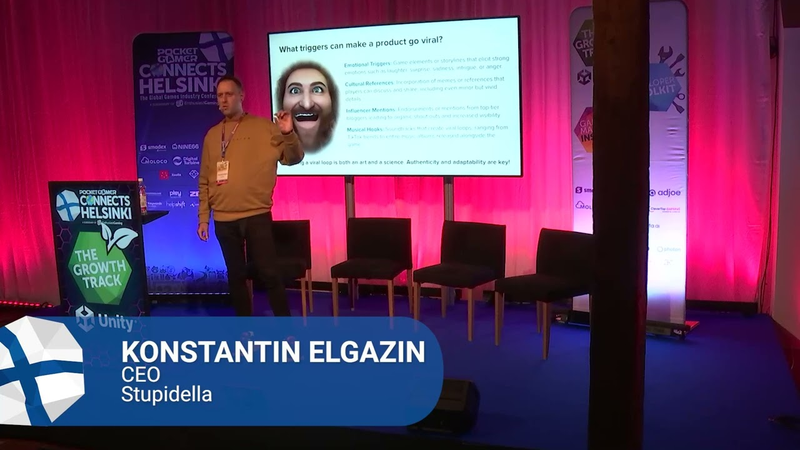
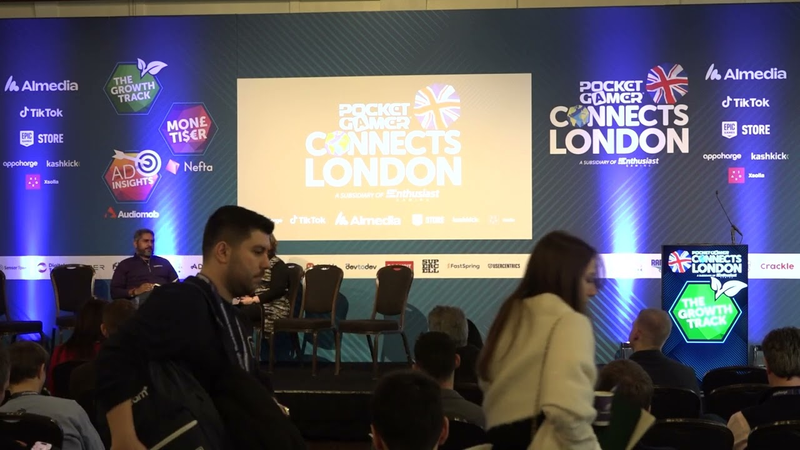
Uh thanks very much to Unity. Yeah, we've got a big day of sessions ahead, but first up we have Constantin Elgazin from Stupid Ella with a talk on viral loops in game marketing. So, please give a hand. Hello. This is me. I don't see much people here. Not everyone passed through a party yesterday. Okay, but so we will have a cozy session. Um I represent Stupid Ella company. We
are based here in Helsinki in Finland. We develop mobile games. Initially, I will tell something about our company. Um we develop games for almost 15 years. We focus on mobile games. We started with web games and now we develop mobile games. And we put a lot of effort into viral marketing. We are We use this as a main marketing method for our games and succeed in this. So, we released 26 mobile games with 200 million installs. Included Troll Face Quest series and Stupidella series, widely known.
And as I early said, the main method is viral marketing and viral loops. This is what I am will speak about today. Uh I created some illustrations for my presentation. Um I don't want to share any numbers or charts, anything complicated, just basic information on how you can make your game perform well uh without any additional payments. So, I created illustrations with Stable Diffusion AI. Um just entered the prompt of how the marketer who use viral loops looks like. So, what is viral marketing and why should we use this? Market is oversaturated now, and to reach people, you need a cheap um cheap source of
um of organic traffic, and viral marketing can give this. This is very cost-effective strategy that makes your users, your players, become your promoters and promote your games naturally, by heart. Uh you should implement some triggers into games, and how is this is how it works. You integrate triggers, and then you monitor, and you check, and you refine the viral elements, so you sustain the momentum. Viral loops in game marketing. Viral loops is a kind of trick how you um how you get your content amplified. How you turn your users into your
promoters. It sounds pretty easy, but it is quite complicated. Um it was doing. In games it works pretty well because of the nature of gaming. Games are interactive and engaging and sharing um viral content is just in the nature of gaming. And you don't need any heavy campaigns for use viral marketing. You just need to implement correct triggers just in the beginning, just um on the stage of development. Okay. Let's speak about key components. There are three key components. Emotional resonance. Everything that
goes viral should be based on emotions. Emotions should be both negative and positive, no matter. You can use surprise, humor, indignation, anger, anything, but this is this should trigger user with emotional response. The next one is shareability. When I say shareability, it doesn't mean you have share button. It means that the content is so natural, it brings uh the feeling that make people share it themselves without any buttons, without any uh templates. So, user see the content. The triggers are working, and user shares it over their social networks. And the third one is seamless
integration. As I said earlier, everything should be 100% natural. So, viral mechanism doesn't work when uh when user sees that you implemented this to promote your game. I put the fourth point, reward, because a lot of marketers say that when user shares something, he would uh they should be rewarded for this action. I don't agree with this because the real source of viral loops, viral marketing, comes from actions that are not rewarded. They comes from natural response, emotional response, and no reward needed. But, I put this point into my presentation because
there is a situation where influencers share your content. In And this way, there is a win-win strategy, and the influence is rewarded with a free content that comes from your game. And this way, it works. Uh let's go a bit deeper. What triggers can make a product go viral? As I said earlier, emotional triggers. They can be implemented into a storyline. They can be implemented into graphics, animations, into anything, into product name even. The second one is cultural references. It may be a reference, it may be a meme, it will it may be a location. It may be a tiny detail on the
background that gives a trigger that gives a cultural reference. And from our experience, tiny triggers work pretty, pretty well. You can implement, for example, if you point to um French audience, uh you can just put a small French word into the background and it works pretty well because user sees uh something he's aware about and this cultural reference works pretty well. The next one, influencer mention. Influencer mentions don't work if you didn't follow the previous two points. You can buy mentions from top vloggers on YouTube, but it won't work um if you didn't implement any triggers
into your game. You can um you can pay, but you will will not have any organic traffic from this. So, that's why I would advise not paying any vloggers because you can trigger them to make the review videos for free. And this works. If you create very cool content and if it's cool to share, it will be shared, be sure. No need to pay. Creating viral loop is a kind of psychology science and both and art. And authenticity is a key. It is quite quite hard to explain how to create
the viral loop, but when you get this, the result is stunning. How to measure? Another point. It is also very, very complicated because when you create viral loop and when it works, you can't measure it. You get organic traffic without any marks. So, you should analyze campaigns. You should see which videos are popular about your game. You should monitor TikToks and compare this data with installs, with monetization charts. So, it is a kind of analytics, non-typical work, but it should be monitored and
analyzed. And another point, uh you should monitor YouTube comments because this is a nice source of ideas for future projects, for updates. Users on YouTube are quite open in their commenting. And you can pick up a lot of insights just from comments, from review videos. The these were funny slides. This is the serious one. So, just facts. Surges in organic traffic allow ascension in marketplace rankings. It works pretty good. Video reviews and TikToks may be a free source for organic traffic. And the third one, viral loops increase
the IP value. You can't measure it, but uh the day comes you will sell your IP, for example, or you will need some better conditions with publisher. And this time the IP value is quite important. And viral loops works for this. But it is very hard to rely on viral loops and to predict performance. This is where a lot of studios combine traditional marketing efforts with viral marketing on the first stage. And this is good way, but we in our studio rely completely on viral marketing. We don't use AdMob. We don't use any meta campaigns. We don't use anything. Only viral loops. And this is what we got from this.
For example, we got a review video with 5 million views in 2 days. And we got a initial punch for our project. And it was ranked number one in puzzle section worldwide for 2 weeks. So, it was a nice start and monetization came pretty well. The next situation we got a video review from Spanish speaking blogger. And this video gathered more than 30 million views and was a kind of drive train for this project. It performed about 1 and 1/2 year and all performance of the game was based on one video. All performance in Spanish speaking
countries and this is a big piece. And finally one of our games in Troll Face Quest franchise um was five of the most trending games on Google Play. It was ranked by Google and normally and we didn't use any traditional marketing for this. So, funny slide again. Um these are four insights from our company and from Stupidella that worked in our projects. The first one trend integration. As I earlier said, we integrated some minors minor and major trends, memes, Easter eggs, and references into our games and it worked pretty good. Um we saw it in comments on YouTube
reviews because users pointed some small details that were put into the background, some local memes, some memes for Spanish speaking people, French speaking people and it works really really good. The next one, subtle blogger reference. We included um vloggers themselves into our games without asking them. We just draw them and put into a level. And then we just mentioned them in some tweets. And it caused nice video reviews from top vloggers all over the world. The next point, it is slightly connected with viral marketing, but it worked pretty well. Strategic game release.
Uh we create puzzle games and each game contains, for example, 20 to 40 puzzle levels. So, we just split our game into two parts and released it uh one after another with a two-week frame. And it worked pretty good and resulted in 60% revenue increase. Because uh each game promoted other game. And the last one, the last insight, is building of fan art community. This is not connected tightly with um monetization, but with IP value. We created a fan art community of DeviantArt.
We put some artwork related to our games there. And with a kind of magic, there was created a community of artists that created some pieces of art related to to related to our games. So, when you put the name into Google, you will see a lot of artworks by by different artists over the world. We can't measure it with money. We can measure We can't measure it with installs. But, it increases the IP value in case of big deals in future. Mhm. This is a slide for you to remember the name of our company. Stupidella. Yeah. Stupidella. Stupidella. Stupidella. Remember, everyone.
So, what's the viral loop? Viral loop can be anything. Anything that makes user remember a product, remember the game, remember anything you create, and to become a part of its marketing, to become a promoter. So, today's quirky illustrations and the name of our company is also a part of viral loop. A part of viral loop component. Please connect Stupidella on LinkedIn. I share some insights in my feed there. And see you. Thank you for your attention. Uh thanks very much for that. Really appreciate that. That was great. Uh does anyone I think we've got time for like a question. Does anyone have any burning
questions? They'd like to ask. Uh we do have one here. We've got a microphone. Thank you. You said you integrated your your viral loop very early very early stage of your game development. Could you tell us a little bit more about or early you know it's like in a concept phase or maybe maybe later? About about what? I'm sorry. You said that you implemented or you were thinking about your viral loops very early. Yes. Very early stage of your game. So this is in the concept of the game itself or is it during the design phase or Yes, it comes from the concept and level design. Yeah. Even speaking about our project the most successful one was Troll Face Quest franchise. And the game itself contains Troll Face
in its name. So this is the name of the meme. And all levels are contained and memes inside. So yes, the a very early stage. Okay, great. Yeah, that's a tough question. So thank you very much. I'm sure if anyone has any other questions they can catch you just after the talk. All right, cool. Thanks very much. So please give a round of applause. Thank you.
Summary
Viral marketing serves as a primary, cost-effective growth strategy for mobile game developers, enabling organic user acquisition without reliance on traditional paid advertising or meta-campaigns. By embedding viral loops directly into the game’s core concept and level design, developers can transform players into natural promoters. This approach relies on three fundamental components: emotional resonance, which triggers user responses through humor, surprise, or indignation; inherent shareability, where content is compelling enough to be distributed without artificial incentives; and seamless integration, ensuring that promotional elements feel authentic rather than forced.
Key findings suggest that successful viral loops are built upon cultural references, memes, and Easter eggs that resonate with specific regional audiences. Rather than paying influencers for promotion, developers can generate organic interest by creating content that is inherently "cool" to share or by subtly featuring influencers within the game’s levels. While viral performance is difficult to measure through traditional metrics, developers should monitor organic traffic surges, social media trends, and YouTube commentary to gauge impact. These insights can then inform future updates and project development.
The strategic implementation of these loops provides significant benefits, including improved marketplace rankings, increased intellectual property value, and sustained user engagement. For instance, a single viral video review can drive millions of views and sustain a game’s performance for over a year. Furthermore, tactics such as splitting game releases to create cross-promotion and fostering fan art communities contribute to long-term brand equity. Ultimately, while viral marketing is difficult to predict, it offers a powerful alternative to paid acquisition, particularly for studios that prioritize creative, emotionally driven content from the earliest stages of production.













Comments