Marketing reports and market data
Documents
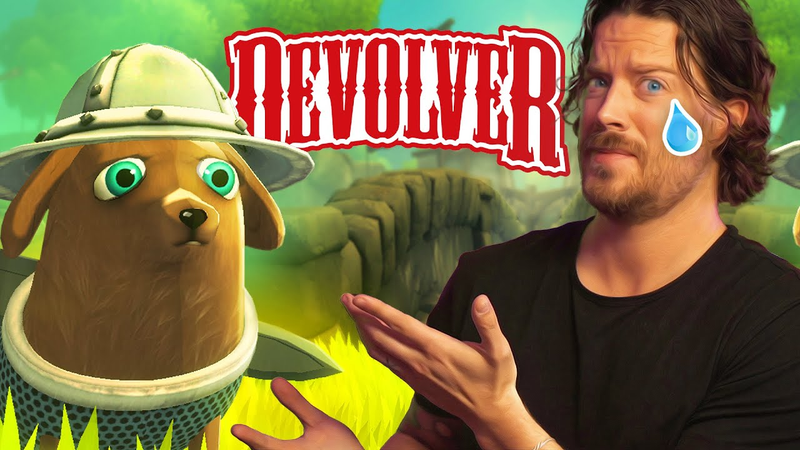
A Huge Publisher Played My Game And.... (Devlog)
The process of securing a partnership with a major indie game publisher requires a combination of professional outreach, industry networking, and a willingness to iterate based on expert feedback.
- Securing meetings with major publishers like Devolver Digital can be achieved through cold emailing, but leveraging long-term industry relationships—such as connections made at events like PAX—significantly increases the likelihood of a response.
- A professional pitch deck should be a simple, accessible website containing a 10-minute polished demo, a video introduction, clear game hooks, and a high-level overview of the team and development schedule.
- When negotiating with publishers, adopt a 'show, don't tell' strategy by proactively developing specific assets—such as updated game design documents, new mechanics, or character cosmetics—to address their concerns before they are formally requested.
2023 Insights Report: Marketing Trends in Indian Mobile Games
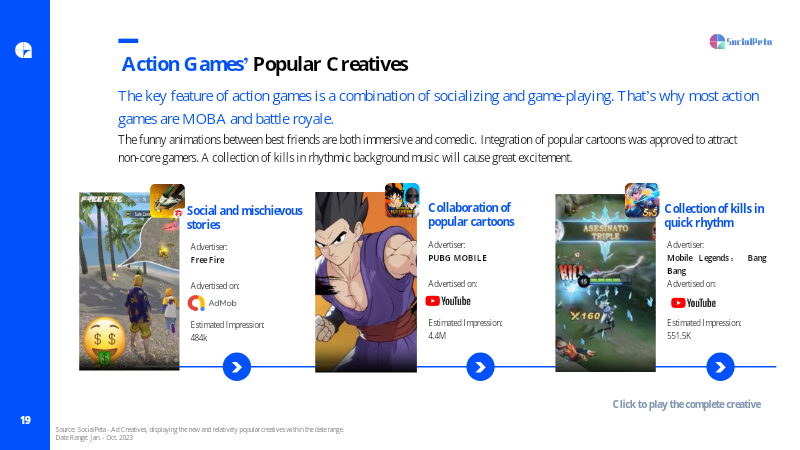
The 2023 Insights Report on Marketing Trends in Indian Mobile Games provides a comprehensive analysis of the advertising landscape within the Indian mobile gaming sector.
- The Indian mobile gaming market saw an 86% year-over-year increase in monthly active advertisers during 2023, signaling rapid sector expansion.
- Despite the surge in advertisers, the average volume of monthly ad creatives per advertiser dropped by 51.7%, indicating a shift toward more efficient and targeted production strategies.
- Android dominates the Indian market with 3.4 times more advertisers than iOS, and Android-based advertisers produce an average of 36 more creatives per month than those on iOS.

How to Build a Cross-Platform Franchise with Sola Saulenko, CMO of Pixonic
The evolution of the War Robots intellectual property from a mobile-exclusive title into a multi-platform franchise demonstrates the necessity of balancing creative intuition with rigorous, data-driven operations.
- Expanding a mobile IP to PC and console requires specialized marketing units and a shift away from traditional app store reliance, as these platforms operate under distinct user acquisition funnels and trust-building requirements.
- Successful cross-platform growth relies on a symbiotic integration of product, marketing, and analytics teams to ensure game mechanics and creative strategies remain aligned with player expectations.
- Prioritizing high-quality, actionable data from primary markets like the United States is more effective for franchise development than relying on traditional soft-launch models.

2.5 gamers x Live AM(F)A #1 - March 20
The mobile gaming landscape is undergoing a significant shift toward hybrid-casual models, characterized by the integration of robust economy mechanics, gacha systems, and meta-game depth into traditionally simple gameplay loops.
- The mobile gaming market is shifting toward hybrid-casual models that integrate complex economy mechanics and gacha systems into simple loops, exemplified by Legend of Mushroom generating approximately $2.5 million in daily revenue.
- Genre-blending is a primary growth strategy, with top-performing titles like Whiteout Survival and Last War successfully incorporating match-three and puzzle mechanics into 4X strategy frameworks to expand their audience.
- AppLovin’s Axon 2 has emerged as a top-performing channel for iOS user acquisition due to advancements in algorithmic signal processing.
Innogames’ Deniz Kekeç On Building Long-Lasting Relationships With Narrative Marketing
Narrative marketing serves as a strategic framework for enhancing user acquisition and long-term retention in casual simulation games.
- Narrative marketing enhances user acquisition and retention in casual simulation games by shifting focus from mechanical features to character-driven storytelling.
- Studios should use rigorous A/B testing via isolated Meta ad accounts to validate narrative personas, measuring success through install-per-mille and overall profitability.
- While narrative-focused campaigns may incur higher initial costs per install, they are justified by increased player lifetime value and long-term retention.

Sustain Creative Excellence to Drive Enduring Growth with Amit Pande & Jen Donahoe
The modern digital marketing landscape, particularly within the mobile gaming industry, necessitates a shift toward creative-first strategies to engage a global audience characterized by short attention spans.
- Advertisers must prioritize native-feeling, vertical short-form video content to capture user attention within the critical two-to-three-second window.
- Over 80% of advertisers are now tailoring creative assets specifically for short-form environments, frequently utilizing influencer partnerships to increase authenticity and engagement.
- Creative assets serve as the primary fuel for machine learning engines, requiring the upload of maximum-volume, diverse asset sets to optimize performance across Google’s inventory.

The Art of Achieving Peak Performance with John Wright, Jennifer Donahoe & Di Weng
This discussion outlines a strategic framework for mobile game development and user acquisition, emphasizing a lifecycle-based approach to achieving peak performance.
- Modern user acquisition relies on automated bidding strategies, such as value-based bidding and ROAS optimization, to hit specific day-three or day-seven performance goals.
- Game development follows a four-stage lifecycle: MVP for core loop validation, Alpha for testing long-term retention with four to six hours of content, soft launch, and hard launch.
- Monetization strategies have shifted from pure in-app purchases (IAP) to hybrid models that capture revenue from both paying users and ad-engaged players.

Stay Compliant with the Ever-Shifting Privacy Landscape with Di Wang, Rachael Weinberger & Rina Onur
The mobile gaming industry is currently navigating a significant shift in data privacy regulations, most notably the European Union’s Digital Markets Act (DMA).
- The EU’s Digital Markets Act (DMA) mandates that large platforms like Google separate core services, restricting cross-service data sharing and disrupting real-time user acquisition targeting.
- Marketing teams must shift from deterministic measurement models to a holistic strategy that integrates SKAdNetwork, modeled conversions, and first-party data.
- Creative strategy has replaced granular identifiers as the primary lever for audience targeting, necessitating frequent, isolated testing to triangulate campaign performance.

Fireside chat: How Scopely Fuels Growth and Outpaces Rivals with Jen Donahoe & Jamie Berger
The success of Scopely’s mobile gaming portfolio, particularly the 2023 breakout hit Monopoly Go, is driven by a strategic synthesis of intellectual property (IP) integration, social mechanics, and a disciplined approach to performance marketing.
- Monopoly Go generated $800 million in revenue during Q4 2023, providing the financial scale necessary to fuel aggressive user acquisition while maintaining operational discipline.
- Scopely treats intellectual property as a platform for authentic gameplay rather than a guaranteed success driver, exemplified by adapting the traditional Monopoly board game into a real-time social experience.
- Community management is treated as a core marketing function, resulting in significant engagement metrics including 8 million Facebook followers and 500,000 Discord members for Monopoly Go.
Level Up: AI Powered Mobile Gaming Growth with Google's Katie Funk & Belinda Langner
Google’s product leadership highlights the integration of artificial intelligence across the mobile gaming lifecycle, positioning AI as a critical multiplier for user acquisition, creative optimization, and monetization.
- AI-driven value-based bidding, such as Target Return on Ad Spend (tROAS), has replaced manual campaign management to better align user acquisition with specific revenue goals like in-app purchases and advertising.
- Voodoo achieved a 58% increase in Return on Ad Spend (ROAS) by implementing AI-optimized bidding strategies tailored to their specific monetization structures.
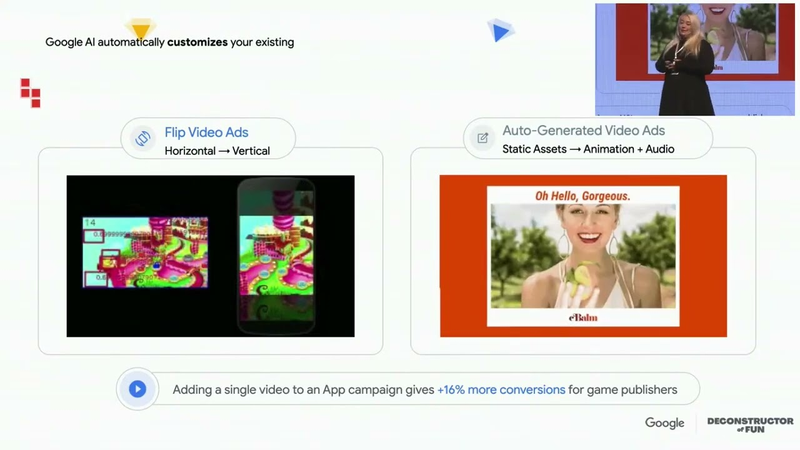
- Google’s AI-powered creative tools, which include automatic video reorientation and asset generation from static images, deliver a 16% performance uplift in campaign results.

Branding for Top Line Growth: MY.GAMES Journey by CEO Elena Grigorian
The gaming industry faces a persistent challenge where the cost of acquiring paying users (CPPU) steadily rises while the revenue per paying user (RPPU) struggles to keep pace, creating an inevitable intersection that threatens long-term profitability.
- MY.GAMES is shifting from performance-based marketing to branding campaigns to counter the industry-wide trend of rising costs per paying user (CPPU) outpacing revenue per paying user (RPPU).
- A branding campaign targeting a broad audience increased downloads and marketing efficiency but failed to generate significant revenue because the casual audience could not navigate the game's complex onboarding and monetization.
- A second, more targeted branding campaign focused on demographics with a higher propensity for spending resulted in improved retention rates and higher revenue compared to the initial broad-reach attempt.

Finding a publisher: Live Q&A
Securing a publishing deal for premium PC and console titles requires a fundamental shift from creative-led development to a rigorous, business-oriented strategy.
- Publishers prioritize risk mitigation, requiring developers to present a comprehensive business case that includes realistic budgets, detailed timelines, and clear revenue projections.
- Success in securing a deal depends on demonstrating market demand through tangible metrics such as Steam wishlists, community engagement, and social proof.
- Developers should pitch a singular, confident vision supported by a functional vertical slice that highlights core mechanics and unique selling points, rather than offering multiple design concepts.